Software
Houzz Logo Print
party_music50

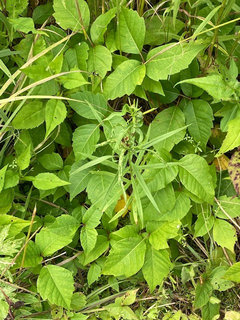
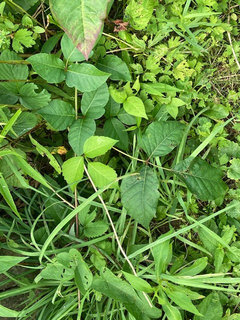
Is this poison ivy?!

4 years ago
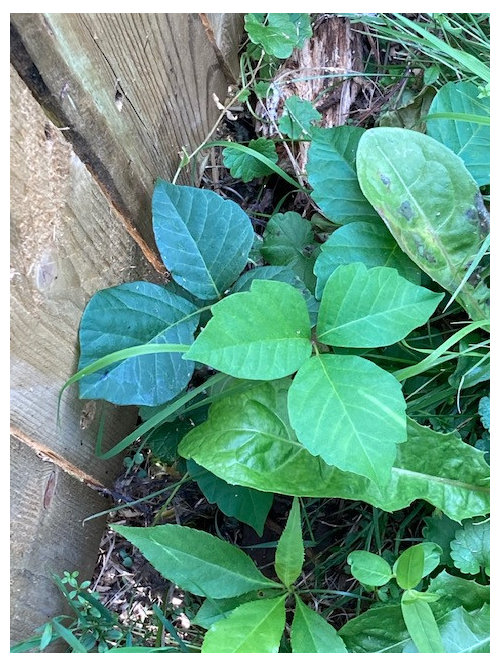
A tree came down at the back of my yard and all kinds of new weeds are showing up in that area…


I recently noticed this plant growing from under a neighbor’s fence. Is it poison ivy?! I’ve never knowingly seen or dealt with PI and it’s making me nervous — although it may explain the weird rashes I had after tree trimming last month. :p


Comments (30)

  • 4 years ago

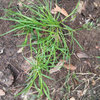
    Yes, that is Poisoned Ivy with a cherry tree seedling, Creeping Charlie and Dandelion.

  • 4 years ago

    O m g. Thank you for confirming it, Christopher. Thus, I had PI rashes on my legs and arms and had no idea that’s what it was! It’s growing from under the neighbor’s fence, and the neighbor’s house is currently empty and for sale.… ugh. How do i stop this? I already tried to rip it out once, but it came right back. :(

  • 4 years ago

    If there is a big patch of it growing on the other side of the fence you won't be getting rid of it easily. You can buy some Poisoned Ivy killer at the big box. Best time to spray is late summer - early fall right before it goes dormant when it is pulling nutrients down into the stems for winter storage.

  • 4 years ago

    Why would you spray it after having yanked it out or removed it from the neighbor's side? Once you pull it up, it's dead.

  • 4 years ago

    The more leaves you have to spray, the more poison the plant is going to absorb. The roots and any remaining vine are not going to absorb anything with over the counter big box herbicides. Spraying where the poisoned Ivy used to be is just a waste of poison.

  • 4 years ago

    I’d be spraying the h@ll out of every P.I. leaf I see, on both sides of the fence. (Surely the other property owner doesn’t want to keep it.)

  • 4 years ago

    Which is why the more leaves there are to spray the more poison the plant is going to absorb. Systemic does not imply the ability of a chemical to be absorbed by the roots. Roundup in particular is not absorbed by the roots. If you are going to use a woody brush killer like triclopyr on Poisoned Ivy in a landscape setting, you best be sure not to get it in the root zone of the plants you want to keep. I would definitely not recommend spraying it in the neighbor's yard.

  • 4 years ago
    last modified: 4 years ago

    You are confusing the ability of a chemical to be absorbed by the roots underground and the ability of a chemical to be translocated to the roots from the leaves.

  • 4 years ago
    last modified: 4 years ago

    So the question becomes, what is the best way for the chemical to enter the plants vascular system? More often than not that is through the leaves. For some systemic chemicals that is the only point of entry.

    The more leaves you have to spray the more chemical is going to be absorbed. Spraying roots you can't see that may or may not be there is a waste of poison. You have flunked your pesticide applicator licensing test.

  • 4 years ago

    Jordan, please read the labels completely before you apply any chemicals to the landscape.

  • 4 years ago

    Thank you, Christopher, Jordan, and littlebug! I may contact the realtor that’s handling the property since PI is something we’ve never seen growing around here.

  • 4 years ago

    party_music50 here is a link to a University of Georgia extension publication on control of Poisoned Ivy with herbicides to help avoid any Jordan generated confusion. A main take away being "applications should be made at the full-leaf stage of growth."

    Controlling Poison Ivy in the Landscape | UGA Cooperative Extension

  • 4 years ago

    Just spray it with Poison Ivy killer, both sides of the fence. Then watch for reemergence and spray again. Keep after it until it is gone for good. That is, until the birds plant some more:)

  • 4 years ago

    Thanks, everyone.

  • 4 years ago
    last modified: 4 years ago

    Very good Jordan. You read the extension publication. I hope it helps.

  • 4 years ago

    Wow.


    I've never seen such prevarication.


    No one should apply Roundup (or other glyphosate herbicides) other than as foliar or cut-stump applications, and apply it only to that which you intend to kill. Any statements to the contrary - implying that a soil drench to encourage root uptake is appropriate - defies logic and science.


    To assert that soil drenching with a "mobile" herbicide is an appropriate method to control Toxicodendron radicans in the situation described here, well, that's just reckless, dangerous, and ignorant. Mobile and persistent chemicals (like imazapyr) used in a garden situation can and will lead to permanent damage to off-target plants. That's a mistake that party_music50 does NOT need to make.


    Read and follow label directions. That provides you the legal methods of how to apply these poisons, and that is why those directions are provided on the pesticide containers. If you don't understand them, find a licensed professional who can explain them to you.

  • 4 years ago

    If you all don't mind me asking in this thread, I need help with PI also and have a question for y'all. I have it growing around and up an Arborvitae and I absolutely cannot touch it, I'm super allergic to it even if I try my best to keep it off of my skin, it somehow manages to break me out!!!! So my question is, is there a product that I can spray on the PI foliage that will not kill the Arborvitae. A friend told me that I can use that PI killer that you buy in the store, I would like a more informed answer to clarify if it's OK or NOT! Thanks!

  • 4 years ago
    last modified: 4 years ago

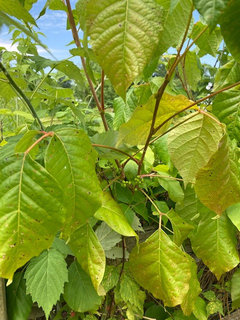
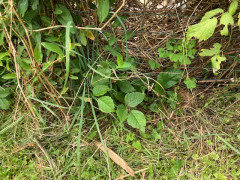
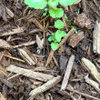
    I heard a lawn service show up at this neighbor's house so I ran over to tell them that there may be poison ivy at the back of the yard. I went and inspected the area with two of the workers and they both said that this is NOT poison ivy. Are they right? Is any or all of this stuff poison ivy?! btw, these weedy plants all originate from a 3rd neighbor’s yard that is many many acres running behind us.


    This section was at least 6' tall and has little berries:


  • 4 years ago

    arkansas-girl, I don’t mind. I just hope the thread hasn’t been abandoned. If so, we’ll both need to start new threads. :)

  • 4 years ago
    last modified: 4 years ago

    There is a big patch of poisoned ivy in the neighbor's back yard. It has been there a long time. Plenty more in the woods behind you. You are alive and doing fine. Chill. Read the full extension publication posted above. Ignore Jordan. The house is on the market you say. It's not your problem. Let the buyers deal with it.

    I hope those landscape dudes were lying to you for their sake.

  • 4 years ago
    last modified: 4 years ago

    Party-music, thanks! And yes the pictures you posted are definitely poison ivy!


    Thanks Jordan!

  • 4 years ago

    Vinyl or nitrile is recommended over latex for gloves when contacting poison ivy. The oils can permeate latex/rubber.

    If you think poison ivy oil has contacted your skin, either directly from the plant or secondary transfer (such as off of your protective clothing), you have a couple minutes to get it off (the natural oils on your skin provide you brief protection). Do not scrub if there may be urishol present, as it may rub it into your skin (you want to get it off not have it be absorbed). Start with alcohol, poison ivy wash, or another oil cutting soap (dish soap or laundry detergeant fit the bill); these will remove the oils. Following that, wash those off your skin to avoid irritation from those products. Make sure to get anywhere the oil may have contacted ... including under your nails, etc. Keep in mind that in stripping the poison ivy oil off your skin with the alcohol, you've also temporarily stripped off your skin's natural oils, so don't go back out where the poison ivy is, as your buffer is now gone!

    I recommend throwing your poison ivy removal clothing in the washer before you wash up ... otherwise you're just potentially exposing yourself again (secondary transfer). Wipeable shoes are ideal, so you can just use an alcohol cleaning wipe ... don't forget to clean your tools, too!

  • 4 years ago

    Good choice to talk to the listing agent! They likely don't want the poison ivy either but that doesn't give you the right to treat or remove it without their permission. You could try talking to thethird neighbor about it to see if they'd want to work together on removal ... if not, just keep dealing with what you can (what invades your property) and keep an eye out for it so you don't run into it accidentally. Goodluck!

  • 4 years ago

    Christopher, you completely ignored what was being asked and obviously didn’t read the comment regarding the arborvitae because the small-mindedness has you more intent on trolling me than provide accurate information.

    You are an easy target. Obviously, I was not responding to the arborvitae choke full of poisoned ivy. Most people would have understood that.

  • 4 years ago

    How bizarre.

  • 4 years ago

    Oh, and whatever you do, don't burn poison ivy! It will release the oils into the smoke/air ... you do not want to breathe that in. We bag ours up and dispose of it in the trash (double bagged - and the gloves go in there, too - so the outside of the bag is safe).


    I should have mentioned, if you don't have vinyl gloves, cotton are better than latex ... you just have to wash them afterwards ... I like disposable (vinyl). Vinyl gloves are also great for various other projects.

  • 4 years ago

    Thanks for all the extra tips, BlueberryBundtcake! I am trying to let all parties know its there. I wonder if they hit any of it with their weedwhackers today. oy.

  • 4 years ago

    That would be unfortunate if they did ... poison ivy can spread by "cuttings". Bits of leaves blustering around won't make more plants; they are just a urishol conduits.

  • 4 years ago
    last modified: 4 years ago

    "Keep in mind that a dead poison ivy plant still contains urushiol..."