Software
Houzz Logo Print
webuser_834679376

Leaning ficus benjamin

4 years ago
last modified: 4 years ago
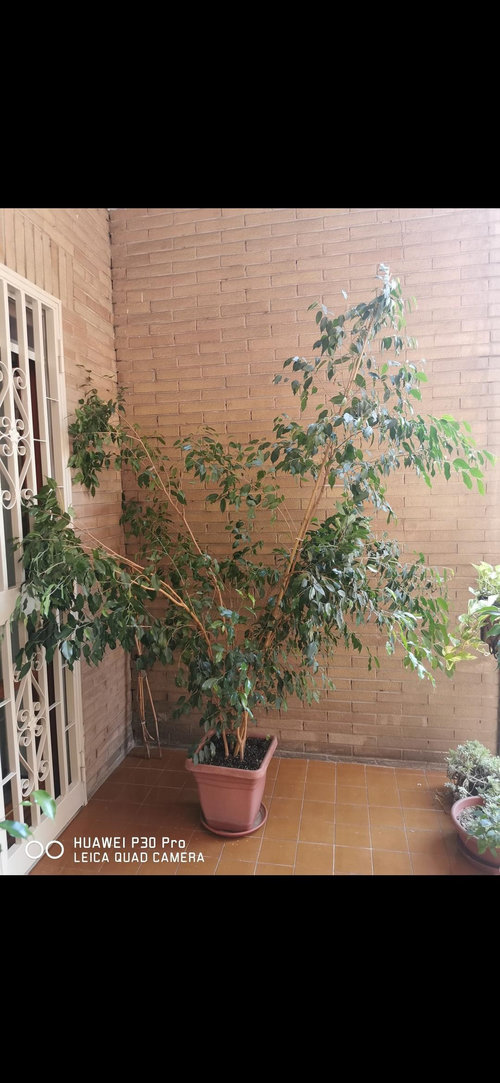
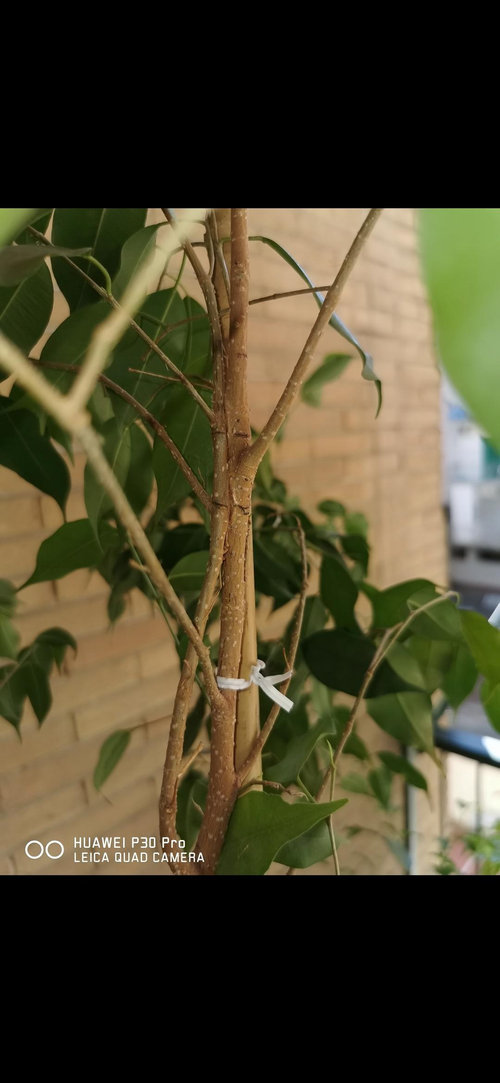
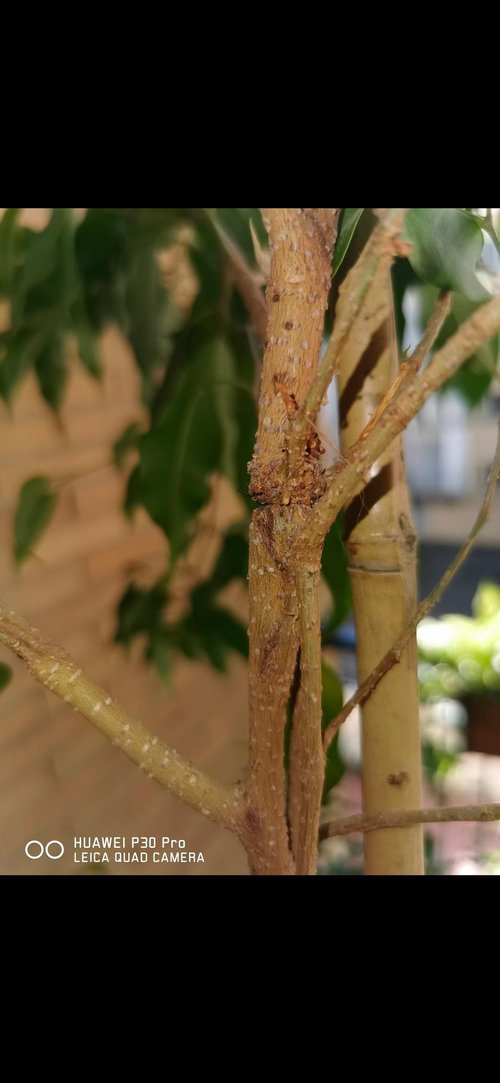
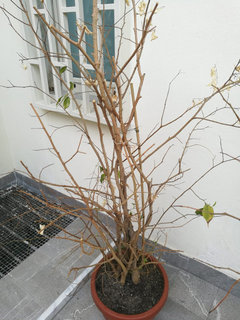
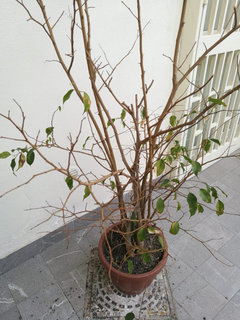
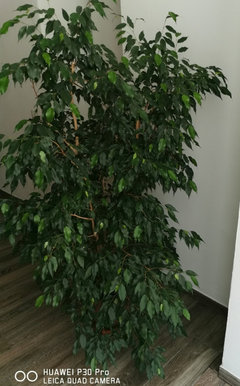
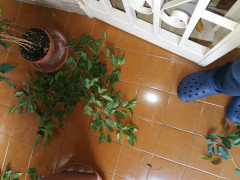
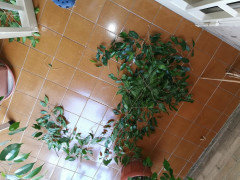
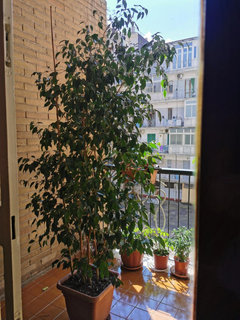
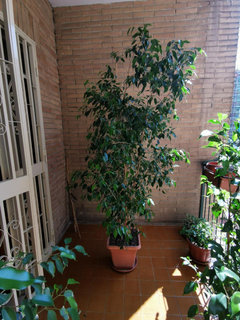
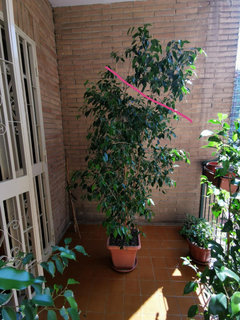
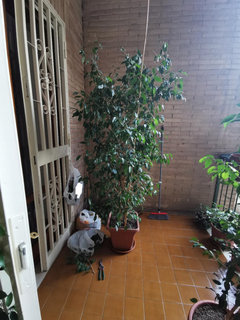
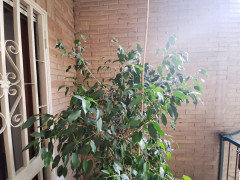
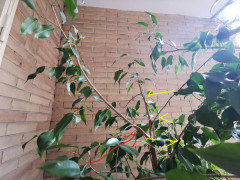
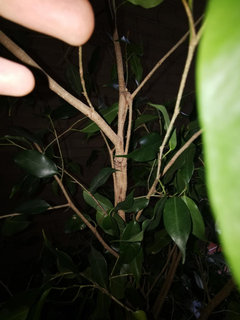
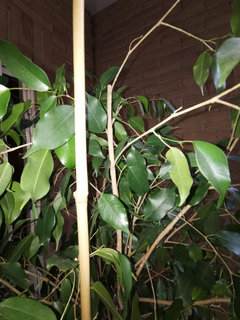
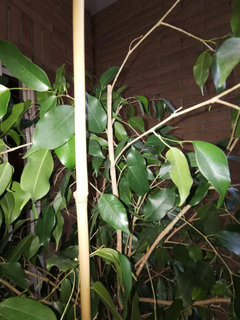
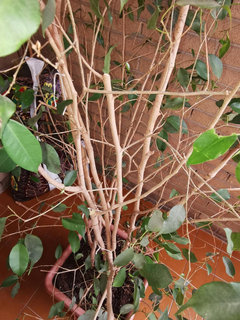
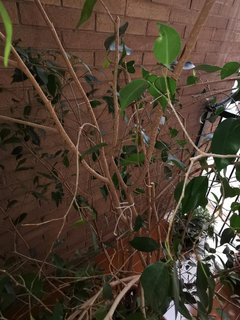
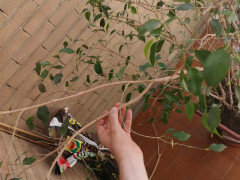
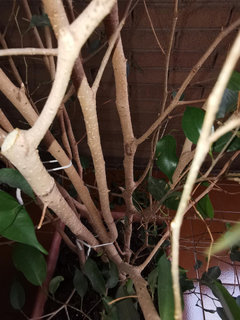
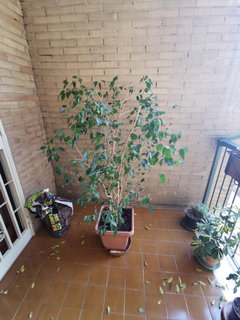
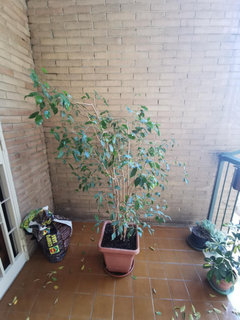
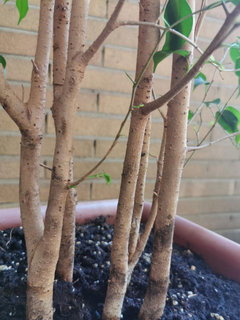
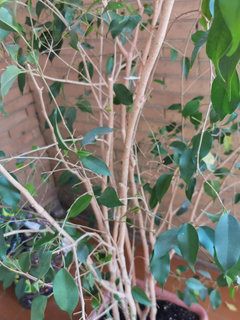
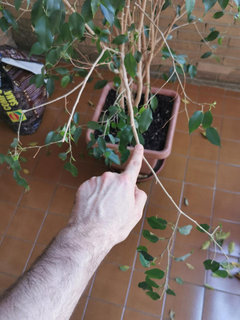
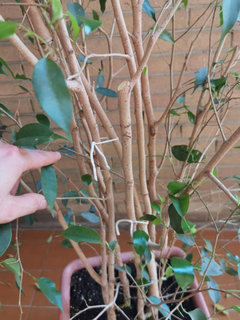
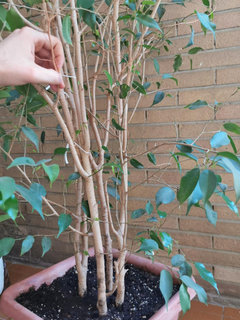
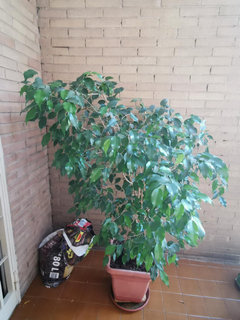
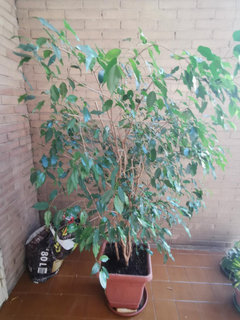
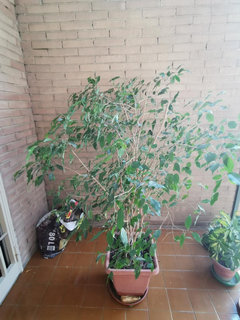
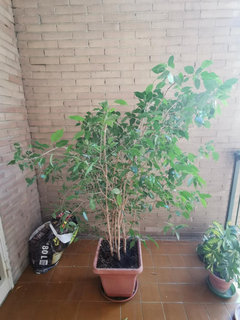
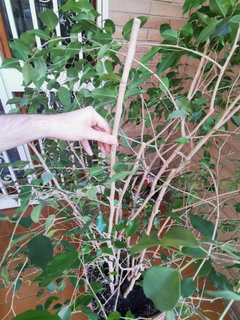
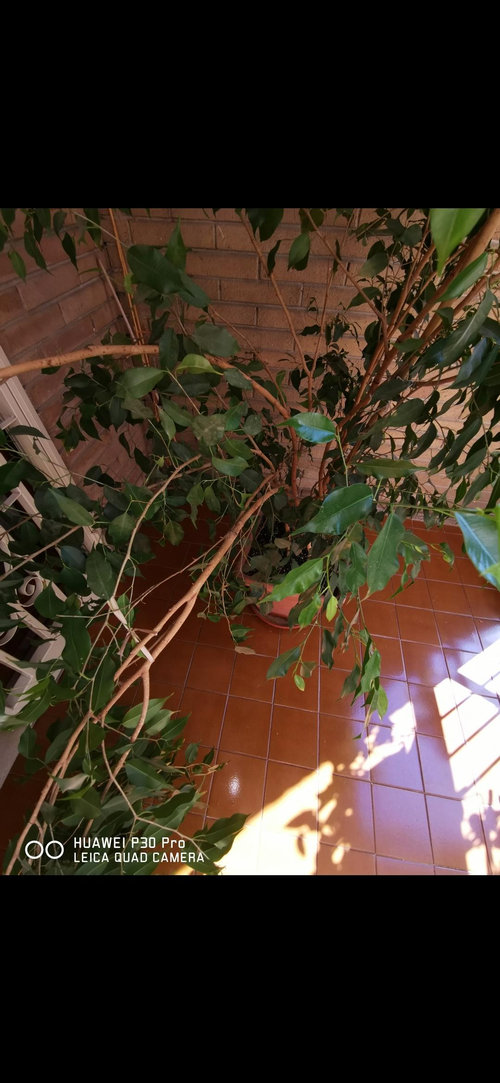
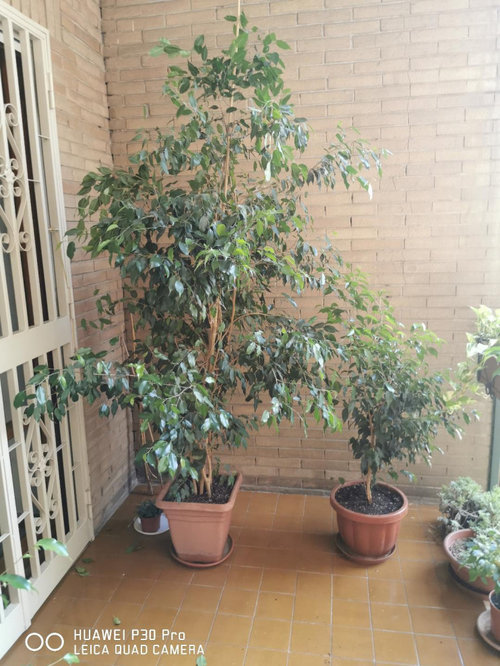
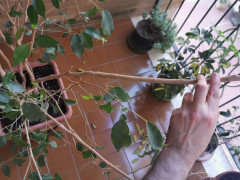
Now I'll tell you how stupid I was (terribly stupid). Al @tapla (mid-Michigan, USDA z5b-6a) will think badly of me. This ficus was born from a cutting almost 5 years ago. For the past 2 years I have tied the branches of a benjamin to push them up with the aim of getting a taller plant faster. Until yesterday, even if slightly lopsided, the plant had an aesthetically pleasing shape and seemed compact (one would have said a fine specimen of benjamin). However, it was only appearance. When yesterday I eliminated some threads, I realized that the branches had not taken that shape at all over time and the plant is practically crushed (the branches reach the ground if not resting against the rod or a wall). Even now that I have put it back together, as you can see, it looks anything but beautiful. In addition, yet another mistake, I used a thin iron wire which then melted into the trunk and I think it is very bad for the plant. I think the only solution would be to prune it, but I don't know if halving the height would grow straight. I am very sorry to halve the plant and I also wonder if in mid-August it is already late to prune it in such a radical way. Really a disaster.


Comments (12)

  • 4 years ago
    last modified: 4 years ago

    I live in Naples, Southern Italy. All images were taken on the same day. The plant had a harmonic shape, but when I cut the threads the plant bent. As you can see, I tried to give it back an acceptable shape, but now it has a lopsided and disamonic aspect. Even the rod that is present in the center of the pot is not very firm because I can not stick it into the ground I think due to the very thick roots of the plants. I would like a plant that stands upright on its own and looks compact. That corner of the balcony looks darker than it actually is (the photo was taken against the light): I still have the ability to move it more towards the light, but it will be less sheltered from the elements in winter. PS1: Al, I'm not an expert like you, but I usually know how to heal my ficus benjamina. I will show you two plants that were very perishable at the beginning of 2019 and that I have reinvigorated. PS2: I apologize for my bad English.

  • 4 years ago

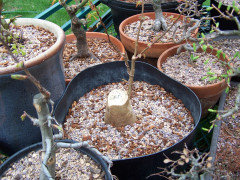
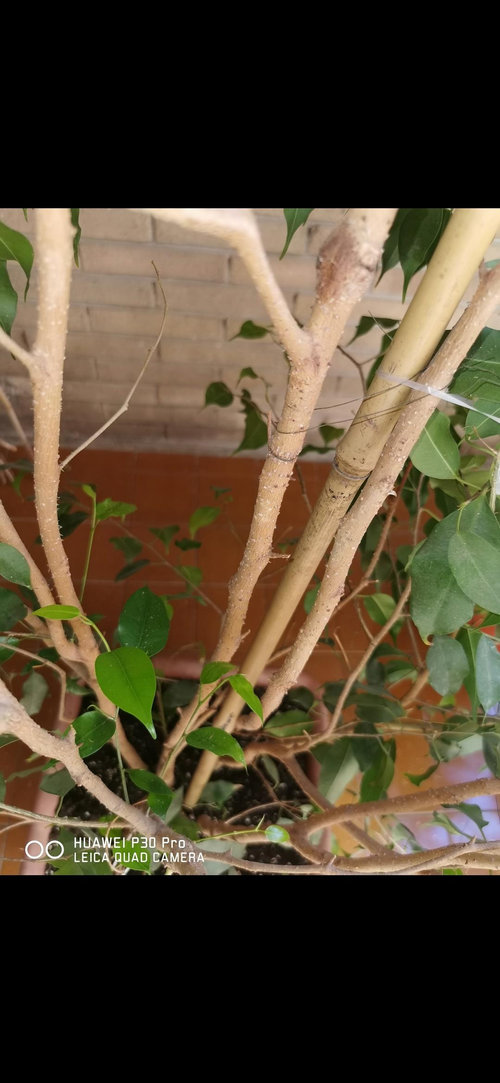
    In an attempt to straighten the plant, this trunk broke off at the point where the wire was. I put the stump in the ground, but I doubt it will take root because it is too big (I don't care).


  • 4 years ago
    last modified: 4 years ago
    Here the two plants that were very perishable at the beginning of 2019 and that I have reinvigorated (May 2019 and now).


  • 4 years ago
    last modified: 4 years ago
    I would like a plant that stands upright on its own and looks compact. There are 2 ways to make your plant self-supporting. 1) Situate it so it gets at least 8 hrs of full sun. 2) Prune back regularly. A stem that is 2m tall and laying over can be pruned back to a point where the stem is straight, even if that means you have to prune it back to 50-75cm. Trunks and branches are like sticks of wood in that a long stick of a given diameter is more flexible than a short one.

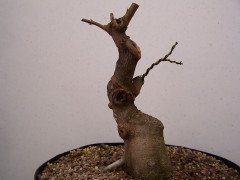
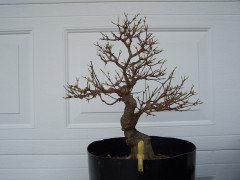
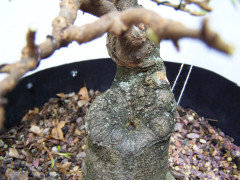
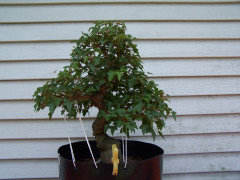
    The tree in the middle with the large white scar is a maple I grew in beds devoted to potential bonsai trees. It was about 2.5m when I chopped it. Notice I had saved a low branch to serve as the tree's new leader after the chop.

    See the progress:


    4 years after the chop, scar nearly closed completely ^^^

    Summer of '21 ^^^

    You have 2 options that will fix the issue. You can prune back the height very hard, so you have a structure which will allow you to build a tree with good eye appeal, or, you can prune back the tops to where the trunks are not lying over, then prune the branches back hard, removing those which grow almost straight up or down, and those which cross or grow back toward the center of the tree. One other possibility would be to contact a bonsai club and ask if someone would help you get it sorted out. I could do it in less than an hour if it was a tree-in-hand type of arrangement, but directing you by looking at 2D images won't work except on smaller and less complicated trees.

    Your tree could be pruned in a strictly conical shape - no problem; and, a year of pinching judiciously would ensure it's fullness and compactness, but you would end up with more of a topiary form. and would depend on the fullness of the foliage to hide the branch structure.

    That corner of the balcony looks darker than it actually is (the photo was taken against the light): I still have the ability to move it more towards the light, but it will be less sheltered from the elements in winter. You could try this: Give it full sun for the summer, then move it to a sheltered spot for winter. Here's why that will work great: The growth your tree puts on during late fall/ winter/ early spring will be lanky and weak. Ideally, you would get into a pruning rhythm that finds you pruning all the long winter growth off in May, judicious pinching until mid-late fall, then stop pinching from late fall until May's hard pruning. Pruning this way ensures that ALL internodes on the tree are tight. It makes the tree as full and compact as it can possibly be when you pair the pruning rhythm with summer pinching.

    PS1: Al, I'm not an expert like you, but I usually know how to heal my ficus benjamina. I will show you two plants that were very perishable at the beginning of 2019 and that I have reinvigorated. PS2: I apologize for my bad English. Your trees look very healthy, and that's the main thing. A healthy tree will tolerate a LOT of hard work when it comes to doing full repots (includes bare-rooting, root pruning, and a change of grow medium) and hard pruning.

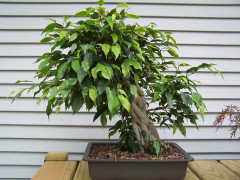
    Picture story of one of mt Ficus benjaminas:


    Intentionally defoliated to make it easier to prune and wire ^^^

    wired - starting to push a new flush of leaves ^^^


    Has about half of it's leaves. Pinching will also force more back-budding.

    Al


    Michele Rossi thanked tapla (mid-Michigan, USDA z5b-6a)
  • 4 years ago
    last modified: 4 years ago
    "There are 2 ways to make your plant self-supporting. 1) Situate it so it gets at least 8 hrs of full sun. 2) Prune back regularly. A stem that is 2m tall and laying over can be pruned back to a point where the stem is straight, even if that means you have to prune it back to 50-75cm. Trunks and branches are like sticks of wood in that a long stick of a given diameter is more flexible than a short one".

    I don't have a balcony where I can spend 8 hours in the sun (or, better said, there is a balcony, but in a few weeks the number of hours of sunshine will decrease more and more). And then I guess I should gradually get used to the sun ... I think I'll be forced to cut it. :(

    A question: why don't the other ficuses on the same balcony have this problem? The initial problem was not the scarce hours of sunshine, but what I did with this plant, right? The other two ficuses I showed you are indoors, but only some branches hang down (and I like them because they hide the pot). By the way, advice on these other two plants as well apart from the fact that I have to change the pot (I haven't done this since 2017 and this definitely it will scandalize you if I have gotten to know you a little).

  • 4 years ago

    I made a mistake and hit 'send' before I was done with the post. I'll wait for another reply from you.

    About me - I don't mind if someone takes a shortcut or even decides a plant isn't worth any effort beyond the bare minimum. I'm all about making sure you get the info you need to make an informed decision. I'll admit to letting a good measure of 'this is what I'd do if it were mine' into my posts, but still, what you/others decide to do doesn't bother me. Occasionally, I'll spend a lot of time explaining something and offering suggestions, only to find that the member decided to try the easiest suggestion that might be well wide of the mark, but even then I just figure that at some point in the future, someone will come along and find the information in a search, often years later, so it doesn't bother me.

    Let me know if you want to get deeper into the 'topiary' thing.

    Al

  • 3 years ago

    Remember this ficus whose trunks couldn't stand straight? I started pruning it yesterday: these are the branches I cut.


    Actually I should prune further for two reasons: 1. the trunks still won't stand up by themselves and bend due to the unnatural way I made it grow (I will never do it again) and because the main trunks that bend without being tied on the side they also have 30 cm between one branch and another and I would like them to thicken (if it is possible).


    Now I'll show you some photos of how the ficus looks today after pruning. If in the first photo it seems passable, in the second photo, as you can see, it already bends to one side as I have disengaged the top from the rod: I could prune as I indicate in the third photo, even if this way I lower the plant a lot. I'm very conflicted.


  • 3 years ago

    I'd go with the shortest version, and shortening will definitely stiffen them.

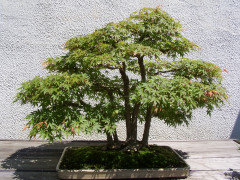
    When you have a grove or clump planting, the best way to handle multiple trunks is to choose the thickest trunk to be the tallest - the 'leader'. The subordinate trunks can then be pruned so the apex turns away from the planting's central axis - so they serve as branches instead of trunks that confuse the eye because your tree has several heads. You can see this in practice in this composition of a Japanese maple grove. Notice how there are 5 trunks, 3 of which are serving as branches and one of which serves sort of as half branch, half part of the apex, but is really more of a branch. The general idea is to make a multi-trunk planting into a composition with the general outline of a single tree.

    Al

    Michele Rossi thanked tapla (mid-Michigan, USDA z5b-6a)
  • 3 years ago
    last modified: 3 years ago

    The plant now looks like this:


    In two weeks could I try to loosen the roots or are there too many leaves left and the plant should be more bare?

    Some more practical questions.

    Do I have to cut the double branch indicated with the double arrow? And the thinner ones indicated with the red arrows?


    More in detail:


    As you can see, some branches are melted because I made the mistake of tying them with a wire.

    Same questions for this other trunk:


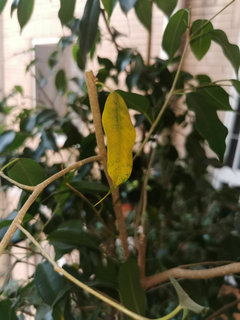
    One last curiosity: was it predictable that this leaf would turn yellow after cutting the trunk just above?


  • 3 years ago

    In two weeks could I try to loosen the roots or are there too many leaves left and the plant should be more bare? If you are planning to prune more, do it when you repot. People often admonish others that "you aren't supposed to prune the top when you transplant because the plant's food is synthesized in leaves". That's fine and dandy if you have a plant in a nursery pot or one that's balled and burlapped, because the plant will have already balanced the ratio of roots to shoots; however, when you start pruning roots during a repot, you sometimes need to prune back part of the top so the plant doesn't start wholesale shedding of entire branches or simply collapse due to a water deficit.

    Do I have to cut the double branch indicated with the double arrow? And the thinner ones indicated with the red arrows? I'm not sure what you're asking, but any time you're working on the top 1/3 of the tree, it's a GOOD thing to be looking for how to cut the thick branches back to thinner branches that can take over as the new branch leader. It looks unnatural to have heavy branches at the top of the tree where your eye has been trained to expect the branches to be twiggy.

    The branches that have fused will eventually be out of sight inside the canopy once you start pinching to increase ramification (more branches and leaves).

    One last curiosity: was it predictable that this leaf would turn yellow after cutting the trunk just above? No. The leaf didn't die because of anything to do with the branch having been pruned - probably natural senescence (aging). I expect a new branch will grow from the formerly suppressed bud in the axil of that leaf in the process of being shed.

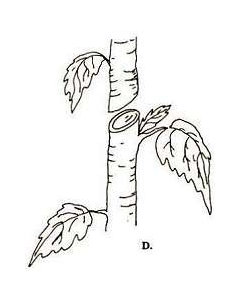
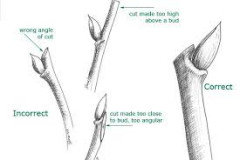
    You might find some value in these drawings that show how to angle your pruning cuts so they are less conspicuous:


    Al

    Michele Rossi thanked tapla (mid-Michigan, USDA z5b-6a)
  • 2 years ago
    @tapla (mid-Michigan, USDA z5b-6a), since I had made the mistake of tying the branches and forcing them to grow upwards and they continued to bend, at the beginning of June I pruned the roots and took advantage of this to drastically prune the branches too. The point is that as you can see from the photos there are long trunks without branches/leaves and I don't know how much they should be cut. Should I have been more drastic? From the beginning or at a later time?

    June 13th:


    June 22nd:


    Today July 27th (so you can have a view of the plant on 4 sides):


    The first of these last 6 photos shows how the side exposed to the light is much more lush (the incredible power of light).


    Suggestions? It may be difficult to give from a distance... Should I cut the long trunks that only have branches at the base or should I cut the branches so thick at the base?

Sponsored
Snider & Metcalf Interior Design, LTD
Average rating: 5 out of 5 stars25 Reviews
Leading Interior Designers in Columbus, Ohio & Ponte Vedra, Florida