Software
Houzz Logo Print
ykindschi

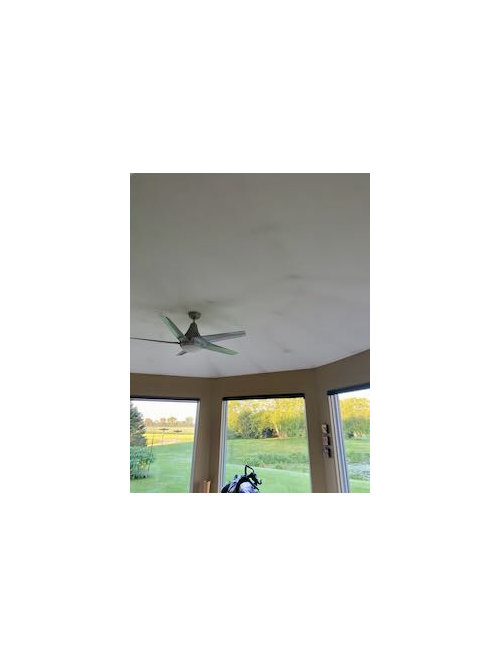
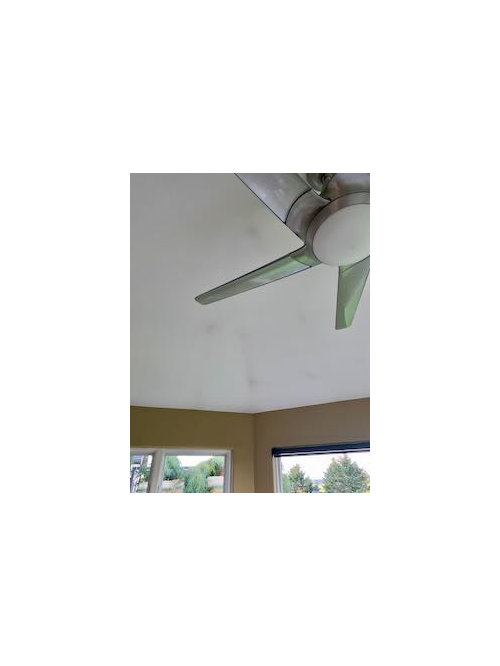
Ceiling drywall ghosting - dark markings

4 years ago
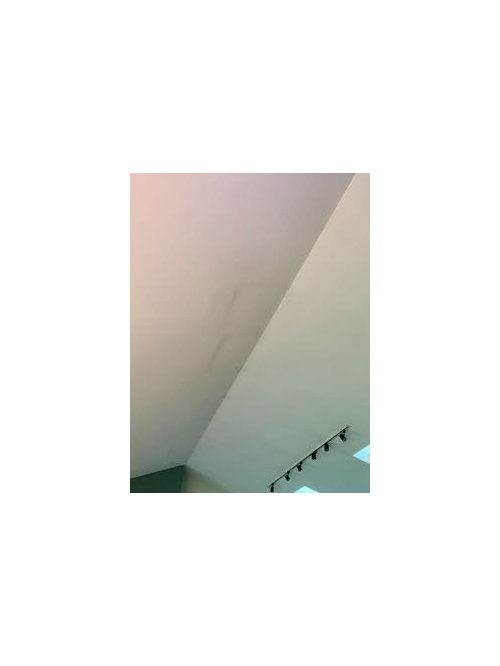


Hoping to get insight into these ghosting marks on our ceiling.


Timeline:


-Built 2001 - 2360 sq ranch house w/unfinished 2200 sq basement.

-Great room ceiling (vaulted ) started ghosting around 2011? (first 2 pics)

-2012 - all wood floor and carpets removed. Installed LVP throughout. Stain primer and painted ceiling. Marks were painted over w/proper prep.

-2017 - new shingle roof, changed to ridgecap venting, added 11" blow-in insulation to attic spaces (because that was supposed to stop the trusses from absorbing the dirty particulate and wicking into drywall on ceilings).


-fast forward to 2020, few marks start showing but then it was almost like mushrooms, they are "everywhere"

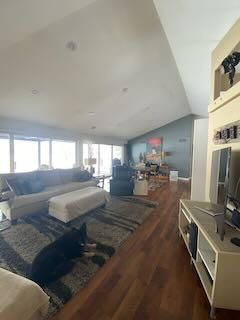
-2022 many marks showing in other rooms besides original area, including sunroom (pic 3/4), master bedroom (vaulted), and master bath.

-not sure if I am going crazy, but I do see some cracks in the seams of drywall or rippling of corner drywall tape (not sure if this was there and I just never noticed before). In 21 years it is reasonable if our house settled.


Consults have included:

Roofer - original installer and 2nd opinion person - to double check ridge vent width, etc...

HVAC - to discuss whole home dehumidfier or other system if it is moisture issue

Builder - for other ideas to remedy

Insulation - had blown-in installer from 2017 back to see if he had ideas.

Insulation - have call into another company to get another opinion on soffit venting being added/clogged.

Painter - to hear of other places they may have encountered.


When we built our soffit venting was code for every other truss space.


Yes, our house does hold higher relative humidity. Yes, our house feels like an oven in the summer. Yes, we get some condensation on the windows in winter. We are located in Wisconsin. No shade trees on the house. Lots and lots of windows and exposure to thermal gain/loss. No we don't have a lot of houseplants or any reptile pets/aquariums. No I don't burn a lot of candles. We do have AprilAire but do not run it. We do keep our house on cool side for all seasons.


I have some theories but I wanted to put this out on Houzz discussions to see if there might be an angle I haven't considered. I want to solve the problem before we fix the ceiling.


Thanks in advance for looking at the pics and reading the post.


Comments (13)

  • 4 years ago

    @louis thank you for your answer. Do you think it’s moisture specific to the attic vs too high RH in the home? I will tell you we probably have too much insulation. When the 2nd layer was blown in I speculate they blocked some of our soffit vents. Going to check that out.

  • PRO
    4 years ago

    I believe you have a ghosting problem, but I don't believe it's related to attic moisture. Rather, I believe it's related to high indoor relative humidity. You can get localized condensation on the drywall under ceiling joists--the R-value of which is lower that the surrounding joist cavities which can attract dust and particulates.

    To manage the problem, I suggest you ensure all point sources of moisture are vented to the outdoors. That includes bathrooms, cooktops, and maybe the laundry room, too. Make sure bath vent fans are properly sized, function well (their function can be reduced by lint build up) and are actually used (my teenager was great at creating a tropical rain forest.) I have timers on my bath vent fans and set them to run for 30 minutes after a shower.

    I'm not a fan (pardon any pun) of humidifiers and I recommend you don't use one.

    Minimize any indoor smoke generators like candles, and smoking. Make sure fireplaces and wood stoves draft properly.

    ykindschi thanked Charles Ross Homes
  • 4 years ago

    You need to get in the attic. Moisture in the attic, none to be concerned about inside in Wisconsin.

    ykindschi thanked 3onthetree
  • 4 years ago

    @User thank you for your pro comments. I will say our A/C is undersized, so it shouldn't be that. I did meet w/HVAC contractor about adding whole home dehumidifier but he suggested just using air exchanger unit. (quoted $3600). As far as vaulted space, sounds like we need more venting but we have enormous amount of insulation in the attic and truss space. Original required amount during build (2001) and then added 11" back in 2017. Now code is longer trusses and baffles at every truss, ours is every other and I think our truss overhang is 10" - but don't quote me.


    Sidenotes - we are considering going geothermal.


    We do live in a low marshy area in the middle of ag land.


    Wonder if we should add ceiling fans to great room?


    I think we need to add baffles to the continuous soffit venting so they will be at each truss vs every other. Making appointment for another insualtion contractor to come and get bid for that. I don't know if airexchange is enough. (Does $3600 sound reasonable for that system?).


    We do have newer bath fan venting. Our kitchen doesn't have vented hood but we are going to remodel and include that. It's just the 2 of us but I bet we would be surprised at moisture we create.


    Last winter inside we held 40% or more on RH. 😢


  • 4 years ago

    @Charles Ross Homes thank you for your insight. Yes, we need to work on venting! Your explanation of the condensation makes sense. Our bathrooms all have new vents but we aren't always great about running them. I cleaned our dryer vent last summer and OMG - that was scary - but it does vent well to the outside. Do not have kitchen vent, but will remodel kitchen in next year and add that. I think we have high indoor RH but possibly also attic venting issue. Will work on all the things suggested on my post. Very good info. Responded to @User with longer answer too. Thanks all!!!

  • PRO
    4 years ago

    You may have an attic ventilation problem; I just don't think it's the driver of the ghosting problem. Our practice is to install continuous soffit vents and as much ridge vent as we can. If you get a lot of snow in your area, you may need to consider alternatives to ridge vents.


    I have Honeywell DR90 dehumidifiers integrated into my HVAC system (one for each floor) for "shoulder" seasons when neither heating nor cooling is required. They have a ducted outdoor air supply and can provide ventilation if desired. If you have relative humidity problems during shoulder season, you should consider a dehumidifier. A fresh air ventilator won't provide the same ability to control relative humidity as dehumidifiers will.

  • 4 years ago

    Yes, our house does hold higher relative humidity. Last winter inside we held 40% or more on RH. 😢

    A humidity of 40% is at the low end of comfortable. What is the typical temperature and humidity range in the summer?

    I did meet w/HVAC contractor about adding whole home dehumidifier but he suggested just using air exchanger unit. (quoted $3600).

    Did the HVAC contractor explain why an air exchanger would solve the problem?

    When was the last time you went into the attic to inspect it?

  • PRO
    4 years ago

    "A humidity of 40% is at the low end of comfortable."

    The good folks at ASHRAE published a standard for occupant comfort, ANSI/ASHRAE 55-2017 and addendum. There is no published lower limit for the humidity ratio except in the case of excessive air speed. There may be individual health considerations such as dry skin, etc. which would require humidification and should be evaluated on a case-by-case basis. Keep in mind that in northern climate zones, winter humidification increases the risk of condensation inside exterior walls. For that reason, I'd avoid humidifiers unless absolutely necessary.

  • 4 years ago

    @mike_home The humidity in the summer flexes based on whether we run a/c or not. Our insulation person told us summer is not the time to measure for the issue. But to answer your question, at present it is 74º outside, 72º inside, 94% humidity outside, 49% inside and I turned the a/c off last night at bedtime and I'm sitting here feeling hot so I'm turning it back on.


    Insulation person, HVAC people, etc... say in Wisconsin winter humidity should average 15%. He told us to open the house once a week for 10 minutes to get the wet air out.


    I have not been in the attic. We have access in our garage but that hits the scissor trusses about 8 feet in, and there is so much insulation it is impossible to pass or crawl around. I can access the other end of the house but haven't. All the experts that have looked say we need to get more soffit baffles or check for plugged baffles. We can't do that. My husband and I both have lung damage from a severe bout of Covid, so we are not playing around in our attic. It's very hot here, so until fall, I wouldn't make anyone work up there. We are young enough to do it, but no longer have the lung health to do it.

  • PRO
    4 years ago

    "Our insulation person told us summer is not the time to measure for the issue"

    Nonsense. High indoor relative humidity is a problem irrespective of when it occurs. It can result in excessive movement of wood floors and trim and elevates the potential for mold and mildew growth, and most likely the ghosting which you're seeing.

  • 4 years ago

    One theory being proposed for the cause of the ghosting is high humidity. This is the reason I am asking about it.

    A humidity level of 15% in the winter is not good for human beings, furniture, and wood floors. I don't understand why professional HVAC and insulation people are telling you this. The advice to open your windows once week for 10 minutes in the winter is absurd in my opinion. Your house is doing well if it can maintain a 40% humidity level during the winters of Wisconsin. The winter design temperature for Wisconsin are in the -2 to -16 F degrees. My advice is to not open your windows in the winter. I also recommend not opening the windows in the summer when the humidity is high. You should monitor your humidity everyday of the year. Don't turn off the AC. If you want to save some money then do a 3-4 degree set back.

    If you do have a ventilation problem, then you could have black mold growing in the attic. Someone you trust needs to go into the attic and see what is going on. Have them take photos or do a video transmission so you can see it.

    ykindschi thanked mike_home
  • 3 years ago
    last modified: 3 years ago

    I've done more work on this. So here is where we are:

    2nd Insualtion Contractor, 35 years experience. Did not like that our 2nd batch of blown in was cellulose blown on top of the original which was fiberglass. That was his biggest hangup. He said we have adequate vapor barrier and the plywood sheeting is in excellent shape with no mold. He was concerned the ridge vent wasn't cut wide enough. Says there is no blockage of proper vents. Is mystified why we have issue but thinks it could be moisture trapped in the fiberglass insulation not able to breathe out thru the cellulose. To have it vacuumed out and reblown could be upwards of 12k. He has never seen anything like this and really didn't have an answer.

    2nd builder expert here, doesn't like mesh ridgecap and thinks we should switch to omni vent

    Original roofer - willing to switch out to omni vent (if I can get ridge to match the shingle, shingle color may be discontinued - building supplier looking into it). Says where he has used it, he has had to shovel snow out of attic space but thinks our location wouldn't be an issue with that, but can't guarantee it.

    Original roofers other workers (family - generations of builders and very good at what they do) - think we should add an attic fan for ventilation rather than change out to higher omni vent. Also think we should add dehumidifer versus air exchanger. Knows we live in a marshy area near ponds and keep circling back to thinking our air has higher humidity here. Even though one HVAC person says that other homes exist in these same conditions without problems. He also thinks our carpeting and wood floors absorbed moisture and with switching to vinyl plank we changed the indoor conditions and those surfaces hold a lot of household humidty.

    You know how when it rains, it pours? With all this going on, we are distracted by deciding whether to put in Geothermal by years end. Don't know if upgrading our HVAC of 21 year old units would add more fan/air flow/change how house air operates. Don't want to spend $3600 for air exchange if that doesn't solve it.

    Right now it is chilly out, 2 days in a row of fall-like weather, leaves are turning. Outside temp 54ºF / 81% humidity outside. Inside one guage says 67º/52% and the other says 68º/47%.

    I realize every contractor is begging for help, short staffed, and I hate bugging people. I am not sure if I should contact another attic person/roofer? I don't like making more work for people. I was hoping to resolve this with simpler solutions rather than throwing baby out with the bathwater.

    More ideas?