Software
Houzz Logo Print
gardentides

Insulating cement planters

3 years ago

Hi everyone,


I am using large concrete pipes, 42" in diameter, as faux planters for Black cedars. The cedars will rest inside of the container for the Winter. This was a specific request from a client for an event.


I'm looking for advice on what you may think is a solution to possible problems. Here is currently what I am planning to execute this request.


1. Put thermal insulation on the inside of the concrete planter.

2. Place tree in planter.

3. Fill with straw.

4. Add a thin layer of mulch on top to keep the straw from blowing out.


I'm in Zone 5b.


Thoughts?

Comments (13)

  • 3 years ago

    z5 is about half the US ad wildly divergent .... how about a big city name..


    does the ground freeze in your version of z5?


    width of pot noted.. how tall???


    the most important thing in a pot is the media.. not the plants.. what are you planning to use inside the pot..


    shall we presume the pots will be bottomless???


    are you doing this now .. do you already have the plants ... we they raised locally ... in other words.. do you think they went thru a z5 winter ?


    all that said.. why do you think they need protection from winter ..


    do note.. black cedars are actually Thuja occidentalis 'Nigra'... which means they are not cedars.. this is very important in searching out info since arbs can take a lot more cold than a true cedar .. like down to z3 instead of z6 min ...


    just curious.. for most of the world an arb is an arb is an arb.. why does the client want nigra???


    frankly..... im not sure you need to mess with any insulation in a 42 inch wide pot .. you have much bigger issues than cold media ...


    ken

  • 3 years ago

    no insulation needed

  • 3 years ago
    last modified: 3 years ago

    Since Thuja occidentalis is listed as hardy to zone 3, you might not need insulation to ensure the plant(s) remain viable; however, it would be a benefit if the insulation is used appropriately. You can use it to your advantage or disadvantage, depending on whether or not the "pots" are resting on the ground or raised above the ground.

    The plant cannot generated any degree of significant heat, so you'll need to depend on using the insulation to trap heat from an extraneous sources. Usually, that would be geothermal heat rising from the soil or a cement slab. This would mean that the walls of the walls of the pot would get insulation (either inside or on the outside of the pot), the top should be mulched with straw or wood chips (fewer weeds from wood chips) , and the bottom should not be insulated as you do not want to prevent heat from getting into the pot.

    If the extraneous source of heat is the outer wall of a heated building, the pot should be against the building and all sides of the pot except the side against the building should have some form of insulation.

    Simply "insulating" a pot does nothing for the plant unless you have that extraneous source of heat and a plan to trap it so it benefits the plant. No source of extraneous heat = no advantage in insulating pots.

    Al

  • PRO
    3 years ago

    No insualtion will protect a plant in a pot the plant will still be exposed to the elelents. Ia m trying to understand the issue so maybe some pics .

  • 3 years ago
    last modified: 3 years ago

    No insualtion will protect a plant in a pot ..... That's inaccurate, Pat. Even a foam cooler over-turned and covering a potted plant resting on the ground can increase temperatures within the over-turned cooler >15* above ambient air temperatures. If not for the insulative value of rose cones, they would be another on a long list of ineffective products aimed at the gardening community.

    The same strategy can be used by those of us who harbor zonal envy, wishing to maintain favored plants hardy only to USDA zones 2-3 higher than where we live. To over-winter, simply set the plants on a garage floor and cover them with an over-turned cardboard box to act as insulation. Just as in the case of the foam cooler outdoors, a cardboard box traps extraneous geothermal heat rising through the garage floor, raising temps inside the box as much as 15-20* above ambient air temps. In both cases (cooler/ cardboard box), the colder ambient air temperatures are, the greater the temperature differential between air in the cooler/ box and ambient air temps.

    Again, the key element is there must be an extraneous heat source (the earth, perimeter wall of a heated building, propagation mat, passive solar gain, .....) providing an extraneous source of heat which can then be trapped through use of insulation. The interface (outdoors) where the insulative box/ cooler contacts the soil should also be mulched to prevent convective air currents from moving in and out of the box with the convective activity diminishing the effectiveness of the set up.

    Al

  • 3 years ago
    last modified: 3 years ago

    Hi Al.

    Would a heavy tarp be just a good as a box to cover with?

    I need to hold my fig trees over the winter in my un heated garage in dormant stage.

    I must also add that this garage is not insulated. I can literally see outside through tiny rack of the walls. The outside air would be the same as inside in the dead of winter.

    This would be great if so)

    Mike

  • 3 years ago

    Would a heavy tarp be just a good as a box to cover with? No. A plastic tarp would lose a considerable amount of heat by conduction through the tarp, and tarps that are gas permeable would lose a considerable amount of heat through convective air currents.

    I need to hold my fig trees over the winter in my un heated garage in dormant stage. You should be ok if you allow them to rest directly on the garage floor and against the wall that divides the house from the garage. You'll need to be careful about leaving the garage door open for extended periods when temps outdoors are more than 10*F below killing root temperatures (usually considered to be 27*F).

    Al

  • PRO
    3 years ago

    That means the plant is covered there is no mention of covering the trees in this case.

  • 3 years ago
    last modified: 3 years ago

    Those were examples of insulation used appropriately, and there are others. E.g., if a plant/pot combination is directly on the ground, is surrounded on 4 sides by foam or wrapped batt insulation, and the top of the soil is mulched, all/ any of the 3 forms of insulation will help to retain extraneous heat, and would work exponentially better when used judiciously in combinations; which means your original comment is still as inaccurate as it was when posted. The main problem is, it paints with much too broad a brush; so as a stand-alone comment w/o qualification, it's an unintentionally misleading error.

    I've measured the effectiveness of various insulating strategies with regard to the amount of temperature differentiation with a digital high/low thermometer, but this is something anyone with a basic working knowledge of physics should be able to intuit. Some strategies work well, some middling, some not at all.

    Al

  • 3 years ago

    Al, if the poster doesn't mind I'd like to ask another question.

    If you were to wrap up planted trees that need insulation, in ground, what would you wrap the trees with?

    I have 4 planted figs.

    Thank you)

  • 3 years ago

    If you had 2 Styrofoam cups of water and put 1 in a chest freezer set at 0*F, and a the other cup in the same freezer but first placed inside of a Yeti cooler of the highest quality, the temperature of the water/ice in both cups will eventually equalize at 0*F; only difference being the rate at which the temperature change occurs will take considerably longer for the cup in the high quality cooler.

    As I noted, wrapping a tree or pot with insulation does very little in the way of saving a plant from extreme temperatures UNLESS you have a plan to trap heat from an extraneous source. If it was possible to create an extremely thermal-efficient surround that encases a planted tree, the average temperature would still be almost exactly the same as a surround not as thermal efficient; the difference being in how wide the temperature swings might be. If you have an efficient surround and ambient temperatures vary from 10*F to 32*F, the average temperature inside might vary from 18* to 24 degrees for an average of 21*. Temps in a less efficient set-up would range more widely when subjected to the same range of ambient temperatures, say from 12-30*; however, the average of 12-20* is still 21*. The problem is, it's just not practical to build such an efficient enclosure for no gain other than mitigation of the rate of change and the hope that you wont' have 2 days in a row so cold it forces root temps below killing lows temps.

    I don't know how big these trees are, so I don't know what might be practical insofar as trying to keep them viable. You could build a plywood enclosure with a top and put some sort of heating element in the enclosure, but anything that converts electricity to heat is going to be an expensive proposition.

    Al

  • 3 years ago

    Al, thank you.

    The fig trees are meant to grow in zone 6 but it still may be too cold for them exposed here. They are planted up against the sunny side of my house. They are about 5 feet high.

    Last year they died back to the ground but took all summer to grow that tall again and bare fruit but the fruit ripens way too late.

    I was hoping to keep the trunks protected so that I would get a great start next spring.

    Someone had suggested piling leaves around the base and wrapping the stems up with fiber glass roll but wasn't sure what to think before I asked here.


  • 3 years ago

    Hi everyone,


    Thank you for all of the comments. My client wanted to go ahead with it.

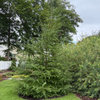
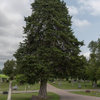
    This is what it looks like:

    Concrete planters with an open bottom 3' high and 4' in diameter.

    In it are White cedars (250cm), root ball still in burlap and surrounded by mulch.

    I've explained everything about roots freezing to my client, but they wanted to go ahead anyways - all I can do is hope for the best.

Sponsored
J.Holderby - Renovations
Average rating: 5 out of 5 stars4 Reviews
Franklin County's Leading General Contractors - 2X Best of Houzz!