Software
Houzz Logo Print
webuser_758024807

Crawl space insulation

3 years ago

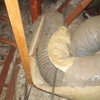
We recently had a bedroom addition put on . The bedroom is very cold. Theres a crawl space below the addition. Only the walls of the crawl space are foam insulated. Nothing on the celing. I asked the builder why no insulation on the ceiling and he said its a conditioned space and doesnt get insulated . Its very cold in the crawl space and seems to be the obvious cause of the cold room . Ive researched but couldnt find a clear answer. Should it have been insulated by the builder?

Comments (23)

  • PRO
    3 years ago

    How is the crawl space "conditioned"?

  • 3 years ago

    Well its a concrete slab with cinder block walls. Walls were spray foamed. Thats it but he says its considered conditioned

  • PRO
    3 years ago

    There are a number of details that need to be considered before deeming a crawl space "conditioned." If your builder insulated the perimeter foundation walls, you're well on your way to achieving a conditioned crawl space.

  • PRO
    3 years ago
    last modified: 3 years ago

    Is there any means provided to heat or cool or ventilate the space?

  • 3 years ago

    There is one air vent to the exterior. The duct work that feeds the bedroom runs through the crawlspace but the space is nit heated or cooled in any way

  • PRO
    3 years ago

    If you have duct work that runs through the crawl space, it may indeed be a conditioned crawl--either intentionally or by duct leakage. To comply with the 2018 IRC it would need to have a ventilation rate of 1 cfm/50 SF of crawl space area.

  • 3 years ago

    Ok whether intentional or not, if its considered conditioned does that mean its not supposed to be insulated on the ceiling? It just doesnt seem to make sense as its so cold in the crawl space and all that cold air is going right through the floor

  • PRO
    3 years ago

    Where is the project located?

  • 3 years ago

    Maryland

  • 3 years ago

    Are you saying there is an open vent from the crawl space to the exterior? If so that would be like leaving a window open and it doesn't seem like it should be considered a conditioned space. There could be concerns about freezing pipes if your underfloor is insulated but insulating your underfloor could be done with steps taken to protect any vulnerable plumbing.

    HU-758024807 thanked mojavemaria
  • PRO
    3 years ago

    Lots of info: https://www.google.com/search?q=conditioned+crawl+space


    If your floor is cold, then it makes sense to insulate, or to warm up the crawlspace.

    HU-758024807 thanked PPF.
  • 3 years ago

    No plumbing in crawl space. Small air vent to exterior on one side and small metal access door on other side with no insulation

  • PRO
    3 years ago

    Conditioned crawl spaces do not have any vents to the outside. That needs to be filled in and insulated.

    HU-758024807 thanked BobH
  • 3 years ago

    Yes definitely planning on insulating. It was expensive addition and trying to determine if it should have been done by builder before i put out more money

  • PRO
    3 years ago

    Whether or not your builder should be responsible for constructing a conditioned crawl space would be dictated by the contract plans and specifications.

  • PRO
    3 years ago

    Think of your crawl space as another room in your house with an air supply duct and a means for return air for heating and cooling, insulated walls, and no openings to the exterior other than windows or doors. That would be a 'conditioned' crawl space as far as I am concerned.

    HU-758024807 thanked Mark Bischak, Architect
  • PRO
    3 years ago
    last modified: 3 years ago

    "Arguably, the contractor did not meet a standard - like code - that you should be able to hold him or her to. A vented crawl is not a conditioned crawl."

    A "conditioned" crawl space is not the same as an "unventilated" crawl space although the 2018 International Residential Code section R408.3 uses the term "unvented" crawl space to describe conditioned crawl spaces so there's plenty of sources of confusion.

    To meet 2018 IRC requirements, a conditioned crawl space (termed an "unvented crawl" in the code) needs to be conditioned by any of the three alternatives specified in the section R408.3. All of the methods provide ventilation of the crawl space. Two of the alternatives require a return path for air supplied to the crawl space which makes me wonder if there were any adults in the room when that portion of the code was approved. I don't know about you, but I certainly don't want air that's taken a tour of my crawl space to be recirculated through my home which is what a code-compliant system would do. A better approach, in my opinion--to be worked out with your local code official--is to supply the necessary air flow rate for ventilation and install an exhaust with a damper like a dryer exhaust. You could also forgo the vent since the code-required flow rate of 1 cfm/50 SF of crawl space area isn't going to pressurize the space.

    Regarding insulation, insulating the perimeter walls and rim joist would be appropriate for a conditioned crawl space with the R-values and other details as specified in the applicable building code. Insulating under the floor system would not be appropriate.

  • 3 years ago

    "Well its a concrete slab with cinder block walls."

    What kind of foundation is on the existing house? In Maryland, I would assume a basement? Where is the metal access door from, the outside or from the existing house?

    After going to the expense of installing a concrete floor slab in a crawl space, it's probably best to consider this space a basement for really short people. That would want it to be an "unvented" crawlspace. So you would remove the open vent to the outside and add an air supply from the furnace into the crawlspace, and a transfer grille/duct to the existing basement. In this scenario there is no pressing need for floor (ceiling of crawlspace) insulation. That is an easier and less intrusive option for an "unvented" crawlspace than the other two choices, which are a dehumidifier, or a continuous exhaust fan.

    If you would like to keep the open air vent to outside, then that negated installing all the wall insulation to begin with. But you would want to insulate the floor (ceiling of crawlspace) in that scenario, and the expense of the spray foam on the walls was just a freebie for the contractor's boat payment..

  • 3 years ago
    last modified: 3 years ago

    If the crawlspace is accessible from the interior without bellycrawling and is useful, properly condition it. See Building Science Corp. publication linked to earlier.

    If the access is from the exterior only, completely isolate it from the interior of the home, ideally with spray foam on the ceiling.

  • 3 years ago

    Interesting Worthy, that advice is not considered best practice around me. Unvented and insulated crawls that are typically conditioned are considered best for energy use, mold control, access to equipment etc. Probably because ducts are typically in the crawl as they are in OPs situation and summertime humidity is a problem in East US. All of Maryland is near the coast.

    Building Science Corp tends to agree.

    Without ducts, your approach is reasonable but you do lose some access and you will still have a nasty crawl.

    OPs actual situation is a bit hard to understand. Metal door to me would assume only access from outside. But it would also seem to be old - I typically see wood on newer access. Also, a slab in a crawl is not cheap and not sure why it would be done on new construction in a vented situation. But this is regional for sure.


  • PRO
    3 years ago

    The International Residential Code allows for construction of either a (traditional,) vented crawl space or an "unvented" crawl space. Both designs require ventilation and have specific requirements for how to achieve it. If you seal up a crawl space and make it a thermos bottle insulated on all surfaces, it won't conform to the requirements of either crawl space in the prescriptive code without ventilation. If you want to propose an alternative to the options in the prescriptive code (and I recommend it) consult your local code official about submitting a code modification request.

Sponsored
Custom Home Works
Average rating: 4.6 out of 5 stars10 Reviews
Franklin County's Award-Winning Design, Build and Remodeling Expert