Software
Houzz Logo Print
rouge21_gw

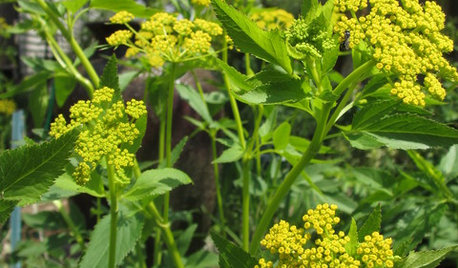
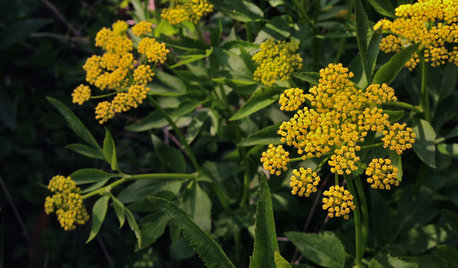
Zizia aurea (Golden Alexander)?

3 years ago
last modified: 3 years ago

I have a "wild and woolly" area of garden (mostly FS to PS) for which I am always on the lookout for native pollinator plants that can hold their own w/o my 'help'. But I see some writeups that it 'prefers' moist conditions. What has been your overall experience with Zizia Aurea?

Comments (16)

  • 3 years ago

    (mostly FS to PS)


    ==>>> what?

  • 3 years ago

    Full Sun to Part Sun?

  • 3 years ago
    last modified: 3 years ago

    Hey Rouge, I have this on my Hardy Plant Soc. seed order. So it will be new to me (I think I have tried before but had no luck with germination). I live in one of the driest UK counties but manage to grow quite a few of the apiaceae. I find that getting the umbels through their first year can be a little challenging - they will need supplemental irrigation. (as will all new plants).

    However, the perennials will, thereafter, be well able to deal with drought, while biennials shine in the second summer. TBF, it can be hard to find a reliably perennial umbellifer: most are biennial, monocarpic or short-lived perennials.


    Ah, 'wild and woolly' is a fair description of my entire plot...I am always on the look-out for rugged and robust plants. I have a few 'new-to-me' seeds on their way (excited).

    rouge21_gw (CDN Z5b/6a) thanked rosaprimula UK (Cambridge) Z8/9
  • 3 years ago

    It does seem to greatly prefer ample water during the growing season for me.

    rouge21_gw (CDN Z5b/6a) thanked dbarron
  • 3 years ago

    Thanks for that @dbarron. That's a non starter for me in that location (ie possibly having to provide supplemental water).

  • 3 years ago

    It's a nice long-blooming native plant. Nice foliage too (basal vs flowring foliage is somewhat different). I'm sowing seed for more (from my 2 purchased plants) very soon (waiting on eye infection to clear so I can *see* the seeds).
    I think when established it would tolerate drought, but it doesn't look anything like it's full potential (I tried drier at my last house...it basically existed, didn't do much).

    rouge21_gw (CDN Z5b/6a) thanked dbarron
  • 3 years ago

    Great post @Jay 6a Chicago...thanks.


    Just curious @Jay 6a Chicago et al....do you notice butterflies drawn to this plant (as I often see in descriptions.)


  • 3 years ago

    Of course, I'm not Jay, and I didn't see much butterfly activity (but then I had NO pollinators the year before and they didn't ramp up till summer last year) on them. I'm hoping more for them as host plants for swallowtails than nectar providers.

    rouge21_gw (CDN Z5b/6a) thanked dbarron
  • 3 years ago

    Rouge and debarron. I have never seen any butterfly activity on my Zizia plants. Definately no swallowtail caterpillars, and I can't recall any butterflies nectaring on the flowers. I think my area is a dead zone for butterflies. I have several native host plants that never get used. When I was a young kid, black swallowtails were plentiful and I would see a lot of BS catterpillars on the non native wild parsnip. In more recent years I have only noticed BS catterpillars feeding on the more aromatic Apiaceae species like dill, and fennel, and the aromatic, but unrelated Ruta gravolens. The predation on these caterpillars was 100 percent. It is discouraging to see six or more recently hatched BS caterpillars on a dill plant and then find them all vanished the next day. You might have better luck having butterfly activity where you're located. Wasps seem to be the insects that are most attracted to Apiaceae flowers, and I think they are doing the majority of the predation, because birds wouldn't bother with caterpillars that are so tiny. The last time I had a BS caterpillar was a few years ago. I had taken a couple cuttings of a friend's rue plant to root, and then discovered a BS caterpillar on one of the cuttings. I ran out to the nursery and bought 2 Ruta gravolens plants. The following year I was happy to notice some Giant Swallowtail catterpillars on those same rue plants. It's fascinating that BS will always use plants in Apiaceae as host plants, with the one exception of rue. Rue is in the citrus family, and Giant Swallowtails use species in Rutaceae as host plants. I know other people who get BS caterpillars on their Golden Alexanders.


  • 3 years ago
    last modified: 3 years ago

    Our native swallowtail is now almost extinct in all parts of the UK aside from a small part of Norfolk. The caterpillars have 1 food plant (peucedanum palustre)...which is also threatened by habitat loss. Really hard to find seed, hard to keep the plants alive (and they rarely set seed). It is a reason to try a lot of different umbels..,plus, I feel extra virtuous when a plant craze has utility for wildlife (#shallow).

    rouge21_gw (CDN Z5b/6a) thanked rosaprimula UK (Cambridge) Z8/9
  • 3 years ago

    My Zizia has been thriving for several years with lots of competition abd zero care, but I agree with others that I’ve never seen much activity in it at all. consider mountain mint (Pycnanthemum muticum) it thrives with total neglect and does fine with part shade, and gets more visitors than anything else in my garden. it’s main fault is that it has some imperialistic tendencies.

    rouge21_gw (CDN Z5b/6a) thanked Markay MD-Zone 7B
  • 3 years ago

    As far as pollinators in general (usually smaller ones), the mountain mints (muticum and tenuifolium) are fantastic.

    rouge21_gw (CDN Z5b/6a) thanked dbarron
  • 3 years ago

    Yup @dbarron we do have a clump Pycnanthemum muticum. It is interesting how the bracts, not showy at all to me are so attractive to bees.

  • 3 years ago

    Tenuifolium is the prettier one, but possibly not quite as pollinator active.

    rouge21_gw (CDN Z5b/6a) thanked dbarron
  • 3 years ago

    Looked at a pic or two of Tenuifolium...that is pretty @dbarron.

Sponsored
Schlabach Woodworks
Average rating: 5 out of 5 stars21 Reviews
Franklin County's Reclaimed Wood Professionals