Software
Houzz Logo Print
heruga

What’s wrong with my cast iron plant?

3 years ago
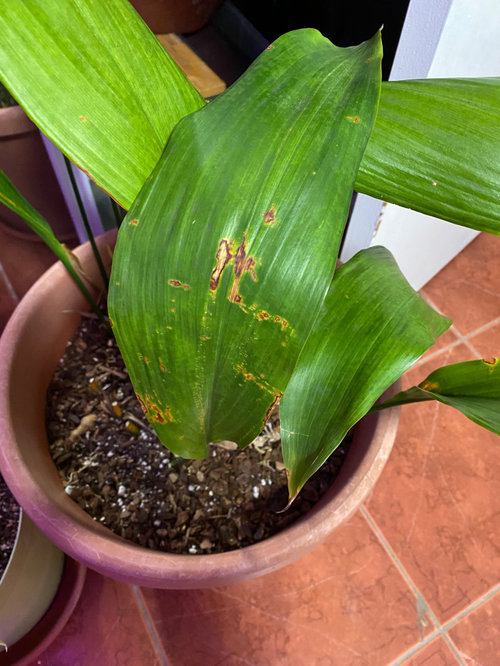
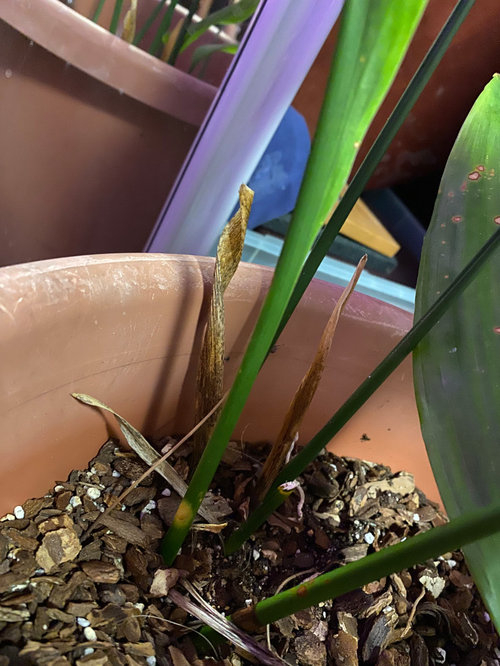
My cast iron plant seems diseased with brown lesions on stems and leaves. Could this be a fungal disease like fusarium?


Comments (11)

  • 3 years ago

    Afraid I cannot answer your question, just chimed in to say, I LOVE theese Victorian era plants. I have one in a large planter that summers outside. They are incredibly hardy. I have others that I overwinter in the ground here in NJ (7a).

  • 3 years ago

    With no sense of how the plant is cared for, it;s hard to do anything but guess. Odds highly favor the issue is related to poor root function or root health, which can be caused by one or more of a fairly long list of adverse cultural conditions.

    How do you determine when it's time to water?

    Does the pot have a drain hole?

    How do you actually water (Do you water in small sips to avoid over-watering, or do you saturate the medium completely, so at least 20% of the water applied exits the drain hole?)

    Do you allow the plant to sit in the water that exits the drain hole?

    Do you fertilize regularly? with what? how often?

    Al


  • 3 years ago

    41 north, does it stay evergreen outdoors? Does it need absolute full shade or can it thrive in part sun?


    Tapla, I water it when it feels dry to the touch. It has drain holes and is in your 5-1-1 mix. I water deeply in the shower tub in winters and infrequently, I wait until all the water drain out(few hours) and then I place it back on the saucer. I fertilize with dyna gro foliage pro and probably once a month since that’s how much it takes for media to dry out. Although I did divide them into 4 pieces last Spring, don’t know if that hurt them.

  • 3 years ago

    Dividing the clump of plants didn't hurt it, it has a rejuvenating effect because it removes the limitations imposed by root congestion.


    If your watering intervals are as long as a month, there is something seriously off in that the soil mass is much too large (planting is over-potted) or the medium is holding way too much water. I make my grow media so almost all plantings can go at least 6 days between waterings and all (except for some very tiny bonsai) can go 3 days between waterings while indoors (but I do grow under a large bank of 6000k LED lights). What is your opinion re the red flag of lengthy intervals between waterings? Soil too water retentive or plants over-potted?


    Another potential issue is, unless when you flush you're flushing so thoroughly you're actually resetting the EC/TDS (fertility levels) of the soil back to (near) zero, there's a chance you're over-fertilizing as well. If, when you water, you're saturating the entire soil column and at least 20% of the total volume of water used in that watering session exits the drain hole, you can fertilize at low, maintenance rates every time you water - 1/4 tsp/gal.

    If you are flushing the grow medium so thoroughly it resets the EC/TDS levels to zero, it is appropriate to fertilize at rates anywhere between maintenance and production levels.

    If we're able to water correctly, it's far better to tie the frequency with which we fertilize to the number of times we water, instead of to the calendar. The main questions here are, 1) How much water do you use when you flush the soil; enough to reset the EC/TDS soil levels to zero? 2) At what rate are you fertilizing.

    I think some of the leaf damage is mechanical, and some appears to be oedema. Let's see what info/ additional comments you have about pot size and the other topics I mentioned.

    Al

  • 3 years ago

    Heruga, yes, it stays green outside, HOWEVER, our deer it and it may not be the most appetizing, but they do munch on it. Will check on my clump outside. Part sun is fine, especially if outside, and they will BURN if put outside without acclimating them to it.

  • 3 years ago
    last modified: 3 years ago

    Tapla, I have to say the soil mass is too large in comparison to the plants rootball. When I split them I also barerooted them and potted all 4 divisions in 5-1-1 mix in a single 15 in diameter x 13 depth container. And that was only last Spring so roots haven’t spread enough yet to the point it can absorb all the water fast enough to keep the soil mix dry soon enough. You would know much more than me that soil medium cannot be overly water retentive with the 5-1-1. Though they do tend to get more moisture retentive throughout the years with the bark fines starting to decompose.

    I absolutely soak them(until water comes out of the bottom and I would keep watering for a bit more). Then I would get my watering can with 1/2 tsp of foliage pro per gallon water and water it. But sometimes I skip out on the fertilizing because well.. it’s a cast iron plant. The lesions on the stems also concern me, you sure that is not a symptom of something fungal?

    41 North, you are in the warmer coastal area of NJ. Do you think they would survive in northeastern zone 7a NJ?

  • 3 years ago

    "You would know much more than me that soil medium cannot be overly water retentive with the 5-1-1." When you make the 5:1:1 mix, if you want to take advantage of the superior drainage offered by pine bark, it's essential that the total volume of peat and pine bark fines (particles smaller than 1/10") are not enough to fill all the large pore space between the particles of bark. If you DO have more than enough fine material to fill all the pore space between large bark particles, you're essentially growing in the fine material. If you have a mix of marbles and just enough peat to fill all the space between the marbles, you're growing in peat.

    It's possible the lesions on the stems are related to a fungal infection of one of the several fungi usually gathered under the umbrella of 'damping-off diseases. It sounds like the amount of fertilizer (salts) in the soil isn't a part of the problem, given your added info.

    Is the pot clay or plastic?

    Al

  • 3 years ago

    The pot is plastic. I also used some old decomposing 5-1-1 mix the cast iron plant was originally in in the repotting along with the new 5-1-1 mix. Bark fines were screened to 1/2 in or less. But I honestly did not think a cast iron plant would be fussy in their choice of soil composition.

  • 3 years ago

    Here is what I would do:

    * Unpot the plant(s).

    * Melt a drain hole through the bottom of the pot at the sidewall.

    * Place a plastic or clay pot upside down in the bottom of the pot the plant is in. There should be at least 1/2" between the rim of the overturned pot and the inside of the sidewall. Cover the drainhole(s) in the overturned pot with insect screen or a piece of plastic. The cover is only to stop soil from falling through the drain holes.

    (See D below for a sense of how much excess water this simple trick will eliminate)

    * Insert a wick through the hole in the bottom of the pot. If you wish, you can melt a second hole through the bottom opposite the first; then, a single wick can be used. I use 100% rayon mop strands for the wicks. They work VERY well; so well in fact, that they allow me to water plants in the 5:1:1 mix on a schedule, which is supposed to be taboo.

    * When you water, water thoroughly so you wet the entire soil column. Tip the just watered pot at a 45* angle (see B above) so a drain hole with a wick through it is at the lowest point (see E above). The wick should hang at least 3" below the pot bottom until it stops draining. It should drain all or almost all of the excess water the soil holds.

    See the mophead in the image below (along with some of the repotting tools I use).

    The following sequence shows a wick set-up for pots with a single drain hole. The wick works better when the hole is through the bottom at the sidewall.


    I honestly did not think a cast iron plant would be fussy in their choice of soil composition. Most plants commonly grown as houseplants (other than cacti and some succulents) do not vary much in what they want insofar as a grow medium and moisture levels. They almost ALL want a medium that is evenly damp or moist with plenty of air porosity to drive root function. Where they DO vary is where the limits to what they will tolerate lie. The most commonly grown houseplants all tolerate indoor conditions. Some are known to tolerate low light or dry soil conditions better than others, but very few will tolerate the watering cycle that includes a large fraction of roots completely inundated for such long periods. A well-made 5:1:1 mix will (structurally) last much longer than media based on peat/ coir/ compost/ composted forest products, and can generally be watered almost at will without serious consequences in the form or limited root function or poor root health.

    The reason a 5:1:1 mix with too much fine material can't offer the same benefits as a 5:1:1 mix with an appropriate fraction of fine material is exactly the same reason that adding a bit bark and perlite to a poorly made commercial mix doesn't work. It is essential the the volume of particles larger than about 1/8" make up somewhere around 80-85% of the mix.

    Examples: A) If you have a jar of peat and add an equal measure of pine bark thinking it will improve aeration, it will be a failure because there is more than enough peat to fill all pore space between bark particles. B) If you have a commercial grow medium you feel is holding too much water and try to amend it with pine bark and or perlite, thinking it will improve aeration, it will also be a failure unless you add so much bark and perlite that, combined, they make up a fraction of the medium by far larger than the original soil you started with. In fact, adding pine bark and or perlite to a water-retentive medium continually DECREASES o/a air porosity until reaching "threshold proportion", where there is no longer enough fine material to fill pores between the coarse material. From that point on, adding additional coarse material significantly increases o/a aeration.

    Al

  • 3 years ago

    That is a unique idea, though it does sound like a lot of work. May try that on my next repot. I always use pure peat, pine bark fines, and perlite to make the 5-1-1. Never used commercial mix as they usually have fungus gnats in it. But sometimes when I repot, I can't completely bareroot it(was able to for cast iron plant but not for potted trees) so the old soil still has to be attached to the rootball and because it is old, it's decomposing and that causes drainage disparities. But as far as what to do with my potentially diseased cast iron plant, will repotting in better draining potting mix improve it or do I just get rid of it at this point?

  • 3 years ago

    If you have a 5:1:1 mix that has an overabundance of fine material, adding more coarse material (and an appropriate measure of lime) can rectify excessive water-retention. The critical element being you won't gain any traction unless there is not enough fines to fill all the spaces between the coarse materials. The gritty mix is so productive because the particles are ALL large enough that the mix remains well aerated from the top of the soil column to the bottom. That CAN be achieved with the 5:1:1 mix but it requires more careful screening.

    If your plants, even in winter, can go a week or more between waterings, you're leaving a good measure of potential in terms of growth rate, vitality levels (health), yields if applicable, the plant's ability to defend itself, and likely eye appeal, lying on the table. Any time a plant misses out on achieving all of its maximum potential, that potential can never be regained.

    None of what I've said in any way is meant to be judgemental. If a grower prefers long watering intervals, I'm perfectly fine with that, though I think it's important that they understand there is a price to pay for that particular convenience if they're to make the best decisions.

    The passive methods of eliminating excess water I mentioned take a bit more work when you're trying to resolve issues with an established planting. If, however, they are implemented when the planting is established, they take only a few minutes more to put in place, and they will work passively for however long the interval between repots.

    I wish you well. I'll keep a lookout to see if you have additional questions or input.

    Al