Software
Houzz Logo Print
war_garden

lets see a map of your vegetable garden plan

3 years ago
last modified: 3 years ago

lets see a map of your garden plan for 2023.
so many people very seem have trouble at planning
their vegetable gardens so let's' help each other by
posting our plan so everyone can see them and help
find problem each others plans help each others correct them.
I will post my plan later.

Comments (16)

  • PRO
    3 years ago

    I have things written down, but not much yet. Last years plans are still in place. Or at least, it looks like stuff is where it's supposed to be out there. Most of the garden map is still sort of generic. I know where a lot of things will go. While some details are there, a lot does not get filled in till later. Like I know where peppers will go, but which peppers in what spots won't get filled in till my plants are more ready. I know where some greens will go, but not exactly till it gets warmer and some of the come back greens are showing up.

    I also do written mapping. Mostly for the kitchen garden that's full of bins. I'm got going to draw out whats where. I list it. Those plans can change a lot as things mature and new stuff goes in though the season. Or right now no mapping required since I only have a few bins growing things it's easy to keep track of what I got growing.

  • 3 years ago

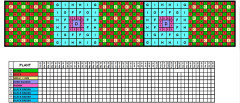
    my plan for bed one the top bed on hill terraces
    4 ft wide 20 ft long.


  • 3 years ago

    Thanks for inspiring me to get my act together and jot this out. Lots of seedlings in the garage, and it is time to figure out where to put them!
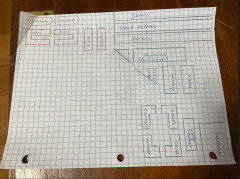
    This is a rough plan of the “mountain garden”. The “city garden” has a lot more permanent stuff like fruit, and I tuck in where I can…the beds outlined in red are raised due to utility lines buried, the green are in-ground. Kinda to scale, each square is about 18 inches..

  • 3 years ago

    Good grief, the photo won't load...working on it...

  • 3 years ago


  • 3 years ago

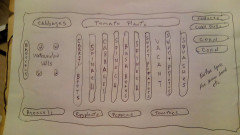
    Here's a rough draft of my main garden plot below. (~ 30' x 70')

    The 3 rows of spinach were fall planted, as they bolt by late May and are removed then the rows of carrots, beets, cabbages, broccoli, and bush beans will be harvested and will also be pulled out by early summer to allow the watermelon vines to expand into their vacated space. The 2 rows of sweet potatoes will overlap into the "vacant" row and be re-rooted there for a later harvest. By late August the melon vines will be removed and be replaced with various fall crops. Zinnas and Cosmos flowers will be scattered around the plot for some color and pollinator attractors.

    The peas, cantaloupes, and late corn/tomatoes will be located in other garden plots.

  • 3 years ago
    last modified: 3 years ago

    vgkg Z-7 Va i am guessing but north in your diagram ion right.side.

    what is spacing between rows. what is size of your garden you

    forgot to include measurements.

  • PRO
    3 years ago

    Heh, my mapping tends to look a lot like vgkg. I blob in where stuff is going to go. At this point I don't use measurements anymore. I don't need to. And sometimes it would be just kind of awkward to write it all in. Probably helps that I sketch in the notebook instead of graphing it out.

  • 3 years ago

    @vgkg Z-7 Va, already picking spinach? Sooo jealous :) Not happening yet in z5...still "eating the freezer" as it were.

  • 3 years ago

    ^^^ This spinach seed was planted back in Nov (3 times) and it overwintered in the garden. Several years ago I was planting spinach as my usual fall crop but bunnies & deer ate all of it. So I planted more seed anyways assuming it was too late to do much, but to my surprise it went dormant during the frigid months and woke up by late winter to produce a good crop by early March. This winter was milder than normal so it has produced its first harvest a little earlier. This was all learned by accident (thx bunnies and deer) so now I plant spinach this way on purpose to get that extra early crop with an extended harvesting period of time before it starts to bolt when the hot temps hit here in late May.

  • PRO
    3 years ago

    Am I recalling right that you do caps for overwintering vgkg? All I'm harvesting right now is the parsley and kale under caps in the kitchen garden, the other winter greens haven't sprung yet.

  • 3 years ago
    last modified: 3 years ago

    No caps for overwintering the spinach for my location in central Va, the seeds planted in early Nov sprout and do fine on their own even when the temp dropped down to 8F. By mid Feb I'll clean them up (weed, thin, fert, and mulch the rows) and they're harvestable in about 2-3 weeks depending upon the weather (which has been mild this year). These 3 rows of spinach are located in full sun and get at least 8 hours of direct sunlight even during the winter.

    btw, I don't use caps at all, but on occasion I will experiment with covering young tomato plants with a heated box to get an early jump on picking an early tomato. Last Spring I did cover one row of corn (hooped plastic pic below) with a couple of light bulbs inside. The corn plants survived but the ears were not very good...


    ^^^ Won't be doing that corn thing again, but will protect a couple of extra early tomato plants which worked very well to give us tomatoes by mid June.

  • PRO
    3 years ago

    I wonder who I'm thinking of then that had the tall caps. Ah well. I do remember that pic of the UFO being posted, lol.

    It's supposed to be extra nice out tomorrow. So I'll likely take the notebook out on a garden tour and start sketching in.

  • 3 years ago

    Going back to the spinach pics, there are wire hoops covering the rows but those are to deter any deer that hop over the ele fence, also to keep bunnies at bay. Both critters don't have much available for them to eat during the winter and the young/dormant spinach would be a buffet for them. ....it was so nice and warm today I almost planted the peas, they can wait a bit longer, maybe tomorrow, nyuk..

  • 3 years ago

    I have the plan in my head.

    8 plantings of sweet corn, 4 varieties. 2 plantings of potatoes, early and late. Sweet potatoes, green beans, lima beans, tomatoes, 2 plantings. Onions, Butternut squash, peppers, carrots, lettuce, spinach, broccoli, cauliflower, brussel sprouts, sugar snaps peas, pumpkins, strawberries, raspberries, blackberries, watermelons, glads, cockscomb, zinnias, Shirley poppies, ground cherries, and cover crop later.