Software
Houzz Logo Print
richard_mcneil2

Araucaria, March update

3 years ago
last modified: 3 years ago

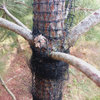
My Araucaria araucana (Monkey Puzzle) sailed through its second winter now here in NJ/Zone 7a/b. I saw one at the other end of town and it looked browned. I was really surprised by how mine showed 0 browning and this other one looked like toast. Only difference I can see it that the fried one is in a more exposed location..., more winter sun, and especially wind. Could winter winds make such a difference for an evergreen?

Comments (22)

  • 3 years ago
    last modified: 3 years ago

    absolutely... in MY MI.. it will freeze dry the leaf tissue ... and if it repeated thaws and warms during the winter day.. and refreezes at night.. there will simply be no moisture left.. ergo.. it turned brown ..

    also.. i had a few babe conifers.. turn brown a month or 2 after winter ended ...i opined the tissue would not accept new moisture for spring growth.. so it browned and failed... but in this circ's.. it was usually minor.. and the plant survived with new growth ..


    my experience has nothing to do with monkey puzzle.. it wouldnt survive here ..

    ken

  • 3 years ago

    41 North,

    Check out this youtube about MP tree in Connecticut. Notice it is not healthy looking. It's not winter that kills MP trees in eastern US. We have soil pathogen which slowly kills them from the bottom up.

  • 3 years ago

    " We have soil pathogen which slowly kills them from the bottom up. "

    What soil pathogen would that be and why is it apparently limited to parts of the east coast? I do not find any documentation to support this theory.

  • 3 years ago

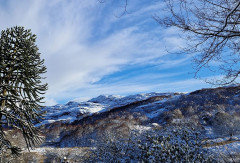
    I thought of this thread when I saw this picture on the BBC weather page. There’s been snow in the North of England and Scotland. Ths is on the Inner Hebrides. Roughly same latitude as Alaska.


  • 3 years ago
    last modified: 3 years ago

    Actually, much of southeast Alaska along the west coast (~56.5 N) is zoned usda 7 & 8.

    Araucaria Araucana;

    ' In its natural habitat, it is often found over 1000m above sea level. It is by far the hardiest tree of its genus and grows well in other areas of the world such as in western Europe, the U.S. west coast (in Alaska), '

    Source: https://www.graftingardeners.co.uk/monkey-puzzle-tree-araucaria-araucana/

  • 3 years ago


    Here is one of several on line images of MP in its native habitat, high in the mountains of Chile. How did the urban myth that MP is sensitive to the cold get started? Why do we not find them in Raleigh, Savannah, Atlanta, Charleston. It's not cold that kills them in the east. I'm a member of the nursery trade. Not a single wholesale grower of MP to be found in eastern US.

  • 3 years ago

    " Why do we not find them in Raleigh, Savannah, Atlanta, Charleston. "

    Because they dislike summer heat and humidity. Performs best in cool summer climates (UK, PNW) or maritime exposures (Long Island). And while they are somewhat cold hardy, temperatures below 10F for any extended periods will cause winter damage and dieback.

    btw, their native range in Chile and Argentina has a quite high hardiness zone rating - USDA 7/8 and up.

  • 3 years ago

    The southern hemisphere is mostly salt water - there are no Arctic fronts that expose outdoor plants to dry cold resulting from the greater proportion of large land masses in the northern hemisphere. This is why plants from the southern hemisphere that "ought to be hardy" in specific northern hemisphere locations based only on what temperatures they are known to take in their native habitats may rather often burn up during northern hemisphere cold periods. Including ones of comparatively low severity.

  • 3 years ago

    Right now, all I know, is that mine has survived two winters and one of our hottest summers ever..., but last summer was very, very arid. Maybe this wil turn out to be a Goldilocks zone.


  • 3 years ago
    last modified: 3 years ago

    Embo, Arctic fronts would have to go a really long way to get to the southern hemisphere. :) :)

  • 3 years ago

    The direction of ocean currents play a big part in coastal areas. The whole southern coast of Alaska is relatively mild compared to further inland and upstate.

    Same for S. Chile, they pick up warmth from the S. Pacific current that flows along with the Antarctic circumpolar current.

    https://oceantracks.org/sites/oceansofdata.org/files/pacific-currents_0.png

  • 3 years ago
    last modified: 3 years ago

    Araucaria are basically a southern hemisphere dominant genus, with lots of growers trying their successes with the genus in Britain, California, and even NJ. Was sad to learn that they are in decline in their modern, current range due to climate change and overly aggressive cutting. I have a thing for paleobotany...., gingkoes, cycads, Araucaria, ferns, Metasequoia, Magnolias, podocarpus, etc...

    I also grow Araucaria bidwillii and A. heterophylla, but those these to get protected in the Winter.


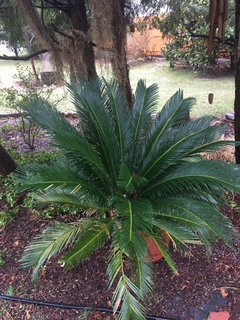
    One of several of this species alone. (Cycads are coming out for the season now.)

  • 3 years ago

    Here's an article from NCSU with information about this plant:

    It likes regular water but along with very good drainage. Also a cool summer climate.

    https://plants.ces.ncsu.edu/plants/araucaria-araucana/

  • 3 years ago
    last modified: 3 years ago

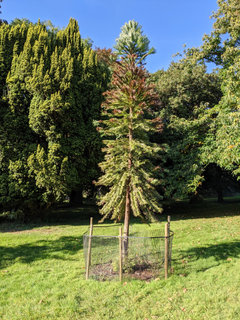
    Here’s one for you 41North. Wollemia nobilis. Only rediscovered by science in 1994. There are a lot around the UK nowadays.


  • 3 years ago

    I've heard about that conifer, Floral. I am just glad my Araucaria araucana has survived so far. If anything, my Summers can be more inhospitable than the Winters. Especially in the last decade or so, my Summers are prolonged, ridiculously HUMID, HOT, and prone to both drought and monsoonal conditions. Last Summer was very HOT but extremely arid, no rainfall. I think they resent the high humidity more than the heat of Summer. Time will tell.

  • 3 years ago

    41, it's not the humidity per say, but that the humidity fosters pathogens like fungus and bacteria.

  • 3 years ago
    last modified: 3 years ago

    FWIW, Phytophthora are neither bacteria nor fungi... https://en.wikipedia.org/wiki/Chromista

    Wollemia is only zone 8 hardy, a cold winter would wipe it out in NJ which is what happened to the one the Smithsonian tried in DC. They had the castle to shelter it, btw - not something most of us have at our disposal, I daresay. 🤣 But all except one have died south of DC. Why? Same issue as its relative Monkey Puzzle - prone to various species of Phytophthora that are now cosmopolitan in most gardens around the world, and that thrive in our hot, wet soils of summer. The lone survivor in the US Southeast is the one Jason/Salicaceae - former poster here {I've mostly joined that club 🤷] - grafted onto rot-resistant Agathis.

  • 3 years ago
    last modified: 3 years ago

    ' The lone survivor in the US Southeast is the one Jason/Salicaceae - former poster here {I've mostly joined that club 🤷] - grafted onto rot-resistant Agathis. '

    wow, that's cool!

    Any pictures around here of that one?


    ETA: FWIW: I think I found the thread, but picture links are no longer valid. :-\

    https://www.houzz.com/discussions/1846391/wollemia-grafted-onto-agathis

  • 3 years ago

    There's a fungus called Pestalotiopsis funerea ( who knew?) Regarding Monkey Puzzle Tree and other conifers it is a problem related link

  • last year

    Been a few years here now in my NJ yard (zone 7a/b Metro NJ/NYC, so some heat island effect), planted in either 2022 or earlier. My Summers are pretty hot and humid too. My lowest temp has been around 5 F.