Software
Houzz Logo Print
frdnicholas

not sure where to put this

3 years ago

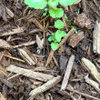
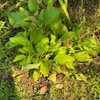
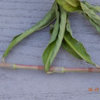
I have this small, white seed/bulb looking thing growing all over my garden and yard. It's about 1-2 inches long and sprouts green leaves, which I should have added to this picture, but I'm hoping someone will recognize it. The roots grow up to a foot or more long. I'm in Southeast Coastal Georgia. Sorry for the lousy photo.


Comments (20)

  • 3 years ago
    last modified: 3 years ago

    Stachys floridana?


    Edible. Could also be a Chinese Stachys species, if the leaves don't match S. floridana. I haven't tried them myself, but I would, even though they resemble beetle grubs.https://www.holisticlivingschool.org/2014/04/07/floridas-radish-betony/

  • 3 years ago

    i am impressed with jays knowledge of everything plant related.. but sorry.. i dont take eating suggestions from strangers online ... yeah jay.. your strange.. and im sure you will agree ....


    take some to your local COUNTY Ag or extension office... they are often in the same building... and have a local expert ID them for you.. then start eating.. same with shrooms .. and anything else you find in the garden ...


    be careful and live a long life ... no darwin award winners....


    ken


  • 3 years ago

    That was Jay’s suggestion above.


    Do you get the impression this is a wild plant? Or a garden escape? Stachys affinis aka Crosne or Chinese Artichoke is similar and is grown as a vegetable. It spreads very easily.


  • 3 years ago

    We bought our home from a Korean family that did a lot of gardening so it's possible they planted this. It is all over the where they had their garden, but also in areas that weren't planted. The roots are extremely long, even when the leaves are an inch tall. I won't eat it now, unless times get really bad. Thanks for all the help.

  • 3 years ago

    Floral, Stachys floridana is thought to be native from northern Florida, down to the Florida panhandle. Any plants north of Florida are considered cultivated. The fact that it's growing in Georgia can either mean it was introduced to the location, or like many other native species it is on the move northward because of global warming. One of it's common names is rattlesnake root because of the tubers resemblence to a rattlesnake's rattle. I think saint Patrick drove out all the snakes from the UK, but he overlooked the Tories LOL.

    ,

  • 3 years ago
    last modified: 3 years ago

    My entire property is covered with that. It's definitely hardy and self-situated here, 18 miles N of FL border, which plants do not recognize, but that border is the 31° latitude line.


    The tubers are absolutely delicious, like a mild & slightly sweet radish, but although there is foliage everywhere, everywhere, everywhere, finding the tubers is hit or miss. They send long stems sideways, then the foliage pops up. Mostly you'll just find the white "strings" in the ground, and a rare tuber.


    It will disappear by about mid-May, when it gets hot.

  • 3 years ago

    It would be tricky to cultivate this, if the aim is to harvest the tubers. If I was going to try, I would use something no bigger than a baby pool to limit the amount of soil I would need to disturb & inspect to look for the tubers. In any case, the effort of finding the tubers would surely exceed the calories one would ingest.


    I wonder how long it takes for a nice (finger size) tuber to form?

  • 3 years ago

    Just a clarification - the snakes legend refers to the island of Ireland, not the UK. We have snakes here, but very few.


    Crosnes do feature in Korean cuisine so I still think Stachys affinis is a good bet, especially since was found in the vegetable plot.

  • 3 years ago
    last modified: 3 years ago

    Oh I feel stupid. I thought Ireland was part of the UK. I guess he was made a saint because everyone back then, thought snakes were evil, because of the serpent in garden of eden. I will look it up before I start a conspiracy threory. I was digressing at that point, tubers, rattlesnakes, Irish snakes, Saint Patrick, poison.😂

  • 3 years ago

    Oops. A bit of Googling is in order, I think.

  • 3 years ago

    Georgia has put Florida betony on it's invasive plant list. The map shows where it's been observed in the wild. It's endemic to Florida.


  • 3 years ago

    Bonap indicates it as native.

    http://bonap.net/Napa/TaxonMaps/Genus/County/Stachys


    The border between FL and GA only exists in our minds and governmental structures, not to plants.

  • 3 years ago
    last modified: 3 years ago

    Flora betony is endemic and native to Florida. It has now spread north into the Carolinas, and east to Texas, probably because people started growing them in those areas and they let it escape into the wild. Some of it's movement could be from global warming. It had enough competition in Florida to keep it in check, but in areas where it didn't evolve with the local flora it becomes an invasive thug. Native plants can be invasive if they are growing in a place they don't belong. We have that problem with Black locust here in Illinois. Bonap should have the states where Florida betony has spread to in purple, not green, but BONAP gets a lot of things wrong. BONAP lumps the invasive European Phragmites with our rarer native Phragmites and list them combined as native. The do the same exact thing with our native and invasive Typha species and also Urtica dioica and U. gracilis, and Achillea millifolium and A. gracillis. We know that Florida betony is on the move because botanists look at all the places the plant has been observed, and those observations go all the way back to the time of Linaeus. Botanists are more concerned with the geology and hydrology of a place, not the border lines. Borders help nail locations. Most botanists today use GPS. The seeds of Florida betony can also cling to people, pets and cars which also spreads it.

  • 3 years ago

    A few years ago I grew a native thistle Cirsium flodmannii. It ranges west of me where the light green is on the map. It was a terrible thug in my garden and it's rhyzomes spread into the surrounding plants and killed them. This thistle isn't a thug further west, but it was a thug in my garden. Looking at Iowa on the map, I see it's considered noxious in parts of Iowa, and Iowa is west of me.

    Cirsium flodmannii

  • 3 years ago

    How far does a plant need to spread to say that is has "escaped" its native territory? A foot? A mile?


    I doubt completely that anybody has ever cultivated S. floridana on purpose. The amount of space it requires is not commensurate with any measurable quantity of harvest.

  • 3 years ago

    Tiffany, I would say a mile or more. If only 1 plant is found in a new location, it's considered a waif, but if a reproducing colony is found, it will be added to the expanding range map. Some people really do try to cultivate it.

  • 3 years ago

    If a seed is blown or moved by animals by 1 mile, you're saying it's no longer in its native territory?

  • 3 years ago

    FWIW, I understand the 'snakes' St. Patrick drove out were Pagan humans, not reptiles.

  • 3 years ago

    That's as may be, but it is a fact that there are no actual snakes on the island of Ireland and there are on mainlaind Britain.