Software
Houzz Logo Print
webuser_834679376

Repot a small schefflera

3 years ago
last modified: 3 years ago
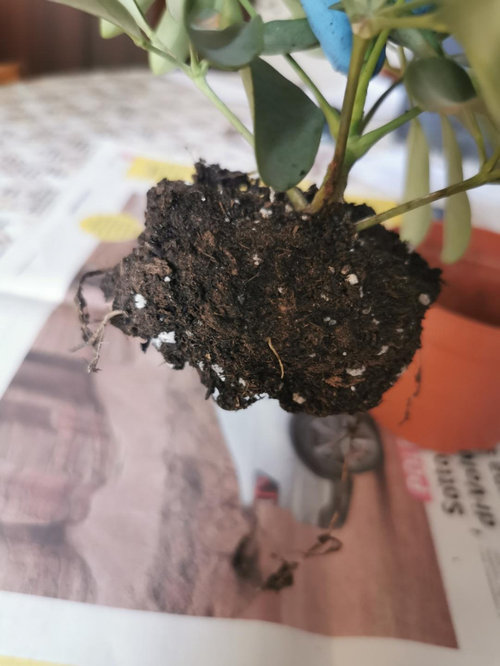
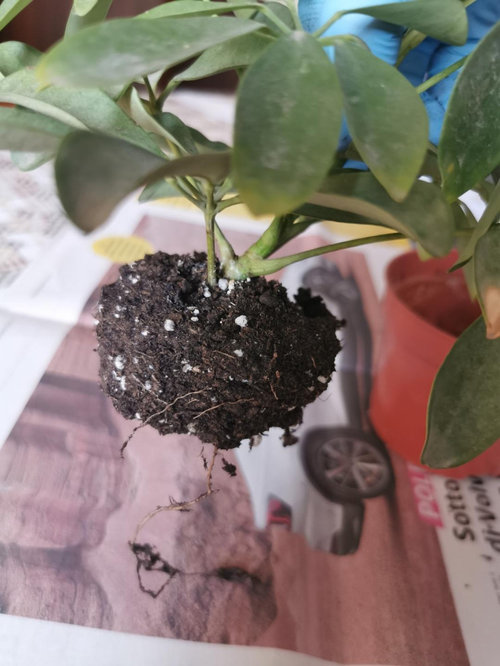
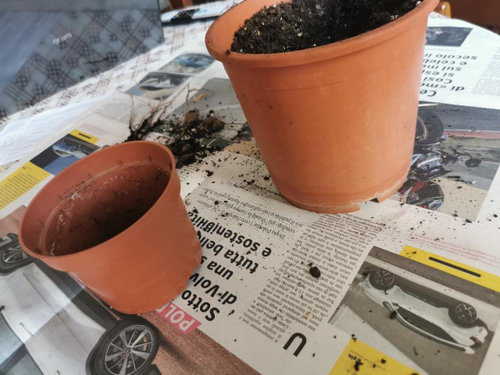
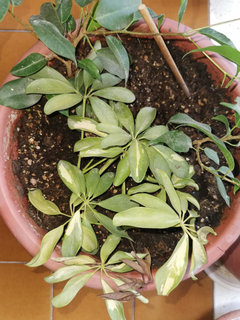
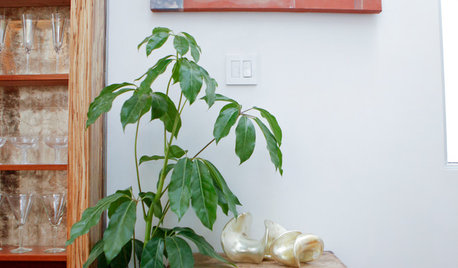
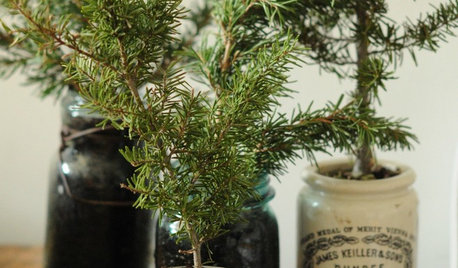
Hi @tapla (mid-Michigan, USDA z5b-6a)! In August, I planted a schefflera cutting. The pot was very small and I have now had to repot it (you can see the two pots). I tried to remove the soil but it was practically impossible because I think the roots compact it. How could I ever remove the old soil from a 2-3 meter tall ficus benjamin?


Comments (7)

  • 3 years ago

    Stick the root ball in a bucket of water and sloosh it around. Although the root mass looks by no means crowded.

  • 3 years ago

    Why must you remove the soil? I would just repot the whole thing.

  • 3 years ago


    Personally, that's what I would do. But I assumed the OP wanted to 'bare root' it, which seems to be the fashion amongst some growers.

  • 3 years ago

    if you are repotting with the same soil.. like al's 5-1-1.. then there would be no reason to remove als 5-1-1 on the repot..


    unless you fertilized so heavily ... that you suspect.. or know.. that the old media is sodden with fert salts..


    dont make you garden life harder than need be ... life itself is hard enough ..


    what you dont want.. is 2 divergent media in the same pot.. leading to potential watering issues because of the difference i the mediums....


    i would have added the houseplant forum to this post ...


    btw ... medium or media is used in pots.. and soil is mother earth.. and never used in pots.. when you can grasp that concept by using the right terms.. then working with pots becomes easier... its a beef i have with the potting soil peeps.. really.. is it soil...??? .. but i digress ... media is a water management system in a pot.. holding the water necessary for a given plant.. and shedding all excess the plant doesnt need... e.g. trees like a sip of water and then near drying between waterings.. so you use a media with giant chunks to increase air movement and shed all extra water ... on the other hand.. many houseplant like to be a bit wet all the time.. so you use a high peat media... so it holds the extra water many of them like... but nowhere in that equation is soil .. or dirt ..


    ken

  • 3 years ago

    "Fashion" has nothing to do with the repotting process, but science does. Potting up leaves almost all the root congestion to continue as a limiting factor, so it allows the plant to grow at a rate and level of vitality a little closer to its genetic potential. A full repot, which includes bare-rooting, root pruning, and a change of grow medium, entirely eliminates all limitations associated with root congestion. Root congestion can, and eventually will rob the plant of nearly 100% of it's potential in terms of growth, vitality, and its ability to defend itself against disease pathogens and insect herbivory.


    If you do a side by side comparison of 3 schefflera cuttings from the same plant, you'll find the one that is left to languish in the pot it came in will likely be dead within 2-4 years. The one potted up will likely survive but not even come close to thriving. The plant that is repotted and root pruned regularly will be many times larger after 5 years (if the others are still viable), and will be much more healthy, fuller, and appealing to the eye than the others.


    "SOIL" is any solid medium a plant will grow in or is growing in. There is nothing to differentiate between the term soil, grow medium, potting medium, potting soil. I try to use the term "grow medium" when discussing container soils, but soil science covers container media too. If "soil" is good enough for the soil scientist, it should be good enough for the hobby grower.


    Most houseplants do best in a medium that after being watered copiously, has no or a minimal fraction of the medium completely full of water. The water that occupies the spaces between soil particles (perched water) is the water that does the damage. Under conventional container culture, no plant likes to be wet. Damp? Moist? Yes, but not wet or soggy. Saturated soil robs plants of the oxygen essential to root metabolic processes/functions and should be avoided. It kills fine roots and forces the plant to regenerate the roots killed before normal growth can resume. This repetitive cycle of death and regeneration of fine roots is how soggy soils rob plants of immense fractions of their potential for growth and vitality. Top growth stops so the plant can devote energy to regeneration of roots lost to soil saturation. About the time when enough air has returned to the soil as the soil solution is used or evaporates, the grower waters again, perpetuating the cycle.


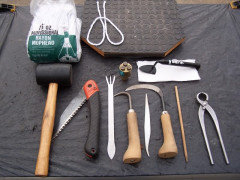
    @Michele Rossi To remove the soil from the roots, you can swish the roots in a tub of water and tease the soil out of the roots with a root pick you can make from a 1/4" dowel rod b y sharpening it in a pencil sharpener. For use as a root pick, blunt the tip slightly and lightly char it over a gas flame to harden the wood. See below, bottom row second from right, and bottom row 4th from right, Both are homemade from a wood dowel rod and a piece of 1/4" nylon. A toothbrush can also be fashioned into a shorter version. The wood dowel, without the charring, works great as a "tell", used to "tell" you when it's time to water.

    Al

  • 3 years ago

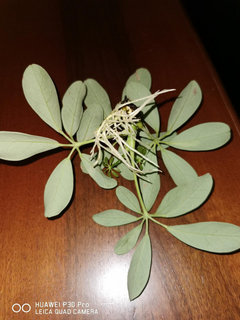
    In July 2022 I put accidentally broken leaves from a mother plant into water (I know @tapla (mid-Michigan, USDA z5b-6a) doesn't like cuttings in water). In a few weeks the roots grew and after mid-August I planted the cutting (photo 1). Two months ago, as I wrote to you, I changed the vase and now everything seems to be fine (photo 2).


    Many months ago I planted other leaves in the ground, without even putting them in water and they have been still for months (photo 3): maybe some are missing the meristematic apex and therefore cannot develop or am I saying something incorrect?