Software
Houzz Logo Print
lena_liczyk

what is happening to our parging

3 years ago
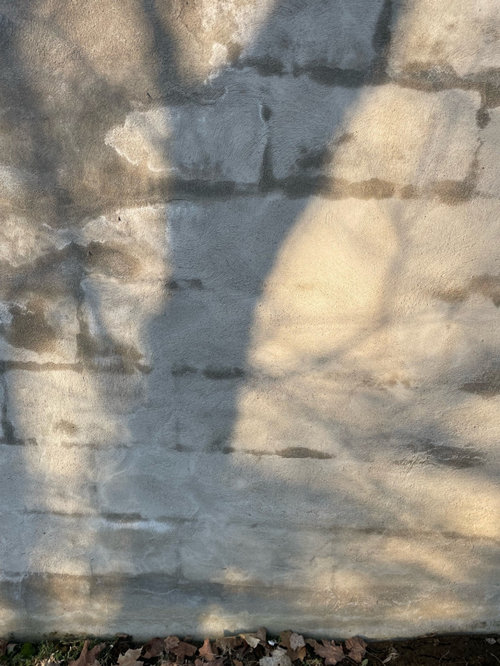
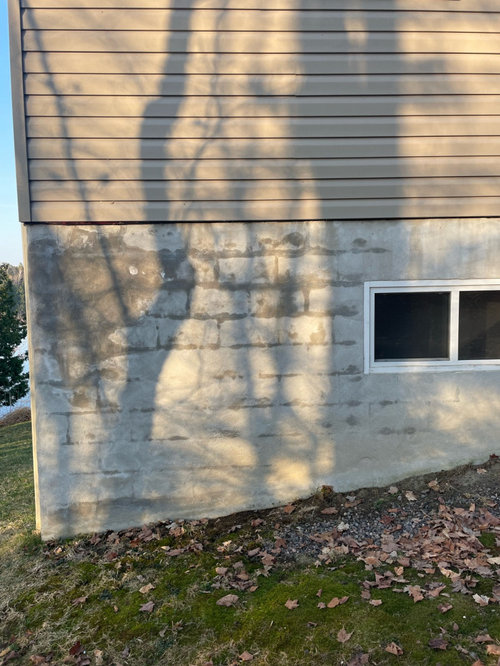
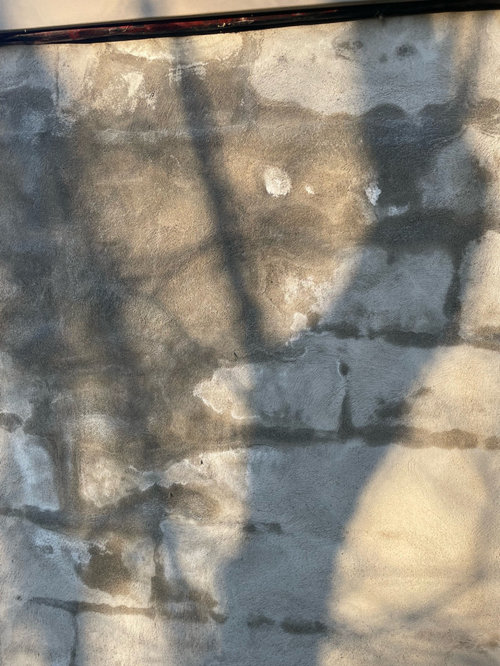
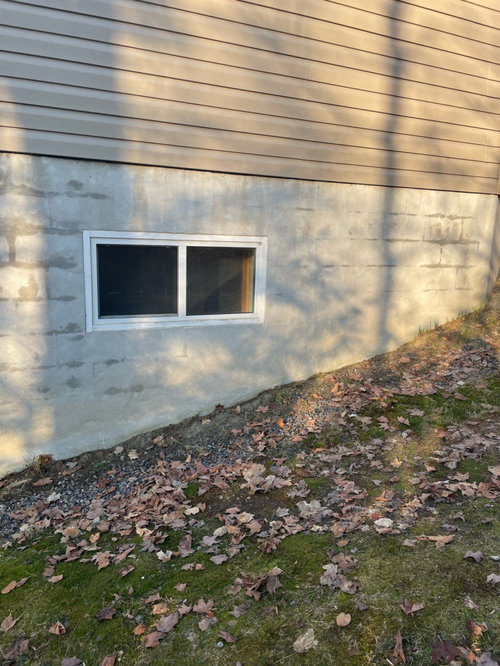
Hi there , the parging is on our cement block north walls . This started last year and it’s a lot worse now.
Does anyone know what this is and why it’s happening , the cement blocks are hollow, is it a problem, .

Comments (33)

  • 3 years ago

    Seems to be a sacrificial parging. Time for a new coating.

  • 3 years ago

    Thank you worthy, do you know if this is creating issues inside. Can we parge on top of the existing or do we require a sealant first.

  • 3 years ago

    Could it be water from above either inside or outside?

  • 3 years ago

    Res2architect, no there is no water any where near it, also it’s only in a couple places

  • PRO
    3 years ago

    It's migrating water coming from somewhere. The last thing you wan to do is seal it topically and hinder the water evaporating. If it freezes when that happens, it's going to jump off the block.

  • 3 years ago

    Sorry you guys. Yes that was not one of my sharpest comments ! We have blue skin on the foundation and on top of that we have 2” rigid foam. We are now seeing it on some corners also.

  • 3 years ago

    This block wall was put up in 2006.

  • 3 years ago
    last modified: 3 years ago


    Capillary breaks on top of the footing are required where I am. (I was using it in the early '00s.).


    Detail from our current build plan.

    But you can't add them afterwards.

    Still, you must have a good amount of water there as I see relatively little damage on our block builds with parged foundations from the '80s.

  • 3 years ago

    Ok then, now how do we fix it. Is this saying that our French drain system has failed .

  • 3 years ago
    last modified: 3 years ago

    Likely nothing to do with the perimeter drain if it's functioning as designed. A big "if", of course.


    It's likely capillary action--the same force that brings water up a tree trunk to the topmost leaves, as explained in the first link by Dr. Lstiburek.

  • 3 years ago

    i once had ice dams that directed water into one entire exterior wall of my house and it appeared a story below

    Look for any way water could get into this wall from inside or outside

  • 3 years ago

    We are in Ontario, at the time of our build not sure if capillary code we would have known about it , and hopefully the inspector did pass it without it. If anyone is from Ontario would you know.
    We are thinking about bringing the inspector in , not that we want to do that but where do we turn.
    My husband says it’s dry to the touch, but when we come here next we will bring a moisture meter and see if that will detect anything .
    we also have rigid foam on the interior against the block. Are we look at
    mold in the block
    This is how we build here, we are in a house from the 60’s and nothing like this.

  • PRO
    3 years ago

    @Poorgirl,

    You noted the installation of both Blueskin and insulation on the foundation wall, but those protect against moisture migration through the foundation wall to the interior-not the potential flow of moisture into the parging.

    Since the parging has been installed for some time and the problem is new, I'd look for a change in storm water flow such as problems with gutters or downspouts as res2architect noted above or for settling or grading issues at the foundation which are altering flow of storm water in the vicinity of the foundation. The grade should fall at least 6 inches in the first 10 ft from the foundation wall.

  • 3 years ago

    Thank you Charles, , the building is from 2006 and this started last year some time , it is also showing up on corners on both sides of the building . I’ll tell my husband and he can check the grading out.
    One of our concerns it that we are going to have to drill into the blocks and pump concrete into them from the inside. Not sure we are just guessing here.
    One of the reasons we would bring the building inspector in is to see if this shouldn’t have been passed at the time , I’m not seeing and code on this in Ontario. We are thinking that this is going to be a costly fix.

  • PRO
    3 years ago

    I'm not familiar with Canadian code requirements, but here in Virginia, 17 years post construction would be well past the period during which you could claim a construction defect. Further, code compliance isn't likely to be responsible to guarantee against construction defects. If the home performed well for nearly 17 years, you'll be best served to look first for a recent change--not a defect from 17 years ago that finally reared its ugly head.

  • 3 years ago
    last modified: 3 years ago

    we are in a house from the 60’s and nothing like this.

    the building is from 2006 and this started last year

    Which house are we discussing??

    I’m not seeing and code on this in Ontario.

    OBC (See Part IX)

    9.13.3.4. Application of Waterproofing Membranes

    (1) Unless otherwise stated in this Subsection, waterproofing shall be installed in accordance with the manufacturer’s instructions with regard to,

    (a) surface priming,

    (b) conditions during application,

    (c) the required number of layers of reinforcing fabric on foundations, footings, floors, walls and structural slabs,

    (d) application quantity and rate, and

    (e) curing times.

    (2) Waterproofing shall be continuous across joints and at junctions between different building elements.

    (3) The waterproofed surface shall be protected with a suitable material to minimize mechanical damage during backfilling.

    (4) The area in which the waterproofing is to be carried out shall be kept free of water during the application and curing of the waterproofing system.

    (emphasis added)

    Not mandatory, but jurisdictions do enforce/request different things.

    In any case, pumping concrete into void blocks does not stop moisture. Concrete is not a waterproofing material.

    Of course, as others have mentioned, it's possible there is some above-ground water source causing the problem.

    If you're getting an inspection, it should be from an independent professional, not someone selling waterproofing.

  • 3 years ago
    last modified: 3 years ago

    Im not sure why a municipal building inspector would be helpful

  • 3 years ago

    Wow everyone thank you so much for your information. Since we have been talking about this , it’s been more then last year that it started , it’s been a few years but when we came up here this year that wall that I took a picture of spread.
    The inspector we would get in would be the town inspector.
    If we can’t use capillary blocks now then what would be the solution .
    Should we have the area dug up and regraded.
    We are planning on adding a 15’ x 28’ extension to this side of the cottage we are working on preliminary drawings right now , can this wait until we get into construction, which wouldn’t be for at least another year or so or do we need to address this right now.

  • 3 years ago

    Sorry res2arcitect, I didn’t see your message fast enough .
    we would call the town inspector to tell us what to do next but if you think that’s not who we need then we will ask around.

  • 3 years ago
    last modified: 3 years ago

    Looks as if it could be more like water coming down from above and behind the parging. Can't exactly tell, but this picture doesn't quite look right, as if the siding/sheathing doesn't overlap the foundation wall and the sill plate is exposed:


    Core filling the CMUs does nothing now and can't be accomplished as you think it would anyway.

  • 3 years ago

    ^^^^^

    Interesting catch, if correct. That would explain all the moisture at that point.

  • 3 years ago

    Hi-291315178, thank you for your comments, we have decided that we will bring in a waterproof specialist. No this isn’t the first house, but we didn’t build this cottage , we did a lot of work but not this part of the work we had contractors come in and not one of them said anything, including the inspectors when they have been in to inspect at certain times.
    3onthetree, wish we had of seen your comment before we left the cottage, I did take a picture of the front, it’s also on the other side.
    We have a waterproof specialist at home that we will contact.

  • 3 years ago

    we will bring in a waterproof specialist


    Who will very likely pitch you his latest waterproofing miracle spray. Better a qualified home inspector.

  • 3 years ago

    worthy, the waterproof specialist is a friend of a friend, we had him at our house that we are renovating, for a few issues that the previous owner left us. He won’t come this far but at least he can look at the pictures , before we left the cottage we noticed that our neighbour has the same issue and his basement is maybe 10 years old.

  • 3 years ago

    3onthetree, we won’t fill the blocks, it was a thought but we are listening to all the advise we are getting from all of you.

  • PRO
    3 years ago
    last modified: 3 years ago

    Holdiing the circumstances of a waterproofing salesperson against them is logically flawed.

    Suppose you do call and suppose the waterproofing salesperson documents 5 similar jobs in the area that his company has successfully remidied and offers you contact information. After contacting them and substantiatiing his claims, you're not going to contract with him because he's making a profit?

    That's lunacy.

  • 3 years ago

    Joseph, no we wouldn’t do that, just as we wouldn’t do it ourselves. Not our specialty , but we will find someone that is closer to the cottage .
    There is a lot of building and renovating going on around us.
    Lots of cottages being lifted and block basements going in.
    Very grateful to everyone that has given us a starting point.
    I will come back to this thread when we have a solution.

  • 3 years ago
    last modified: 3 years ago

    " We have blue skin on the foundation and on top of that we have 2” rigid foam." This would normally be installed on the wet, cold side of a foundation wall but it sounds like it was installed on the inside thereby allowing the block to get wet and cold. This and the French drain system suggests an interior retrofit due to past water infiltration problems. Unfortunately, this creates a large moisture reservoir so it's not surprising it takes a long time for the wall to dry. When was it installed?.

    Consider every possible source of water then think about how it could get into the foundation.

    Look for water stains on the basement floor.

    Look closely at the joint between the siding and the foundation; is there sufficient overlap with flashing?

    Water could be entering the wall from the roof so get up on a ladder to look at it. You can't tell much about a roof from the ground. Check the gutters carefully. Spray water on the roof.

    Even consider leaks in a perimeter hydronic heating system.

    Don't overlook any source of water.

    A local building inspector inspects for building code violations during construction and that occurred long ago. He/she should not have any interest in your water problem unless he's also a waterproofing contractor or a close friend.

  • 3 years ago

    The blue skin is on the outside rigid foam on the inside, inside is dry and so is the cement floor. No leaks on the inside

  • 3 years ago
    last modified: 3 years ago

    Very puzzling

    Parging is applied directly to concrete or concrete block not over a membrane

    Is it stucco on metal lath over a membrane?

    Why are the block joints showing through?

  • 3 years ago

    Res2architect, thank you for thinking more about this problem, the drainage was done when the building was built , this was a new build back 17 years ago. It’s not. Retro fit.
    The blue skin is on the block below grade not above grade.
    Once again this building has been through all the inspections required . We have never had a leak in our basement.
    Our soffits and downspouts are where they are suppose to be and not leaking, so it’s not coming from there. We are going to inspect the siding when we go up next

  • 3 years ago
    last modified: 3 years ago

    Is it stucco on metal lath over a membrane?

    A strange ordering. But anything is possible from all sorts of "innovative" builders.

    The order of materials as described by the OP is unclear.

    According to the OP:

    The blue skin is on the outside rigid foam on the inside.....[of the foundation?]

    We have blue skin on the foundation and on top of that we have 2” rigid foam.

    Either order is acceptable.


  • 3 years ago

    Hi Worthy, you can see some of the blue skin under the stairs, below grade . I’m sorry I didn’t clarify myself properly, when my husband said we had blue skin on the outside and rigid foam , I didn’t hear the inside when he told me about it .
    I’m pretty sure when you look at the building we are no “innovative builders” .
    We will bring someone in to have a look at it and we will have a look at the siding that was mentioned when we go there in a few weeks. Since it is on all block walls this one makes more sense at the moment. Once again we did not do the work it was hired out.