Software
Houzz Logo Print
susan_johnston17

Heptacodium - What to do re dead parts...?

3 years ago
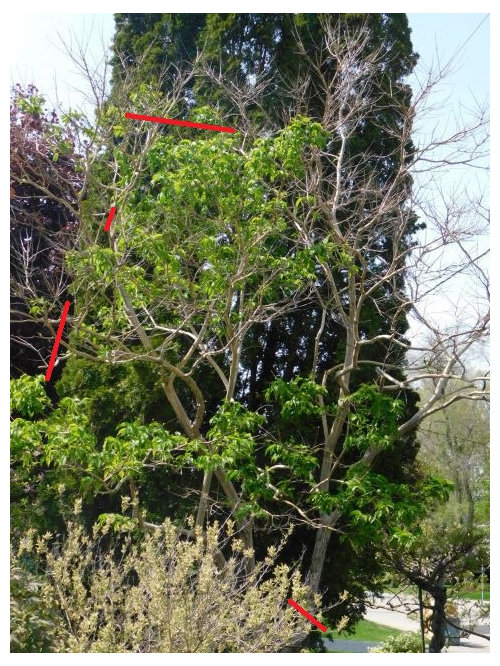
Last year we had a bit of die-back that we assumed was winterkill... This year about 2/3 of the tree is dead! The entire NE side - basically one branch/trunk/stem that branches off the main trunk about a foot or so above the ground - has died, as well as some of the top stems and some on the W/NW side.... So I wondered whether it was just at its normal lifespan and went looking for information on that issue. What I found was very interesting - not helpful but interesting :-) Basically all Heptacodiums in the horticultural trade are descendants of seed provided to the Arnold Arboretum in 1980 and they started distributing seedlings and cutting-grown plants to other Botanical Gardens and later to the 'trade' beginning in 1986. We bought our plant in 2002 so it is fairly early. Some (most?) of the original plants are still alive so the only thing known for sure is that they live for at least 40 years or so! I will be contacting the arbor business we had taking down or pruning-up other trees here to cut off the dead stuff. Maybe the rest will die next year but we'll have to wait to see what happens... I'm hoping that cutting off the dead bits might prompt new growth either at the pruning sites or at ground-level. Has anyone had parts of their Heptacodium die? What did you do? What happened to it?


This link should take you to a 1986 Arnold Arboretum article talking about what they have been doing re the Heptacodium... (Note that the original botanical name is different from the one used now.)


Tentative pruning plan for our tree:


Comments (17)

  • 3 years ago

    woody, my Heptacodium was planted in 2003 and is generally healthy, but it does experience some minor dieback each year (some years hardly noticeable, other years more significant). The dieback often appears to be associated with cankers, but not always. I don't recall seeing dieback of an entire mature stem like yours has experienced on Heptacodiums in our area. There may be something else going on. Was there any digging or other activity (herbicide application?) on that side of your tree that may have been the cause, or a contributing factor?

  • 3 years ago

    No digging; no herbicides… The things I wonder about is whether the dead tall trunk/stem on the NE side was more vulnerable to NE winds off Lake Ontario because that part of the tree extends beyond the shelter of the cedar clump. And perhaps the tree and the cedar clump (which was here when we bought this place back in 1999…) are now both big enough that they are competing too much for the same resources - to the detriment of the Heptacodium. Even if that is the case, it leaves me wondering what is best to do now. Also, on the north side of the cedar clump there are other trees we added (e.g. two magnolias, a serviceberry - on the west side, and multiple perennials, some clematis, a spicebush, and probably a few other things I’m forgetting…! ) None of them have suffered any damage like the heptacodium has…! I’m totally bewildered and not sure what is best to do… I’m very interested in your and other people’s experience with this tree. What would you do now if this was your tree?

  • 3 years ago
    last modified: 3 years ago

    What a shame, Woody. Is this tree common? I don't see a lot of posts on it. I just looked it up and it sounds like a great tree. Does it attract hummingbirds?

    Not sure how many GW members grow this to give you help with it. If you have waited until now to see if more of it will come back, then the lines you indicated seem to me to be the right position to cut. I can't think of what other choice you have.

    Are you going to wait to see if more of it comes back? Does it sucker? Any chance it will replace the dead branch? I don't have experience with any tree of having to cut that much back. My Japanese Maple suffered a lot of damage this year for the first time, but it's all over the tree, smaller branches that new growth seems to be disguising somewhat.

    woodyoak thanked prairiemoon2 z6b MA
  • 3 years ago

    They are not very common trees here but are now more available in local nurseries. I did add a new one in the backyard after removing the ash tree in 2022 - there is more light back there now! In its early years here there was never any dieback on the heptacodium tree - which made me wonder re lifespan when dieback was so extensive this year after just a bit last year. Nothing else in the garden that I consider vulnerable had any problems this spring which is why the problem with the heptacodium seems so strange to me...! Prairiemoon - yes, hummingbirds, monarch butterflies and bees all love this tree. Since it starts blooming in late September and continues into early November, it's a rare source of tree nectar for anything migrating or preparing to hibernate. DH is a 'birder' and two of my favorite pictures of the tree - the pictures are old now (2011 and 2012) - are in his flicker albums:

    https://www.flickr.com/photos/26679916@N03/8007004567/in/album-72157630396189676/lightbox/

    https://www.flickr.com/photos/26679916@N03/8009152671/in/album-72157630396189676/


    I'm hoping cutting off the dead stuff might trigger new growth - that happened a couple of years ago when we had a part of one of the white redbuds pruned off. So I've got my fingers crossed.... The heptacodium produced sucks in its first year or two but none lately.

  • 3 years ago
    last modified: 3 years ago

    Woody, Love those photos of the hummingbirds and the flowers on your tree. I am starting to plan a redo of a long bed along my lot line and I'm wanting to add sort of a hedgerow effect for screening and pollinators and birds. The area does have a lot of roots from other trees, maples/spruces. I wanted some small trees, hoping for spring summer bloom. And I considered having three of the same tree for effect. But....it's very tempting to plant a tree that attracts hummingbirds and something that doesn't get huge. I'm going to have to consider this tree. And I can just add two other trees that bloom in different seasons.

    I so hope you can prune it in a way that is satisfactory to you and that you do get some regrowth.

  • 3 years ago
    last modified: 3 years ago

    pm2 - other small trees we really like here are white redbuds, the native fringtree (which is really late to leaf out here - still looks dead but isn’t…), ’Wolf Eyes’ variegated dogwood, serviceberry and Saskatoonberry - both those two sucker but have tasty fruit for people and birds and good Fall color, magnolias - we have the ‘Susan’ and ’Randy’ cultivars… It’s fun to look at small ornamental trees!

  • 3 years ago
    last modified: 3 years ago

    pm2 - I just realized that one of the links I posted earlier was not the one I meant to post! Check out this one to see monarch butterflies on our heptacodium:

    https://www.flickr.com/photos/26679916@N03/6196835896/in/album-72157630396248286/

  • 3 years ago

    Cutting dead wood off is cosmetic and disease averting. But it won’t trigger new growth. That will probably happen but it isn’t caused by the pruning.

  • 3 years ago
    last modified: 3 years ago

    Woody, that is a LOT of Monarchs on it!! Thanks for that photo too. How long did it take to get to a good size? It looks like a really good tree.

    I've tried serviceberries and they haven't done well for me for some reason. I had a regular Dogwood but I forget what happened to it. I LOVE Wolf Eyes. Those varieties of Magnolia are such pretty shades of pink. I also like the yellow magnolia. Randy and Susan? lol Those names sound familiar.

  • 3 years ago

    I found this description at a local Nursery...

    Weston Nurseries - Heptacodium


    What is this red display? Do you have the cultivar 'Temple of Bloom'?


  • 3 years ago

    floral_uk - while it was not dead wood, a few years ago I had part of a white redbud pruned off as it was causing the rest of the tree to lean severely. Now there are new stems rising from where it was cut off. At the same time we also had a large branchremoved from a red oak - there was no regrowth on the oak. So I think it might make a difference whether the tree is naturally inclined to sucker or sprout growth along a trunk. That gives me hope for what might happen if we prune off part of the heptacodium…


    pm2 - the heptacodium grows fairly fast (18-24” a year) but it took a couple of years before it bloomed. It was maybe 6’ or more before it bloomed. Ours was rooted cuttings in a pot when we got it - maybe you can get one as a small tree now…. Ours is not a named variety - just the original no-name species.


    speaking of names… Those magnolias are part of the ’little girls’ magnolias so ‘Randy‘ probably was named for a Miranda but DH says most people wouln’t know that… :-)


    The ’Wolf Eyes’ dogwood is very striking. The first one died because it was planted in a very dry spot. We planted the replacment near a stump of a dead pine so the stump could act as ’nurse log’ and hold water for the dogwood. That dogwood is doing well but hasn’t bloomed yet. Frankly I don’t care if it ever blooms because the leaves are so striking! Now that it is about three years old, the white edge on the leaves turn pink in the Fall. Very pretty!


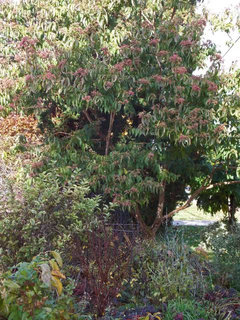
    The heptacodium does have some pink color in the Fall from the calyxes but, unfortunately, here we don’t get the showy pink-red that warmer zones seem to get. Maybe you would get that though.


  • 3 years ago

    woody, agree with pm2 that is a great photo of monarchs on your Heptacodium. I see that your photo is dated 9/23/11, which I think was right before a noticeable decline in monarchs around here that lasted for several years (IIRC). 2019 was a good year, though, I remember seeing quite a few migrating monarchs that September.

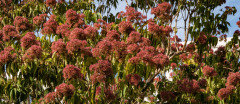
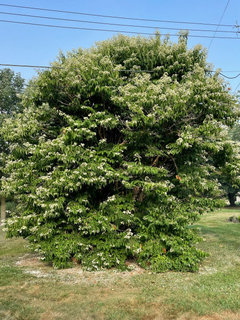
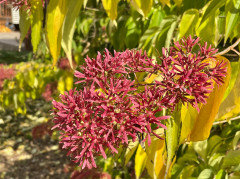
    My observation has been that Heptacodiums do require a fair amount of pruning to keep them looking good as they mature, but it's worth the effort for those interested in attracting pollinators as well as having a nice fall display in September - October. I'm surprised yours doesn't color very well, I get good color here. A couple photos from last fall, 1st showing the full plant in flower (9/17/22), 2nd photo of calyces (10/25/22)


  • 3 years ago

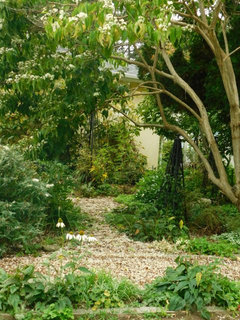
    arbordave - Where our heptacodiums are located, it is impossible to leave them with foliage at the lower levels as it would block paths, so limbed-up trees are the only viable option for their growth here. Definitely the monarch migration - and the local population in summer - has been poor lately and that certainly affects their use of the tree! In the good years there is literally a stream of monarchs going overhead, many of them stopping to feed on the tree. In good years, it is breathtaking in September and October. The Fall flower color re the calyxes has always been disappointing here for unknown reasons. My pictures are on the other computer - I will try to post a picture of it a bit later…

  • 3 years ago

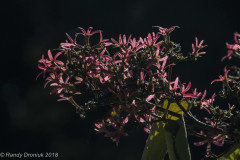
    OK - here are some pictures that show the calyxes in various years - we do get some color but it just doesn't add up to the showy displays I have seen in pictures from warmer areas.


    Nov. 3 2018 - the color just never adds up to a big display after the white flowers drop!


    Flower-drop October 7 2021

    (you can see in this picture on the far right where the trunk/stem that is now totally dead splits off from the main trunk)

  • 3 years ago
    last modified: 3 years ago

    while it was not dead wood, ”... Woody, that is exactly my point. Pruning live wood off causes dormant buds to wake up and sprout. But cutting off dead wood does not. The OP asked about pruning dead wood to encourage growth. It won’t.

  • 3 years ago

    floral_uk - I am the OP! Since there still is live wood in most places on the tree just below where the dead wood would be cut off, I am hoping that the pruning might prompt some regrowth. Maybe it won’t; maybe the rest of the tre will die too - which is why the first thing I looked for is info on the lifespan of these trees… But if I’m going to pay the cost of having it ’cleaned up’ (dead wood removed) I’d prefer to believe there might be some chance - even if it is a small one - of longer term survival for it! Time will telll….