Software
Houzz Logo Print
emilyzl

Huge heating challenge in old house - hydronic?

3 years ago
last modified: 3 years ago

Here are the facts:
Age: 1904
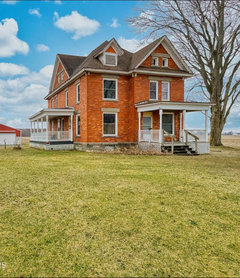
Type: double brick 3 story with basement
SQ ft: approx. 3500 with 3rd floor/attic
Walls: plaster mostly, some drywall
Insulation: little to none (probably won't ever be added since I'm reading horror stories about moisture problems from insulation)
Current system: Propane forced air furnace in basement (nonfunctioning unit)
Ductwork: limited - about one grate for each room, and a single return at the base of the stairs for the entire house. Halls and a couple rooms have no grates at all.
We don't want to gut the walls and ceilings because the moldings and plaster walls are in good shape for the age of the house.
The first HVAC company quoted us $62,000 to do a new furnace in the basement for the first floor and then to do mini splits for the 2nd and 3rd floors. But that's a lot of conduits running up the sides of the house.
The second Geothermal company quoted us 'probably $50-60k, but can't be sure, probably less than 60' to install a new propane boiler and radiator system. They would use the new type of PEX to fish through the plaster walls. It will be difficult. The guy seems up for the challenge, but also kind of not filling me with confidence. He's kind of vague about how things might be doable. On the other hand there is no one else who's even heard of the idea around here. The third HVAC company talked about using knee walls in the attic/3rd to help route ducts through the floor in the attic (which is open right now for the electrical) to the second floor, and using one furnace in the basement and one in the attic, serving two floors each. But they haven't gotten a quote to me in a couple weeks. A fourth company I haven't met with suggested high velocity forced air. I hadn't heard of it but doing some research it might be really loud. They also do radiant but had never heard of the new PEX capable of handling high pressures and temperatures.
The major challenge is that there are plaster walls and no returns and no real place to put them, so forced air probably won't ever work very well and keep the house warm from those limited little grates and no insulation. This is a challenge! I'm inclined to go with a new radiator system, though it will take up wall and floor area. I like radiator heat because it isn't as drying, and I am inclined to think it might feel warmer.
Wood stove won't work because the chimney needs to clear the roof line 35+ feet up, but a propane gas cast iron stove might be an option for the living and/or kitchen on the first floor.
Any thoughts??

Comments (24)

  • 3 years ago

    Where are you located? Climate? Electricity costs?

    Emily L thanked sktn77a
  • 3 years ago
    last modified: 3 years ago

    Do you need cooling as well?

    Can you expand on why the chimney precludes a wood stove? The chimney needs to clear the roofline and any nearby obstructions by some amount, but not by a ton.

    Have you talked to the Google geothermal spinoff Dandelion Energy?


    Is the attic a finished space? If not, insulating the attic floor would make an enormous difference on energy use, since heat rises.


    What state are you in? Some states have incentive programs for insulation, air sealing, heating, etc. Some of these (MassaMassachusetts for example) are very valuable.

    Emily L thanked Isaac
  • 3 years ago

    We are located in rural mid-Michigan. I'm not yet sure of electricity costs since we just moved from Texas. The climate is very cold in winter. Given the brick, and us coming from Texas, we don't think we need cooling right now. It isn't too bad with fans going even when it's hot out. We might consider a window unit or two if needed. The attic is definitely going to be finished living space. It has a full size staircase, 9 windows in 5 gables, and tall cathedral ceilings.

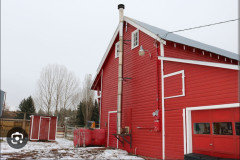
    For the wood stove, that's something we would love. But there's no current chimney. We'd have to add one on the exterior and apparently code requires it to be higher than the roof line and anything within 10 feet, and with the tall gables and ceilings, it would be like 40 feet up. Something like this picture but taller.


  • 3 years ago

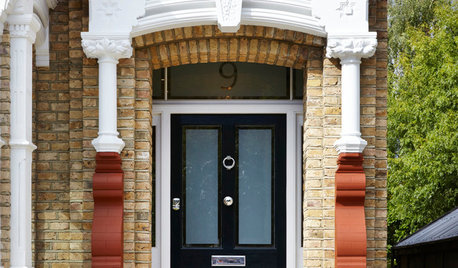
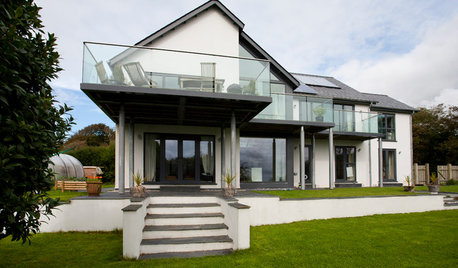
    Is the second picture your house? It is lovely.


    If you do add a wood stove (or, less likely but nicer, a masonry stove) then I strongly recommend the chimney go in the middle of the house. That lets tge heat get throughout the house more easily, and having the chimney pass through the warm house helps the smoke exit quickly therefore reducing creosote formation. I also have a foursquare, and our wood stove is in the middle attached to a chimney that goes through the peak of the hip roof; it works wonderfully.

    Emily L thanked Isaac
  • 3 years ago

    There are ways to insulate a finished attic, and I thibk you will regret it very quickly if you dont insulate the attic ceiling.

    Emily L thanked Isaac
  • 3 years ago

    Oh yes, sorry, I should have clarified: there won't be exterior wall insulation. There's cellulose in the attic floor and there's definitely going to be insulation, probably spray foam, on the attic ceiling rafters once all the electrical stuff etc is finished.

  • 3 years ago

    I am in the same situation in Maine. i got a functioning boiler that works but not efficiently. I was thinking of adding two new Renai Propane heaters on the first floor. My second and third floor is fine.


    I have had them before and they duct through the wall directly so a 3 inch hole. That is it, just a single 3 inch outlet/intake since they are double walled. them route propane to them. so very unintrusive.


    In my experience they heat well and without consuming a lot of fuel to do it since they self adjust themselves based on the heat coming back.


    Are they perfect? No you have individual units to buy, but for the most efficient heat without obnoxious ducting and pex tubing to fish, thats what i suggest for you. Maybe look into it anyway?


    Emily L thanked Travis Johnson
  • 3 years ago

    Hmm, yes, I'm looking at it. I guess the question would be, routing the propane to each unit. Like all these other solutions, the first floor is easy (through the basement) but it's getting everything to the second floor that makes trouble. Thank you for the suggestion!

  • 3 years ago

    One thing i have yet to see on this thread yet is a discussion regarding ROI or Return On Investment


    While a heating system may be super-efficient, a homeowner at sone point has to cross reference with upgrade costs with real world savings.


    Case in point, at $3.50 a gallon for 91,000 btus, i can buy a lot of propane for what a $82,000 heating system will cost even if it is super-effecient. Since it might only last 15 years before needing to be rebuilt, honestly I can heat my house ”ineffeciently” for a lot less money. Yep a super-duper geo-thermal heating system might cool the house too, but adding in the cost of cheap window units means i still would not spend $82,000 in the next 15 years heating and cooling

    my house.


    And if you decide MN is not for you and you return to Texas, you might lose your $82,000. Just because you spend that much for a heating system does not mean its reflected in a houses value at sale. The next homeowner just expects its heating system to work. It need not be the best


    How do I know?


    My geothermal heating system installed in 2006 cost me $2200 a year to heat my house. A wood pellet stove cost me $8000 less and cost me $750 a year.


    Sometimes you can spend too much and get less. Always factor in return on investment


    Emily L thanked Travis Johnson
  • 3 years ago

    I'd talk to insulation specialists about insulating your walls. I'd also look for leaks. Are your doors and windows tight? Are there random holes through your walls? We have iron downspout pipes (long ago disconnected, routing your downspouts through the basement to your main sewer pipe is a recipe for sewage backup in your basement. ), various holes for cable, phone, fiber optic, some holes for water taps since disconnected. Etc, etc. Get spray foam and tighten them up.


    In your attic, you probably have holes, too, under your insulation. Wiring, piping, can lights, etc. Find and seal them with spray foam.


    This Old House has some nice videos on the topic.

    Emily L thanked Sigrid
  • 3 years ago

    Lots of great ideas and potential solutions here. One thing I would suggest you take caution in is when considering the significant cost of building in a chimney for any kind of woodburning, whether it be an open fireplace or a wood-burning stove. I say this because, increasingly, insurance companies are getting a lot more strict with homeowners policies when it comes to woodburning devices; less so with things like propane or other types of combustion that are more sealed off and that do not involve embers or sparks.

    Emily L thanked HU-16168550092
  • 3 years ago
    last modified: 3 years ago

    A few things:

    1. Propane and electricity are two of the most expensive forms of energy. You will want to pay attention to reducing operating costs. Particularly with uninsulated walls.

    2. One of the ways to reduce operating costs is through zoning - or being able to reduce or shut off heat to unused rooms or floors.

    3. Low impact on the interior spaces is an issue. However, you can build a chase inside the house if you are creative. For example, I've used space inside a closet (built a false wall) to get ductwork to second floor. I've also put a chase in the corner of a room and in bulkheads in a kitchen. There are ways of doing it without tacking it on the outside of the house.

    I would look at:

    1. Traditional forced air condensing furnace (92%+) in the basement and a furnace room in the attic with duct work going through knee-wall space to second floor. This would be the least costly to install and would be pretty traditional.

    2. High velocity forced air. Same setup as above

    3. Potentially mini split heat pump - but that's probably pushing it given the location and lack of insulation. Perhaps you use a mini split heat pump in the attic space (It's insulated and may need AC) and traditional forced air in basement and second floor. Mini-split works well with solar PV that you could put on the outbuilding.

    4. A backup/aux wood based heat, such as a pellet stove or such. This could even be an outdoor wood furnace to avoid flue costs. This would provide backup heat or supplemental heat and could reduce operating costs. You don't need it to heat the whole house with this, but if you could keep the lower floor warm that would be a big deal.

    Emily L thanked Jake The Wonderdog
  • 3 years ago

    These are all great points!

    Wood pellet stove: we have one left by the previous owner. We were going to use it to heat the barn or shed as a work from home space for my husband, to get out from under the main house roof, given that we have 7 kids homeschooled all day. Lol. Maybe a new pellet stove that looks like a wood stove in the living room? I hadn't thought of that! Love the idea.. How do they route that heat, so it isn't 100 in there and 60 in the bathroom?

    Insulation: I have learned that insulating exterior walls causes a ton of problems for the brickwork. It is no longer able to use the interior heat to dry and avoid freezing. I now have realized that the only spots where the brick shows damage outside is where the previous owner pulled out plaster and put in drywall (and presumably insulated). We may have to pull that out. There's no sense worrying about heat loss if the house starts falling down. So we will focus on insulating the attic ceiling, attic floor, and basement walls, and windows and doors.

    I think we will probably do the second furnace in the attic. That's probably the safest choice. I'm just stuck on the concern that it will be super expensive to keep comfortable using propane.

    Does anyone know if a high efficiency propane boiler (or two) feeding hot water radiators in each room would be cheaper, or cozier? I keep thinking it would be a more pleasant heat, radiating warmth, and that it might be cheaper to run. Or maybe a hybrid approach with a pellet stove on the first and radiators in the second floor and attic. Sigh, how complicated!

  • 3 years ago

    BTW: That's a gorgeous house!

    Emily L thanked Jake The Wonderdog
  • 3 years ago

    You could go with a propane boiler feeding radiant floor heat on the first floor since you have access to it from the basement. When done right, radiant floor heat is nice with no noise, warm floors and efficient.


    On the second floor you could do a Modine set up in the hallway (or a Renai ) and only have a minimum of pipes to run 2/1). You would have to keep the doors open during the day to let heat in, but there are always trade offs in life.


    I would not worry too much about condensation and not add insulation from that mindset. MN has about as much humidity as Maine and we deal with that in other ways. You’ll want insulation.


    Emily L thanked Travis Johnson
  • 3 years ago

    I have a house (I have 4 in total) and the previous owners put 500 gallons of oil and 8 cord of firewood a year to keep the 1100 sq ft house warm…. for decades.


    When i got the house I put in $527 worth of insulation and heated that house on one bag of pellets per day.


    But the reason i opened up the walls and insulated?


    It had 6 outlets total in that house so i could add both electrical outlets and get insulation into it. So sometimes decisions about one thing affect the other… like the need for upgraded wiring. No ine wants to ipen up walls, but sometimes that is what is best.


    Emily L thanked Travis Johnson
  • 3 years ago
    last modified: 3 years ago

    You should understand some things about "efficiency" that are often conflated:

    Efficiency is the ability to convert the fuel to usable heat and not waste it to the outside.

    Then there is "comfort" which is a little more difficult to quantify. It involves getting heat where you need it and eliminating cold spots, drafts, thermal stratification, etc.

    A 92% forced air furnace is going to be just as efficient as a 92% hydronic boiler.

    A Hydronic system is probably going to be more comfortable - delivering more even heat at the perimeter of the home.

    You may be able to save some operating costs with a hydronic system because you may be able to lower the overall temperature and still be comfortable. However, hydronic will be more expensive to install and doesn't provide an opportunity for AC.

    Emily L thanked Jake The Wonderdog
  • 3 years ago

    If installation and practicality were not a concern at all, my ideal system would be wood pellet stoves in the two main rooms on the first floor, with radiators in the bedrooms and bathroom on the second floor (and perhaps a radiator run down to the first floor bathroom as well so it won't be cold with the door shut). And a pellet stove in the big open attic as well. But there seems to be some big drawbacks to that... Notably lugging 40 lb bags up two flights of stairs daily would be a deal breaker I think. And having only a boiler in the attic for the second and third floors would perhaps put us at risk for leaks? And does the basement need a form of heat or does it just stay a constant temperature (assuming we insulate the basement walls a bit)? Because on this plan, the wood pellet stove plan, whether the upper floors use furnaces or radiators, there would not be a furnace or any heat in the basement.

  • 3 years ago

    Not to play with semantics but i am not sure i agree with that.


    In my way of thinking, you are confusing boiler efficiency with heating system efficiency, It is very easy to use the word efficiency and yet compare apples to oranges.


    To get a true efficiency rating on a heating system a person should use degree days so they are comparing apples to apples.


    It is the one thing i love about working in the energy industry, since you can not create or destroy energy , but merely convert its form, a person cannot misrepresent it. Megawatts can be converted to horsepower which can be converted to btus which can be converted to boiler horsepower, etc. Using degree days to do a heating needs study on a space is the way to compare apples to apples.


    Emily L thanked Travis Johnson
  • 3 years ago

    A high velocity air system controls sound by maintaining long enough secondary duct runs from the main trunk duct so the layout is critical and not practical for all situations.

    Running a main duct in the center and feeding to the outside walls is good

    Emily L thanked res2architect
  • 3 years ago
    last modified: 3 years ago

    @Travis Johnson

    I don't want to go too far down this road, but unless one system for delivering the heat wastes more heat to outside the envelope, then the difference in efficiency is the boiler / burner. A system that produces 92% of usable heat for each 100k btu input doesn't get more or less usable heat based on how it is distributed - unless we are talking leaky ductwork outside the envelope.

    Again, a system that improves comfort by reducing drafts or heating the floor, for example, may allow comfort at a lower overall interior temp - thus lowering the temp differential between the inside and the outside. Reducing the temperature differential reduces heat dissipation to the outside. But that's all based on the individual perception of comfort. It's not a function of system efficiency.

    Emily L thanked Jake The Wonderdog
  • 3 years ago
    last modified: 3 years ago

    @Emily L

    A few points about your "Ideal" system:

    1. For future resale value, you need a "conventional" primary heating system that is able to heat the house. That could be forced air, hydronic, ground loop, etc... but not wood.

    2. Wood can be a good backup / supplemental heat source (think power outages, propane delivery issues, -30 weather, or the cost of propane goes crazy like it has in previous times.) It comes with the cost of installing and maintaining a flue. It also has insurance implications. That's probably one pellet heater on the main floor or basement or an outside furnace. Outside furnace has some advantages.

    3. You need to be able to leave the house and have it not freeze up. You need to be able to heat the house when you sick, overwhelmed, tired, etc.

    The most comfortable form of heat for that home would probably be baseboard hydronic convectors on the exterior walls. It would counteract the cold air that will be cascading off the walls and windows and would provide the most even heat. The boiler would be in the basement and the water lines would go up a chase (or more more than one) and be distributed to the rooms. That would probably be the most expensive to install.

    The least costly to install would probably be the conventional forced air in the basement and the attic - with the attic unit heating the second floor. Heating the second floor from ceiling mounted vents is not ideal for comfort, however. If you can find ways to get the heat to floor level through interior partition walls, that's a good plan. A multi stage or modulating furnace would probably provide you with greater comfort by giving you longer run times instead of cycling on and off.

    Emily L thanked Jake The Wonderdog
  • 3 years ago

    @Jake The Wonderdog has some excellent points. Hydronic baseboaed heat (especially cast iron baseboard, though that takes a lot of wall space and may be pricey) is extremely confortable heat. We have that, plus wood for a backup. Ideally we would rub our radiators off a water to water geothermal heat pump, but unlike your property we would need a deep well and digging those is $$$.

    Emily L thanked Isaac