Software
Houzz Logo Print
upperbaygardener

very aggressively root pruning a couple large Picea abies?

2 years ago
last modified: 2 years ago
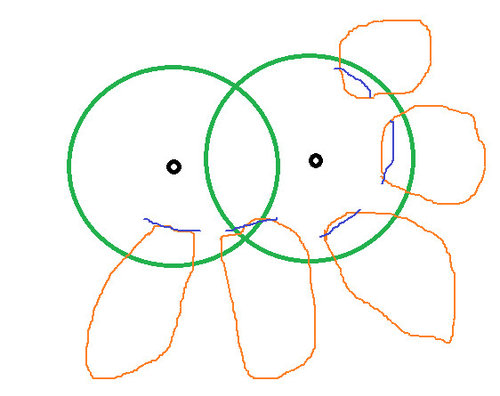
Roughly 10 years ago I created a new series of beds surrounding some of the oldest trees of my property, a couple Picea abies. They were maybe around the low 40s when I bought the house and now 18 years later seem to be getting close to 55'. (I have roughly estimated using a professional trimmer pole with extension that I have) They are in a lower part of my yard, but overall, my soil is well draining. It obviously wasn't so wet for them to even show a little dieback in those early years, that featured incredibly flooding rains like those from Hurricane Irene in 2011. Still I decided to experiment with making raised beds of pure course sand, because I'd realized at this point how cheap it is (or I should say, was!) to have dump trucks of course builders sand delivered. And I had a front end loader to move it. I felt that if I planted rhododendrons on grade, although ok for the Picea abies, they might drown. Important note: these beds radiated out from the 2 spruces in a roughly starfish like pattern. The biggest is maybe 3' or 4' X 10'.

So here's the issue. The rhododendrons have never drowned, other than a couple particularly root rot sensitive varieties that wouldn't have survived on ANY substrate around here. A few grew quite well: ESPECIALLY ON THE TIPS OF THE STARFISH LEGS. But the issue emerging is this: the closer to the Picea abies they are, the more root competition they've faced, and they will barely grow no matter how much water or fertilizer I give them. Those mounds of sand? Within only a few years and I mean 2 or 3, tops, the spruce roots aggressively started coming up from below, so to speak, to start using it as root zone and probably suck out the food or water I was giving the rhodies (which mind you, of course don't need a lot, but pure sand is very nutrient deficient! of course they have always been mulched with hardwood chips, which are now breaking down into an organic layer.

About 2 years ago, as an experiment, I maneuvered my then new backhoe into a slot between starfish legs, and tore up the roots of the spruce at the base of one of the legs. A little Rhododendron 'Black Widow' that had truly struggled for at least 7 years, finally perked up a bit and looked like it might start growing again.

Now I'm debating about going to the base of every 'starfish leg' with something like this https://www.sunbeltrentals.com/equipment-rental/earth-moving/12-or-13-walk-behind-trencher/0370005/ and just chopping the hell out of the spruce roots. I know there's a risk in doing this...but a couple points: the starfish 'legs' are only 2/3rd of the 'pie' around the spruces. Also, there will still be least 8' from the trunks to where I'm cutting. And finally, I plan to not cut the areas between the sand mounds, so not every radial root of the spruces will be cut.

Personally I am 95% sure they will be fine, and will just slow down their growth for a few years, which will allow the rhododendrons to catch up. But...I have that 5%, 'hhhmmm maybe this could be a bad idea' so that's why I'm posting this question!

Here is a visualization: the orange blobs are the mounds of sand (it's only about 4" deep), and the blue lines are where I want to make cuts. 2 of the starfish legs as you can see, were more round than long. IIRC I started running out of sand. The idea was for each mound to be shared by 2-3 rhododendrons.


Comments (10)

  • 2 years ago

    I've seen the surface root layout of some big Norways, and they just meld together where I think it's no real issue for them. Kinda like the way sugar maples, beeches and some oaks like pin oak do it. So not sure it would "help" anything. Still, I'd think that what you plan would not really hurt them either. I have done some girdling root work on some sizable Norway maples where the overlying root was definitely not melding into the beneath roots, but that work really didn't require any major digging into the soil.

  • 2 years ago

    Planting beds anywhere near large aggressive tree specimens will be an ongoing battle. The bigger the tree the worse it will become.

    If you don't mind doing the root pruning every couple of years, then it's up to you but if it were me, I'd come up with a plan where the beds are further away and even then, feeder roots will always be expanding, searching for moisture and nutrients.

    I've seen beds abandoned for this very reason and the trees were much smaller jack pines.

    Not trying to discourage you but it may be time to 'Think outside the box'.

    It may be more work initially to change things but in the long run you'll be glad you did.


    UpperBayGardener (zone 7) thanked BillMN-z4a
  • 2 years ago

    " I've seen beds abandoned for this very reason and the trees were much smaller jack pines. "


    Fascinating. Before this experience, I wouldn't have lumped Norway Spruce into a category of 'trees with very aggressive root systems' but it definitely seems to be the case. To contrast, my very very first rhododendron bed was under a hemlock (in the native soil and grade) and the plants grew just fine.


  • 2 years ago

    I can't explain it. ;-)


    In the realm of 'Outside the box' would be large pots or planters that contain the roots, in those trouble areas.

  • 2 years ago

    Thanks but rhododendrons would never do well in containers around here, nevermind the additional attention they would need in terms of watering. Everything about my garden is designed to let me be as lazy as possible!

    I'm probably just going to do it, unless someone comes along with a report of 'oh, Norway spruces like to drop dead if their roots are too disturbed'. As Ben and Bill noted, it might only be a temporary fix; but a mature rhododendron can have a pretty tough root system too, where happy. I think once they get established they will be able to fend for themselves, they are just having trouble getting established when fighting with the spruce roots.


  • 2 years ago

    ' Everything about my garden is designed to let me be as lazy as possible! '

    My goal also. :-)

    UpperBayGardener (zone 7) thanked BillMN-z4a
  • 2 years ago
    last modified: 2 years ago

    FWIW: I've read something about Hemlocks being a fibrous root system. Which may be what's different between that and the Pine family(?). Betula (birch) is another tree with what is considered fibrous root systems. But I'm aiming in the dark here.

    In my neck of the woods, everywhere (in sandy soil) where I see spruce and pine growing, there is a perimeter several feet out from the trunk, the trees have sucked the soil dry of moisture and possibly of nutrients(?), starting at the trunk out beyond the drip line, so the ground is bare in that area, except for some moss.

    But you know your area best and with plentiful moisture out there, you have a better chance of success.

    I don't think your trees will die from root pruning, but I've always been under the idea that root pruning is best done in the Fall when the tree is not actively growing.

    UpperBayGardener (zone 7) thanked BillMN-z4a
  • 2 years ago

    I don't think your trees will die from root pruning, but I've always been under the idea that root pruning is best done in the Fall when the tree is not actively growing.


    Yep, that's exactly why I'm planning it now.


  • 2 years ago

    " Perhaps cultivars "lose" some of their natural competitive ability? " It's entirely possible. There's a hybridizer I have met on Long Island, I have a few of his plants. They are beautiful but the interesting thing about them is I know he heavily fertilized his garden. His rhodos have needed way more fertilizer to perform than most of my cultivars. (which is next to nothing, for most of them) So in my opinion he was selecting for plants that performed well under a regular feeding regime.