Software
Houzz Logo Print
yeluning

cupping floor in new construction

2 years ago
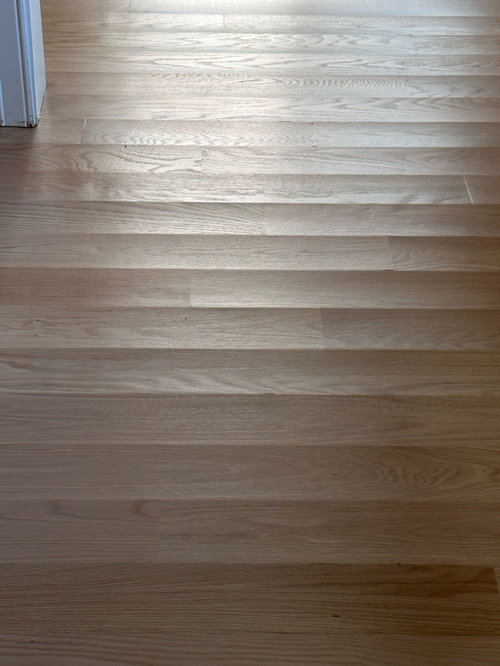
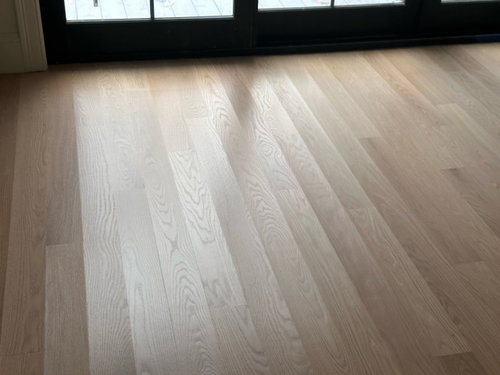
We have a new construction. Red oak floor was installed back in July(I don’t remember the floor was acclimated maybe 3days the most) with 2 coats of stain. End of oct the floor guy came in to put the last coating. After the last coating we were told to turn on the heat to 70F and close all doors and windows to allow 24 hours to dry. After 24 hours all the floors are cupping pretty badly. The odd thing though is we didn’t notice any cupping before the last coating was applied(while we are not 100%sure but don’t remember anything noticeable at least) would that mean the subfloor is not wet at least? Could this more a wood floor quality issue? The builder brought 3 dehumidifiers but I don’t believe it will flatten them…any idea what could be the cause and what could be done at this point? Builder suggested the worst scenario they can sand them and re coating but would the same problem won’t come back? Or would this not cause crown problem at later stage? Appreciate your insights all!

Comments (24)

  • PRO
    2 years ago

    What is below the rooms where the cupping is occurring?

  • PRO
    2 years ago
    last modified: 2 years ago

    You didn't condition the space until last week? THe AC should have been going in June, for a July install.

  • PRO
    2 years ago

    Cupping is caused by excessive moisture underneath. Heating the room suddenly from above has dried out the top of the floors and not the bottom. Temperature and humidity should have been controlled and kept stable since July. My suggestion is to get the temperature and humidity stable and let them acclimate for a couple weeks then re-sand and re-finish. I have never seen cupped floors go back to normal.

  • 2 years ago

    Thanks for the insight! Does that mean we might have uncommon wet subfloor? Or is it just because the unconditioned house cause this excessive moisture? We’re facing the situation that we need to decide when to move in…and we definitely don’t wanna move in and then do the sanding..so wondering is there an indicator we can see whether the wood has been stabled that we can do the sanding?(e.g moisture level or whatever other measurable indicator?) trying to figure out the moving in timeline at this point..

  • 2 years ago

    Thanks guys for the input..to answer your question:
    No we don’t have any AC working until last week.. both the first and second floor has this cupping issue and we have a finished basement underneath

  • 2 years ago

    We just had hard time to figure out what was the root cause. The same vendor did all the floor for the builder in same area for other houses. There was one we went last week and was perfectly fine. So that shouldn’t be the problem of quality of the wood floor and the installation method I would think—‘cause that would be the same for other houses. And the climate situation would be the same as well…and I didn’t notice they had the a/c run long time ago ..they started the landscaping end of sep/beginning of Oct which they installed the condenser…

  • PRO
    2 years ago

    I believe the subfloor had a high moisture content all summer and after the hardwood floor was installed it’s moisture content increased a lot. Air conditioning naturally dehumidifies as it runs and it’s important to dry out houses under construction especially during summer when the humidity is high.
    I would run multiple dehumidifiers in the basement to dry out the subfloor. It will take at least a couple weeks for the hardwood to dry out to an acceptable moisture content after the subfloor moisture content is where it should be. Hardwood installers have moisture meters to measure the moisture in the wood. Once everything is dry and stable re-sand and re-stain the floors.
    Your builder should be well aware of the importance of controlling moisture in new construction homes. It is on them to fix this properly.

  • 2 years ago

    Answer Mark's question in the first comment:

    "What is below the rooms where the cupping is occurring?"

    Is it a basement or a crawl space? Has a slab been poured?

    Then tell us if the site slopes and if there are footing drains.

  • 2 years ago

    The floors should never had been installed/stained/finished in a house without functioning HVAC set to a normal/average temperature for your location and climate. Any humidifiers or dehumidifiers appropriate for your climate and house, should also have been running.


    I would not accept sanding and refinishing the floors without a big discount, since you will lose the option for that sanding/refinishing when your floor are older and need to be refinished due to wear and/or you wanting to update the floors to a different look.

  • PRO
    2 years ago

    It's not just the floors. The trim, and the cabinets too, required that. Everything wood. All required that the space be conditioned before install, to dry the home out. Wood moves around a lot when the humidity varies a lot. It swells and shrinks. That is why you have to control your humidity through your HVAC.

  • 2 years ago

    It’s the basement then first floor. The house is located at a small hill next to a pond but not in a flood zone and there is a trail in between the pond and the hill. The moisture level we measured was 49 before any dehumidifier (and my friend’s house is in the same area away from pond was 48) so don’t think our house is particularly humid comparing to the houses in same area… yes the site is slope as well. The basement is on the slope one side with 4 above grounds windows.

  • 2 years ago

    The things confused me is that I don’t believe my builder run heat on for other house they build 5 mins away. They use the same vendor same way of install the floor —everything is the same but other houses never had this problem..might be just the slope? That’s the only difference I can think of…

  • 2 years ago

    slab was being poured for the basement but not sure about the footing drain though

  • PRO
    2 years ago
    last modified: 2 years ago

    Use a commercial dehumidifier. It will stabilize indoor humidity much quicker than small residential units. Give it up to 30 days it will lay flat.

  • 2 years ago

    I hope they put a 6 or 10mil vapor barrier under the basement concrete pour.

  • PRO
    2 years ago

    Stable indoor conditions are desirable when installing interior trim, cabinetry, and hardwood floors. That's a tall order in new construction because the conditions are uncontrolled for the majority of the build. The framed structure is constructed out in the elements, likely got wet a couple of times, and needs to dry out once it's under roof and the windows and doors are installed. That takes time. To complicate things, at the same time we're trying to dry out the framing, moisture is being introduced in the space by curing of concrete, drywall mud, tile work, and painting.

    With respect to hardwood floors, a key objective is for the moisture content of the hardwood flooring to be close to that of the subfloor at installation. Maintaining relative humidity in the spaces above and below the hardwood at the same level is important. In my experience, vented crawl spaces and basements, usually require a dehumidifier to be in operation during, and for the first year after construction.

  • 2 years ago

    Exactly when was the basement slab poured?

  • 2 years ago

    Sounds like none of the "rules" for acclimation of wood flooring were followed...at all. This might help you see what went wrong. Even if the HVAC had been running for months, if the interior had just been painted (imagine gallons of water evaporating and being absorbed by your subfloors) if the windows and doors were opened for long periods, etc.. humidity in subfloor would be far off the flooring. 3 days is nearly worthless acclimation time even with HVAC...

    https://www.wagnermeters.com/moisture-meters/wood-info/acceptable-moisture-levels-wood/

  • PRO
    2 years ago

    The goal of "acclimating" hardwood flooring is to bring the moisture content of the hardwood within an acceptable tolerance of the moisture content of the subfloor over which it will be installed. Depending on the moisture content of the subfloor, the moisture content of the hardwood flooring after kiln drying, and the storage conditions the hardwood flooring was subject to, there may be no time required to acclimate the hardwood or there may be a lengthy time.

  • 2 years ago

    Did the OP ever state location? To some of us, having installed hardwood in a house without a/c from July-October sounds ridiculous. Clearly the house is not in the SE or on the coast.

    I realize the rules still apply but I imagine builders and hardwood floor installers in some areas of the country can ignore rules and get away with it more often.

    OP - you have to look at your leverage here. Is this a tract home or custom? Do you own the land? What does your contract look like? I know there is a standard from the national association of builders about cupping but I don't recall what it is.

    But also I wouldn't jump the gun too much. It would seem possible that with aggressive dehumidification and time, the end result may be acceptable. And with some discount if sanding and staining is needed. I would think 20% of installed floor cost is reasonable. I imagine it is hard to figure the exact time line for when this is done. We have no idea what your climate is like, how wet the concrete is, how good the vapor barriers are, how long the house has been painted etc.

  • PRO
    2 years ago

    "After the last coating we were told to turn on the heat to 70F and close all doors and windows to allow 24 hours to dry. After 24 hours all the floors are cupping pretty badly. The odd thing though is we didn’t notice any cupping before the last coating was applied(while we are not 100%sure but don’t remember anything noticeable at least) would that mean the subfloor is not wet at least?" The attempt at "rapid" dehumidification likely contributed to the OP's cupping problem. Moisture migration in hardwood flooring is diffusion limited. It takes time.

  • PRO
    2 years ago

    October to November is transition time. Home heating is just getting turned on. Basements are cold and damp. Basements require dehumidification starting from September or October to start the drying process. This helps stabillize indoor humidity before the heating systems are turned on and dry out the humidity above.


    " Take it slow, just need a little patience"