Software
Houzz Logo Print
mightygeekman

Seeking Kitchen Hood Insert Advice

2 years ago
last modified: 2 years ago

Hi all,

We are looking for help choosing a hood insert to go above our 48" gas range. It will be hidden behind a custom enclosure and vented to the outside. We do a lot of cooking, including frying, so a high CFM is important, but we'd also like it to be as quiet as possible. We also would like the insert to be at least 54" wide and less than 22" deep. It would also be a big plus if the lights were LED instead of Halogen, but that is a nice-to-have, not strictly a must.

We think we've narrowed our choices to the following:

Any advice or insight on the above models would be appreciated. And if you have any other recommendations, we'd also appreciate that as well.

Comments (10)

  • 2 years ago
    last modified: 2 years ago

    Strongly suggest you look at a Modernaire custom hood liner, coupled with a remote blower mounted in the attic or on the roof. Equipped with an inline silencer, it results in high cfm ventilation with an extremely low noise level. No in-hood blower can come close. And Modernaire will build your custom liner to the exact specifications you want in all dimensions. Extremely high quality construction with the LED downlights you requested. Speaking from experience--we've had one for 15 years, and have a second one for the lake house on order as we speak. Can't recommend highly enough vs what you're listed.


    Oh, and cost is much less than you'd think for a custom piced--quite competitive with off the shelf options.

  • 2 years ago

    Thanks clinresga.

    We hadn't thought of MA because we aren't looking for a custom designed hood since the liner will be hidden behind custom cabinetry. Do you know if their liners are as expensive as their custom designs? Doing a little bit of research, we found there's only one dealer even close to our location, so we're afraid it could cost significantly more than any of the other options.

    Also, it's unfortunate, but we can't have an external blower since the vent is on the side of the house, not the roof.


    I'm also editing the choices listed in my original post because after speaking with our kitchen designer, they recommended AGAINST Z-Line and Best. I've updated with the latest options.

  • 2 years ago
    last modified: 2 years ago

    "Down-roof" blowers are also suitable for "down-wall" mounting in most cases. You will have a wall cap there otherwise that has to be about as big to not cause significant pressure loss.

    VaH Magic Lung hood squirrel cage blowers are more susceptable to flow drop with pressure loss than common external centrifugal blowers such as Wolf, Broan/NuTone/Abbaka, etc. use; with VaH I think that you will need to be more exact in your MUA flow matching design, possibly needing blower enhanced MUA. You haven't provided information to evaluate that, but no hood system should be purchased without the MUA system being at least specified.

    There are only two means that I am aware of to keep a high flow system "quiet" (a) use a silencer in the duct path between hood and blower, and (b), use an oversized blower for the required flow rate and run it at partial power.

    A 52 x 22 nominal intake aperture is roughly 8 sq. ft., requiring in my view 8 x 90 = 720 CFM actual flow at full power. This would require a blower rated at 1200 CFM in free air given nominal pressure losses such as from the baffles.

    The Wolf 1500 CFM remote blower would be slightly quieter at 1200 CFM. (Mine is muffled with a silencer and reasonably quiet -- presenting mainly baffle hiss. See https://www.houzz.com/discussions/6040827/range-hood-noise-project.) A lot of cooking could be done at lower flow rates with attendant reduced noise. Otherwise, a commercial style up-blast unit used horizontally, with fan "gearing" (belt sheave ratio) set appropriately could be quiet enough to leave only baffle hiss and a bit of duct turbulence to disturb you. It might be ugly in that orientation and location. External chases are also possible.

  • 2 years ago
    last modified: 2 years ago

    As usual, kas has the physics of airflow down pat--listen to him, there's real wisdom there (though an engineering degree helps :-) )

    The Modernaire I'm suggesting is a hood LINER, not a hood. It goes inside your custom hood surround. It's very affordable, and gives you unlimited ability to customize size and configuration. As kas notes, you can mount a remote blower in a wall just as easily as on a roof and it's far superior to any -hood blower system. If you're serious about looking at best options, I'd strongly advise a conversation with Modernaire. They're great folks too, and super helpful.


    We're using a Fantech MUAS 1200 for MUA on the current kitchen reno.

  • 2 years ago
    last modified: 2 years ago

    Thank you all for the words of wisdom and help.

    We have checked our exterior walls and, due to the house design and kitchen placement, we can't place an external blower on the exterior walls. We are also unable to vent to the roof, so we are stuck with internal blowers only. With that in mind, we narrowed our choices to the Wolf and Vent-A-Hood.

    Weirdly, there aren't many reviews of hood inserts on the interwebbings, and none of our local stores carry the units we're looking to buy, so we're going with Wolf. It's just a hair less expensive than the VAH and matches the look of the stovetop we're installing. Plus, it's a name we currently trust.

    Thank you all!

  • 2 years ago

    Are you happy with the Wolf hood? I’m deciding on an insert. Thinking about the Zephyr Monsoon II or the Best CP5. I’m nervous about sound and too much backdraft. I purchased the 36” Wolf Gas Range. Would love to know how yours worked out?

  • 2 years ago

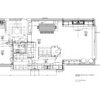
    I'd love to be able to answer you, mishdish, but we haven't installed the hood yet. We're getting close to installation time, though. If you ask again in about a month I'll probably have an answer for you. We're currently stuck in limbo as the cabinets are in, but none of the appliances are since we need to wait for flooring. Below is a photo of the space from earlier this week.


  • 2 years ago

    Amazing!! Looks great.

    Thank you for responding. I’ll send a note in a month.

    Why did your KD take Best hoods off the table?

  • 2 years ago

    I believe the installer had bad experiences with Best and recommended against it. Since we were trying to narrow our choices, we agreed to remove it from contention.

  • 2 years ago
    last modified: 2 years ago

    Normally, for adequate ventilation hood systems and closed-windows houses, there will be significant back-draft pressures without sufficient make-up air systems. These will degrade hood performance, and potentially be a safety hazard from CO back-drafted from combustion appliances. How good a given MUA system has to be depends on what combustion appliances might be affected. Our understanding is the following (rewritten from another forum contributor). Suggested pressure limit for not moving too much moisture and dust through walls has not been argued here.

    -------

    Mechanical-Draft Appliances

    Heating systems with fan-powered exhaust systems can withstand higher negative pressures than natural-draft appliances. Some types of fan-powered systems are much better than others, however. In order of effectiveness, the choices are:

    * Sealed-combustion. Also called “direct vent,” these appliances draw all combustion and dilution air from outside. These can typically tolerate negative pressures in the range from 25 to 50 Pa.

    * Power-vented. These draw their makeup air from indoors and are also called fan-assisted, forced-draft, or mechanical-draft. These can typically tolerate up to 15 to 20 Pa of negative pressure.

    * Induced-draft. These have a small fan added for energy performance, not to overcome house depressurization. These can typically tolerate 5 to 15 Pa of negative pressure.

    By comparison, an atmospherically vented furnace can back-draft with as little as 5 Pa of negative pressure, and a gas water heater will have spillage at 2 or 3 Pa. Fireplaces can start having problems at about 3 Pa. Canadian codes limit negative pressures in homes with atmospherically vented equipment to 5 Pa. U.S. codes do not currently address the issue (in a plainly spelled out "prescriptive" number).

    1 pascal = 0.00402 inches, water column

    1 atmosphere = 407 inches, w.c.

    ---------

    The MUA system will have its own pressure losses, such as from a filter, so even without a code requirement, but always with a safety requirement, one has to have no combustion appliances, have separate MUA for combustion appliances, or add a blower to the MUA path if hood flow rate is high enough.