Software
Houzz Logo Print
westes

Source For Composted Manure Near San Jose, California?

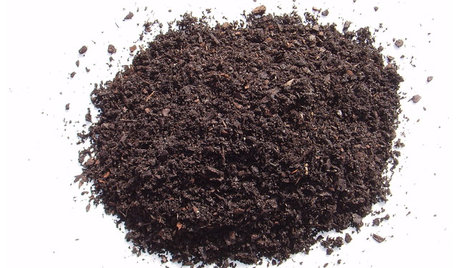
Is there any wholesale garden materials vendor near San Jose who has a *composted* manure available for delivery by truck, priced per cubic yard instead of per bag? Lyngso in San Carlos has a composted turkey manure named Organic Diestel Structured Compost:

https://store.lyngsogarden.com/products/organic-diestel-structured-compost-120.html

This is a very expensive product at $185 per cubic yard. Is there something comparable in the South Bay, hopefully cheaper?

Comments (15)

  • 2 years ago

    Evergreen Supply sells a composted manure out of their Watsonville yard. Labeled NuFiber, it is described as " Derived from dairy fiber by a proprietary process that involves extracting excess liquid and allowing the manure to naturally heat up under aerobic conditions in a rotating drum. The finished product tests pathogen free and is suitable as a planting medium, soil amendment, or livestock bedding material." $69/cubic yard. Might be worth checking out.

    Otherwise, a few more possibilities:

    http://wheelerfarms.net/products.htm

    https://siliconvalleyseeds.org/svs/resources/compost/

    https://cesantaclara.ucanr.edu/Home_Composting_Education/Where_to_Get_Compost/

    westes Zone 9b California SF Bay thanked gardengal48 (PNW Z8/9)
  • 2 years ago
    last modified: 2 years ago

    @gardengal48 (PNW Z8/9) NuFiber sounds interesting, but getting a small truck out of Watsonville is very tough. I have tried working with Evergreen in Watsonville before and logistics always killed the deal.

    Wheeler Farms is interesting and I will contact them. Delivery might be expensive.

    An aesthetic pruner here is asking me to use compost as a fertilizer for some hedges, then mulch on top of that. How much do I need to worry about salts in the manure and making sure it is pH adjusted? I guess this is addressed as long as the manure is fully composted?

  • 2 years ago

    A couple of things I'd question first. Does this "aesthetic pruner" require the product used be composted manure rather than some other form of compost? If so, why? The NPK of any compost regardless of input is going to be quite low - that's why compost is considered a soil amendment, not a fertilizer. Which form of compost used is not going to make a heck of a lot of difference, specially in the quantity that is likely to be provided with this application. Also when applied as a topdressing as described (not incorporated into the soil), compost IS a mulch. No other topping or mulch is required.

    As an aside, while compost in any form is not a great source of plant nutrients (and therefore not really considered to be an effective fertilizer), compost derived from the widest range of ingredients will produce the widest (but not necessarily the highest) range of nutrients. Yard waste and kitchen scrap compost is widely available, much more so than bulk composted manures. And it is reasonably priced as well.

    westes Zone 9b California SF Bay thanked gardengal48 (PNW Z8/9)
  • 2 years ago

    @gardengal48 (PNW Z8/9) You convinced me to push for a fertilizer. I found a fertilizer named Nutri-Rich that uses some composted chicken manure as one of its nutrient sources. It looks more cost-effective than something like Espoma Plant Tone. How does this look to you?

    http://stutzman-environmental.com/fert-nr824.php

  • 2 years ago

    That should be fine.

    westes Zone 9b California SF Bay thanked gardengal48 (PNW Z8/9)
  • 2 years ago

    On rereading, I see that compost was suggested as fertilizer FOR A HEDGE. As such, we're talking long term. For that, compost can be considered a weak nutrient in the long run. For annuals, that's really not applicable. They need right-now fertilization, which compost really doesn't provide. As a soil amendment, compost has enormous advantages, but fertilization isn't really one of them. Nutri-Rich seems good as a fertilizer, and if available locally, can be pretty inexpensive. Re fertilization, I always suggest people get their soil tested. Don't buy nutrients that your soil doesn't need.

    westes Zone 9b California SF Bay thanked daninthedirt (USDA 9a, HZ9, CentTX, Sunset z30, Cfa)
  • 2 years ago

    Had this in my bookmarks. Average levels of compost nutrients From 1600 samples the data was the average with a very good breakdown of all the exchangeable, or available (water soluble) nutrients found in compost. The nutrient numbers may appear to be low as a percentage but exchangeable nutrients are all they test for.

    The organic matter dry weight of 42% shown is considered "active" organic matter which will eventually brake down to all the the other elements listed making twice or more of the nutrients available at some point int time.

    The Stulzman fertilizer shows 1% soluble nitrogen (either ammonium and/or nitrate) and 7% insoluble nitrogen which needs many months to years to break down, so to me this isn't much better than compost for nitrogen, but i do like chicken manure. Stulzman has twice the available phosphate and 3 times the soluble potassium than compost (until the active organic matter breaks down) but it's available right away. Stulzman is OK, but just about any composted chicken waste will do and see prices half Stulzman prices.

    So how much do you need? Application rate for shrubs is 50 lbs. per 1000 sq. ft. and in a cubic yard there's about 13 fifty pound bags and will cost you $400, so $68/cubic yard for something gardengal suggested is a better deal. If you want more macro nutrients spread a $20 bag of all purpose fertilizer before spreading the bedding material. But if you're hooked on the word "organic" I guess Stulzman's price fits the label.

    westes Zone 9b California SF Bay thanked outpaientzero
  • 2 years ago

    @daninthedirt (USDA 9a, HZ9, CentTX, Sunset z30, Cfa) Why do you like compost as a weak nutrient for the long term health of hedges?

  • 2 years ago
    last modified: 2 years ago

    @outpaientzero I can probably cover my entire hedge line with two bags of the Stulzman fertilizer and even with transportation costs I am under $50.

    Finding a source for composted chicken manure is not easy. The Wheeler Farms product that Gardengal found looks good, but then I am looking at transportation costs alone of around $160. The Lyngo product is $185 and has transport costs over $300.

    What's your opinion of Stulzman versus some organic fertilizer like Espoma Plant Tone?

  • 2 years ago
    last modified: 2 years ago

    I guess compost can be thought of as a weak fertilizer for hedges because compost has to thoroughly break down in the soil to release nutrients, which may take years, and hedges last for years. So you put down compost around hedges, and they'll get some nutrients out of it in a year or two. I think the working number is that compost doesn't have a lot of N, and it releases only a few percent of that nitrogen every year. Doesn't work for annuals, like summer veggies. They're gone at the end of the year.

    You can tabulate nutrients from compost, but those tabulations don't tell you when you're actually going to have them usable. Those soil control lab numbers are for well destroyed compost. I will say that one advantage of very slow-release fertilizer like that is that it isn't leached effectively.

    westes Zone 9b California SF Bay thanked daninthedirt (USDA 9a, HZ9, CentTX, Sunset z30, Cfa)
  • 2 years ago
    last modified: 2 years ago

    @outpaientzero Thank you for all of those ideas.

    I do not understand what feather or blood meal is adding to the equation here if most of the fertilizer is high-nitrogen composted manure. Those are also high nitrogen sources. Are you using them for trace minerals?

    When you say chicken manure at a 5:1 ratio, do you mean five parts chicken manure to one part blood meal? What about the Wheeler Farms composted manure product that GardenGal identified, which is about 25% horse manure and 75% hay or other organic material used for the composting? I am not crazy about the idea of large piles of manure and having to manually mix it all and then bury it into the soil. Having something where most of the composting is done before I buy it is desirable, both to save time and to stabilize the nitrogen in the soil

    Could I just mix the Stulzman's (which is much cheaper than Espoma) with some composted chicken manure?

    I don't completely understand the difference between chicken manure purchased by the bag at a garden nursery and purchasing "composted manure" which is only a 25% fraction by volume of manure. If I use raw manure in a bag, I have to bury that in the ground so that it is not losing ammonia as gas and losing nitrogen to the air. If the manure was composted those nutrients are fixed as more stable chemical compounds in the soil and can stay with the compost as more of a top-dressing lightly mixed in with the mulch. In a perfect world, I would like something I can just have a truck dump a few cubic yards of on my lawn and then top dress and mix with mulch throughout the hedges. It's more time-efficient, and less messy.

  • 2 years ago

    For the purpose you describe above, yard waste/kitchen scrap compost - which nearly every municipality in CA has available - will work perfectly well. Manure based composts have no added 'magical' benefits and may be somewhat less appealing, as they often tend to attract dogs and other critters by the aroma.

    FWIW, in all my years of gardening, I too have never fertilized any trees or shrubs planted in the ground. But I do topdress or mulch routinely (generally annually, sometimes more often) with a yard waste-based compost. Over the years, this has provided all the nutrient supplementation required to grow healthy, vibrant plants. I would add that when I had pet rabbits, I made good use of their manure but there was nowhere near enough to go around and so saved it for certain "hungry" plants.

    westes Zone 9b California SF Bay thanked gardengal48 (PNW Z8/9)
  • 2 years ago

    I'm somewhat confused, no one mentioned using fresh manure and all discussions were related to fully composted manure. In this state of composition they contain very little nitrogen. so Stulzman's, Espoma and Wheeler either label or state amendments are added to their low nitrogen products such as feather meal to increase nitrogen levels. Diestel was the exception with no reference of added amendments.

    Stulzman's and Espoma are both fully composted poultry manure/waste. Both have the same amendments added to alter the NPK ratio of there products, the only difference is the amount of each amendments they add. Wheeler farms is fully composted horse manure and bedding hay, and the company states amendments are also added to there compost but doesn't say which ones or publishes a nutrient analysis.

    All 3 products are completely composted before adding organic certified amendments to make it their own recipe, and any of these products will work for you. IMO Stulzman would be my first choice followed by wheeler farms. All these products are completely composted and will just look like black or brown piles of dirt, and you don't have to mix anything. My prior suggestions were based on your desire to save money, and after I read my comment over I also found it confusing so I'm deleting it. Sorry for the confusion.

    I found Organic Diestel an odd mixture using wood as a bulking agent for composting Turkey manure. The rate of decomposition are so opposite of each other I'm wondering if the wood was used more as a filler leaving partially decomposted wood to fill a cubic yard, or could be just a price issue. I don't like it anyway and personally wouldn't buy it at half the price, but you can and I'm sure it well also work for you. (Again the manure is completely composted.)


    westes Zone 9b California SF Bay thanked outpaientzero
  • 2 years ago
    last modified: 2 years ago

    @outpaientzero Since shrubs mainly want nitrogen for leaf growth, would it make any sense to just use alfalfa? Or alternately I could blend alfalfa with other fertilizers? But generally others are saying shrubs should not need any fertilizer, so I am focusing on nitrogen to just promote better leaf growth.