

Does anyone cook with induction and do you need to have hood vent?
I am in planning stage of new kitchen and love gas cooking. However, because of the robust ventilation system needed including makeup air I'm wondering if I need less of a hood system with induction. The cook top will be on the island and the hood will go through the roof and shown from the front of the house. After much research we do not want to do a downdraft but maybe a downdraft is better with induction cooking?
Comments (42)
 2 years ago
A hood vent does not work only to remove gas fumes. It also removes fumes/steam/odors given off by the food being cooked. I would say the same kind of hood would be needed no matter what kind of cooktop you install. We are doing induction and getting a behemoth vent hood because we cook a LOT and we hate lingering food odors in the house.
cristinehoffmann thanked A C 2 years ago
I cook with induction and love it.
Venting is indispensable for steam, odors, and vaporized grease.
cristinehoffmann thanked qam999Related Professionals
Sugar Land Kitchen & Bathroom Designers · Dubuque Bathroom Remodelers · Clarksburg Kitchen Remodelers · Las Cruces Kitchen Remodelers · Bainbridge Home Remodeling · Chattanooga Home Remodeling · Santa Rosa Home Remodeling · Pine Bluff Kitchen Remodelers · Saint Cloud Kitchen Remodelers · Eau Claire Kitchen Remodelers · Cincinnati Bathroom Remodelers · Janesville Bathroom Remodelers · Plymouth Kitchen & Bathroom Designers · Madison Kitchen Remodelers · Bronx Kitchen Remodelers- 2 years agolast modified: 2 years ago
While waiting for further responses, maybe you could try a search here? There have been dozens of threads discussing these two topics over the last decade. Of course, the Houzz search engine doesn't always work well and sometimes it works very poorly. On venting, try using this as your search string: "does induction need vent" and see what turns up.
Regarding downdrafts, past threads can be summarized thus: (a) downdrafts are less ineffective with induction than with gas but still are only in the "better-than-nothing" category; (b) taller telescoping (pop-up) downdraft models definitely perform better than surface intake downdraft models; (c) some of the current surface-intake models are better than they used to be but that is not saying much --- ferociously expensive and still very-much at the lower end of the "better than nothing" category.
cristinehoffmann thanked jwvideo  PRO2 years ago
If you cook, you need to vent. Period. And if you don't cook, you still need a vent. Because the next person probably cooks.
- 2 years ago
"but maybe a downdraft is better with induction cooking?"
Downdraft won't work any better with induction. Downdraft is a tool of last resort. Since you are already planning on an overhead hood, it would not make sense to consider the inferior downdraft.
It is important to realize that your cooking will generate smoke and grease regardless of the type of energy used to cook the food. If you are cooking hamburgers, or doing a stir fry, or cooking anything smoky, it doesn't matter if your cooktop is induction or gas - those foods will generate smoke and grease regardless.
When shopping for your hood, make sure it is 6" wider than the cooktop due to the island location. You won't have adjacent upper cabinets to corral the smoke the way you would with a wall location for your cooktop. Therefore you must make the hood 6" wider than your cooktop. In addition, a canopy-shaped hood is more effective than a flat hood, so I advise you to get a canopy-shaped hood. Also get a hood with baffle filters, not mesh filters.
 cristinehoffmann thanked cpartist
 PRO2 years agolast modified: 2 years ago
What needs to happen is to place the 10% of your time cooking zone on the wall. Then you can vent much more effectively, and also more cheaply than island cooking. The island then becomes the 70% of your time prep zone, where you can interact easier with guests for the most time spent in the kitchen.
cristinehoffmann thanked Strawberry Patch Designs- 2 years ago
You do need a hood with induction, for the reasons others stated. But you don't need the same level of suction. You are venting only the cooking effluent--steam, vaporized oils, etc. You aren't trying to clear combustion byproducts as well.
cristinehoffmann thanked mcarroll16 - 2 years ago
I agree with what others have said here. Induction means you won’t have the same level of heat and potential velocity of cooking effluent, but you will still need to exhaust whatever you’re cooking, but might be able to get away with lower CFM’s. If you have the option, and I am not certain that you do, if you wanted something on the island, it would make a lot more sense to have your sink and or prep sink on the island and use your wall linear space for your cooking appliance and ventilation hood. if that is not an option and you end up doing your cooking on the island, you might even consider going more than 6 inches wider with your hood dimensions in order to capture more of the cooking smoke and effluent that might escape the canopy of your hood above. Downdrafts are always a last ditch solution because you are fighting against the laws of physics given how inevitable it is for heat to rise and so you’re working against that principal.
cristinehoffmann thanked HU-16168550092 - 2 years ago
"You do need a hood with induction, for the reasons others stated. But you don't need the same level of suction. You are venting only the cooking effluent--steam, vaporized oils, etc You aren’t trying to clear combustion byproducts as well.”
No. Physics says otherwise. Natural gas is the lightest of the cooking effluent. You need more "suction" to pull the heavier effluent. In order of density, lightest to heaviest, is: natural gas, steam, smoke, grease. Although cooking with induction does not emit effluent from natural gas, cooking with induction has the effluent's heavier components of steam, smoke and grease. You should not reduce your cfms because there won't be a natural gas component to your cooking effluent.
cristinehoffmann thanked M Miller - 2 years ago
Surprising as it may seem, there is very little suction at the cooktop from a properly placed hood. There will be some transverse air flow that interacts with the cooking plumes. What overhead hoods do to function is to let the cooking effluent plumes rise to the hoods where the plumes can be entrained in the air flow as the plumes approach the capture aperture (hood base) and are brought to the baffles for containment.
Plumes have momentum and if the CFM is too low for a given configuration, some plume portions may reflect out of the hood and not be captured or contained. A published study I have intermittently referenced shows that the plume velocity profiles change with type of cooking, cooktop type, and power source. From these data an argument can be made that the minimum CFM that will fully capture and contain a particular plume will be lower with an induction source than a equal powered (BTUh) gas source. (This is unlikely for any two given cooktops.) But this whole area has so many factors requiring estimation that skimping on CFM should only be considered when some architectural or financial limitation leads to risking some conditions that may not be fully captured.
For example, I usually recommend 90 CFM per square foot of hood entry aperture. I wouldn't go less with wok cooking or steak searing, even if a wok hob is used instead of an equivalent gas burner. (We are not considering Asian restaurant 100k BTUh burners here.) Experimentation in situ swapping back and forth might reveal that the induction case only required 80 CFM/sq.ft.
For less 'effluently' dynamic cooking, the gas plume component may represent a larger fraction of the plume. One might imagine that for frying, induction cooktop plumes might well be adequately captured at 50 CFM/sq.ft. where a similar configuration gas burner required 65 CFM/sq.ft. (These values are for argument purposes only.)
In other words, M Miller's advice is valid, except for the "suction" aspect, which may have been intended only to simplify the topic.
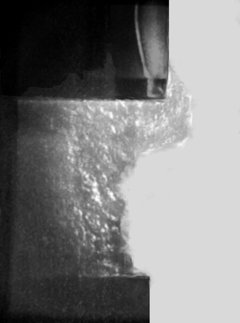
spillage -- inadequate CFM
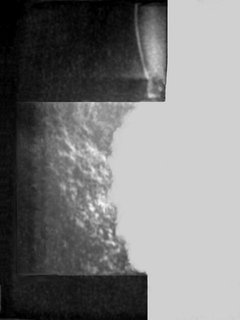
no spillage -- adequate CFM
Schlieren photos of heat turbulence; the concave shape of the cook's side boundary shows the modest effect of the air flow on plume bending.
cristinehoffmann thanked kaseki - 2 years agolast modified: 2 years ago
“For less 'effluently' dynamic cooking, the gas plume component may represent a larger fraction of the plume. One might imagine that for frying, induction cooktop plumes might well be adequately captured at 50 CFM/sq.ft. where a similar configuration gas burner required 65 CFM/sq.ft. “
I am sorry @kaseki, I do not undestand how this conclusion is a logical result of the relationship between the premises. If the cooking is ”less effluenty” as you put it - for example, meals for a family of vegetarians vs a family that regularly sears beef or chicken - then the need for cfms is still a function of which is the lesser or greater ”effluenty“ cooking, not the cooking source. To further the example, the difference in effluent from steaming vegetables with gas vs steaming vegetables with induction is de minimus. That difference is not enough to dictate lower hood cfms. And, if that vegetarian family wants to stir fry their vegetables, then the delta between the two cooking sources is even narrower. The cfms would need to be enough for both the steam and grease generated regardless of energy source.
The other problem is that installing a hood with lower cfms because the cooktop is induction assumes that cooking for that family will always be ”less effluenty”. But meals are not the same in that regard. *I would rather have a hood with higher cfms, and keep it on a low setting most of the time, with the ability to turn on the higher cfms when needed. As opposed to spending money for a hood exhaust with permanently low cfms and no flexibility to make the exhaust stronger when needed.*
cristinehoffmann thanked M Miller - 2 years agolast modified: 2 years ago
Hmmm. Sorry for my writing, as my point was missed. I attempted to point out that the fraction of plume volumetric rate that is gas combustion products relative to that from food cooking products may vary with what is being cooked. I was not arguing for scaling a hood system to some modest cooking requirement, although I agree that this is sufficient if the resident is certain the modest requirement will never (or hardly ever) be exceeded.
We are at least aiming for low grease on the walls, and at best no odor in the house. This is a major and expensive upgrade in a world where OTC microwave pseudo ventilation is common. I wish for others to find the best affordable ventilation, and to avoid "Perfect is the enemy of good" [enough]. ...Voltaire. See also Pareto principle.
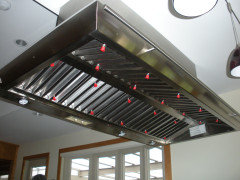
As to the original question, I have a 36-inch induction cooktop and an induction wok hob side-by-side. My hood overlaps the two units. I sized for 90 CFM/sq. ft. and seem (rough air flow measurements) to be achieving around 100 CFM/sq. ft. See image of Wolf's largest Pro Island hood. I don't think I can be accused of skimping on a hood system because of induction cooking.
 cristinehoffmann thanked kaseki
cristinehoffmann
Original Author2 years agolast modified: 2 years agoThank you for all of your comments. My question about venting was really about CFMs and makeup air needed. Because of the layout and many windows in our MCM home, we are laying the kitchen out with both cook top and a sink on a jumbo size island. After much research on induction, I think I will be disappointed with the possibility of cold spots on the sides of the pans if the pan is slightly larger than magnet. I would prefer the Thermador Freedom induction cook top. However, not in our budget so we will most likely go with the Wolf Contemporary gas. Here's an idea to all chef instructors .... If induction is going to take off in this country, appliance stores could hold cooking classes so buyers could try it out.
- 2 years ago
Wolf and Miele have demonstration centers where you can do just that. Any chance you live close to one?
cristinehoffmann thanked mcarroll16 - PRO2 years agolast modified: 2 years ago
You are completely wrong about cold spots. You really ought to go to a Wolf cooking center before you let your prejudice show like that. And certainly before you put in any type of downdraft with gas. You will have way colder spots with that pulling the flame away from the pan than you ever will with induction.
cristinehoffmann thanked DeWayne cristinehoffmann
Original Author2 years agoWe are not planning on a downdraft with gas. We were just wondering if there was any other venting options with induction cooking.
- 2 years ago
I'm a huge induction fan, but I wouldn't say OP is wrong about cold spots. She did mention using a pan larger than a burner. I have the Wolf 36" cooktop. My 15" pan is definitely cooler around the edges than at the center. (Might be in part because the pan is warped, so the sides are farther above the cooktop than the center is.)
cristinehoffmann thanked mcarroll16 - 2 years ago
I am not an expert. I can only relate my personal experiences so here goes:
I have 36" induction range with a 36" Zephyr hood hung at the maximum recommended height from the cooktop. This set up works great except when there is a large amount of smoke i.e. if something really burns. In that case, even at the highest setting the hood allows smoke to escape along the ends of the hood. I would have gone with a larger hood but the range is sandwiched between two existing windows in a brick house.
There was also mention of cold spots when using pans larger than the burner with induction. I have never experienced this but I use heavy flat bottomed pans like Le Creuset, cast iron, etc. I have a gas stove in our vacation home and I prefer induction. When we renovate that kitchen the gas stove is getting the heave ho.cristinehoffmann thanked moosemac - 2 years ago
Generally, the triclad and similar types of pots and pans have a thermally conductive layer that spreads the heat across the pan base. This layer does not rise up the sides, so the gas cooking effect of the gas flowing across the base and up the sides directly heating them also will not be present. Hence sides will be cooler on induction.
Thinner pans, such as my HexClad griddle pan, ~12" OD, 10" base, used on a 10-inch hob, are slightly cooler on the sides, and barely cooler at the base edges, likely due to heat conduction into the sides. This may be seen frying eggs during the sunny-side-up phase, where the pan edge and pan side contacted portions seem to cook slightly more slowly. This effect with disturbed cooking, such as when scrambling eggs, would likely not be noticed.
If I were to use this pan on an 8-inch hob, not tested, I expect that the unheated outer inch of the base would be cooler because this pan is a single thin (~1/8-inch) stainless steel sheet without a deliberate aluminum or copper spreading layer.
Cooktop: 36-inch Frigidaire Gallery; pan supported on three 2-inch pads of 0.040 silicone sheet. Pan base is deliberately slightly convex (top view) for warp resistance when used in ovens.
cristinehoffmann thanked kaseki cristinehoffmann
Original Author2 years agoI would like to know from all of you induction fans, why you like it better than gas.
- 2 years ago
I've used induction for the last 15 years and would not consider gas again unless there were absolutely no other choice. You may be able to get away with slightly less power on your vent, but I wouldn't stretch that too far. You may not need to vent the products of combustion but you do need to vent the steam and grease and possibly odors. I currently have the Thermador Freedom and had to do some fancy budgeting to get it, but it's been worth it. Cooking is something I enjoy, so my cooktop is a priority. I get that not everyone has that priority. My prior cooktop was a Miele, and honestly, the size of the hobs was rarely an issue. Unless the difference between the size of the pan and the hob is large--ie, more than half an inch or so, you're not going to see a lot of difference.
cristinehoffmann thanked cj47 - 2 years agolast modified: 2 years ago
Why I like induction:
- Speed. Water boils SO FAST. Your pan is ready to sear ingredients so quickly. You do need to learn new cooking habits. No doing a quick task while your pan heats.
- Cleaning. SO EASY. Because your cooktop doesn't get that hot, food and residue don't cook on.
- Safety. A cooler cooktop is so much safer with kids in the kitchen.
- Convenience. A cooler cooktop can double as a work surface. As soon as I take a hot pan off the burner, I can use that part of the cooktop to set down platters or cutting boards. And because it's a smooth glass top, the whole cooktop functions as continuous countertop space when burners aren't in use. If you are putting the cooktop in your island, you will really appreciate this feature, because it's wonderful to have a large work surface on your island.
- Summer comfort. Standing at the cooktop is much more comfortable when your burners aren't radiating heat into the air.
- Health. I have asthma, so the health effects of gas cooking are top of mind for me. And I have kids--I like knowing I'm not exposing them to an asthma risk.
cristinehoffmann thanked mcarroll16 cristinehoffmann
Original Author2 years agolast modified: 2 years agoOpaone ... enjoyed reading your link! We also have been driving an electric car since 2012 and will never purchase a combustible engine vehicle again.
 2 years ago
My spouse and i have had an induction cooktop for years. We love it so much we would never do anything else. But like anything you buy, you get what you pay for. As you go up in price, the cooktop capabilities expand. Take a careful look at what you cook and how hou currently use a fry pan.
Also if switch to induction, you will most likely need to get a new set of induction ready pots and pans.- 2 years ago
Opaone, I also enjoyed your link! I'm still a fan of induction but it was interesting to read why you choose gas. You have a lovely space!
I love cooking on induction because I get good power at the top end and really gentle, low heat at the other end. I have excellent control. The heat is instantly adjustable and I have no problems getting it where I want it and keeping it there. I like that it doesn't throw heat at me--or carbon monoxide, though I have a good vent that would mitigate that problem . Studies by plenty of organizations have concluded that intermediate EMFs are not harmful to us, so I'm not worrying about them. This is not new technology, it's just newish in the USA, and if in another 30 years they find out that they were wrong about the EMFs, then I'll deal with it. In the meantime, I drink coffee every morning despite it being a healthy beverage some years and akin to poison other years. :-)
I tend to be a messy cook, so I do love the total ease of cleanup. I'm not fussy with my appliances. They're here to work, and I use them pretty hard. They don't have to be pristine, they just have to do what I want them to do with a minimum of fuss and bother. Cleaning up with a quick swipe of a lightly soaped cloth followed by a microfiber is about the right amount of fuss for me.
Before committing to induction, I bought a Viking hob for a trial run. Having a portable hob gave me a taste of induction, but, it was not as good or as powerful as either of my full sized 36" cooktops have been, so while it was a good start, I would still seek out working models to tinker with at a showroom. Hob layouts, power levels, and digital control layouts vary widely between brands, so it's worth it to find a place that has working demo models from different brands. .
If you love to cook, you're going to turn out great food no matter what you're using. You might as well enjoy the process, so get whatever gives you the most joy to use.cristinehoffmann thanked cj47 - 2 years ago
Opaone, I too, found it helpful to revisit this link so thanks again for posting here. This blog article is quite well written, and very balanced in terms of the rationale provided for why gas was chosen. For myself, I have often wanted to renovate and use a blue star rangetop, because I am a fan of the open burner style where more of the heat goes to the cookware and less into the open air of the kitchen. My primary reason for wanting it, though, is not the high BTU capability because my cooking style does not really require it, but rather due to the fact that there are still some gas, cooking appliances out there, which have fairly low levels of technology, which gives me at least a little confidence that they might be serviceable for a longer period of time than many of the more technically sophisticated offerings available currently.
And, you also make good points about the fact that we simply do not know enough yet about the impacts of potential harm fromthe EMFs given off by induction appliances. Granted, people also make good arguments that items, such as vacuum, cleaners, create relatively strong, EMF fields on their own. You are correct that gas is not unfamiliar nor are its risks as we have been using gas cooking appliances for more than 100 years now on a fairly large scale at least in cities and so we do know a lot about how to manufacture and maintain them to be relatively safe.
However, my own decision making process recently became more complex, given the fact that, since your linked, excellent article was written in 2020, some new reports have been published regarding indoor air quality and the potential risks of having natural gas appliances in the home. One of the excerpts from this report that I came across drew my attention in particular where it states,
“To better understand cooking appliances’ potential climate and health impacts, the researchers measured methane and nitrogen oxides released in 53 homes in California, not only during combustion, ignition and extinguishment, but also while the appliance was off, something most previous studies had not done.”
With proper ventilation, I’ve always assumed that any of the noxious gases created due to the combustion process of cooking food, along with the emissions generated by burning, natural gas itself would be readily mitigated by properly set up ventilation presuming that it is used regularly when cooking. What I do think is somewhat new is that we now know that gas appliances leak methane and its toxic components even when they are not being used. This comes as a great disappointment for me as I was hoping that ventilation alone would take care of any toxic exposure. Here is a link to the article from 2022. Although there are multiple variables at play influencing municipal policies that are trying to de-incentivize gas appliance use, the article also discusses the issue of indoor air quality and the concerns around toxins like benzene, which are admitted into the air when natural gas leaks. Note that these leaks are from appliances that are in proper running condition and are not experiencing malfunctioning. My point here is not to suggest that everyone who has a gas appliance, needs to run out tomorrow and ditch them to the curb. Everyone in the forums who expresses concerns regarding exposure to both natural gas toxicity risk as well as any potential health risks from induction. EMS have very legitimate concerns to make and so I don’t believe I’m taking sides here so much as wishing there were a healthier alternative to both of them. 🙄. I recall reading somewhere else, though I don’t have the link at the moment where some regulators were pushing gas appliance manufacturers to redesign their valve systems to better contain leaks that happen 24/7 when gas appliances are not turned on, but still emitting toxins into the indoor air spaces of our homes. Here is a link to the article I’m referring to where are the researchers are discussing indoor air quality and the impacts of gas appliance use:
https://news.stanford.edu/2022/01/27/rethinking-cooking-gas/
cristinehoffmann thanked HU-16168550092 - 2 years ago
Going to a showroom where you can actually full-on demo the equipment is well worth your time. Long story short, DH and I weren't sold on induction when we were given a boiling water demo at the chi-chi appliance store. I don't remember what brand it was, but it didn't impress us. At all.
Fast forward a short bit of time and I was still thinking about the induction, I didn't think we gave it a fair evaluation, and I wanted to get a demo on a top-line induction. Someone on the board suggested calling a showroom and explaining that DH wanted to COOK on the appliance, and the folks at the Wolf showroom were more than willing to accommodate us. That demo showed DH he could cook that way he wants and needs to using induction; he was very doubtful before that demo. We are now budgeting for a Wolf. :0)
Why do I want induction? Some of you are going to howl in laughter or downright scoff, but it's because I'm becoming more and more afraid of burning the house down with the gas stove. We are both forgetting to turn the burners off more often. It used to be just his carelessness, but I've done in multiple times myself over the last year or so. I have no idea if this is actually dangerous or not, but it is a real concern to me.Secondary reason is ease of clean-up. People on this board have posted about how easy it is to wipe up after cooking, and I didn't believe it until I saw it with my own eyes during that demo -- yes you CAN cook on top of papers towels. Cooking something with a lot of splatter? Put down towels and simply pick up the towels when you're done and toss them in the wash. Boom you're done. And like mentioned above, the cooktop doesn't get hot enough to cause anything to bake itself onto it. Quickly wipe it down and off you go. I'm a so tired of cleaning up the gas stovetop, the induction will be a cleaning game-changer.
cristinehoffmann thanked porkchop_z5b_MI - 2 years agolast modified: 2 years ago
"I'm becoming more and more afraid of burning the house down with the gas stove. We are both forgetting to turn the burners off more often."
This really struck me, as I am concerned about my mom doing this with her gas range. I do not have an induction cooktop (and frankly, it is a turnoff how people on this forum push it so strongly - but that is another topic...). So I am not familiar with how it might be safer. If you leave a pan on the induction cooktop, with food contents of some sort, then forget about it, won't the contents continue to cook with induction until they burn, and thereby potentially cause a fire? That is a long way of saying, how is an induction cooktop safer for people who might be forgetful?
cristinehoffmann thanked aem04 - 2 years ago
I (who have induction) don't think it is significantly safer w.r.t. pan contents vs. failure to turn off. When on and attended and grease vapor is being emitted, then the flame could come in contact with the grease vapor. I recall grease fires as a youth with gas stoves, and suspect that something like this occurred.
Other safety factors include the gas cooktop presenting open flames that might ignite a sleeve or paper towel, or a gas leak might not be detected if one's odor sense is degraded.
- 2 years ago
"Other safety factors include the gas cooktop presenting open flames that might ignite a sleeve or paper towel..."
Or your hair....yea...have had a couple of close calls with that over the years.
" I (who have induction) don't think it is significantly safer w.r.t. pan contents vs. failure to turn off."
What does w.r.t. stand for? - 2 years agolast modified: 2 years ago
w.r.t. = with reference to
@porkchop_z5b_MI you were referencing the benefit of induction when it comes to forgetting to turn the burners off. But it doesn't seem that is actually a benefit of induction. But I see the other safety factors that kaseki cited.
- 2 years ago
You mean you can't burn the house down if you leave the gas burners on? Even if you say you can't, I'm not going to fully believe it and still be concerned about it.
- 2 years agolast modified: 2 years ago
Induction isn't much safer if we're talking aobut leaving a burner on with a pan still on the burner. Where it is safer is when you remove the pan. Induction burners will turn themselves off. But even if they didn't, no pan on top means no heat being emitted. A gas cooktop will keep sending out a flame, which might ignite something else you set near the burner. (Who would ever do this? My grandmother, once upon a time. Or kids who just come fiddle with an empty cooktop.)
- 2 years ago
Regarding leaving a pan on an active induction hob, the induction cooktops I have worked with turn off when the heat gets to a certain point--and it's prior to the point where the contents of the pan would burst into flame. Some significant charring might occur on the food, or you might damage the pan, but from a safety standpoint, it's not going to burn the house down. So there is increased safety from that point of view.
- 2 years ago
You mean you can't burn the house down if you leave the gas burners on? Even if you say you can't, I'm not going to fully believe it and still be concerned about it.
@porkchop_z5b_MI I do not understand your comment. No one has said that. To review: I said I was interested in the safety factors of induction because I was concerned my mother might forget to turn burners off with her gas range. @kaseki responded that induction is not significantly safer with respect to pan contents left on the burner and the failure to turn off that burner. A fire could still happen under those circumstances. Then there were two subsequent comments that were very helpful. I repeat, no one said that "you can't burn the house down if you leave the gas burners on".
- 2 years ago
"@mxk3 z5b_MI I do not understand your comment. No one has said that."
I was not looking to start an argument -- I said that because I did not understand kitasei's comment. I now do because of the subsequent comments. That is all. - 2 years ago
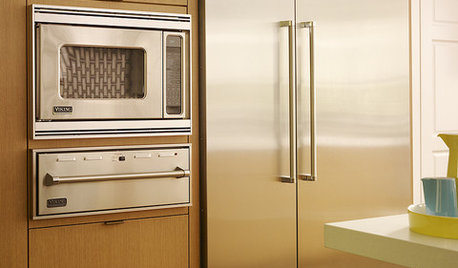
I just randomly pulled up the Bosch website to see their induction cooktops' features. I took a screenshot of their overview of safety features, so these are good to know. And also to know the specific names for these features so that I can look for them in other models too ("automatic shut-off, pan detection, and overheat protection").






opaone