Software
Houzz Logo Print
webuser_436863303

Are hydrangeas a good choice as foundation shrubs?

2 years ago
last modified: 2 years ago
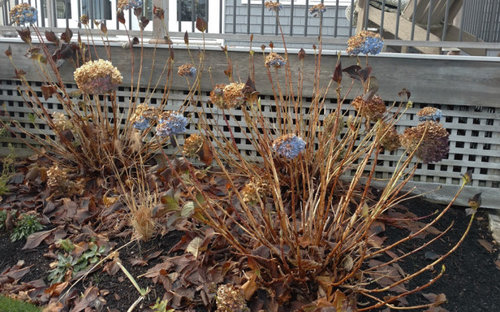
I keep reading recommendations for hydrangeas as foundation shrubs. People post beautiful photos of hydrangeas in bloom to convince others to use them.

Here's how they look in winter.


Most foundations are ugly cement and hydrangeas will expose it for all of winter and early spring.

Which shrubs do you recommend for foundations?

Comments (29)

  • 2 years ago

    Arborescen hydrangeas like Annabelle are not attractive after the blooms fade, unlike paniculatas or maculatas. And in their case the dried blooms look best against a background that shows them off. If your foundation is this low lattice I think grasses or evergreens will be better.

  • 2 years ago

    Yep, you're right. Hydrangeas look like hell in winter. I think foundation beds should be 85% evergreen shrubs and 15% spring and summer eye candy like hydrangeas. What climate you live in will determine which shrubs are going to green all winter long. I'm a fan of getting a good mix of leaf size and shape in evergreens. I'm smitten for cherry laurels if they are right for your climate.

  • 2 years ago

    I do see cherry laurel being used here quite a bit (Oregon).

  • 2 years ago

    Foundation shrubs - if you even need them - should be mostly (85%+) evergreen. And in the PNW that is not an issue.......many, many to choose from.

  • 2 years ago

    Soft touch holly are evergreen and only grow a few feet tall and wide.

  • 2 years ago

    I like that holly!

  • 2 years ago

    When tidily kept (unlike those in your photo), hydrangea look fine in winter. I wouldn't make them the entirety or focus of a foundation planting, but an assortment of evergreens clustered along a foundation is also not my vibe (reads very subdivision/1980s to me) and the beds in front of my house are mostly herbaceous or deciduous woodies with boxwood for accent and structure. This is common in New England where, traditionally, foundation plantings were not used. So I see no issue using hydrangea in a foundation bed.


    Good article on the uniquely American history of "foundation planting" and why it is anachronistic here: https://archive.lib.msu.edu/tic/wetrt/article/1980mar65.pdf

  • 2 years ago

    Perhaps the issue is today's smaller homes where there might be room for only three shrubs along the front of a porch or along the foundation. You can't layer the evergreens with the hydrangeas because there just isn't room.

  • 2 years ago
    last modified: 2 years ago

    Interesting article on 'foundation planting'. It's a phrase I had never heard until I started frequenting these forums.

  • 2 years ago

    You might want to consider Ground hug aronia.

  • 2 years ago

    I don't need foundation plants. I'm asking as general knowledge because hydrangeas are frequently suggested to others.

  • 2 years ago

    Your original post asks about them as foundation plants along with the title. ¿???

  • 2 years ago

    A topic for general discussion, not for me personally.

  • 2 years ago

    Rhodos, azaleas and mt. laurel are evergreen. You can do a mix of them with needled evergreens and deciduous shrubs. I find that people look at pictures of plants in bloom and say, you should plant those, without recognizing what they will look like when out of bloom. A long-blooming shrub will bloom for about a month, which is why you want a mix.

  • 2 years ago

    BUT THEY ONLY WORK IN YOU HAVE ACIDIC SOIL!!! Yes, I am yelling, because I can't figure out how to SCREAM in print.

    I CANNOT GROW THESE !!!

    NO !!!! NO !!! NO !!!

    Come up with an evergreen plant that can handle shade, alkaline soil, and cold winters and you will be my hero.

    NOT EVERYONE HAS ACIDIC SOIL !!!!!!

    (Imagine all of this in flashing neon pink)

  • 2 years ago

    " Come up with an evergreen plant that can handle shade, alkaline soil, and cold winters and you will be my hero. "

    Taxus - yews.

  • 2 years ago

    Hello everyone. New to the forum.

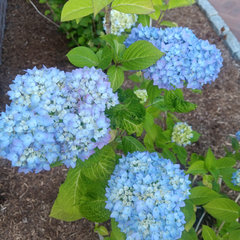
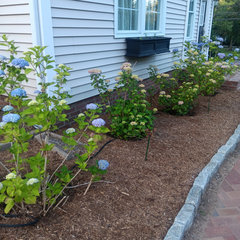
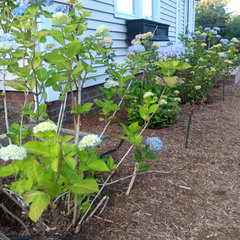
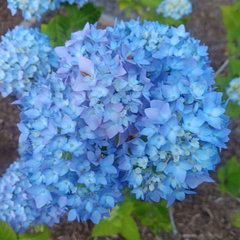
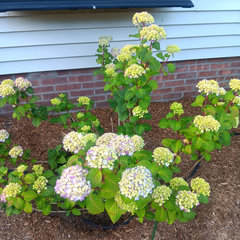
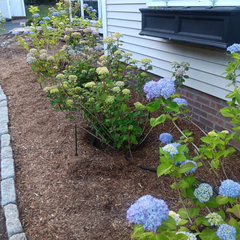
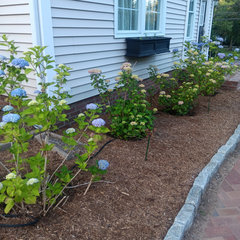
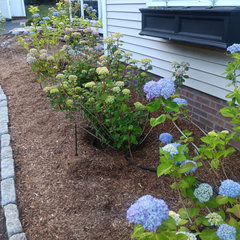
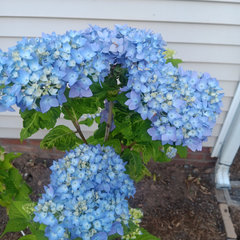
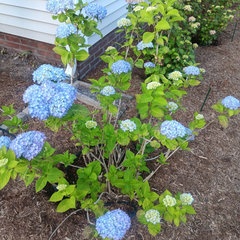
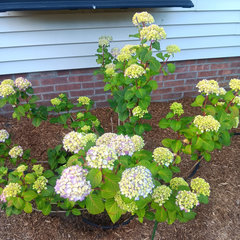
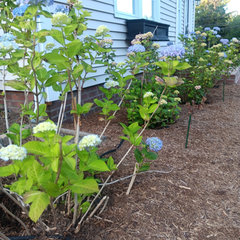
    Still a newbie growing things out in Connecticut, zone 6. My friend recently purchased a home in 2023. He give me the opportunity to tackle his yard anyway I pleased. When friend purchased his home last year the front of property is mostly landscaped with a mixed of Evergreen, Common Boxwood, Japanese maple, European cranberry virburum and several hosta plants. But his fenceline of property has 20 foot Arboriate trees that lined all three side except the front yard. The front side of house is facing the South which gets the most sunlight.As a newbie I went for it and against all odds of planting in the sun with no shade whatsoever. The hydrangeas plant I took out from ground were 2 mature hydrangeas mophead that were planted in the backyard. These plants werent blooming because theres a huge cherry tree that covers everything with very little to no sunlight.The hydrangeas shrub was dug out of ground and it was separated into several smaller plants because i wanted to make more. I actually attempted this task in early spring of this year while plant was still dormant. I prepared my site days earlier for it's transplant. I added a cobblestone boarder along the side to hold all that mulch. After all hydrangeas were planted I watered it in really good. Several days after I purchased a little more hemlock mulch to layer over soil. Every 3rd days in the morning at 6am I water the hydrangeas to keep soil moist using a soaker hose as the soil is well drained. It's now June, and this is the results after all that hardwork since early March. I do understand most would say don't plant in full sun. But part shade/part sun for better results. But knowing Connecticut, zone 6 is cooler in temperature. Plus, during the summer months till fall I would consider it fairly cool than other places. It does get a little hot at times in summer but it's still cool. Theres a good amount of winds that flow through yard for circulation. I didn't know much about fertilizer but went with Espoma Holly Tone + Iron Tone and just applied very little and water it in good several weeks afterwards. I planted the hydrangeas in the front side of house foundation as seen in pictures. Throughout winter only the cane's would be visible but I'm okay with its esthetic. Lol Having the bare stick sticking out ads character to this house and in all honesty the property is elevated where you can't see it from street, unless you're walking up the driveway. My friends mother who is 92 years old. I'm her care giver for the past 20 plus years. She has Dementia, and adores hydrangeas flowers. I would like to shoot for a soil PH thats slightly acidic so I can make the flowers turn Purple. I wanted Purple because it's the color for "Awareness" for people living with Dementia/Alzheimers. P.s. A little concerned on several of the shrubs. In Pic I have notice some leaves are more lighter green than the other plants. Back in May, we had a late frost as several leaves got ugly. But overall thought the plant looked good.  Any advice greatly appreciated.  😊

  • 2 years ago

    e p You didn't post any pictures.

  • 2 years ago

    Sorry, folks I thought my picture went through the first time. Anyway here's my pictures what was planted in early March.

  • 2 years ago

    Sorry, folks.. I thought I uploaded my picture the first time around. But since it didn't go through here's my results planting against the front side of foundation. Started this project in early March when plants were dormant.

  • 2 years ago

    If the blooms are blue your soil is already acidic. Alkaline soil produces pink blooms.

  • 2 years ago

    Hydrangea arborescens (aka "Annabelle") does NOT need acidic soil. They bloom exclusively on new wood so you can hack the cr*p out of them to get a pleasing winter shape or height, or even cut them all the way to the ground, and they will still bloom with abandon the following year.


    Oakleaf hydrangea and Hydrangea paniculata don't need acidic soil, either.


    Point: Hydrangeas are varied shrubs -- not all are the fussy mophead or lacecap types.

  • 2 years ago

    EP has macrophyllas and wants purple blooms. So either they need slightly less acid soil to get the existing shrubs somewhere between pink and blue, or to buy a purple cultivar. Arborescens, paniculata etc will not give the flower colour they want

  • 2 years ago

    Macrophyllas do not require acidic soil.......only so far as it affects their flower coloring. If you do not lust for blue flowers, they can and do grow quite happily in neutral to slightly alkaline soils. Also, not all macs can produce purple flowers. The paler blue varieties like Endless Summer or Nikko Blue will never turn to much of a purple color. You need a much more intensely blue cultivar to do that and just the right soil pH. It's tricky!!

    " hydrangea look fine in winter "

    Hmmm.......I guess they might do if you think a collection of bare, dead looking sticks is attractive in winter. There are a number of deciduous shrubs that do provide plenty of winter interest but just not hydrangeas!

  • 2 years ago

    Thanks, to everyone replies concerning the color blooms. I purchased a ph meter from a local hardware store and tested the soil. It showed a ph 6.5 and along the front and on the other side it showed a 6. It's nice to watch the bloom take shape from inside windows.

    The hydrangeas planted were not purchased from me but planted from the previous owners before my friend purchased the property. I was told it was a hydrangeas macrophylla. But the following hydrangeas weren't blooming a year ago because it was planted under a huge cherry tree with no to little sunlight. I dug it out in early spring of this year and seperated the plant to make more and created a boarder eventually. But wanted to share because I'm still new to growing these beautiful flowers out here in Connecticut. I don't want to make a mistake but I know I will along the road. But sharing my images and questions to all of you I know I'll get great feedback. 😊

    My friends mother she likes to sit by the window from time to time and stare out into the yard. Having to spend quality time with her everyday makes me smile with happiness because she a wonderful person. All the planting I completed was mainly for her to enjoy along with my friend and I. In fact, I plan on taking a picture of the hydrangeas blooms and create a puzzle so that she can enjoy putting it together one day.

    Anyway, thank you to everyone on this forum for your guidance on hydrangeas care. Greatly appreciated.

  • 2 years ago

    Found this comment on the internet. Some gardeners report success in turning their hydrangeas blue by applying coffee grounds to the soil.

  • 2 years ago

    LOL!! One can find all manner of interesting comments on the internet.......doesn't necessarily mean there is any value to them. 😉 Coffee grounds are not particularly acidic. Coffee is - but the grounds test out as only slightly acidic or close to neutral. So they are of little to no help in lowering soil pH. And it is actually the aluminum content of the soil that makes Hydrangea macrophylla flowers blue. Acidic soil just allows the aluminum to be more freely available to the plant. Alkaline or neutral soil ties it up.

    Aluminum sulfate is the recommended product to use to both lower soil pH as well as ensure adequate aluminum levels.

  • 2 years ago

    And, as stated above you won't get purple blooms by changing the soil either way. There are purple cultivars but your currently blue hydrangeas can only produce muddy or clear pink if you lower the pH. They can't produce a definite purple.


    As for the coffee grounds story it's nonsense. As is its twin myth about adding eggshells to get pink blooms.