Software
Houzz Logo Print
webuser_883989312

Best Waterproofing for New Construction

last year

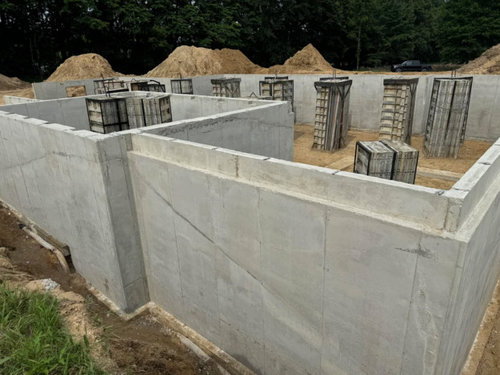
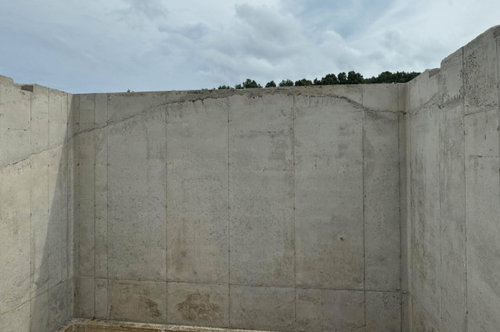
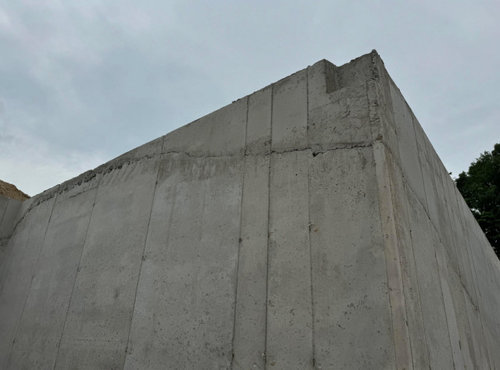
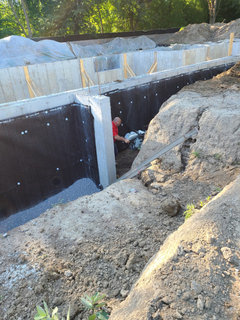
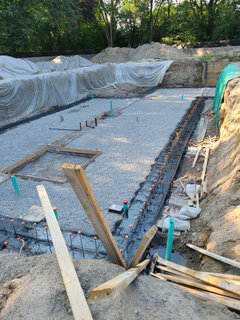
Hi, all. Dealing with a disaster and would love some thoughts. When pouring my foundation the last truck was stuck a couple hours and when they poured it over the older, now curing concrete, I have a massive cold joint the length of the back of my house.


I have a structural engineer coming out, but I want to start doing my homework on waterproofing systems. What is considered the best waterproofing systems out there? I had initially planned on the spray on bituhene or whatever is pretty normal, but now I am thinking we need to do more than that. I will not have a wet basement for what I am paying for this house.


Comments (19)

  • last year

    I hear you, PPF. We have experts coming out, I just want to educate myself as well through this process.

  • PRO
    last year

    If you do not feel the 'expert' you have coming out can educate you, you have the wrong expert coming out.

  • last year
    last modified: last year

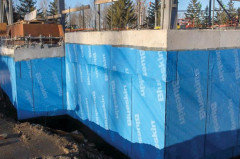
    Blueskin WP200 (or equivalent) properly applied is likely the surest protection.


    However, a plastic dimple barrier, such as Delta Foundation Membrane or equivalent


    Tamping fill after gravel on current worthy build.

    should be sufficient. Provided it is properly applied and adhered to the wall and sealed at the top. But these membranes are subject to tearing by later trades--typically the backfilling.


    Stopping capillary rise from the footings into the foundation is equally important but less often seen.( worthy build).

    Will be fascinated to see what the "experts" recommend.


    BTW, bitumen is not waterproofing; it is damp proofing. Useless unless you have the only poured concrete foundation that doesn't crack.

  • PRO
    last year

    Are those dimples facing the right way?


    (made you look)

  • last year

    Mark - I find it often helpful to have a baseline understanding of topics heading into a discussion myself, but to each their own I suppose.

  • last year

    Avoid applying a "dampproofing" coating to your foundation. I recommend spray-applied modified asphalt.

    The first thing to get right is the footing drain to daylight or to a sump pump.

    The foundation waterproofing system I use for residential projects is Tremco's Tuff N Dri 60 mil spray applied modified-asphalt membrane protected with their Warm N Dri fiberglass drainage board.

    https://www.tremcosealants.com/fileshare/DataSheets_Hyland/Warm_N_Dri_Board_DS.pdf

    https://www.youtube.com/watch?v=b8pd-dJF2lA


  • last year

    I like peel and stick Bituthene 4000 over a primer. It will span cracks, is foolproof to install, and there's no guessing how thick it was put on like spray products.

  • last year
    last modified: last year

    Cost is the biggest deterrent to using adhesive membrane waterproofing.

    Bituthene, for instance, retails for approximately US$1.80 per sf plus tax. Next is the problem of finding qualified applicators. We used Blueskin at the cove on the most problematic foundation corner. I realized too late it wasn't applied by the manufacturer's guidelines.

    At least, I did better than Drake in yesterday's record Toronto rainfall!

  • last year
    last modified: last year

    "Stopping capillary rise from the footings into the foundation is equally important but less often seen.( worthy build)."

    To late for this build but worthy is absolutely correct and rarely seen. Concrete is like a candle wick and vapor drive will push vapor through out the wall structure. It will naturally travel from a high concentration to an area of lower concentration, until the concentration is in balance. This means any part of the interior wall it can get through it will so you'll always have some level of moisture vapor entering the basement.

    Capillary raise can actually travel 6 miles if there wasn't any where for the vapor to exit on the way up. (6 miles is not an error). I see a brick ledge on part of the walls, this capillary action can also extend into the brick and may cause efflorescence on the lower layers of brick,so ask your contractor about a capillary break between the concrete and brick to avoid efflorescence.

    At this point your best option is to ensure the inside of the concrete walls are completely sealed. Framing the interior walls about 3/4" from the the concrete and using spray foam on the wall will do the job. Any moisture vapor will eventually move up and out the above grade exposed concrete.... for ever. Under the bottom plates of the framing will also need a good capillary break.

    Plastic dimple mat is something I'm not sold on. Attaching it to the wall with tap con screws breach the moisture retarder so under Hydrostatic Pressure it would be like a pinhole in a water hose x's 1000. A drain tile system is how you relieve hydrostate pressure so the Plastic dimple is an expensive sheet of plastic full of screw holes, and every irrational reason for it violates hydrostatic law which states "the pressure variation occurs vertically downwards and is a function of depth". It's purpose isn't needed with a drain field to remove downward pressure.

    My recommendations: On the exterior use a layer of EPS insulation which is required by code if you didn't know that. (Climate Zone determines minimum thickness.) Require the EPS is adhered it to the walls, (not screwed) with adhesive between the butt ends and taped. Then cover with 6 mil plastic sheeting or thicker overlapping and sealing the laps. Cover the plastic with 1/4" foam fan board to protect the plastic as sacrificial during the construction of the drain tile and back filling. This the best solution with exception to using 45 mil EDPM under the code required EPS insulation.

  • last year

    Worthy, a qualified contractor for Bituthene is anyone who can walk into a supply store and buy it. Peel, then stick. I've installed it by myself.

  • last year
    last modified: last year

    ^^^^

    If only I could be be doing everything everywhere all at once! (Especially with Michelle.)

    ***

    Plastic dimple mat is designed to keep out liquid water, nothing to do with hydrostatic pressure.


    One inch SPF on interior basement walls of current project. (Yes, propane containers should be outside.)

  • last year

    dimple mat is designed to help water fall by gravity to the drain tile system. Gravity just happens to do the same without the help of a dimple mat. labor costs to drive in hundreds of tap con screws isn't worth the return when plastic sheeting will do the same thing and much cheaper and easier to apply.

  • last year

    Draping plastic sheeting over the foundation doesn't provide a route for water to drain to the weepers. It sticks and bunches to the foundation, held tight by the soil. But I'll grant that it's cheaper.


    In the '90s we used a speciality fibreglass insulation on the exterior no longer available.


    In the record deluge yesterday--a month of rain in three hours--only a couple of areas of moisture along one wall. And that's with no downspouts connected.

  • PRO
    last year

    "I have a massive cold joint the length of the back of my house."


    This is no disaster. Were you shooting a ferrocement boat hull, yes, you'd have a disaster.

  • last year

    Dimple board provides a drainage plane. It should be used on top of a waterproofing membrane (not damproofing). The fasteners hold it up until backfill. Instead, you can install a geotextile-wrapped 12" wide stone backfill drainage plane all the way up (but your contractor will not like that laborous method). Both methods relieve hydrostatic pressure of water sitting against the wall exacerbating the lateral forces which also tries to push water in.

    Also a better practice is using rigid Sewer&Drain pipe rather than corrugated pipe for the drain tile. There are other details for best practice in installation but that is the overall gist.

  • last year
    last modified: last year

    geotextile-wrapped 12" wide stone backfill drainage plane all the way up

    On another build, we did that on one side of a foundation that was touching an underground rivulet. The stones act as a reservoir for any water while it drains away. (We also added drain pipe tying into the sewer around the inside of the foundation. )

    The stones had to be a certain diameter as well. Too large and they would let in air that could result in a heaved foundation after a cold winter. (The engineer learned that one spring, he told us, after he hadn't speced small stones.)

    This was a spec house that we ended up moving into for seven years. Dry as a bone.

    ****

    Tract builders, however, do the minimum their jurisdictions require. In ours, the mandatory warranty for water penetration is two years. After that, your problem!

  • last year

    I'll post this again, hydrostatic law states; "the pressure variation occurs vertically downwards and is a function of depth".

    Water weight and and depth along with acceleration due to gravity are needed to create lateral pressure and plastic dimple mat is a piss poor bleeder of water weight. A drainage system with the right size sand and rock is a critical necessity and dimple mat is a placebo. Back fill is equally important and you certainly don't want to use clay.

    My water table is high and I use a sump pump in a deep sump pit at the footing level outside the house. The walls are water proofed with a drain tile system covered by 2 feet of rock and then covered with another foot of washed #2 course sand and another foot of medium sand up another foot. Back fill was a sandy loam and the house is surrounded by 4" of landscape rock with small perennial plants for landscaping. I will NEVER have water penetrate my walls except the weak link where the floor slab meets the footing.

    If the sump pump fails the Hydrostatic pressure will force water up through the joint between the footing and floor slab, this is the weak link in guaranteeing a water proof basement. You've been Schooled on the walls, now see what the contractor is going to do about sealing the joints at the footings, including the interior footings.


  • last year
    last modified: last year

    Interesting that Dr. Lstiburek, one of the leading building scientists in North America, advises the use of air-gap membranes.

    But, of course, they're not the be-all and end-all. See other approaches above.

    now see what the contractor is going to do about sealing the joints at the footings, including the interior footings.

    As noted above, Blueskin (or equivalent) products can be used to cover the wall-to-footing joint.

    We covered the most problematic corner.

    At one time, Delta claimed a product lifespan of more than a century. It's now 25 years.

    Were I building a home designed to last hundreds of years, I suppose I would do it differently.


    Toronto's Don Valley Parkway becomes one with the adjacent river. (16 July 2024)

    As for effectiveness, even with no downspouts in place, the basement survived another 100-year downpour--which now occur every 10-15-years!-- with only a couple of transient damp spots below the scuppers.