Software
Houzz Logo Print
justin_valasek

Marble tile discolouration in shower (new question!)

2 years ago


Hello all,

We had a new shower installed with marble tiles, and immediatly had a problem with discouloration from water. Yes, i know, we didn't do our homework and only read the articles by Starykov afterwards! :)(https://www.tileletter.com/marble-moisture-discoloration/)


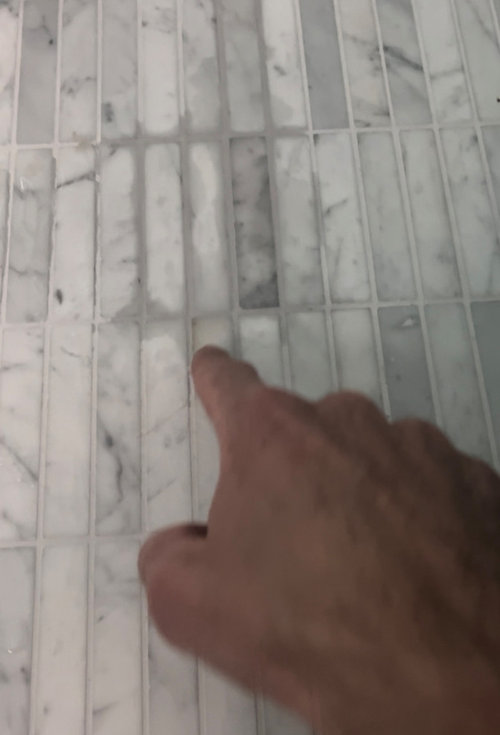
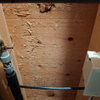
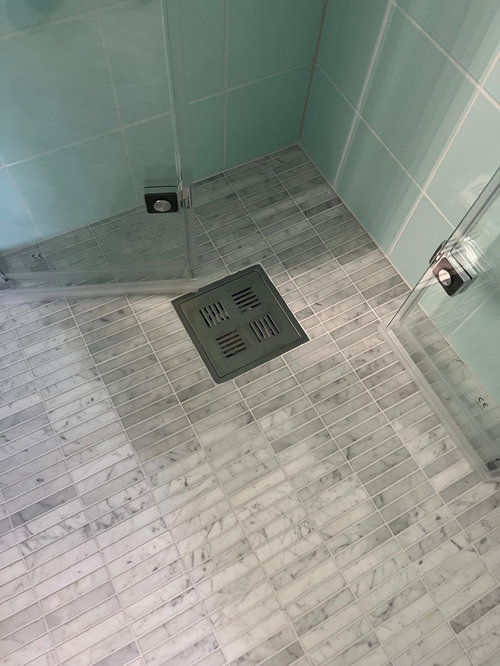
My question is whether we can do anything to make the grout somewhat more waterproof, since this seems to be our problem---water soaks straight into the grout, and is then transferred laterally into the tiles. You can see this in the picture where I poured some water on the tiles and you can clearly see it absorbed into the edges of the tiles.


Any suggestions? Thanks!

Justin

Comments (12)

  • 2 years ago

    Marble and grout is porous. They absorb and release water naturally. Neither grout nor marble is waterproof. Nor is it ever going to be waterproof. That job is done by the waterproofing system under it. Which is???? A WIWO or a topical?

    Justin Valasek thanked HU-862725558
  • 2 years ago

    As Zumi states, marble and grout are porous and always will be. Probably water sitting in a bird bath in the pan due to not sloped properly which is why it is showing in the area only. You cannot make it waterproof from above.

    Justin Valasek thanked millworkman
  • 2 years ago

    Thanks for the comments. I suspect you both are right---we actually live in Norway, and they are religious about putting a waterproof membrane inside of the whole bathroom (for insurance purposes), and I don't think that they have a proper wiwo system and I suspect that the water is pooling around the drain. However, the grout they used seems particularly porous, absorbing a lot of water and discoloring in a matter of minutes when exposed to water (in contrast to the grout in my other bathroom which seems less absorbant).


    Therefore, I figure that making the grout less porous can't hurt the problem? We do have underfloor heating (considered a necessity here :) ), which was able to help dry out the tiles after we stooped using the shower for a while. I know it is probably a lost case, but any suggestions to improve the problem would be most helpful!

  • 2 years ago

    " Therefore, I figure that making the grout less porous can't hurt the problem? "


    You are not making what you have less porous. If you think other grout is less porous, remove this grout and apply different or leave it as is.

    Justin Valasek thanked millworkman
  • 2 years ago

    Thanks for the feedback---perhaps you can help me understand why no one is reccomending a grout sealer? I thought the point of them was to seal the pores of the grout?


    Also, any recommendations for removing grout from marble tiles? I am concerned about damaging the stone...

  • PRO
    2 years ago
    last modified: 2 years ago

    Grout sealer is not a waterproofer, it is a liquid inhibitor, which creates a bit of a barrier to staining. Water still enters the porous marble and porous grout. What ends up happening is that it actually retards the moisture from drying out, and makes the shower floor wetter.

    Justin Valasek thanked Minardi
  • 2 years ago

    Would putting a thin layer of epoxy grout on top of the cement-based grout be a terrible idea?

  • 2 years ago

    "Would putting a thin layer of epoxy grout on top of the cement-based grout be a terrible idea?"


    Will not stick nor stay. Crack and fall out in short order, And epoxy grout is not waterproof either, grout is not nor ever was intended to be waterproof.

    Justin Valasek thanked millworkman
  • 2 years ago


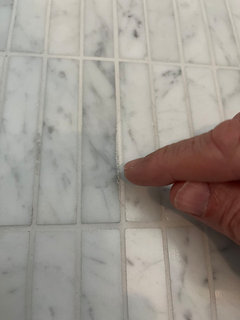
    Thanks for all the help---I think I found the problem. The grout is incredibly soft---I can scrape it out with my fingernail. Probably wasn't set right, which may explain the water absorption ?

  • 2 years ago

    Let us know what all is done (what type of new grout is used) + if it helps with the amount of water absorption. I am curious because I looked at this issue extensively when I was deciding about materials for my bathroom renovation. I actually even spoke directly with Mr. Starykov after reading some of his articles - which included the results of his experiments with shower pans (constructed using different methods + sealed or unsealed marble tiles installled on top.


    For others reading this:: using a water-in/water-out mud shower pan underneath marble tile works better than installing a surface waterproof membrane on the top of a shower pan (as long as your WIWO traditional pan is built correctly = with a pre-slope installed underneath the liner/correct pitch to drain/protection of weep holes in clamping drain to allow drainage/etc.).


    Many pros over on John Bridge Tile Forum believe that marble should not be sealed when used inside a shower (well, they actually strongly feel that marble should not be used inside a shower at all). Sealing the marble causes water to become "trapped" inside the stone - water vapor is able to easily pass through the sealer - however, it turns back into its liquid state while inside/under the tile, and becomes "trapped" = the sealer greatly slows down its ability to pass back through the sealer = the tile remains wet much longer - as pointed out in a comment above by Minardi).


    Good luck!


    Justin Valasek thanked dani_m08
  • 2 years ago

    Thanks Dani, very helpful!


    I will make sure to update the post when the grout is replaced and we have some more data. For what it is worth, we spoke with some people in Croatia where they have a long tradition of working in stone (including supplying some of the stone for the white house), and their only advice was to not use natural stone in the shower.... :)


    We still like the look and feel of it, and they were of tje opinion that water would only have a visual impact and not harm the stone.