Software
Houzz Logo Print
jonathan_a67

shower demo.. now what??

last year
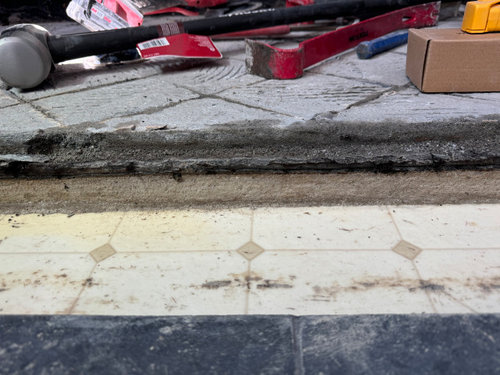
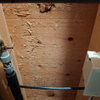
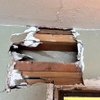
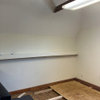
my all-tile shower was leaking water through the wall of my house so i started to demo to identify and fix the problem. I removed the tile on the floor as well as the step so i can now see the layers under the tile. it looks like there is a layer of concrete, then a layer of waterproofing substrate, following by another layer of concrete. and it appears they built the shower on top of an old linoleum floor (see photo). a few questions.

1) is it normal to build a shower on top of an old linoleum floor? are there risk associated with doing this?

2) do i need to break through all three layers? i mean i assume i need to demo at least the first layer of content and waterproof layer, but do i need to break through the second concrete layer?

3) how should i do this? seems like renting a jackhammer is the popular option online. but is it the best?

4) could i possibly damage whatever is below the bottom layer of concrete while doing the demo? how do i ensure i don’t damage something that shouldn’t be damaged?

thanks!!


Comments (10)

  • last year

    If you don't understand what you are seeing now, what makes you think you can put it back the way it's supposed to be? Call a tile setter as you should have done before wading in on this.

  • last year

    @klem1 i dont recall saying anything about putting it back... let me check… nope didnt say anythjng about putting it back. my questions are about demo, and i’ve been doing just fine. i’ve received lots of helpful feedback in other forums and am confident moving forward. so yeah, thanks for nothing though.

  • PRO
    last year

    "1) is it normal to build a shower on top of an old linoleum floor? are there risk associated with doing this?"


    It depends upon the condition of the existing floor and evaluating that is subjective.


    "2) do i need to break through all three layers? i mean i assume i need to demo at least the first layer of content and waterproof layer, but do i need to break through the second concrete layer?"


    At this stage, it would be foolish to not get down to floor sheathing, even framing if necessary.

    "3) how should i do this? seems like renting a jackhammer is the popular option online. but is it the best?"


    How easily is it coming up please? I shoveled a tile bathroom floor off of concrete once in minutes, but the one tile that was properly replaced took longer to remove than the rest of the job. You never know what you're going to find. If you've gotta jackhammer, you've gotta jackhammer.


    "4) could i possibly damage whatever is below the bottom layer of concrete while doing the demo? how do i ensure i don’t damage something that shouldn’t be damaged?"


    Yes, but you'll fix whatever you damage. You've jumped half way across the proverbial creek, now you're getting to the other side, no matter what. Good luck.

    Bill Pulman thanked Joseph Corlett, LLC
  • PRO
    last year

    All has to go. All the way back to the subfloor. If the subfloor gets damaged from your breaker hammer, then you fix it as you are building it back correctly.

    Bill Pulman thanked Minardi
  • last year

    Look at it his way, if the layers you remove are deep enough, you will be able to put a trench drain in against the back wall with the proper slope. Or you will be able to put in a solid surface shower pan and never have to deal with potentially leaky tile and grout again.

    Bill Pulman thanked Nancy in Mich
  • last year

    " ...so i started to demo to identify and fix the problem. "

    " i dont recall saying anything about putting it back... let me check… nope didnt say anythjng about putting it back. "

    Hmmm, then what does it mean to fix it, if not replacing it?


  • last year
    last modified: last year

    @catbuilder after idetifying the true source of the problem and the extent of the water damange (if any) a proper quote can be sought from a professional to fix/replace it. Prior to demo the professionals are guessing at what’s wrong and the extent of the damage and give outrageously high quotes to do God knows what.

  • last year

    Bill - my new tile floor (outside of the shower) in my primary bathroom was not installed correctly - all of the 4x12 tile was removed very quickly. Luckily, the contractor also didn't install the cement board over the plywood subfloor correctly either (no mortar underneath the cbu - it was only screwed down). So, the cbu was also able to be removed easily. My plywood subfloor was still in perfect shape.


    I also had concerns about how the shower pan had been constructed. The tile had not yet been installed on the pan (thankfully, since it was kind of expensive). My BIL used a jackhammer in order to break up the deck mud that had been used in order to create a sloped pan. He said that it didn't have as much sand in it as it should have - but the jackhammer is able to break up concrete - so, it worked fine.


    I was correct - the pan had not been constructed correctly - there wasn't a pre-slope under the pvc liner. Some of the subfloor was damaged a little bit - but he replaced those pieces of subfloor before I had a new contractor who rebuilt everything the right way.


    The bids I received before the tile floor outside of the shower was removed + the shower pan was in place were pretty high. My BIL spent some time on a Sat and Sun - but just a few hours each day. Once my bathroom was back to a stable subfloor - the bids to construct a new shower pan + install new underlayment for tile outside of the shower + tile the shower were reasonable. Before the tile, cbu, and pan were removed, contractors didn't know what they would find - or that it would be so easy to remove the tile and cement board - so, they had to add a premium in order to cover themselves.


    If you have the ability to remove everything that's been installed in order to get down to your subfloor, a contractor will be able to identify the issues that need to be addressed - instead of guessing what he/she might encounter.

    Bill Pulman thanked dani_m08
  • last year

    If you don't want to use a jackhammer but have a circular saw, buy a concrete/masonry blade and cut that concrete into 2' x 2' chunks that you can crowbar off the substrate and then off the linoleum. Then pry/scrape off the linoleum and assess the subfloor. If necessary switch back to the wood blade on the circular saw, set depth to avoid cutting joists, and cut out the subfloor.


    Not sure if the jackhammer or circular saw will be easier, but its a small area so I think either should work fine. Remove everything from the bathroom and plastic sheet the door, to contain the concrete dust, and wear a mask/safety glasses.


    We recently cut/pried off almost 200 sf of stone tile, cement board, and plywood off my kitchen. I would have looooved to have been only dealing w/ a shower :-)


    Bill Pulman thanked John Liu