Software
Houzz Logo Print
sandra_plate

Convert to natural gas??

last year

I'm thinking of converting to natural gas, mainly to add space to a laundry reno by getting rid of the oil burner. Way out of my element here, though. I have a ranch home with a large apartment.

Any recommendations?

Brand?

Size?

Is a descaler necessary?

Keep hot water tank?

Will I regret it when everyone is taking showers at the same time?

THANKS!

Comments (18)

  • last year
    last modified: last year

    Something is telling me you are looking at a gas tankless water heater (to save space).

    Do you have natural gas to your home? If so, it "could" be done - but they are shockingly expensive to install. You have to run a large gas line, install a vent (can't re-use an existing vent) they need a drain and also electricity.

    If you have hard water, a water softener will help tremendously - a descaller is nonsense.

    Send a photo of your existing setup and your approximate location (for climate reasons).

  • last year

    I would do most anything to get rid of oil! A regular natural gas water heater/tank is still preferable to tankless, in my opinion, although plumbers are starting to charge insane prices to install these, too.

    How is your home heated?

  • last year
    last modified: last year

    A gas tankless heater can be the right solution in some cases, but most of the time, there's a better solution.

    I installed one in my last two homes. The biggest drawback is in my mind is the installation costs if you are paying market rate for an install. It's insane.

    I'm not a huge fan of atmospherically vented "regular natural gas water heater" because they are by definition 62% efficient AND leave a 4" open hole to the roof 24/7. They are (should be) cheap to install though if there's a vent already.

    For homes that can do it, I suggest an electric hybrid heater. They are the cheapest to operate and don't have some of the drawbacks of tankless. They are also unreasonably expensive to install, even when replacing an electric heater. They play well with solar PV and work well with basements and garages. I'm a fan of the Rheem models.

  • last year

    " A gas tankless heater "

    I don't know where you are but they're incredibly common in my area.

    What are unknown is electric resistance water heaters. You can operate a gas heater for nearly a year for what in my area an electric one can cost in a month.

    As for atmospherically vented units, the "hole to the roof" is typically coming from unconditioned space sealed off from the conditioned interior. The operation of such have little or no effect on heating and cooling a home's interior.

  • PRO
    last year

    Hi, Sandra,

    The size of a tankless hot water heater is based on the number of bathrooms in your home (or the number of bathrooms it serves if you install more than one tankless unit.) I had a Rinnai non-condensing type tankless hot water heater in my previous home which was installed on the exterior. It worked well for 12 years with zero maintenance. When it died, I replaced it in kind. You can purchase one for less than $700. You don't need to install vent piping or a condensate drain so it's less expensive to install than a condensing-type. It's also less efficient.

    The main drawback is the time it takes for hot water to arrive at the use point. You can purchase tankless hot water heaters with recirculator pumps, but they add cost, complexity, and they waste energy heating hot water in the circulation loop. Such is the price for convenience.

  • last year

    I'm thinking of converting to natural gas, mainly to add space to a laundry reno by getting rid of the oil burner.

    Do you use fuel oil to heat your home? Is it a steam, hydronic (hot water), or a forced air system? If you have a boiler, is their a hot water tank connected to the boiler?

    You will need to provide more information if you are looking for good advice. In general it is a good idea to convert from fuel oil to natural gas for heating and domestic hot water. It can be an expensive conversion but if you plan to live in this house a long time it is a good investment in my opinion.

  • last year

    I am going to get pics as soon as i get home. From the top of my head:

    -Im looking to lessen the footprint in my laundry room. I can do the kitchen/laundry/den reno without the extra space, but it would be nice

    -I have a 60 yr old boiler and a 3 yr old electric hot water tank with an aqua boost.

    -we have solar panels so electric is no issue but i dont want electric heat

    -I have my home and another zone for an attached 2 bedroom apartment.

    -Gas line would have to go through the attic. Theres no other way.

    -I do not want gas stove (sorry), but a gas fireplace would be nice. Its either that or we will do propane.

  • last year
    last modified: last year

    @Elmer J Fudd

    I wasn't clear on what I was saying - Gas tankless water heaters are fairly common, but the situations where they are the best choice to retrofit are not. They can be (should be) reasonable cost to install on new construction - and in parts of the S and SW they put them on the outside of the house and avoid the cost of a flue and such (climate change is making that a bad idea, just ask Texas a few years ago). But the cost to retrofit a gas tankless is usually very high.

    I agree that electric resistance water heaters are generally the most expensive way to heat water. But hybrid electric are cheaper than even gas tankless in most situations. YMMV - as they say.

    The problem with the hole through the roof is that it's a hole through the envelope (exfiltration) and the makeup air - including makeup combustion air - is going to come from cracks around windows, doors, etc. (infiltration). It's the same issue with a gas furnace that doesn't have an outside air intake - although I believe atmospherically vented furnaces have been banned since the 1980's. So, the combustion air and the thermal syphon from a standard gas water heater (62% efficient) may be semi-conditioned air coming from the basement, but it's entering the house from everywhere.

  • last year

    @Sandra Plate


    I'm a little confused:

    1. Do you have natural gas currently?

    2. You have an oil boiler (and you want to get rid of oil). That's for space heating? Do you have hydronic baseboard heat?

    3. You have an electric tank water heater and you want to free up the space in your laundry room for a larger renovation?

    4. You have solar PV.

    5. In what part of the country do you live?


  • last year

    " the situations where they are the best choice to retrofit are not. "

    She wasn't asking for the best choice, she was asking about natural gas choices. She mentions wanting more floor space. Tankless hang on the wall.

    By the way, it's bad form to retroactively edit a comment to take out something your said that someone has commented about.

  • last year
    last modified: last year

    @Elmer J Fudd

    I edited to make it clear what I meant - because it obviously wasn't as written.

    I'm pretty clear on how tankless mount. I've been commenting here on water heaters, and tankless in particular, for a lot of years. I've installed and lived with them in the last couple of houses also.

    She wants the room. But there's the cost to retrofit, the delay in getting hot water, and a maintenance issue if she has hard water and doesn't have a water softener. It's easy to look at one of these boxes on the wall and say, "I want that" - until you see the other side of the ledger.

    Yes, they can get you a few extra square feet of floor space, but it's probably the most expensive four square feet you can buy.

    She mentioned a "descaler" which could be a number of things - but if it involves magnets or electromagnets or anything similar, it simply doesn't work. But that also suggests hard water. A water softener to deal with that issue would take up much of the same footprint as a water heater tank (and of course, would add cost).

    There just isn't enough info. And at this point, it's not even clear she has natural gas to the dwelling currently, or if it's available at the street or what. If natural gas is now available at the street and there's a plan to phase out all of the oil, it's possible to rethink both the boiler and the water heater - and in the process get a few square ft.

  • last year
    last modified: last year

    " I edited to make it clear what I meant - because it obviously wasn't as written. "

    Out of respect to others, feel free to clarify comments supplementally, without removing what others have read and responded to.

    " It's easy to look at one of these boxes on the wall and say, "I want that" - until you see the other side of the ledger. "

    The only sensible response to this comment is that there are millions of these thingsor more in homes and businesses. Certainly many tens of millions or more if one considers installs outside the US. So whatever for you are negatives and barriers are factors others have come to different conclusions about.

  • last year
    last modified: last year

    @Elmer J Fudd

    Dude, I'll edit my posts as I see fit, thank you very much.

    Many of the tankless heaters installed in other countries are more like Point of Use where they are in the shower or very near the kitchen sink, for example.

    But it doesn't really matter how many are installed here - or in any other country.

    The point is there are some well-known issues with tankless heaters many of which people don't realize until they install them:

    1. They are stupid expensive to retrofit, even for simple installs - $6-10k isn't uncommon.

    2. They are slow to get the initial hot water because they have to pre purge, then get up to temp. It adds several seconds to the wait over a tank heater that has hot water sitting in the pipe about 36" from the heater. That wait can be lessened with insulation and/or a recirculation loop - but that's difficult to do on a retrofit.

    3. They have minimum flow rates to activate and keep activated. There have been many people on here who have run into that issue. You can avoid it by paying attention to that when you buy the unit (Rheem has some of the best numbers) and by keeping the set temp to 120.

    4. Hard water requires a water softener or annual cleaning.

    5. Low water inlet temps (cold climates) greatly reduce the gpm output of these units. You really want to install the 200k BTU/h units (largest residential) always - and even then you may find that two people showering at same time (everyone in house getting ready for work/school) will use all of the GPM. And you have to run gas line for that 200k btu/h - which is generally a 1" home run to the meter - assuming the service to the house has that capacity.

    On the plus side is that they are small, very efficient (condensing models), and they can solve venting problems -- particularly when you can vent horizontally through a sidewall. They vent with PVC pipe (again, condensing models) and that's much cheaper than lining a masonry flue in an older home (what I would have had to have done). But you must always run a new vent - you can't reuse an existing metal vent. And they can provide continuous hot water.

  • last year

    It's easy to counter each of your comments with real world facts but there's no need to bother. They serve to reinforce your obvious bias. I'd suggest anyone looking for a water heater to get their advice from the plumbing contractor who would do the work.

    I know no one with a tankless water heater, including a few in hard water areas, who doesn't love what they have. The better brands are predominantly foreign - Japanese brands (excluding Navien) and others.

  • last year

    I installed one in my current house and previous house - I'm not biased against them. I like them for their efficiency mostly. I've advised a lot of people on here who have them. But all you have to do is search on here for "Tankless water heater" and you will see the issues.


    They work best when the system was designed for them and the installer really knows what they are doing so they avoid a lot of problems. In both of my houses it was a complete re-plumb and I could get the heater more centrally located, insulated pipes, etc.


  • last year

    Water heating efficiency gains can't amount to much in a residential setting unless the home has many people in it or a lot of hot water is used for other than expected reasons. For the normal household, water heating is not a high cost matter such that more efficient production can save much money. Certainly not enough to pay for more expensive equipment. In the cases I know, higher efficiencies were not a factor in the selection of tankless heaters. Space saving and unlimited supply for long showers, many consecutive or simultaneous showers and filling large tubs were more the common reasons.

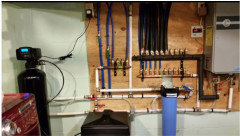
    Was that install shown in the photo done by a professional plumber? Are what appear to be flexed areas and bends in the white pipes from lens distortion or are the pipes not well supported or not cut to proper lengths?

  • last year
    last modified: last year

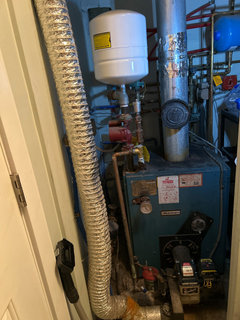
    okay— i think I’ve got ALL the info now.

    To restate: Im thinking of converting to natural gas in order to gain space in my laundry room, which I need since my kitchen reno will take space away from laundry. Bonus: I can get a gas fireplace in my den. Although people will hate me for saying this: I dont want gas on my stove or dryer. I have solar panels and Im used to cooking w electric anyway.

    Gas runs along a street on the side of my house, so I checked and its accessible. The line would have to go up the side of the house and through the attic to the laundry which is located in the very center of my house due to adding an apartment 11 years ago.

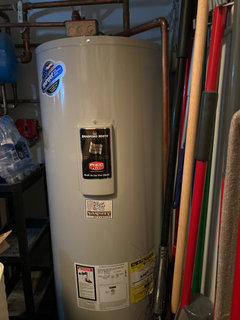
    I have baseboard heat. Oil burner with outside oil tank and an electric water heater tank with Aqua Boost (I dont know what that means, but thats what a plumber told me)

    Im on Long Island in NY and I have a two

    bedroom, large accessory apartment.

    I am VERY concerned with getting ample hot water. Ex: if my Mother-in-law runs her dishwasher and my hubby takes a shower with his rainhead, will I be able to take a hot bath—all at the same time? I can do that now. Will my NY cold weather cause me to pay more for heating with gas rather than oil? Lastly, the whole ”gas blows up houses” scare—should I even consider that?

    If you think YES DO IT, what maker is best? what unit is best? What size should i get? Should i keep my electric water heater tank?

    i hope its enough info