Software
Houzz Logo Print
norma_price12

Waterproof underlay for basement floor

last year
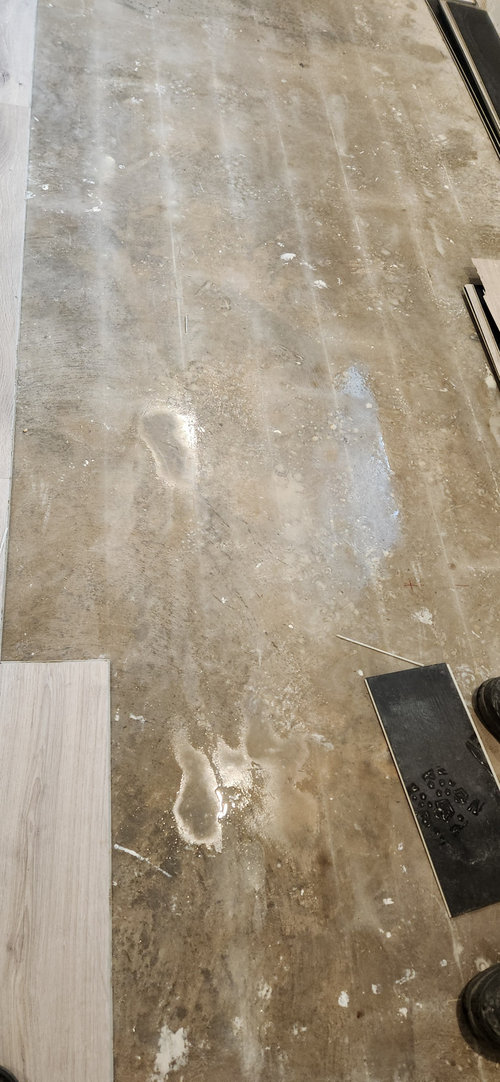
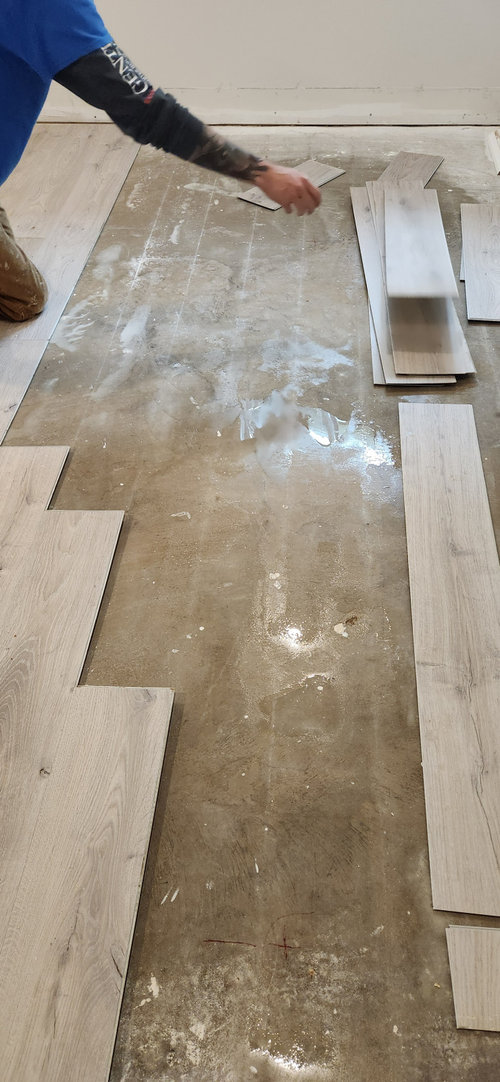
I recently had to remove all the vinyl click floors in my basement because of water damage. The water was underneath the flooring. I've found the entry but there is no reason why it would be coming in there. I'm leaving the floors out over the winter to see if more water enters.
My question is. Should I use an insulating waterproof barrier between the concrete floor and the new floor in case the water is wicking up through the concrete or is it a waste of money. I've been told that it cause mold if the floor gets damp from condensation.
The pictures show how much water was under part of the floor. The rest was extremely damp. Approximately 1400 sq ft in 3 rooms and a hall

Comments (17)

  • PRO
    last year

    You have to seal your concrete to prevent moisture from wicking up. 6 mil plastic will trap moisture below, which can cause mold in the future, over unsealed cocnrete. You need to grind and prep the concrete for a moisture barrier, install 6 mil plastic, padding if required, then click lock flooring. This is what happens when you listen to inexperience people and not take the necessary steps for prevention, all to save money.

  • last year

    I've suggested doing that but was told it had to be done by laying a barrier before pouring the concrete. So what do you recommend as a product?

  • last year

    Did you read the installation instructions for your flooring material? The instructions for Bruce Locking Hardwood flooring (product/brand picked at random) clearly describe how concrete is to be tested and what can be done to install flooring over concrete with a moisture problem.

  • last year

    I purchased a finished basement new house so I have no idea what was read

  • PRO
    last year

    Use epoxy or polyurethane moisture barriers. Wkol PU 280 or Bona R540 are commonly found in flooring supplier shops. You will need to allow your slab to dry for 30-60 days first.

  • last year

    The floor has been open since May with 2 dehumidifiers running 24 7. I turned one off on Monday and the humidity shot up again. I'm going to leave the floor open until next spring/summer and hopefully the heat over the winter will also help.

  • PRO
    last year

    At this point, I would just grind and prep the concrete and apply the moisture barrier. The rooms will dry off immediately once the moisture barrier is installed. You won't notice any condesation after 24 hours.

  • last year

    Where are you located? We don't have any of that kind of services in our area

  • PRO
    last year

    north east mass

  • last year

    Darn! Too far away and wrong country. I live in South western Ontario

  • PRO
    last year

    Contact NWFA or Bona for contractor's in your area.

  • PRO
    last year
    last modified: last year

    Condensation under a plastic floor is normal, if the slab isn't vapor sealed from below. That condensation happens under the vapor barrier under the vinyl, or under the vinyl with no vapor barrier under it, either one. Water is going to end up there, because concrete is just a big giant sponge full of water and water vapor. You are not eliminating that with any topical waterproofer. Water vapor molecules are way smaller than liquid water molecules. You need an applied topical membrane with a .5 perm rating or less for it to act as a vapor proofing membrane. That needs to be installed per specs, using a mil gauge to be sure the coats are achieving the right thickness to perform. On bare ground concrete, with no adulterants.

    Or, you just put down a breathable flooring, like carpet.

  • last year

    "I've found the entry but there is no reason why it would be coming in there."

    Why is everyone focusing on moisture coming up from below the slab causing pooling?

    Water comes in at the wall/slab connection point when you have ground water sitting within the ground, hence the name.

  • last year

    Yes 3onthetree. The entry seems to be above grade by 8 inches and is sealed tight. It's the top of the foundation wall and the brick definitely has flashing. There are no cracks visible and drainage isn't the issue there. If you enlarge the photo you can see where the foam sealer is and the water starts

  • last year

    I don't know where that's at on the outside, or what foam is doing, but it looks like active water. Which would fall to the floor and go under any type of flooring and sheet moisture barrier you choose. Also if the walls are finished there could be other points of water entry and you can't see it.

  • last year

    Most of the outside walls have been removed and that's the worst corner. There is some condensation evident along the bottom of the foam in a few places but i feel thats where it came in. Where you see the foam is at the top of the foundation wall and it's put there to seal everything up (according to the building inspector) and seems to be sealed quite tight. I haven't put a hose on it but like I said it's above grade by 8 inches and the grading has been done sloping away from the foundation.


    I'm at a loss. And I don't have a lot of money to work with. This was to be my final home.

  • last year

    Foam does not stop water. Any fix on the inside of a basement does not stop water. Prior to doing any buildout in a basement, any water entry must be investigated and understood what fixes are available and what are the pros/cons of each. It is a common scenario for all basements.

Sponsored
SK Interiors
Average rating: 5 out of 5 stars55 Reviews
Loudoun County's Top Kitchen & Bath Designer I Best of Houzz 2014-2025