Software
Houzz Logo Print
carleton_henrich

48” Wolf Range Griddle vs All Burners

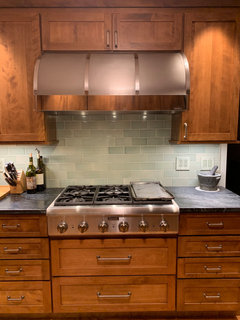
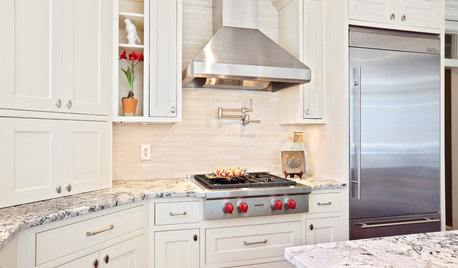
I have always planned a 48” Wolf Range with double griddle - but now I’m second guessing myself and wondering if I should go all burners.

I think single griddle is too narrow to be useful.

I am thinking more for dinner cooking than breakfast.

If you have griddles - do you use? Do you wish you had more burners?
Would you rather cook in pans than on a griddle?

All ideas welcome about configurations/experiences - but not about a different stove or different size stove. That is set.

Thank you.

Comments (21)

  • PRO
    last year

    A completely separate griddle, that doesn't sit there discolored, eternally mocking you for having it look used, is what many many people do. Because if you actually use it, it's going to look used, like any restaurant griddle. And if you don't? What's the point?

  • last year

    It does have a stainless cover for when not in use. But I see your point.

  • last year

    I have awolf stove with a griddle. The griddle is a pain to use. It gets dirty. Unlike a pot, you can't put it in the dishwasher. I hardly ever use mine.

  • last year

    When considering range tops for our kitchen 9 years ago, the salesperson at the high end appliance store on L.I., warned us against getting the griddle model. He said everything that’s been stated by Minardi and Sigrid. We opted to use the GE stand alone griddle, handed down from my mother in law. It’s about 60 yo, and works like a charm, cleans easily, and is then put away.

    Oh, also at the salesman’s suggestion, we bought a Thermador range top. Not Wolf. The thick black enamel surrounding the burners on the Thermador, are much easier to clean.


  • last year

    A griddle, if you know how to use it, is much more versatile than burners.

    More: https://bamasotan.us/griddle-faq/


  • last year

    This is a personal decision, so it doesn't really matter what someone else does!

    Never used the griddle in the 48" Wolf DF range I installed in my previous house. Ordering all burners wasn't an option back then or I would have skipped the griddle.

  • last year

    Mediocre cook that I am, I can see the advantage of a real griddle over a griddle pan -- significantly more thermal mass. Without thermal mass, the pan temperature at the surface area of food insertion will drop. This is obvious even with eggs. Thermal drop makes cooking less than griddle-like, and the griddle pan only achieves the convenience of a low edge.

    As I recall, Cooktek's half-size induction griddle is of the order of 70 lbs, kind of impractical to move under the hood for use and then place elsewhere for storage (and hiding stains). A quarter griddle, if it existed, might be feasible at, say, 35 pounds, but not convenient. One needs a built-in griddle with its own hood, or space under the cooktop hood.

    One can use a portable electric "griddle" typically anti-stick-coated aluminum, and for ventilation move it under the cooktop hood. But such will also have insufficient thermal mass, only partially ameliorated by better transverse thermal conduction than an induction ready pan that is mostly stainless steel. Typically, these sample temperature at one area, so they too will tend to not maintain a constant surface temperature.

    There may well be portable (if one is rugged enough) electric griddles, but I am not up to date on sources.

  • last year

    Gas is king with griddles. It can provide a lot of btu's quickly to maintain consistent surface temp and can stop those btu's in about 1 second as needed.

    Electric (non-induction) cannot stop or start heat delivery fast enough to maintain a consistent temp on the griddle surface.

    Induction can work well but I think that requires a lot of power, and typically 3-phase, in order to deliver heat fast enough.


  • last year
    last modified: last year

    Wouldn't thermal mass only really matter if one is cooking a large mass of food e.g. lots of eggs?

    20 lb iron griddle has thermal mass 20 lb x 0.110 BTU / lb = 2.20 BTU (F).

    4 large eggs have thermal mass 0.6 lb x 0.76 BTU / lb = 0.45 BTU (F).

    So spreading the eggs on the griddle could decrease the griddle temperature by average about 0.45 / 2.2 = 0.20 F. Potentially much more in spots, but probably not more than max a couple degrees?

    In a diner, when a six top all orders mega scrambles and you need to cook two dozen eggs at once, this would matter. For home use, I guess consider household size and eating habits . . .

    A cast iron pan might be 12 lb, so thermal mass 1.32 BTU (F) so the 4 eggs could decrease the pan's average temp by 0.34 F. The eggs are likely to cover the whole pan so the difference between average and max should be lower than for the griddle.

    Choosing a griddle over burners loses you the ability to get very high heat or to change heat quickly. It might be better at very gentle heat, but for sauces etc I set the pots in a roasting pan with water in it, sort of a Bain Marie. OTOH, for households who don't really need more than six burners, the griddle is extra workspace and, IMO, looks cool.

    We use an electric griddle that can go in the dishwasher.

    Specific Heat Capacity of Metals Table Chart

    Food and Foodstuff - Specific Heat

  • last year
    last modified: last year

    It's about EVENESS of TEMP both over time and across the surface. A griddle or flat-top should not have large temp swings over time nor across its surface (unless only a single section is turned on).

    Heat source, source control and mass all play roles for this.

    Even if a burner top griddle has the same thickness and mass of a thermostatic griddle, a human would need to constantly monitor the temp and constantly adjust the heat source on/off or up/down, perhaps several times per minute, to maintain constant temp.

    Your electric griddle does not do what a thermostatic gas griddle does. It cannot maintain the eveness of temps.

  • last year

    I was channeling my hex-clad 12-in griddle pan, which weighs 2# 5.7 oz. Also, your derivation, John, of the thermal masses to delta temperature has to include what the initial difference in temperature was between the eggs and the griddle mass.

    Here is an example of the appliance type I had in mind -- induction plancha, but 63#.

    https://equipex.com/shop/bgic-3000-3600-induction-griddle-countertop-or-semi-recessed-style/

    Background info:

    https://www.targetcatering.co.uk/blog/guide-to-commercial-plancha-cooking

    Bonus:

    https://www.lacanche.com/Tips/tips-08.php

  • last year

    We had a griddle on our Wolf in our previous house. It had a wood insert that covered it when not in use. We didnt use the griddle all that often. Mainly used for pancakes and grilled cheese sandwiches. it really wasn’t big enougn for much and we did not want to do anything really messy on it like bacon. Current house we have a Blackstone flat top on our screened in porch near the kitchen which is much better with lots of room

  • last year
    last modified: last year

    OK, skipping past my implied exercise for the student, what has to be assumed to get an ideal answer (ideal meaning the pan material, the interface, and the egg material have zero thermal resistance) is as follows:

    Let the eggs be at 40F and the pan at 350F; upon combining them the heat immediately flows from pan to eggs until temperatures are equalized; heat lost from pan equals heat gained by eggs. Let "D" be the difference in starting and ending pan temperature. Then (in BTU/deg-F):

    2.2 * D = 0.45 * (350 - 40 - D) ==> D = 52.6F

    With all those eggs, a 2-lb pan would drop in temperature by 208F (to 142F).

    In reality, the egg material self insulates from pan to air so that much of its mass is not immediately heated by the pan, egg thermal resistance surely varies with coagulation, the pan has poor thermal conductivity reducing local temperature more than the actual heated reduced egg mass would otherwise cause, and heat flow is exponential with temperature difference. A real answer requires a computational heat flow simulation.

  • last year
    last modified: last year

    Plancha's are constant heat vs griddles / flat-tops that are constant temp. Because of this plancha's can be electric but are less versatile though do some things, particularly with veggies, that griddles cannot. Plancha's also generally reach higher temps though are often used at lower griddle temps as well.

    Interesting find on Target Catering. Amazingly disengenious. I don't think I've ever seen an electric griddle in any commercial kitchen as they simply don't work.

    Heat recovery is very local, like cm's. If you do an IR vid of making pancakes on a griddle there's a difference in thinner vs thicker. Thinner will leave a cool spot behind much more so than thicker. If you then tried to make another it'd come out kind of wonky. The greater mass griddle will recover much faster in that local area.

  • last year

    In my quick scan today I found a number of devices using the name plancha which are temperature regulated. See, for example, the Lacanche link I provided above. All of Cooktek's induction plancha are electric, of course, and are temperature controlled.

  • last year

    @kaseki, I don't see a term for either object's mass in your formula? It surely matters if we have a 20 lb iron griddle and 0.6 lb eggs, or 200 lb griddle and 0.06 lb eggs, or 1 lb griddle and 6 lb eggs . . . Yes, I agree the starting temp of both objects also matters, but less so if the masses are very unequal.


  • last year

    Yes, plancha's have a target temp but it's not trying to stay with x° of that temp like a griddle is. If I throw a bunch of veggies on a griddle it will immediately try to get back to the target temp. When I do that on a plancha it can take it's time recovering. This results in two different results.

  • last year

    John:

    I used your mass times specific heat values (2.2 and .45 BTU/degF) from the first part of your analysis. I did check them and it is helpful that you found the needed data. And I'm sure that if we inserted values for a 50# plate (guess) from a Cooktek half-plancha we would indeed see less change in temperature for the 4 eggs. Again, though, I have to emphasize that without accounting for thermal conductivity the actual temperature drop will always be less overall, but possibly greater at the surface under the egg.

  • last year
    last modified: last year

    www.equipex.com: THE BENEFITS OF PLANCHA INDUCTION GRIDDLES

    [ @opaone: you get to choose which name to use, I guess]

    From https://equipex.com/pdfs/Induction-Griddle-Benefits-4-2021.pdf

    "Traditional griddle plates are very thick to store heat to overcome a dramatic temperature drop when refrigerated or frozen food is cooked. The Adventys induction griddle surface is a specially designed composite with a temperature sensor to accurately analyze and read the temperature constantly. When cold food is placed on the surface, the induction griddle sends full power resulting in virtually no temperature drop NO MATTER HOW MUCH FROZEN FOOD is being cooked. VERY accurate surface temperature occurs - within +/- 1°F to cook perfectly."

    I couldn't find a tolerance listed for Cooktek's plancha. In all fairness the actual conditions should be specified along with time out of tolerance.

    From: https://www.fermag.com/articles/8549-planchas-vs-griddles-what-exactly-is-the-difference/

    "While the plancha has been compared to traditional flat-top grills and griddles, there are distinct differences. In simple terms, one manufacturer explains, “the main difference between a plancha and a griddle is that the plancha has very high heat concentrated right over the burner under the plate with a gradual decrease in temperature as you go toward the edges.” This is by design and allows you to sear foods and develop a beautiful caramelized crust. The plancha’s heating element can be round (French), straight or u-shaped (Spanish), allowing the intense, even heat just over the burner."

    This is closer to your definition, but seemingly does not apply to induction heating units. I think "plancha" has been repurposed by Cooktek et al to embrace the above definition of "griddle."

    I would note that 5 years ago there were plancha product ads on the Internet that I can't find now.

  • last year

    Many plancha's are also slightly convex but I don't believe that's considered a critical element.

    ----

    Yeah, American marketing people have a bad habit of misappropriating names. We've seen that with 'sauna' that is a very specific thing, except in America.

    Similar for a 'spa' that outside of the U.S. is pool of naturally heated and mineralized water but is just about anything in the U.S. because people think it sounds good.

    Across the world to 'table' something means for it to have immediate effect but for some reason it means the opposite in the U.S. This one generates some interesting reactions when Americans meet with people from other countries.

    And the number of business documents I've read that misuse I.E. vs E.G., affect vs effect, and on and on is sad.


Sponsored
Bella Casa LLC
Average rating: 5 out of 5 stars17 Reviews
The Leading Interior Design Studio in Franklin County