

Polar vortex for eastern US?
Saw on my Twitter that the east could get some very cold weather after New Year’s. Like 30+ degrees below average
Comments (92)
 last yearlast modified: last year
-10F here this morning. -23F in Canaan Valley, WV. -16F in nearby Meyersdale, PA and -22F just north of there. Brother's son in Slidell, LA (just north of New Orleans) has 10" snow on ground. Some guesses were a 70-80 yr event there.
Related Professionals
Hot Springs Landscape Architects & Landscape Designers · Port Saint Lucie Landscape Architects & Landscape Designers · New London Landscape Architects & Landscape Designers · Rochester Landscape Architects & Landscape Designers · Mission Viejo Landscape Architects & Landscape Designers · Mesquite Landscape Architects & Landscape Designers · Manhattan Landscape Contractors · Akron Landscape Contractors · Williamsport Landscape Contractors · Rutland Landscape Contractors · Ogden Landscape Contractors · Forrest City Home Additions · Covington Home Additions · Buffalo Home Additions · Santa Barbara Home Additions last year
We have had snow again, cold 18F. But again the snow probably will melt soon
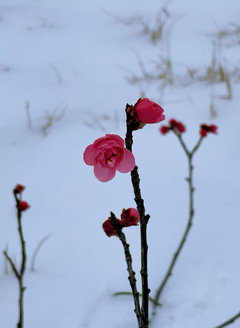
Flowering Apricot trees start to bloom
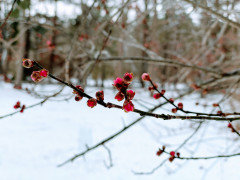

L Clark (zone 4 WY)
Original Authorlast yearAccording to Joe Bastardi, this month now the coldest nationally this century and fourth coldest since 1980. So, I'd say not overhyped at all, and maybe even under hype.
 last yearlast modified: last year
Yeah I agree w/what L Clark posted, although, thankfully, we on the east coast at least, are not having perilous lows compared to 1994, or even 2014...the breadth of the cold, almost from coast to coast, does seem extraordinary. 7F for a low so far here, and hopefully it stays that way. I'm "zone 7b" according to the newest revision, so I can't complain about that! It must be surreal for New Orleans to be under several inches of snow.
As for rhododendrons looking like skeletons, that's actually a normal adaptation, so nothing to worry about. I'd be worried if they weren't rolling their leaves! Illiciums do something even uglier where the leaves look like they've been boiled. But they will rehydrate when it warms up. Illicium henryi is certainly one of the hardiest 'exotic' looking BLE, having survived -16F at Barry Yinger's old garden in central PA.
What I am worried about is this being yet another dry month...and the persistent pattern, since last spring, of the long range forecast calling for normal or above normal rainfall, but it doesn't happen. We will see if early February is actually rainy.

Also interesting how Great Lakes ice has taken a pretty aggressive 'reversion to the mean' this month!https://www.glerl.noaa.gov/data/ice/spaghetti/bas_ice_compare.png
it's still mostly ice free, of coursehttps://apps.glerl.noaa.gov/coastwatch/webdata/glsea/cur/glsea_cur_3.png
 last year
We're finally climbing out of the deep freeze. Sun angle is >4d higher than on the winter equinox and daylength is >50 minutes longer.
It was interesting to see that the Winnipeg sun angle is just now matching what ours was on Dec 21.
The quirky thing this winter was the lack of any big storms that we generally get with all the fluctuating temperatures and pressure. Some light snow for Friday.
We're looking at some above freezing temperatures according to the 10-day forecast but anything's possible in our Septentrional area. :-)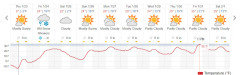
.
- last yearlast modified: last year
https://www.cbsnews.com/boston/video/polar-vortex-explained/
Sorry for the long advertisement. - last yearlast modified: last year
I'm praying to the weather gods (not something worth bothering a real deity...) that we are out of the woods this year. Shocking cold spells are rarer in Feb. but not impossible....but all the long range forecasting now is for normal to warm conditions next month. My low was 6F, which is slightly below the average I've calculated since I've lived here. So, a cold winter by that measure, but not nearly as bad as it could have been. Just north of me, MANY locations in York, Lancaster, and even Chester counties, went below 0F, sometimes well below it! The Upper Bay is just starting to freeze, so its ability to 'protect' me from further cold, would now be diminished if this nonsense continued.
I'll do a damage report eventually but I'll avoid the mistake of making one too early. With certain broad leaved evergreens, cryptic damage can appear much later in spring. I don't particularly care about keeping a Trachycarpus alive, but it's a useful indicator plant. Mine, along a south facing wall, is looking fine. (In contrast to obscure broad leaved evergreen, their fronds show damage very quickly; and it's not very big, nowhere near trunking.) So overall I feel like I dodged a bullet!
- last yearlast modified: last year
-27F in Canaan Valley WV on coldest day.
Wow, David, a palm 'apparently' doing OK after 6F!
- last year
At times the temperature isn't as important as the amount of time it stays that cold.
Interestingly, Trachycarpus is rated down to USDA zone 7 (z7a 0-5?) but then when you look at 'Cold Hardiness' it shows only down to 10F. Then to consider all the 'Protected Area' and micro-climate variables that enter in....And I know you've done things to enhance survival, david and do hope all your plants survive. :-)
Some parts of Texas showed single digits above for 2-3 days in a row, last week so I'm sure reports will be coming in about winter damage after the next months.
In my area, I know we could get a few more cold snaps but so far, forecasts seem to say not as bad for February. Two of my zone pushers are cold hardy down to -30f the other down to -20f and all are heavily covered with snow at this time. Two of them are located where ground freeze was absent last winter. When we farmed, we knew we were 'Rolling the Dice' every year and that it came with the territory.  last year
For a while now, I've wondered if the real zone determinate should be the lowest high instead of the lowest low. It's harder to dig out of the data, but shouldn't be that hard for computers.
- last year
Gallica, you raise an important point that hardiness (nevermind overall plant adaptability*) is a complex interplay of many factors. Nevertheless we know from scientific experiments that for any given individual of a particular plant species, there is an absolute minimum temperature its tissue can survive without destruction. For Trachy leaves, the typical figure is 0 to 5F. This has actually been experimentally verified by a cryobiologist who was once actively researching the topic in the Washington DC area. If an actual Trachycarpus palm tree happens to survive slightly lower temps for a while, it's either because the heart of the tree (the "heart of palm") stayed a little warmer due to insolation and insulation, or because that tissue had a slightly different temp. tolerance.
I think there's still a lot of research that could be done in this area. For example why can Phoenix palms survive shocking lows in the desert southwest they would never survive in the southeast, or even along the west coast? Is the 'heart' of those palms actually pretty cold resistant, but it just essentially rots when it experiences a massive freeze in a winter wet climate...while it doesn't in a desert climate? I'd be curious to know. Alas, if any research monies - probably corporate - are going into plant hardiness research these days, it's probably into seeing if plants could be genetically modified to be hardier. Which I have mixed feelings about, but whatever my feelings are, I believe it's likely to happen eventually. Not sure Phoenix palms will have the same cachet if we someday see them lining the water front of say, the Battery Park in NYC. (maybe New Yorkers will object to the planting of GMO ornamentals, though ;-) ) We could be as little as a decade or two from that, I think. The DC guy knew of people who were 'working on it'.
* FWIW, it's the summer heat hardiness map that should have worked on average night/LOW temperature in summer, vs. number of days with highs over 90F. I know for a fact that's a far more determinative measure for most heat sensitive plants; as I've said before cinnabarinum rhododendrons can grow in parts of Sonoma county CA that had as many days over 90F as I have here, but always have chilly nights! - last yearlast modified: last year
" but shouldn't be that hard for computers."
with the amount of AI data processing available now, I've thought we should have something like the Sunset zones, but for the entire country, and taking into account winter and summer temps average and extreme temps, and moisture/aridity. (High County Gardens has developed their own scale for the latter) Alas just as Sunset's eastern zones never took off, I think it would be too complicated for some people. But it would capture, for example, that Phoenix palms could grow in Las Cruces, but not in Virginia Beach, VA, even though both are 8a. As it is, we're probably lucky they keep updating the good old USDA zones. I remember the agonizing wait for those to be updated leading up to, what was it, 2012? But I know the local area's temps - I'm counting a lot of SE PA, eastern MD, and SW NJ as a kind of local to me - and the newest, 2023 data release is pretty darn accurate. Now the question is will plantings catch up to the map...in 10-20 years, will Trachy palms be seen on Kent Island Maryland? Just in time for them to go underwater LOL. Just in the part of my lifespan as a sentient adult (harhar), Virginia Beach has gone from having a handful of Trachys to now having thousands of them, and easily hundreds of mature pindoes. It's a combination of more people planting them, and fewer cold winters. Even most Trachys were killed there in 1985 - I know from first hand accounts of a local landscaper who was a friend of Fred Heutte. (Mind you, I don't think people should plant based on once-a-century winters.)
- last year
I don't remember 1985 being particularly bad around Philadelphia. 1986 was the year my project manager had just built a new house with a heat pump, and had to spend half the night trying to defrost the silly thing for about a week. Then we moved to suburban D.C., so had a ringside seat for the sideshow of '88, when half the city government was in San Diego for the Super Bowl, and half the city streets weren't plowed. I think that was also the winter the National Arboretum lost their crepe myrtles.
Then it was back to Philly. Where, as they used to say on Batman, 'The worst is yet to come'. Can you say 'nuclear winter'? 1991 was the year we went home to Pittsburgh for Christmas, and came back to a house with frozen pipes. Then in 1992 the weather station on Independence Mall had a reading below zero, and there was serious concern for Hallowell's azalea collection that had been moved to Penn State Ogontz. I don't remember what the headline read, but the lead headline on the Inquirer was in the largest typeface I have ever seen on a current paper.
The problem with the Sunset zones, and any other 'improved' system is that the USDA zone system has two parts. There is the 'what zone am I in' part, then there is the 'what zone does this plant grow in' part, aka the database. If you read pre-USDA zone gardening books, it becomes apparent that for most plants the original zone information was along the lines of- if the National Arboretum can grow it - zone 7
- if the Arnold Arboretum can grow it - zone 6
- if the Morton Arboretum can grow it - zone 5
It's simple, straightforward, and works for a large number of plants. How do you acquire, vet, and compile a comparable database with more variables? That's been the question.
IMHO, the most accurate USDA map is actually the first one. The second overcorrected for Pinatubo. The second overcorrected for the overcorrection for Pinatubo.
- last year
Lows producing wet snow/freezing rain/rain suddenly coming again and again at the mid-Atlantic states, at least.
- last year
🛌💤 3-5" Snow forecast for tonight. 💤
Winds <=10mph. Then a few nights below zero.
Sunny! 😎
💤🐧🐻❄️
- last year
The 'Capitol Weather Gang' is pointing out that DC will likely have the first winter of 'average or above' snowfall since 2018-2019. It definitely feels like the coldest winter since that one. Alas in terms of damage - here's a sneak peak of my damage report which I won't post until much later when it's absolutely clear what has recovered and what hasn't: definitely the worst winter since the polar vortex winters of 2013-2015! But there are many surprising twists. Who would have thought the Australian subshrub Veronica perfoliata would hold up much better than Ilex × attenuata 'Alagold'. There seem to be no 'Alagold' north of Raleigh, for example the Scott Arboretum says 'Previously accessioned No longer in living collection'. Looks like I've found out why! I'll probably deaccession it, too. 'Bienville Gold' from Louisiana is just fine, as is, obviously 'Longwood Gold'. I got my BG from cuttings from an old tree at U. Delaware in Newark, so it's seen some cold winters.
Anyhow back to the matter at hand, point is, many BLEs are stressed from the combination of a summer drought and then one of the driest fall spells ever. A cold winter on top of that was just too much for them. Rare species Camellias are looking especially bad.
Knock on wood but the good news is I think we are done with the severe cold <= 10F. In my study of mid-Atlantic/upper South climate, in a normal year, if you get past mid February, you're basically clear from extreme cold. There was one surprise winter in the 1990s, that had been mild until about Feb 16th and then dropped to 0F or below in parts of the upper South. (OTOH, if you're already having a hellishly cold winter, early March can be very cold, as happened during the polar vortex winters)
- last yearlast modified: last year
Hope all goes well for you david!
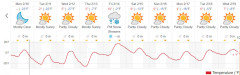
We're seeing a colder, than what was forecast last week, for temps this week.
I can't complain because the lows coming this week, isn't abnormal for this area, even though they are hitting the bottom end of z4a.
So, it looks like February will be colder than January after all.
Generally, when it's cold in Dec, Jan, Feb, the weather improves by March.
This is all speculation, but this winter is shaking out to be a more 'Normal' (la`nina, colder and wetter). If it stays the course, we should see an upswing in the weather in two weeks, give or take. 🤞
- last year
David, one exception to what you mention was 2015 when severe cold struck in the later half of Feb and into the first week of March! I had a row of about 5 days then in March that morning lows ranged from from 4F to -2F. Of course, there the the "storm of the century" in mid-March 1993 where in southwest VA I had about 26" of snow (and 4ft drifts) and a low of 3F. There was massive flooding afterwards due to a heavy rainstorm event falling on and melting all that snow at once.
 last year
March was quite cold in both polar vortex years (2014 & 2015) at my location. The average temp for March 2014 was more than 10 degrees below normal, dipping below zero 3 days. The average for March 2015 was about 4 degrees below normal (sub zero 4 days). That Feb (2015) was almost 16 degrees below normal, falling below zero 16 out of 28 days! The coldest temp I've ever experienced was 2/20/15 at -29F (I believe that was likely the all-time record low here). Lots of damage to tender plants after those 2 winters.
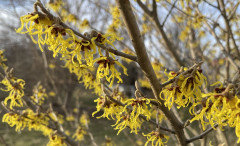
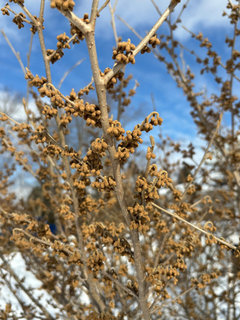
What a difference a year can make. Last winter had to be the mildest I've seen in my lifetime. December 2023 was almost 9 degrees above normal, January 2024 was about 3 degrees above normal, and February 2024 was almost 10 degrees above normal. This winter we're running somewhat below normal: Dec 2024 was slightly below (0.1), January was about 4 degrees below, and this February is also on track to end up below normal.Arnold Promise Witch-hazel 2/11/24
Arnold Promise Witch-hazel today (2/11/25)
- last year
David, one exception to what you mention was 2015 when severe cold struck in the later half of Feb and into the first week of March!
Right, but Jan 2015 had already been very cold. Although it's funny how memory works, I remembered it as being much colder than Jan 2025, but it really wasn't. They are actually quite similar. And in fact if you compare the first two months of winter, Dec 2014-Jan 2015 vs. Dec 2024-Jan 2025, it's a wash...locally at least, this winter is just as bad as "Polar Vortex Part 2"!* I think it felt so shocking back then because we'd already had a cold winter, 2013-2014, and I knew the second would finish off what the first one hadn't. My 20'+ Eucalyptus parvula actually resprouted from the base after PV-1. PV-2 finished it off.
So I would say exceptions to my rule are in fact very, rare, but, I was misapplying my rule, more than I realized! TBH I was looking at the 10 day forecast, that for now at least, that doesn't portend anything quite like the single digits we had on the 19th and 24th of Feb 2015. (and my memory is that both PV-1 and PV-2 had single digits in early March) It's still supposed to be cold, mind you. But I'm fine with that because everything is very much still asleep.
* - and the good news is I've gotten a little smarter since then. The current only 'gum tree' I have in the garden is Eucalyptus neglecta, and unlike the E. parvula, I planted it on a south slope. That appears to have made a big difference, as it still looks definitely alive. But will have to wait a few months, it could have bark damage or something. I've learned by now you can never evaluate broad leaved evergreens at this point. - last yearlast modified: last year
Glow-bull warming hits Japan.
- last year
Now that's snow cover!!
This will be my last 'Vortex' picture. which is NOT out of the ordinary for this area this time of year.
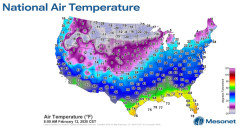
We had -27df last night, right as the sun broke the horizon but moderations are in the future.
Looks like International Falls won the prize again this year. :-)
I'm going back to bed.💤💤💤💤
- last year
Air is cold enough here that subliming water vapor from ground is freezing at low levels and drifting down as extremely fine and light (barely visible) snow. Not really any clouds per say, but a ground-hugging haze of frozen particles. Remember same thing in VA ~1994, IIRC.
- last year
Winter is losing its grip after the last week or so of some of the coldest temperatures this winter, although nothing went below my z4a limits.
Starting next Sat. high temps up in the 30's to 40 for the next week. That doesn't mean spring has arrived but at least we're going in the right direction. :-) L Clark (zone 4 WY)
Original Authorlast yearlast modified: last yearThis winter was much colder than many are giving credit just because it wasn’t record shattering at their particular area. NEbraska, for example, is experiencing truly historic cold this week. Much of the rest of the midwest is, too
- last year
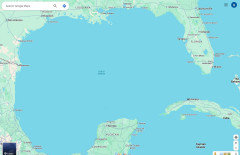
L Clark, center of the arctic high moved south then settled over the Nebraska area. Edge of the high pushed south well into Mexico. Here's something pretty cool below -- look at center.
 L Clark (zone 4 WY) thanked bengz6westmd
 - last year
FWIW:
We had it plenty cold Dec, Jan, Feb.
We didn't have the extreme low temperatures (-30's) that we've had in past years. I think -27f was our coldest low once in Jan, once in Feb, but we had a good portion (60%?) of that winter period with single digits to teens to twenty below zero for lows. With stretches during those cold times with highs around zero to single digit and low teens above zero.
This last week we've been basking in the low 30's to 40 (freezing at night) and next week we're expecting some 50's. Been sunny to PC. Most of our snow is gone. Just patches where the snow was piled or drifted. - last year
To follow-on w/what arbordave said, yeah, I would also say the coldest winter here since the back to back polar vortex winters. The damage was less devastating, in some sense just because some tender stuff was already weeded out by those winters, and also because I've been smarter about where I plant certain borderline items. For example Podocarpus 'chinensis' of commerce, sort of the hardiest form of an Asian P. macrophyllus clone circulating in the Southeast, died in one of the PV winters because it was in a spot that was too shaded. Now the plant is on a south slope where the soil stays warmer throughout cold spells, and it's 100% undamaged.
That being said, it still wasn't as bad as those winters, so I think that podocarp will always run the risk of being at least injured around here. If I have time I'll do a damage report this summer when everything is clear.
- last yearlast modified: last year
Joe Bastardi says an Arctic stratospheric warming will cause a generally cold period from around March 20s thru mid-April.
- last year
We came through Springfield Illinois yesterday, it looked like winter, some places along the way had snow.
This morning, St Louis, tree buds are just breaking, very little green grass.
So late start for many.
 last year
It is Spring here. What I like about the local forecast is not that much variation, 60-65 F by day and 40's by night. They say we need rain though.
- last yearlast modified: last year
Bill, you grow those Tulip Magnolias up your way?! Those northern/deciduous Magnolias are actually much more prone to frost issues than evergreen, southern ones as they bloom so early. I always used to have Tulip Magnolias, as it has gotten warmer over the years, my northern Mags were replaced with their more southern kin.
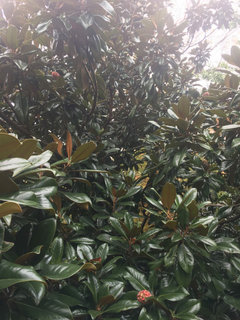
- last yearlast modified: last year
Not my place, I'm at New Orleans for a while. I can't see waiting around for things to start growing at my place when I can be here enjoying the warmth and beauty. ;-)
I think these are azaleas (I think).
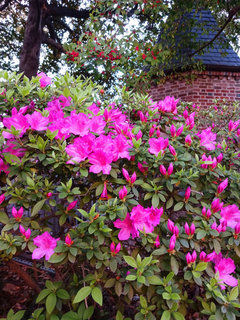
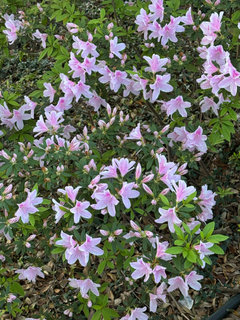
PS Evergreen mags aren't blooming yet.
- last yearlast modified: last year
- PS Evergreen mags aren't blooming yet.
Up this way, bloom peak is June-July, those Tulip Magnolias can start to bloom from late March into early-Mid April, and those have historically been hit by late frosts.
P.S., nice to be able to follow Spring! - last yearlast modified: last year
Been a fairly mild (meteorological) Spring so far, what I like most, is that temps are stable, not all over the place from sweltering to freezing! Mid-South especially prone to damage from wild Spring temperature changes.
- last year
Second azalea looks like the celebrated 'George Lindsey Tabor', aka just 'Tabor'. Arguably the most famous "Southern Indica". I'm just a little too far north to grow it...it will last for a few years and be taken out by a cold winter. I've found a hardier hybrid that looks very similar.
Bill by 'river walk' are you referring to the more well known one in San Antonio, TX, or the one in New Orleans, which I think is styled as one word "Riverwalk"? - last yearlast modified: last year
Sorry david,
Posting on my phone requires the selection of preemptive text which I find challenging to say the least.
NOLA (look it up) :-) riverwalk, is simply a cobble stone paved walk way with benches along the riverfront of the French quarter.
Mississippi River in background. ( best picture I have).
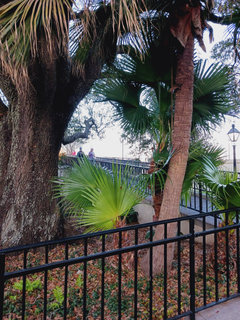
Some potted plants present.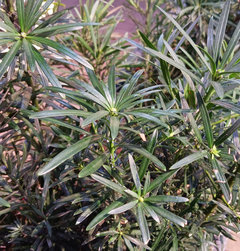
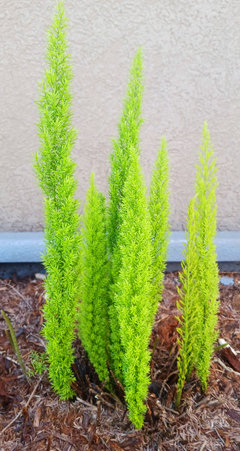
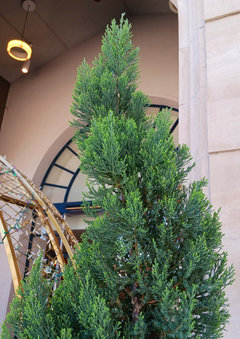
eta:: It had been very dry down here and saw many dead trees (pines) along the way. Crepe myrtle were still dormant. - last yearlast modified: last year
Bill - if you ever get a chance to visit the San Antonio River Walk, do so. In my humble opinion, one of the best 'high profile' public gardens in the country - maybe the world! (High profile in contrast to a typical botanical garden, that a self-selecting segment of the populace must make an effort to visit. The River Walk has a bunch of restaurants, bars, and hotels and seems to be the social core of the city.) And certainly more interesting than the pompous and dreadful 'natives only' planting of things like the NYC High Line. Although I was there 15 years ago and who knows, maybe it's not maintained as well as it was. I'd love to get back there but travel seems like more and more of a chore the older I get!
- last yearlast modified: last year
Thanks, david.
I did have a chance, a couple of years ago, while on a mission trip to Mexico, we stopped in San Antonio and had a tour of the Alamo.
Then with the little time we had afterwards (1hr?), walked the SA Riverwalk for a few blocks. I was with a few others on the trip so didn't have opportunity to stop and examine things, as we moved along with a deadline to meet.
I seem to remember (part?) of the river actually running under clear floors in the stores with dining opportunities on both sides of the river along the way. The shopping centers adjoining the RW all had openings to access the Riverwalk.
We saw large bald cypress at rivers edge, and we had to climb a large/high column of stairs to get back up to sidewalk level (many pictures of SA riverwalk on the net).
The NOLA paved riverwalk is much different in that the river is 1/2 mile wide with barges and ocean-going ships visible traveling the river. The walkway changes in width, design/direction with zone hardy and native plants residing in planters with larger city designed tree and shrub areas placed about, similar to my pictures in my last post.
The city uses a lot of Palms and Palmetto's for street trees along with Taxodium, live oak. and crepe myrtles. Probably more I didn't recognize.
The French quarter runs a half block to a block adjacent so easy access to shopping and dining.
There's commercial riverboat rides and a few other 'Tours' available along the RW.
eta: many buildings are 200+ yo. The don't tear much down, the keep fixing them up. ;-)
I'm no spring chicken either and have a few health issues, I said to DW, we better go do some things before we can't do them anymore. :-)
Oh, thanks for identifying the Azaelia I posted, further up.
- last yearlast modified: last year
"And certainly more interesting than the pompous and dreadful 'natives only' planting of things like the NYC High Line."
I know the Oudolf planting design on the High Line isn't for everyone, especially those who like a more formal and manicured look, but it's pretty bizarre to assail it as being "natives only."
A 2021 review of the flora of the High Line found that 61% of the plant species were non-native. The paper mentions that's an increase from the original floral survey of the High Line in 2002, which found that 55% of species at the time were non-native.
If you're at all familiar with Oudolf's other famous public plantings in the US (like the Lurie Garden in Chicago), he almost always leans heavily on Eurasian species/cultivars like Molinia, Calamagrostis, Salvia, Stachys, Sanguisorba, Nepeta, Sedum, Calamintha, Epimedium, etc etc. in his designs.
- last year
To me, and just my opinion, the warm area southern gardens (zone 8-11) beat the heck out of gardens located below those zones. Maybe I just like warmer weather.
- last yearlast modified: last year
I'm a terrible person.
There, I said it.
I was in a bad mood and made an off-handed troll-like comment, wondering whether anyone would take notice (aka, be trolled!) I officially regret doing something like that. Although, now that we're talking about it: although I'd certainly heard about the High Line, what, decades ago now during the planning stages(?) - I somewhat tire easily of "New Yorkers breathlessly self-congratulating themselves". So I'd only just skimmed a few articles about it since it opened, but those articles cooed about the prominent role of native plants. And so I falsely assumed this meant the vast majority of it was planted that way. Because that would be the logically 'trendy', 'socially conscious', 'virtue signaling ready' thing to do. I'm glad they didn't!
I do mean to check it out, eventually. There's so much more of interest for me to see "around" New York City, I'm not sure when I'll ever have time to get into it. For the foreseeable future, if I'm going to bother making a trip up there it would be more likely to say, see Planting Fields Arboretum a second time, than High Line. It will be a quite a while, if ever, before High Line has a 3' diameter Davidia tree as Planting Fields does. 😊 Something more interesting to me than beds of Molinia, Calamagrostis and Salvia. (I am compelled to say at this point one of the first places I wanted to visit in NYC was Wave Hill and so I went there in 2001)
In my opinion, public gardens should, as a general goal, provoke wonder and delight. If you're at Cranbourne [native only] Gardens in Australia, easy to do - because their native plants are amazing and spectacular. What is native and can be grown in NYC? Eh, sorry, not as much. So I'm glad they aren't constraining themselves entirely to a native plant list just to satisfy some misguided blowhards. Do they have things that could really lead to wonderment, that shock of "wow, I never knew where I lived could look like this", like winter blooming hardy Mahonias, Ericas, and Camellias...or scree beds of Nolinas, Kniphofias, hardy Agaves and Yuccas? I guess I need to go find out! For example this former display could have an info panel explaining that China has so many alluring broad leaved evergreen shrubs because the ice ages have always been less damaging there. It's entirely possible that eastern North America once had a winter blooming Mahonia-like shrub, but that it couldn't migrate to South Florida fast enough!
At any rate, sah67, I sincerely thank you for correcting me!
- last year
IMHO, the truly amazing native plants are at least 150 ft tall, 6 ft across at ground level, and a few centuries old. Yes, there are some in NYC, but they aren't at the High Line.
- last yearlast modified: last year
And in the end, don't we all grow only what will thrive in our diversified climates?
I'm sure an elevated platform presents its own unique challenges that further reduce the diversity of plants that can be grown there.
I'm sure Oudolf did the best he could and should be proud of his accomplishment, after all he's not a magician. ;-)
From what I understand, it was the local residents that lobbied not to tear the structure down and make something to help offset the overwhelming look and feel of the urban city and I think they got that. It will never be the same as a walk in the woods, even in my area, the beauty of which has been engrained in me for most of my life.
TBH, I like to be 'Wowed' and large trees are my passion. Generally, am not impressed with grasses and low shrubs, groundcovers etc. And fwiw: I do like the warmer climates. ;-)
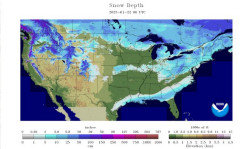

arbordave (SE MI)