

Davidrt28's winter 2024-2025 damage report
So, this was overall the worst winter since the polar vortex winters of 2013-2015...but it wasn't as bad as those in the absolute climatic sense (i.e., days of single digit temps or whatever metric you'd devise), in some ways it was w/respect to plant damage. The good news is a lot of identical stuff did better because I'm more skilled at keeping marginal plants alive than I was a decade ago.
Min temps were right around 3F, again.
So...
For rhodies and camellias, it was basically the worst winter ever...but not that bad! Damage, but no killing. Because compared to PV 1 & 2, we had 1) a preceding drought that stressed the plants and 2) no snow cover to protect the roots. Even some very hardy camellias like one of the Ackermans had tips of the leaves burned. But, point being, it was the one on the driest, most challenging soils...so this was really lingering effects of the drought.
A few rhodie cultivars, including my 'Horizon Monarch' - surely one of the southernmost on the east coast - lost their flower buds. Which was fine because after a PITA struggle to keep it happily watered last summer, I was just pleased it had no foliar damage. (I had the bad luck of moving this 4' x 3' specimen last spring.) One of my own 'Captain Jack' X delavayi hybrids, although it had better foliar hardiness than another, lost its buds - really annoying because I haven't seen it bloom yet - while the other one, quite damaged, still flowered. Proof of how different foliar vs. bud hardiness can be in rhodies, even w/in the same grex.
I lost my Podocarpus chinensis in the PV winters, now, planted on a south slope, it was totally undamaged. The difference is both, not quite as cold, and, spot that catches the winter sun therefore thawed out more quickly. The wisdom about avoiding *morning* winter sun doesn't seem as applicable at least to that conifer. Any of my borderline cam. cultivars are protected from winter morning sun, and for example, with a variety like the superb 'Mieko Tanaka', I'm 100% sure it would have been severely damaged w/o that protection. I know, becuase that was my third try to establish that variety. It's now over 7' tall. In other conifer news, I lost the small Taiwania I planted out. The big one I bought from a certain irascible North Carolina nurseryman was 100% undamaged. It was larger, and might be the hardier flousiana cultivar.
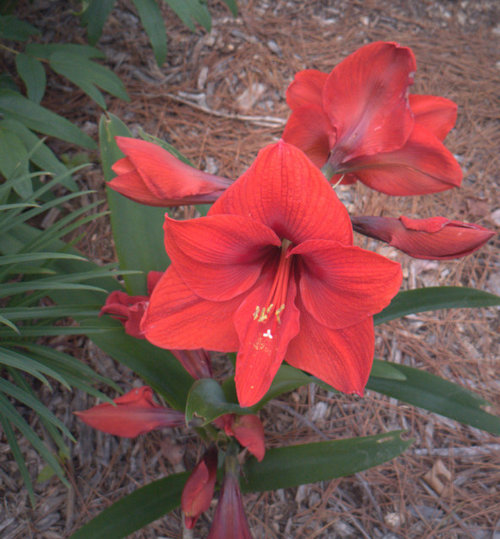
let's run through some perennials...I'm pretty sure all Hedychiums will be ok. Same with Zentedeschias. My 3 clones of Amaryllis belladonna were ok, but they are all in sheltered spots or south slopes. The Fascicularia bicolor I bought in 2011 finally got big enough to divide, and I'd planted 1/2 of it in spring 2023. It sailed through the prior winter. This winter, protected with a wall-o-water, it mostly died, but seems to have a small sliver that might be still alive. Fingers crossed. Pretty amazing for a pineapple relative. I've tried all the other allegedly hardy bromeliads over the years, and, guess what, they ain't nearly hardy enough around here. (Cistus, bless their hearts, was listing Ochagavia as zone 7 back in the early 2000s!) Kniphofia northiae died in a PV winter on a flat, somewhat wet spot, but did just fine on a warm, south facing slope. I have 4 Hippeastrums: H. x johnsonii and 'Olaf' were fine, while a couple other clearly had the main bulbs die off with only a small offset surviving.
Here's 'Olaf'. (not 100% sure actually, I know I have an Olaf, I'm just not sure if it's this one, or another strong red. I have the distinctive looking x johnsonii, 2 strong reds, and a yellow sonatini)
On the 'temperennial' front, I think I already mentioned the very impressive survival and quick return of Solanum laxum 'Coldham' aka (oddly enough) 'Creche du Pape'.
OTOH, my experiment with Tecoma smithii 'Orange Bells', in a similarly sheltered west wall along the house, was not successful. No worries - I rooted a backup, it will make a great container plant. It's probably one of the tenderest esperanzas because there's a theory it might be a Tecoma X Tecomaria (zone 9b south african) hybrid. The soon to be late great SoCal nursery San Marcos Growers conservatively say hardy only to 25F! So maybe I was being wishful. (or, Annies Annual's description was! Cistus isn't the only nursery guilty of zonal denial! I think they were rating it 8, maybe even 7.) I have a possibly hardier Tecoma to try when it sizes up. Some of them range into New Mexico, so should have some hardiness.
Some very satisfying BLE successes:
Mahonia duclouxiana hybrid, seedings from Far Reaches. No damage. I'm hoping to introduce this amazing plant via Camellia Forest someday.
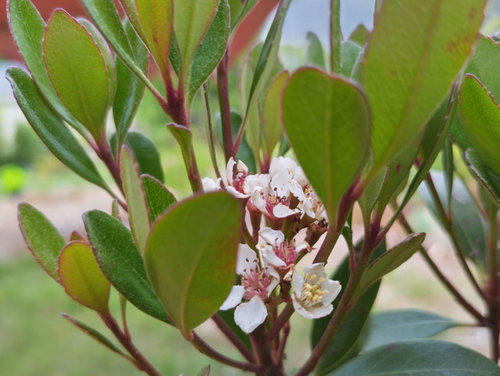
Raphiolepsis 'Blueberry Muffin' - Glad I gave this my customary 3rd and final try. I think years ago I just didn't know what I was doing - I think my first attempt was in the late 1990s at my parents house. About 20-30 years ago, a bunch of cultivars started being introduced as the 'hardier form of this or that'. Some were not...I don't think any of the P. tobiras sold as 'zone 7' really were. Well, this one truly is hardier than the typical Raphiolepsis of the south. Not in a sheltered spot at all, and no damage at all. I saw some crazy Indian Hawthorn variety at NCSU that was one of the most subtropical looking BLEs I've ever seen. I doubt this will ever reach the scale of that one, but hey, I'll take what I can get.
It's even blooming:
Callistemon 'Woodlanders Hardy' - I cheated and protected w/a wall of water, but it only had mild defoliation and is growing back well. It will fend for itself in future winters.
Disappointment: Eucalyptus neglecta. I'm close to giving up on Eucs. Many can make it through mild and normal winters just fine around here, but not the bad ones. E. lacrimans is clearly the hardiest, and would have been ok, BUT, it's also sensitive to summer root rot, and died after the huge single 3" June rainfall we had last summer, that spared the garden from a complete apocalypse. Trade offs!!!!!!!
Ahhhh...what else. The supposedly hardiest Rhodoleia was killed to the lowest few inches of stem. It had gotten to 4-5' tall though, so I'm optimistic it can continue to establish and survive occasional setbacks.
Comments (23)
UpperBayGardener (zone 7)
Original Authorlast yearlast modified: last yearI'll think of a few more things eventually.
I already mentioned how my Trachycarpus - that almost died about 5 years ago in a 'mini polar vortex', was close to undamaged. I won't ever get too emotionally invested in Trachys - I think they are hackneyed, and often rather ugly palms, but a palm is a palm, and I was really pleased it looked so good after this winter. (and with no cringey protection, like incandescent christmas lights. If it dies someday, it will die. I'm never doing stuff that extreme to keep it alive. If I wanted to go to that trouble, I'd keep a Pindo palm alive!!!)
My collected in the coldest town in NZ Phormium died back, but is returned pretty vigorously. Another I sheltered with a wall-of-water only partly died back, and should be 3-4' by the end of summer.
The fascinating Viburnum hybrid, 'Moonlit Lace', quasi-defoliated, but in an interesting way where it retained bright red, albeit dead, leaves all winter. Those fell off in spring, and it quickly and aggressively leafed out. No stem loss. It's as close to a tinus as I can probably grow around here, but that's fine, because it's as good looking as any tinus I can remember seeing.
Not that I was worried about it, but my Glyptostrobus was fine. I remember arguing with some fool years ago about it...he was saying the sad looking ones at National Arboretum prove it isn't hardy. They are on terrible soil!!!! The one at the colder Brookside Gardens in Maryland is gorgeous - one of the prettiest conifers in that garden in my humble opinion - and has seen temps *well* below zero F. Cupressus funebris was fine, but got attacked by an animal in early spring. I rescued it just in time, it's regrowing now. Groundhogs are very annoying. They leave plants alone, mostly, but once in a blue moon, every few years, viciously attack a completely random plant!
I'm also pleased the very Devonian looking fern, Dryopteris sieboldii, survived. Alas, so far at least, it looks like both of the forms of Holly fern I had in my garden, died. One was a seedling that had come from a prior holly fern that died in a cold previous winter. You just can't win sometimes!
 last yearlast modified: last year
Thanks. The siting of plants can make a big difference as the figs that Thomas Jefferson planted at Monticello, VA (near Charlottesville) on a southeast-facing slope (which would also drain away cold air) would grow up to 15 ft tall after quite a few years until a PV winter would kill them back to the ground, but they'd resprout.
UpperBayGardener (zone 7) thanked bengz6westmdRelated Professionals
Santa Barbara Landscape Architects & Landscape Designers · Decatur Landscape Contractors · Ocala Landscape Contractors · Emporia Landscape Contractors · Bennington Landscape Contractors · Alexandria Decks, Patios & Outdoor Enclosures · Magog Decks, Patios & Outdoor Enclosures · Lynchburg Landscape Architects & Landscape Designers · Chillicothe Landscape Contractors · Flint Home Builders · Toronto Home Builders · Gainesville Landscape Architects & Landscape Designers · Belleville Landscape Contractors · Gary Home Additions · Omaha Home Additions UpperBayGardener (zone 7) thanked L Clark (zone 4 WY)
UpperBayGardener (zone 7)
Original Authorlast yearlast modified: last yearOne of the things I forgot to mention about the wall-o-waters. They freeze solid during the coldest nights. The Chilean bromeliad and New Zealand flax I sheltered with them still saw close to 3F on the coldest night of this winter...just as they would have if they'd been outside the wall o water. The difference is just that 1) they buffer the rate of change and 2) protect from drying winds.
I say "close to" though, because they still might have cause a bit of ground coupling, such that, let's say the heart of the Fascicularia was 'only' at 5F, instead of the 3F it might have been w/o it.
Even a pineapple relative that can look good after a 'normal' winter around here is something I'd like to keep around and keep planting, also, they are slow to offset. They might grow faster in a maritime climate with summers that get chilly at night. They don't mind our humid summers, but they might go into a kind of estivation during them.
A few other plants to mention. My 'Andes Silver' hardy pampas grasses had total desiccation of the leaves for the first time in 8 years or so. (I sought and obtained those after the pumila I'd planted when I moved here in 2005 - one of the first plants I planted in this garden - died in the PV winters) But, after the chore of cutting all that away, they are re-growing very well. Even a small offset I'd taken last summer that was barely rooted.
And the pampas grass reminds me of a reason the PV winters were particularly destructive that wasn't the case now. We had deep snowcover for most of those cold periods. This was good for genus that are already basically cold adopted, like rhododendrons and camellias. OTOH, for things like South African bulbs (I lost a large colony of Nerines bowdeniis, and tragically, the rarest species of Kniphofia) they might have preferred, and survived, those repeated freezes to 3F if there had been no snow cover. What probably happened in the 2013-2015 PVs was we had > 15 inches of snow, because of ground coupling it started partly melting for a while and get everything very 'wet', THEN, because the cold was so prolonged the intense 3F freezes penetrated deep into the soil.
Which reminds me of yet another plant! I had a huge 5' w X 3' high, 4" caliper Rosemary 'Hill Hardy' in fall 2013. Also one of the first plants planted in my garden. It totally died. Hill Hardy and Arp came from Texas. Now I have an assortment of east coast selected hardy rosemary bushes like 'Blue Gem', and IIRC 'Salem'. The excellent Well Sweep Herb farm stated in the catalog they once published, that their experiments showed these to be hardier than Madelene Hill's TX rosemary types. They are. That being said, I think a 2013-2014 type winter, which was the worst case type scenario for warm-climate plants like Rosemary and South African geophytes, would have done more damage to Blue Gem, etc. This winter might have been a worst case for things like rhododendrons, but, if they were fully established and most were, they were fine.
A couple more plants to mention. I'd dead obsessed with getting one of the Chilean Berberis going in my garden, and I've made an exception to the 'try 3 times rule'. The latest, a B. stenophylla from Ian's Desert Northwest, has finally gotten more established than I've ever gotten one. The menace around here is two pronged: obviously, the winters are too cold and capricious for its liking. (although, if you go high enough in elevation in Chile, you find places that go below 0F, but things like Berberis probably don't occur in those parts) Also, it will rot in summer if it gets too wet.
So the solution seems to be putting it on the steepest slope I have. That will keep the water draining during summer deluges - we did have just one, but it was a doozy, as I alluded to above - and because it's south facing, helping it warm up in winter. Also stenophylla is a hybrid, so at least it's got hybrid vigor on its side. I did protect it with a wall o water, but, again, they only buffered the changes, it still saw low single digits.
And on the same hopefully ideal area for the east coast ungrowables? Rhododendron cinnabarinum. I'm also obsessed with getting a cinnabarina series rhododendron going in the garden. I'm lucky to have the 50% xanthocodon hybrid, '24 Karat', which is my favorite lepidote rhododendron. It was a cinnabarina crossed with a mid-elevation east Asian species in another group, to give some rot resistance, although I doubt it would grow much further south of here. I protected the cinnabarinum with a wall-o-water, and it did partly defoliate, but came back with, for that type of rhodie, a very encouraging vigor. I kept the beautiful Trewithen Orange alive for a few years with the anti-fungal* Aliette, but the PV winters killed it off. it's a 50% maddenia, so maybe a tad bit more tender, but having some hybrid vigor. I'm hoping the slope will prevent the cinnabarinum from dying due to summer rainstorms - like the Chilean Berberis. I will need to continue to protect it in winter, though. My long term goal is to put its pollen on '24 Karat', to create a 75% cinnabarina that can grow around here. (24 Karat is almost totally hardy, and just had a bit of leaf burning in this winter. It still bloomed fine)
If you ever encounter these "IRL" you will know why I'm obsessed. Even '24 Karat' is the most amazingly scented foliage plant in my garden. Imaging running your hands through the leaves of a shrub and smelling the most exotic cologne or perfume you can think of. And the flowers of cinnabarinum are super tropical looking orange. Same with 'Trewithen Orange'. I bought another one of those to keep as a pot plant, because I think it's a bit less hardy than the species. Again, the point is just to have that pollen around to put on '24 Karat' flowers.
* - anti-fungal is a convenient term to use, but things like Aliette really stop the growth of water molds like Phytophthora, which are what really cause root rot. They are no longer grouped by scientists with fungi.
Oh one more thing worth mentioning. Yes, Virginia, you can grow a west coast Ceanothus in Maryland. In needs to be in the driest soil you can find, and I think it only works because the eaves of my house are extra deep and create a dry zone. (And it is in a southwestern alcove of my house, so protected from both north winds and eastern morning sun!) I picked the cultivar 'Italian Skies' because it's popular in the UK, that obviously gets a bit of summer rain compared w/California. It blooms after most winters, with only minimal damage. This year, it almost completely defoliated, but there was no stem death to speak of. Alas, it wasn't as bud hardy, only a few flowers in the areas most protected from cold. But that's fine. I had another one in a somewhat less favorable spot for a few years before the PV winters, but it died. Again these are the category of 'still worth growing if you can, with the acceptance you're going to have losses or setbacks'. There's really nothing else you can grow around here that blooms like a Ceanothus in spring.
UpperBayGardener (zone 7)
Original Authorlast yearlast modified: last yearA post I'll keep editing with things as I discover/think about them.
I was just planting some ferns from the excellent Sebright Gardens in my shade garden. I spotted that the wonderful Pyrrosia sheareri is returning from a complete kill-to-ground. Most winters the top stays green. As with something like Phormium, I know it couldn't survive dying back every winter, but at least it can recover quickly when it does.
A few more worth mentioning:
Daphne 'Perfume Princess' - that I had to wait so long to buy - almost fully defoliated and didn't bloom, but it's coming roaring back. Although the other parent is arguably even less adaptable to the east coast than D. odora, I think this is a a case of heterosis given a plant extra toughness. Because it's been a while since I gave up on growing D. odoras around here, but I suspect most of them would have just chosen to drop dead after a winter like this.
Also on the 'plants I had to wait nearly a decade to get' front, × Schimlinia defoliated, but also came back vigorous. No stem loss. Interestingly the Schimas at Udel didn't even fully defoliate. The American 'version' of this idea, × Gordlinia, has not been as vigorous overall, and was slower to leaf out, *and* did have minor stem loss! It will be interesting to see which proves to be the long term best performer...I think I already know. (Asian genetics for the win) It's a pity it will be impossible to cross them, but it probably will be...they are so distantly related I don't think either was known for being able to make seed.
I had 2 seed grown Bomarea hirtellas. In a perfect illustration of why you should always grow as many seedlings as possible, only one clone survived!
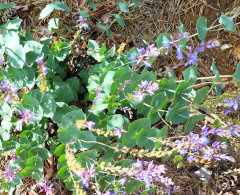
And lastly Veronica perfoliata defoliated, but regrew amazingly quickly and bloomed on time! I can safely say, probably having the most experience of anyone attempting to grow antipodal plants in the mid-Atlantic US, that this is one of the easiest and most rewarding Southern Hemisphere shrubs to try to grow around here. Not a eucalyptus, but co-evolved to have foliage that is reminiscent of one.
Not a good pic but still...
- last yearlast modified: last year
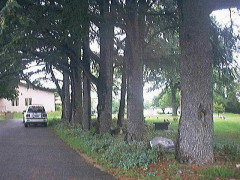
Large patch of evergreen bamboo ~20 ft tall a mile or 2 from my place was all fried to pale brown, but it has recovered. Atlas cedars along road to brother's place in Bedford PA were browned (again), and tho they look like they're releafing, it's really just too cold for them in this area. But there are a number of them in a Hagerstown, MD cemetery that seem to resist the browning surprisingly well - very old pic below.
UpperBayGardener (zone 7)
Original Authorlast yearWow, damaging atlas cedars is impressively cold! How far below zero F was that area?
I think Hagerstown is low and easterly enough to scrape by with a 7a rating, just barely. (But a lot of those places used to be 6b on the old, 'tough love' map from the 1990s. )
- last yearlast modified: last year
David, it was -10F here, but some nearby areas like Somerset, PA had -20F or colder.
UpperBayGardener (zone 7) thanked bengz6westmd UpperBayGardener (zone 7)
Original Authorlast yearlast modified: last yearOk, one more bump with just a few things.
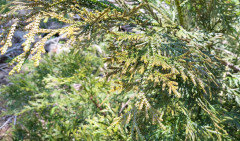
Here's a striking example of just how stressful this winter was. Here is mild burning on the leaves of my Thujopsis dolabrata. This is considered a zone 6, maybe 5b hardy plant. I can't say for certain it wasn't burnt in the polar vortex winters, but I don't remember it happening.
I feel like I forgot to mention a few things that died, and I don't want my report to seem to have a 'survival bias'!Sadly, one of my Chusquea gigantea died. These are far more resistant to hot, humid weather than Chusquea culeou. I should have let it size up some more. I won't plant the other one until Spring 2026.
I have read reports over the years of people getting Lantanas to survive as far north as DC, but I've tried my last one. It was the 'Chapel Hill' variety, which is sometimes sold as zone 7 hardy. I only tried it one more time because I got it really cheap...probably at 'Big Bloomers' in spring 2023. Even giving it an extra year to size up, it appears to be very dead.
https://www.monrovia.com/chapel-hill-yellow-lantana.html
Operative word: 'may' be hardy to 0F! UPDATE JUNE 4th, 2025! Last update to thread! It's comin' back!!! I was shocked! There must be a shoot from a very deep root and it just took a while to emerge! This is at least my 3rd, and maybe my 4th, try with a so-called 'hardy lantana' so it feels great. If it can survive this winter - near 0F with no snow cover - it can survive any winter around here.
I did better with another plant on my 'last try' list. This is one of the Garryas, but I'd have to check on which one. Probably one of the hybrids. Small, but fairly well established in a sheltered spot, it had no leaf injury this winter. Of course it remains to be seen how effective the flowers are here, since my winters are colder than the PNW. As with the Ceanothus, this is in a spot that also protects it from rainfall!
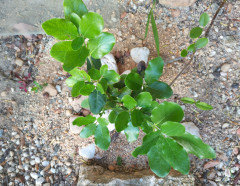
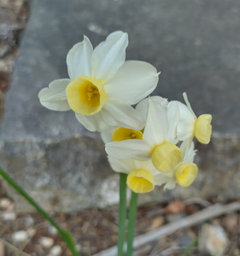
Cistus sold me a very subtropical looking Eryngium pandanifolium. I was worried...it look very, very dead after this winter...well, it took its time, but it vigorously sprouted a couple weeks ago. On the same south slope, Brunsvigia grandiflora from Telos Rare Bulbs is still soldering along, but I think the more promising one for my climate will probably be Brunsvigia radulosa. That bulb had an interesting provenance: Seneca Hill Nursery grew them, but when Ellen retired, she sold her stock to Quakin' Grass nursery. I bought one from them, and waited years for it to size up enough to divide and try one outside. Unlike B. grandiflora, which, mysteriously, is a winter growing bulb even though it comes from the summer wet side of South Africa...B. radulosa wants to grow in summer, but is a real drama queen about dry spells. So it died back in last years drought. I'm relieved it is returning, even though I have potted backups.Finally, not exactly a winter survival story per se, but a "finally blooming after cutting away a shrub that was shading it". But probably *not* a very hardy Narcissus. This was Narcissus 'KayKay' bred by the late William Welch in California. AKA "Bill The Bulb Baron". I ordered it from him when I ordered the batch of Amaryllis belladonnas I tried in various spots, most of which that died. Fragrance was incredible - that's what he bred it for.
Ok - LAST EDIT - 31st of May. Couple more things I forget!My "Wheel Tree" - Trochodendron - was basically undamaged. Maybe a touch of burning on the most exposed leaf edges. There's a famous garden in coastal New England, supposedly one of the only areas of 'oceanic climate' in the eastern US ( https://koppen.earth/ ), that lost one of a these a few years ago. So I feel very smug that I can keep something alive that they can't. 🤣
My Arbutus unedo - 'Elfin King' cultivar IIRC - was about 90% leaf burnt, and fruit/flower burnt, so there will definitely be no cheerful red, yellow and orange berries this fall. However, it only had perhaps 10% branch dieback, so unlike the polar vortex winters that almost killed it back to the ground, it's still got its overall 6' h X 5' w size. It's not very 'Elfin', to be honest.
 last yearlast modified: last year
I had to rush outside to check my little Diggers Speedwell... but only just the first signs of flower buds. This seemed to appear simultaneously across the UK nursery scene, just last year...does make me wonder about the interconnecting sources of our nursery supplies...and the vagaries of fashion.
I am always interested in what you are growing, David, despite having (obviously) much more space than I have because of your tree and shrub acquisitions.
I also bought an eryngium pandanifolium...fell into an eryngo rabbit hole cos of the general umbellifer craze, plus they are generally obliging grown from seed. The annual leavensworthii is a revelation of silvered purple.
My main eye-opener has been the growth of my almonds and nectarines after the driest spring in my lifetime. Not a trace of peach leaf curl (and subsequent defoliation) has led to unprecedented growth and crop production. The almond especially is having to be propped up as the weight of the utterly laden branches (and lush foliage) is dipping into my potato patch.
Always a silver lining of some sort.
I consider trying bomareas every year...perhaps this will be the one.UpperBayGardener (zone 7) thanked suzy jackson- last year
One of the latest trips (May) of the 1309. Trailing diesel is for the return trip as the roundtable in Frostburg can't be used yet. https://www.youtube.com/watch?v=Sx484Igx-7M
UpperBayGardener (zone 7) thanked bengz6westmd - last year
June 2025, my 64 Common Milkweed plants are down to around 30 that I could save due to EXCESS RAINFALL . . . The Swamp variety seems to be doing fine. Statistics:
30-year average: The long-term average rainfall for June in Sperry is 4.78 inches.
June 2025: XXX (My city in NE Oklahoma) experienced 10.63 inches of rainfall in June 2025!!! UpperBayGardener (zone 7)
Original Authorlast yearlast modified: last yearTammy I'm sorry about your milkweeks, but it would really make sense to start a new thread about damage due to conditions other than cold.
While this somehow got bumped, I'm going to add I do have a plant I'm really worried about. Hedychium 'Pink V' is returning agonizingly slowly. It's still only at shoot stage, < 1 foot high. It doesn't seem like it's going to build up enough reserves to make it through another winter. So, on the fence about whether I should dig it up to have a winter inside. I'll wait to see what it looks like by fall - and also, see how much quality growing time it gets in the fall. We've had years we don't get a freeze until December...could give it time to bulk up its rhizomes. I also think the Taxodium 'Banita' shading this lily was smaller in the early years of Pink V's life - 2015 to 2019 - so that allowed the rhizomes to size up. Most of them died in this winter without snow cover. So today I'm going to cut a branch or two away to give it more light.
UPDATE (an hour later)
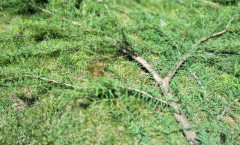
DONEmy phone was inadvertently in some stupid AI portrait mode, hence the wacky look
'Pink V' has a lot more light now, and can hopefully catch up.
Interestingly, H. coronarium, long considered the hardiest ginger lily in the southeast, didn't make it. So the one that came roaring back and really seemed by far the hardiest was H. densiflorum. Makes sense since it is one that is known to do well in the chilly summers of the PNW! I just noticed what I think are buds so it should start blooming by the end of the month.
Update to something upthread - the Fascicularia did die. Sad emoji! But it sailed through the prior winter - so still amazing to be talking about a pineapple relative that can look fine after an average DC/central MD winter, in a sheltered spot. So this will be another tantalizing plant like the hardiest Eucs, fine in normal years but just not enough hardiness to power through the coldest winters. I'll probably keep my mother plant, but save the offsets for someone in a slightly milder east coast climate. My Trachy has fully grown out of its damage and looks good. I think barring another 1994 type winter (knock on wood!), it will be a permanent planting.
- UpperBayGardener (zone 7) thanked bengz6westmd
UpperBayGardener (zone 7)
Original Authorlast yearWell, Ben, there are few people for whom I'd indulge such a request, but you are one of them.
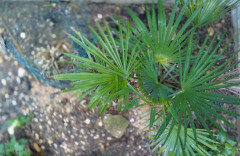
Camera is still in crazy mode but that's fine, I kinda like the way it looks actually!
You can make out how this is in a SW alcove of my house. To the left is the carcass of the poor Fascicularia. It needs a fence because, of course, it is delectable to rabbits. Or was, before it died! They have an amazing way of finding the rarest and most valuable plants to nibble on!
Anyhow as for the palm, it was planted either in the immediate aftermath of the Polar Vortex winters, or the following year, but no later. So either spring 2015 or 2016. Now, right off the bat, a lot of punters would say "that palm should be much bigger". Let me tell you, 100%, if I'd fertilized it like crazy it would be dead now. I've become absolutely convinced the secret to marginal plants is to grow them hard, especially when they are newly planted! They need to start building a root system to FIND nutrients, not have them handed to them in the 12" diamater circle of soil around their crown!
It almost died a couple times since then, but the latest winter - which was the coldest since the PVs - only showed minor dieback, which was a sign to me that its root system was more established and could sustain the top through cold weather. I am cautiously starting to fertilize it a bit more now. It should really start zooming unless we keep having winters like the last one :-(
Last night had one of the most intense thunderstorms since I've lived here! Story for another time...- last year
I grow all my plants in the equivalent of a penal compound or some sort of plants gulag. For sure, the lack of lush is mostly down to a general neglect (because start as you are likely to carry on). Fortunately, I stuff enough randoms in that some, eventually reach a respectable size and state (or cark ).
UpperBayGardener (zone 7) thanked suzy jackson - last yearlast modified: last year
Thanks, David, that's gotta be a pretty unique achievement for such a northern spot (away from the coast).
My crape myrtles were killed mostly to the ground, but that's happened before. Tho I had to mow them over, 2 of my 3 were growing root-suckers outside of the base on the lawn -- never seen that before.UpperBayGardener (zone 7) thanked bengz6westmd  PROlast year
Ok, the whole property has now been checked, paths cleaned, outpost set.
A couple trees down in the north half of the back. A real big one that fortunately fell out of paths. Another cluster that took a chansaw to clear back. But the blackberries and wild grapes are hella happy this year. On the south half, winter heaves have really made the collapsing of a trail section much worse- will require a pretty decent fill in this early fall. Might need to do a hill up to account for the water movement across the property in that acre. I'm not too sure the new apple tree planted two years ago is gonna make it, it is struggling. The other two old apples are good, crabapple is cram-packed.
In the front yard... One pop up greenhouse is amost toast due to late winter winds. It is now decomissioned to light shelf duty to hold cooking stuff by the firepit. One low cap for the kitchen bins is getting real shabby at the seams, and I need to make another cap before fall. It's support collaped under snow, and apparently it was one snow too many, lol. One of the pallets under the big water tank had a rot out and the slight collapse put the tank out of whack for collection. Took most of the dry spell to drain it out to the gardens and get it reset proper. It now has two weeks of water in it :) Excessive wind fall of branches all over the yard are finally mostly shaken down.
Almost all my too-late potted roses didn't make it through, unsurprising but sad. Two potted fruit trees down. Sand cherries not only survived, but gave a couple cherries!
UpperBayGardener (zone 7)
Original Authorlast yearBeesneeds - I'm more than a little confused. Did you mean to start another thread, or add to another one? I feel like context is missing.
I now see I didn't say on this thread, but I have said this in prior threads: I generally believe that with semi-formal damage reports, it's fine to *add* comparisons from people in roughly the same part of the country OR about the same type of plants. So for example, Ben is in another part of the same state, albeit with Maryland's version of a tundra climate 🤣 OTOH, it's not very meaningful if I post a damage report about Maryland, and someone in, say, Davis CA posts about damage to their lime tree from a freeze to 28F or whatever. Not that that's ever happened!
Suzy was obviously more generally replying about growing plants lean. I like the idea of a gulag! Gotta toughen 'em up!
I'm all for threads veering into new topics, but could you at least clarify where you are? Sorry if I can't keep track of people who are relatively knew to me, for some reason Alaska is ringing a bell?UpperBayGardener (zone 7)
Original Authorlast yearlast modified: last yearBen - still can't believe you hit -10F this winter. This is absolutely crazy, but at the same time, shows what a cold winter is really was!
It's no surprise to have damage to crapes at that point. I think I mentioned that my neighbor, who has lived here since the late 80s, assured me the traditional non-National Arboretum hybrid crape in his yard was not killed back in 1994 - and has in fact never died back. I didn't die back in the PV winters. Honestly, I think he might be misremembering, but if true, it would imply that the proximity to the bay, exposure, and cold air drainage really protected my area from temps well below 0F. Which would be a great news. Certainly where I lived in 1994, in western Fairfax County, saw all the old style crapes, including ours, killed to the ground that year.
You are a 3 hour drive from me - what's really striking is how the climate changes in just a 45 minute drive to central Lancaster County in PA. But I digress!
- PROlast year
I thought this was the 24-25 winter damage report. It can take till July to figure out what all the winter damage does since it can take till June for areas to be dry enough to work on and check out. Though this year we are still running low on precipitation carrying over from the 23-24 timeframe- probably what made the heaves in the one path so bad. Had to cut out the windfall from late winter to get to where the crabapples are. The other access was just too crappy to use yet. I tend to hold "dead" pots till end of June to give them a chance- the sometimes surprise me :)
So yeah, that post is supposed to be here. Some winter damage shows early, like greenhouse damage. Some I don't get to make sure of till much later, like where the crabapples are. Wild grapes I don't get to tell how bad the winter was or wasn't till the fruit clusters are well along, I can't find them well earlier in the year.
And sorry for fogetting my location. I'm on the shores of SW MI. Hot side of 6 due to the closeness of the lake and some micropockets in my yard. Winter damage tends to show more in the back acres than the yard.
UpperBayGardener (zone 7) thanked beesneeds







bengz6westmd