Software
Houzz Logo Print
mxk3

Why does no one sing the praises of a hoe?

last year
last modified: last year

I recently started relying heavily on my hoe, something I never really did before. It was relegated to the vegetable garden, and even there I didn't use it much, I always pretty much just resorted to hand-weeding and digging most of the time. Now that I've been started the hoe in both the vegetable garden and perennial beds, it all goes so much faster and is much, much easier on my wrists and hands since I'm not doing nearly as much hand-pulling. Now, yes it's true some things a hoe won't can't touch -- if it's chin-high already then yea you gotta dig it, or dandelions, couch grass and the like, but dang the weeding chores are so much less overwhelming and dreadful with this thing. Why is the lowly hoe rarely mentioned on the boards?

Comments (46)

  • last year

    I don't know, porkchop, but you are right, no one mentions the lowly hoe.


    I do have a favorite, it's the triangle shaped "scuffle" hoe which cuts weeds with both backward and forward motions. My carpal tunnel doesn't like the chopping action of a traditional hoe, but the scuffle hoe doesn't seem to bother it very much. The head is small enough I can get pretty close to plants, or between plants, saving my back from some of the pulling.


    My husband likes the wheel hoe we just bought from Hoss Tools, he can weed between rows and finish the whole garden in about an hour, the time it takes me to go close to the rows and between the plants for about 6 fifty foot rows. He has pretty much retired the rototiller and we use the wheel hoe, our selection of hoes and my trusty hori knife.


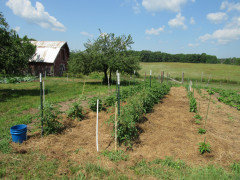
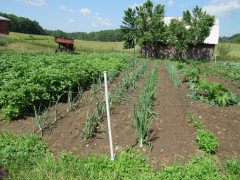
    Our garden is just about an acre, split into two sections by a couple of apple trees. 22 rows on one end and 17 rows on the other, so a good hoe is definitely a requirement.


    Annie


  • last year

    "My carpal tunnel doesn't like the chopping action of a traditional hoe,"


    I use a Dutch hoe which is an easy back and forth action. You can stand up straight to work. Top tip: keep your hoe sharpened.

  • last year

    I honestly can’t remember the last time I used a hoe; I hand pull all my weeds - perhaps it’s time to revisit that strategy.


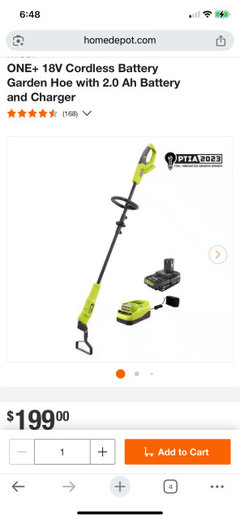
    I wonder how well this gadget works, it seems to have gotten some good reviews. Easier on the hands, perhaps, but definitely not the pocketbook!


  • last year
    last modified: last year

    Hoes just cut weeds off at the surface. They promptly grow back. If you want to really remove a weed, you need to pull it. As such, hoes are mainly tools to make a garden look pretty. A weed without a top is still pulling nutrients away from your other plants.

  • PRO
    last year
    last modified: last year

    An electric hoe. Never seen that before, lol. I have to kind of wonder how well it works too. That kind of hoe is great for chop and drop weeding. I use that kind when I want to pull up the nutes and drop them to the surface. And when I want to make sure I leave the nutes in place in the soil. I make my weeds work for me when I can :) Awful for the grass that breaks up though, sigh.

    I use a long handled mattock instead of a field hoe. I'm short, and why have two tools when the one works good enough for the occasional trenching digging I do. I use a cultivator hoe to scratch in amendments, and sometimes a draw hoe to level out a bed area.

    I have a warren hoe head- the long handle snapped off long ago, leaving the goodly metal collar on the head. It's a favorite tool to deep dig up my 18-20 gallon tote containers. The point is excellent for getting down to the corners that can have a tendency to compact more. But haha on me, I rarely use my long handled one in the garden beds.

    I also have one of those twist cultivator hoes that were on TV long ago. The kind where it has S shaped handlebars. It's handy for a tight reach in, but too much of a workout for a bigger space. And I have a blade hoe that is great for slicing off weeds that pop up in the cracks in the driveway.

  • last year
    last modified: last year

    I have a exactly that make of electric tool. Mine is a strimmer but is identical except for the attachment at the bottom. The small battery pack only lasts 20 mins and to get longer use you need two to change out, or one larger one. I have no issues with strength in my arms and hands but this tool is cumbersome and soon becomes heavy and wearing on the wrists and arms. Luckily I only need to use it briefly. I would not imagine it would be easy to use for hoeing which is a longer and more precise task. I'd stick with a light weight traditional Dutch hoe. You can also use it for balance when you're picking your way about amongst the plants!

  • last year

    "Hoes just cut weeds off at the surface. They promptly grow back. If you want to really remove a weed, you need to pull it."


    Not necessarily true. If you hoe when the weed is small, it often will be dislodged, which usually means death. And then there are some weeds where be-heading means death regardless. But like I said, some things you do need to actually pull or dig.

  • last year

    I have a variety of hoes in both long handled and hand held versions. They're great for dealing with small weeds and seedlings, which don't grow back once cut and can be left to compost in place.

    Many years back I was able to eradicate Canada thistle by routinely walking around with a hoe in my hands chopping off every new shoot I saw sprout up. Its roots are so deep, brittle, and spread so much laterally that you can't just dig it out. Even weed killers can have a hard time with it. It was growing in about a 20x20 foot area and it took a while but eventually I exhausted the root system.

    Rodney

  • last year

    Annual weeds might be killed by hoeing when small, but for perennial weeds, that's unlikely. Around here, purslane is a serious invasive weed. But if you just scrape it off, the top will likely reroot.

  • last year

    You need a proper hoe, know how to sharpen it and how to use it.

    Proper hoe = one piece blade and sleeve for handle. I haven't saw a new one in over 40 years but have acquired a few from garage sales. They are easy to identify. Where hoes normally have 3 parts, blade, handle sleeve and handle, a good one is 2 pieces, blade and sleeve as one piece and handle as the other. This type hoe will always be made of quality metal with proper temper.


    How to sharpen= 8" double cut file to restore badly neglected edge then single cut file to finish edge and future maintenance. Holding blade firmly and keeping file at same angle from stroke to stroke is key. Totally unnecessary to finish with stone since blade will be making contact with abrasive soil while in use.


    How to use hoe= In addition to chopping/scraping action commonly associated with hoes , the corners are used to dig roots out. Corner is also handy for "pushing out" small weeds when crop is between you and weed. Keep hoe sharp and carry it any time you are in and around crop so you can destroy random weeds. Plus as floral said you can use it for balance or just to lean on while admiring your crop.

  • last year

    But if you want a long-handle standup tool to really pull weeds, those multi-claw weed pullers are the way to go. The corner of a hoe can't reach as deep. The good ones have both a deep pick and a claw to grab. They reach down several inches. Sing some praises for those. I don't have one, but a neighbor demonstrates it to me proudly. Now, those are especially good for large weeds. Ones that are more than an inch across. I don't think a hoe could properly extract those.

  • last year

    I keep my hoe nice and sharp and I don't just use it on weeds, although hoeing up small annual weeds on a hot and sunny day will kill them. I use the point to make a row to plant my seeds or dig a small "hill" for squash or melons. I "hill up" my potatoes with it and I've marked the handle so I can use it for measuring between row markers or to make my cattle panel bean tower equal on each end so the next one can be placed. And, of course, I lean on it and admire my handiwork, LOL.


    Purslane is prevalent here, as is lambs quarter. They are both edible and nutritious and I eat both of those things, although there is more in my garden than I could possibly eat. The purslane always needs pulling, so I pull it, put it into a 5 gallon bucket and feed it to the chickens or the cattle, both love it and it is out of my garden to prevent re-rooting. The chickens repay me by turning weeds into eggs and the cows turn it into manure for more compost, so double bonus for me!


    Annie

  • last year

    Slice a perennial weed about thee-four times it usually dies. What’s more effort? Slicing three or four times or pulling once?

  • last year

    Slicing a perennial weed three or four times is more effort than I want to expend. Also kind of unnerving. It's baaaack! I want to pull once, and be done with it.

  • last year

    To hoe or hand pull, that's the question and you only need to look at how farmers do it to know which is best. You will not find field workers crawling around pulling weeds by hand simply because it isn't as fast and effective as using hoes. Case closed.

  • last year
    last modified: last year

    I try to avoid hoeing in my perennial bed as the disturbed soil encourages annual weeds and most mature perennials hate having their rhizomes/ roots damaged.

    I use a lot of mulch and have a dense planting after the plants are established

    for the few weeds I need to get out I have a japanese weeding sickle and a horihori knife

    my garden is small-ish and therefore it works

    and I get the roots of the very few perennial weeds as well

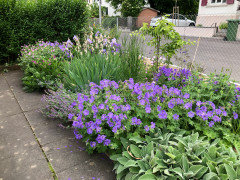
    this is a perennial border I planted with volunteers at our alottment bathroom hut-thingy , and that is the structure I aim for, I do not use a hoe in this situation


  • last year
    last modified: last year

    I bend over and pull weeds by hand because my plot isn't that large, and I have no trouble bending over to do it. I also appreciate the fact that they aren't going to resprout. I don't aspire to be a field worker responsible for crawling over many acres. In fact, in commercial fields a grower will usually cultivate with a powered rotary hoe or tine weeder. The latter actually pulls them up. That's how farmers do it. No one crawling over fields.

    That's interesting that hoeing encourages annual weeds. It's true that running a hoe over soil will break it up slightly, and allow weed seeds laying on the surface to get established.

    A major weed for me, in an urban environment, is Bermuda grass. You hoe Bermuda grass and, guess what, it pops right back up, and spreads.. Most of the plant is in the underground runners. So I guess it's really a question of what your weeds are. As noted, hoeing might do a reasonable job on annual weeds.

  • PRO
    last year

    Japanese weeding sickles are often included in the hoe family. It can kind of depend on the blade. Like nejiri gama are in the hoe family.

    And yes, purselane is a cut and come again green, like many lettuce can be. So using a hoe that slices can just encourage it go grow more greens. Using a cultivator hoe can be useful since it's metal "fingers" can hook under the plant to lift it. I let some grow in blank spaces in the later garden after garlic is pulled. Some cut and come again for eating, some pulled and left to dry before putting back into that bed. Purselane pulls good potassium and calcium so I like to put those back into the bed instead of removing them entirely. It sure can spread like wildfire if I turn my back on it for a second, so I keep it to just the one area.

    I find using a hoe on perennial weeds not much different than annuals. So long as I use the tools while the plants are young, they are pretty effective. But once established, other tools or methods are often more effective. Of course, the hoes that are for the soil rather than weeding are more effective on clear dirt rather than in vegetation.

  • last year
    last modified: last year

    Cultivator hoes with long tines make a lot of sense, but I have some trouble considering one as a real hoe, except that they have a long handle, and you pull them. The definition of a hoe is a tool with a thin flat blade on a long handle.

  • PRO
    last year

    Well, a lovely thing about gardening is that there are as many ways to garden as there are gardeners. And dozens of hoes and other tools to use or not in those gardens :)

  • last year

    In attempt to discredit something Klem said about farmers utilizing hoes, daninthedirt proclaimed " In fact, in commercial fields a grower will usually cultivate with a powered rotary hoe or tine weeder. The latter actually pulls them up. That's how farmers do it. "

    Farmers rely heavily on herbicides for weed control in grain crops but for fruit and many other food crops from California to Mexico and South America they must supplement with hoes. I believe Dan is in Central Texas where 100 acre fields of melons and cucumbers are common. If Dan will furnish conclusive evidence (video of his own or from u-tube where he gets much of his expertise will suffice) of tractor operated equipment weeding mature vine crops, I will sing his praises instead of the lowly hoe.

  • last year

    Oh, we're talking about vine crops? Didn't know that. Shame on me! As to everything else, mechanical tillers with tines are the way it's done. Have you visited Dixondale? They use rotary tillers to weed their onions. No question that herbicides are major tools for weed control. If klem1 will furnish conclusive evidence that I get my info from you-tube and home video, I will sing his praises. I could just flag his post, but I'd rather rebut. I'm not saying that hoes are never used. I'm just saying that in many cases, they aren't optimal. I have no problem with people who love hoes, and I will respect their choice. I don't. But maybe some people can't endure me simply saying that. Funny how these threads sometimes go off the rails.

  • last year

    "Dan" LOVES to argue and be contrary, you people have made him so happy. Used to think he was mentally handicapped but that seems like an act now. Keep giving his rails to go off of!

  • last year

    I've never used a hoe...lol. I do a lot of mulching. I have a small property and when things are mulched there are a lot less weeds and I don't really mind a small amount of hand weeding.

    And what's a KTareaof houzz? [g]

  • last year

    I use my hoe only on the allotment. Not in the garden at home. And yes, if you mulch it's less necessary and more difficult to use. As for perennial weeds, some succumb to repeat hoeing but some don't. I have Bindweed, Calystegia sepium, and that is immune to hoeing. Any piece cut off will simply reroot.

  • PRO
    last year

    And what's a KTareaof houzz? [g]

    Kitchen Table. The tail ends of the hot topics ended up there and another forum, and often get into bickerments that can be rather derailing. It bleeds over into the cooking forum sometimes. Don't need to happen in the gardening areas. None of us are commercially farming or using mechanical hoes for large fields. No need to bicker over equipment that does not apply to our home gardens. But sometimes folks like to kick it up like this is the KT area.

    Back to hoes that most of us home gardeners are using or not using. I'm a little surprised that so much commentary is revolving around weeding, and leaving out the harvesting, cultivating, and furrowing that hoes are good for.

  • last year

    BeesNeeds - Thanks for the explanation on KT. I only visited the Hot Topics forum a couple of times and I was not surprised when they closed that forum. [g]

    Hmm.... I guess I just use other methods for vegetable gardening which is what harvesting, cultivating and furrowing is all about, right? I have raised beds and again I mulched vegetables. And when I am preparing a new planting area - if it is weedly I'll lay down cardboard and cover it over iwth yard waste etc. to make a new lasagna bed, which when it is ready is very friable and ready to plant.

  • PRO
    last year

    Yes, I mulch everything too. Good stuff.

  • last year

    " If you hoe when the weed is small, it often will be dislodged, which usually means death." This is correct. All plants can easily be killed if the tops are cut off when young because the under developed root system doesn't have the energy reserve available to regrow the foliage and dies, and if some do the second hoeing exhausts the roots of energy. A plant that hasn't yet develop true leaves and just has cotyledon leaves are the easiest to kill just by dragging a hoop hoe over the top of the soil decapitating them.

    I use my favorite hoop hoe to decapitate all the weeds on the forward motion and then dig it down about an inch on the pull back motion to disturb and mutilate the roots. Turning it upside down I can get right to the stems of the plant and pulling it back scrapes off the tops. It has rounded sharp ends I use on bigger established rooted weeds to pull them right out of the ground without bending over and love it. With the hoop hoe in my hands I'm like a skilled Japanese knife chef, chop chop.


  • last year
    last modified: last year

    I mulch part and I hoe part. I have cattle and hay and so usually use hay as a mulch, replenishing throughout the season. I mulch at least the peppers, eggplant and tomatoes. I've always mulched tomatoes because my usual procedure with tomatoes is to dig a hole, throw a plant in it, surround it with a thick layer of hay for the tomatoes to sit upon and walk away, only checking periodically for tomato worms and moisture. This year my darling husband has decided I should try the "Florida Weave" because tomatoes get walked on when they just sprawl.


    Other things I don't mulch, like potatoes, which simply grow and fill in, and I use a hoe to keep "hilling" them so the potatoes aren't exposed to the sunlight. Onions don't seem to do well here mulched, they mostly rot, so onions get a combination of wheel hoe down the center, hoeing up the edges and hand pulling within the rows.


    Vines like butternut squash I plant at the ends next to the apple trees so they can just run across the yard.

    Asparagus and strawberries are in a different garden and get cardboard between rows because I don't do much after harvesting until fall. I hand pull weeds from the asparagus crowns but hoe the strawberries and then mulch between plants.

    One size definitely does not fit all in my garden scheme!

    Annie

  • last year

    Such an interesting conversation. I just noticed that this thread was also in the Vegetable forum. I was thinking that hoes are used more with vegetable growing. Nice garden you have there Annie. Kevin, ....'I'm like a skilled Japanese knife chef, chop chop.' LOL Floral, I hate those weeds you can never get rid of!

  • last year

    True that it leaves the roots but so does pullling 90% of the time. On the rare occasion it is wet and I think I actually got the roots - most times in a few days the weed is back. The hoe is very quick and easy - so I do use it and like it.

  • last year

    Because they rate only a hoe hum.

    ;)

  • last year

    Donald likes hoes, while Dan hates them. That must prove they are not the same person.

  • last year

    A hoe is indispensable for controling poison ivy and green briar along my trail to the creek. I also use it to lift sticks to knee height before grabbing them with my hand.

  • last year

    Oh, I forgot, I use a traditional hoe to mix Redi-Mix or Quik-rete when I'm making pole barn floor repairs, but I guess that's not actually gardening. Well, I do keep my hoes and other utensils in the pole barn, so maybe that counts?


    I have also been known to wrap a vine of wild grape or virginia creeper around the head of the hoe a couple of times and then tug, to give me something to grip other than the slippery vine.


    Thanks, Prairiemoon. Right now it looks good, sometimes I slack off in the heat of July and then it doesn't look as neat and tidy. (grin)


    Annie

  • last year

    Porkchop asked about singing praises to hoe so mixing concrete counts. Mom used a hoe to dispatch countless Cottonmouths and Copperheads over the years then one day she was facing a large Timber Rattler and used her shotgun. When asked if she had misplaced her hoe, she said the hoe handle wasn't long enough. (:

  • last year
    last modified: last year

    Gyr - Hoes deserve a little humor. [g]

    Klem, our neighbor has PI growing up the trunks of his half dead Spruce trees, just over our fence. He never attempts to take it out because they never use their yard. It creeps under our fence and I think it must berry and the birds drop them in the yard, because it comes up away from the fence. We just use a plastic shopping bag inside out to grab what we see and yank as much of the root as we can. You must have a patch of it to use a hoe. Is the hose for getting the root out?

    And picking up sticks…are you just trying not to bend over too much to lift the sticks before you pick them up or is there another reason?

    Cottonmouths and Copperheads?! Wow…where was your Mom located when she was dealing with those?

    Annie, Definitely mixing cement is another very common use for a hoe.

    We have a LOT of Virginia creeper and Wild grape too, and we’re on a small suburban lot, not near a woods. I am getting ready this fall to remove as much as I can and if I had a hoe, I’d try that trick.

    Naturally any garden in July has to fend for itself in the heat. [g]

  • PRO
    last year

    Ohhh, I've not thought of using a hoe on the various creepers. Golly I get a lot of it. Excellent.

  • last year
    last modified: last year

    klem, here in Michigan we have no venomous snakes other than the very reclusive and endangered Massasauga rattler which I've seen exactly twice in my 70 years. I'm thinking, though, that no hoe handle would be long enough to face off with a big rattler. My little snakes remain unharmed as they eat small rodents and other things I don't like and none of them are going to hurt me, including the little green garden snake that lives in my dahlias, smilingly referred to as "Mr. Slithers". If they need moving, I pick them up and move them. :-)

    Beesneeds, it works really well for this short farmer when it's in the middle of a rosebush or up the barn wall where I can't reach. I twirl the hoe head around a couple of times and pull!

    Annie

    (edited to correct the spelling of Massasauga, which I ALWAYS spell wrong!)

  • last year

    We don't have venomous snakes here either....at least I don't think so. [g] I've been on this property for 40+ years and I used to see a garter snake once in awhile but not for a long time. Here in the suburbs there are a lot of properties with just mown lawn from property line to property line, so I suppose most snakes look for long grass.

  • last year

    The Missasauga rattler is found in my vicinity but I've never seen one. Plenty of garter snakes, which are friends rather than foes -- though my dog would beg to differ.


    I do much my beds, but weeds still come up through the mulch, and usually the mulch (shredded leaves) breaks down almost completely by the following spring, then it's a free-for-all with the weeds. Like I said, the hoe has cut down weeding time and effort tremendously.

  • last year

    Pra-Moon I clip pi vines at ground. Hand pulling plants from tilled and composted soil is one thing, pulling from clay is another.

    Lifting sticks with hoe rather than putting my hand near ground amongst forest floor litter has to do with venomous snakes. Texas is home for multiple type Rattlers and every other venomous snake in N. America. Non-venomous species are so abundant native Texans call all of them "Chicken Snake" with except "Green Snake" for those less than 12-18 inches long.

  • last year

    Am I the only weirdo who wants to do some play on the word "hoe"? Singing the praises of, lol...


    Sorry about what just jumped into my mind. Forgive me!


  • last year

    ^^ LOL!