Software
Houzz Logo Print
mxk3

What will happen with this tree's growth? Can I fix it?

last year
last modified: last year
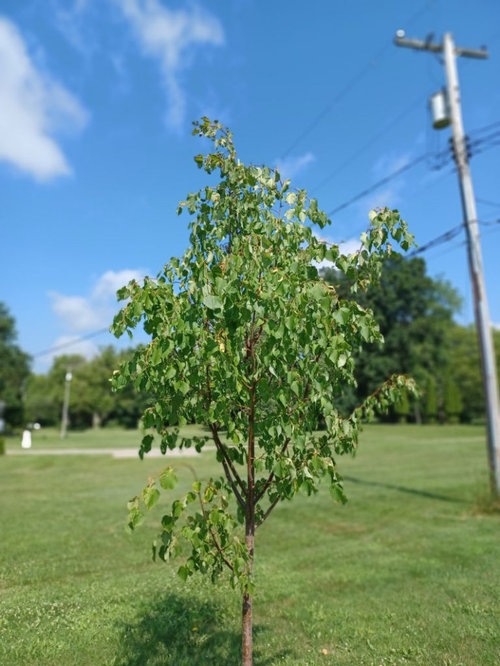
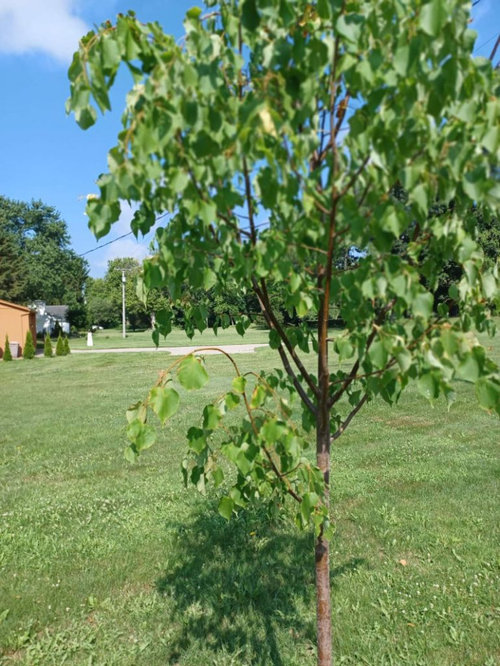
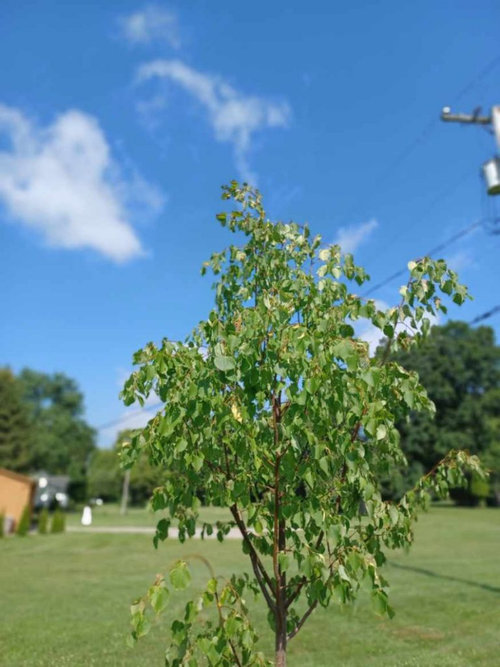
I planted this "Greenspire" Linden in the spring. It was such a beautiful specimen, but unfortunately when I unpotted it to plant it, the roots were girdling in the pot and I had to do some major root surgery...poor thing. Here it is earlly July and she's hanging on -- frankly, I'm surprised (and pleased) all her leaves haven't burned and dropped with the high temps and blow-dryer winds we've had, she's still green and thus photosynthesizing and presumably re-establishing her roots. She's doing a stellar job hanging in there, considering her size and limited root system post-root pruning.

But the new branch growth is really droopy. That's my concern. It's getting to be the time where the new growth will harden before winter, and as you can see in the photos some of the new branches are pretty bad.

If I don't do anything, any possibility the branches will straighten themselves out next year? I'm particularly concerned about the leader, and also that one lower branch that is U-shaped.

Should I try to straighten out that new branch growth? I could make "braces" out of sturdy sticks to straighten out that new growth, maybe it will then harden off straight(ish)? What do you all think of that idea? I don't think I could do all of them, would focus on trying to straighten the leader and some of the larger side branches and employ some artful pruning next spring on the rest of them.

Any other suggestions for me?


Comments (21)

  • last year

    Without any information on soil type and watering practices and how long it's been in the ground, it's going to be hard to give you any pertinent information.


    Root surgery can be moderate or severe, affecting the tree more so if on the severe side.

    And roots tend to grow more slowly in the early summer months so it can take a while for a tree to recover.


    New growth often droops during the day, on newly planted trees and may straighten up during the nighttime or cloudy days, when the heat stress lessens.


    That wide open exposure with all day sun doesn't help either and if you have been fertilizing that lush green lawn, your new growth rate will be much higher than normal, and those roots just can't support that much new growth yet.


    Other than that, you just have to be patient and keep the soil consistently moist but not soaking wet. Water when it needs water, generally once the surface of the soil show dryness.


    If you have clay soil, the general rule is, plant the tree, water it in good and forget about it, for the rest of the season. Unless of course, you have extreme drought and heat.


    ' Should I try to straighten out that new branch growth? I could make "braces" out of sturdy sticks to straighten out that new growth, maybe it will then harden off straight(ish)? What do you all think of that idea? '


    Really? Nobody does that, not that I've ever heard of anyways.

    porkchop_z5b_MI thanked BillMN-z4a
  • last year

    It just looks thirsty to me. New growth on Lindens often weeps. As long as it has sufficient water to get established they'll mature and straighten out in due course.

    porkchop_z5b_MI thanked floral_uk z.8/9 SW UK
  • last year

    I would remove the lower branch. It doesn't seem to add anything to the structure of the tree, and it would be less for the roots to support.

    porkchop_z5b_MI thanked woodrose77
  • last year

    Soil tends toward the sandy side, but reasonable moisture retention and very well-drained. I have been keeping up with the watering but I'm trying to be careful not to over-do it, since the roots really took a whacking. Maybe I should up the watering, at least somewhat. ?


    I thought trying to straighten out the new growth on the branches might be a good idea because if it hardens off too rigidly then next season I'm going to have a bunch of permanently drooping branches.


  • last year

    Drooping is a normal reaction of a new tree out in the hot summer sun.

    I agree with floral; Linden trees require good moisture the first year or two before becoming more drought tolerant.

    Water it, then take a look at it, early morning, before it sits in the sun, you might be surprised how little drooping there will be at that time compared to late morning.

    porkchop_z5b_MI thanked BillMN-z4a
  • last year
    last modified: last year

    ^^ I will do that.

    I've never had a Linden -- do they require more moisture relative to other trees? I usually have no trouble establishing trees, am pretty good about watering the first two years but I suppose there's always something I may not be aware of.


    ETA: Those roots had major surgery, so my thought process is that the tree is struggling to uptake enough water because of the loss of much of the root structure to support the size of the tree, rather than me failing to keep up with watering the tree. The moisture may be available, but if the roots aren't there to uptake it, well then it's not doing much good.

  • last year

    The drooping new growth is normal and common, especially with littleleaf lindens like Greenspire. When the green tip growth starts to turn woody, they will straighten out. And anything that you might not like can always be pruned out in late winter. You could even fix the leader at that time if it's not straight enough for your liking.

    porkchop_z5b_MI thanked mntreegrower
  • last year

    ' ETA: Those roots had major surgery, so my thought process is that the tree is struggling to uptake enough water because of the loss of much of the root structure to support the size of the tree, rather than me failing to keep up with watering the tree. The moisture may be available, but if the roots aren't there to uptake it, well then it's not doing much good. '


    Relax,

    if you had cut enough roots so the tree can't uptake water, you wouldn't have such nice new growth like you do. In fact, the tree would be dead or at least in a lot worse shape than it is.

    It's the heat of summer you're dealing with now and that puts a lot of stress on a tree.


    'Soil tends toward the sandy side,'


    That's good. Most trees/plants like good drainage. It tends to dry out after several days so keep it moist but not waterlogged.


    An upside is, in the spring a tree will sprout new roots at the cut ends, which it has already done, no doubt. That's why you do that kind of thing when the plant is dormant, before budbreak and new growth occurs, because breaking dormancy is the time a tree wakes up and can deal with all that.


    ' I've never had a Linden -- do they require more moisture relative to other trees? '


    Look for information posted online by some of the colleges for any 'New to me' tree.

    I always like to know:

    Moisture requirements.

    Soil ph preferences.

    Soil type preferences.

    USDA hardiness.

    etc. whatever else might be applicable to your area.


    It gives you an idea how things match up with your location, climate and soil type.

    Many trees are adaptable to a wide range of cultures & climates.


    porkchop_z5b_MI thanked BillMN-z4a
  • last year

    We can't see the base of the tree. Is it planted properly with the root flare showing? Is the grass cleared well away from the tree and the soil mulched properly, that is, not in a volcano up against the trunk?

    porkchop_z5b_MI thanked laceyvail 6A, WV
  • last year

    That’s how I can id a linden from a car driving sometimes; that weird bending top bit lol

    porkchop_z5b_MI thanked L Clark (zone 4 WY)
  • last year
    last modified: last year

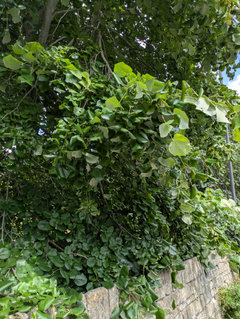
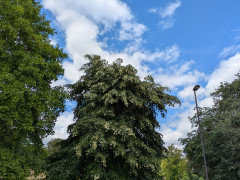
    I just took these in a local street. This Linden is at least 25 years old. And still drooping on new growth. It flops over the wall.


    porkchop_z5b_MI thanked floral_uk z.8/9 SW UK
  • last year

    That bending lower branch looks awfully low down. Regardless of the bend or not, I would trim that one off. THe next two branches up are near the same height. The bendy one will always be in the way of grass cutting, etc.

    porkchop_z5b_MI thanked RNmomof2 zone 5
  • last year

    "We can't see the base of the tree. Is it planted properly with the root flare showing? Is the grass cleared well away from the tree and the soil mulched properly, that is, not in a volcano up against the trunk?"


    It was planted correctly. It is sitting at the proper depth (root flare showing), ring of grass cleared away from underneath tree, mulched with shredded leaves - mulch not touching base of tree, and not a "volcano".

  • last year

    Update: Well, here is almost a week after my original post, and the Japanese Beetles have decided to make a meal out of the linden. I didn't know that lindens are a favorite of theirs; had I done my research ahead of time, I probably would have purchased a different tree. It looks terrible, and it's outside the window in the line of sight. Cr*p.


  • last year

    Update: Well, here it is mid-August and the Japanese beetles have gone. Man did they do a number on this poor tree :0( . But, the tree does seem seem to be hanging in there quite well -- it's still droopy, but I can see that it set buds all along the branches for next year, which is very encouraging. I've been keeping it very well watered, and protected the trunk against deer damage. So she should be just fine next spring as long as she clears the hurdle of the first winter.

  • last year
    last modified: last year

    Congratulations! ;-)

    Just an FYI:

    I can't see the tree base in your picture so maybe you've done this already but if you create a grassless area, a foot or two out from the trunk, and use a covering of wood mulch, this keeps the roots from having to compete with the sod for nutrition and moisture.

    And in the Fall, you can increase the depth of the mulch to 3-4" and that will help protect the roots of your tree during the cold part of the winter, from sudden temperature changes and below zero temps. That helps the tree greatly to recover better in the spring.

    Thanks for the update!

  • last month
    last modified: last month

    I had such hopes for Lindy this spring -- she came through her first winter with flying colors and developed a healthy leaf canopy, stood her ground through the first intense heat wave of summer and then BAM! the Japanese beetles got her. They just will not leave her alone. What a mess.

    I'm considering moving in the fall her down by the road where the damage won't be as visible as it is up by the house, but I'm torn. Part of me thinks just leave her be, she'll eventually get big enough to where the damage won't be as noticeable and I hate to set her back another couple years by moving her, the other part of me can't stand looking at that mess out the window. Ugh.

  • last month

    We have linden trees here. And we have Japanese beetles, but I've never seen entire trees defoliated like that, but linden trees are the most favorite food of JBs btw.


    I'd just leave it be, I'm sure linden trees have been grown from seedlings and saplings before, and it might not get attacked every year.


    JBs are a favorite food of many backyard bird species, like robins, starlings, cardinals, poultry and beneficial insects like the winsome fly.


    So, as the population of JBs go up, so do the predators that thrive on this food source.

    It can take a season or two for the predators to catch up and it's hard to watch your tree get devoured but moving it around isn't the answer either.


    If it survives it survives, if not, you'll just have to try another type of tree.


  • last month

    Oh, she'll survive -- but she looks like cr*p.


    The birds are useless in all this. Utterly useless. Sitting there up on the wire right above a tree covered in tasty treats, rose bushes nearby clothed in crunchy snacks, and they couldn't be bothered.

  • 23 days ago

    I ended up moving it here mid-August. The weather will start cooling down soon, it's a good time. I found a good spot for her about halfway between the house and the road, she's far enough away that I won't see the damage. Actually, it might end up to be a better spot in the long run, she'll offer more screening from passerby as she grows, already looks good from the window.