

Liver Shunt surgery in dogs?
A final update posted in comments 2/15/26
An update is posted in comments from post op followup testing done 11/19/25
I’m looking for info about any experiences with your dogs having surgery to correct a congenital Portosystemic Liver Shunt - PSS. This is an abnormal blood vessel that allows blood from the intestines to bypass the liver and flow directly into the systemic circulation. There are acquired shunts too - those that occur later in a dog’s life which are usually caused by other underlying liver disease. I am likely facing the surgury question for my little 6 year old Papillon and I’m hoping for information directly from those who have gone through this process with their dogs - what their recovery was like. I will have definitive results from a CT scan of my doggie today. Of course I’ve read much info but ’real’ experience might reduce the nightmare aspect of my decision - I hope. Thanks!
ETA: adding some background info here. My pup needs dental & our regular Vet did the blood screen first since she’s 6. Liver #’s high - specifically ALT. Vet said no anesthesia until liver health determined. Since she was already fasted in prep for dental a Bile acids test performed. Both pre & post feed bile #’s high. Referred to Internal Medicine at Specialty Vet hospital. Consult with Internist - DVM, DACVIM (SAIM) with special interest in gastrointestinal/hepatobiliary disease. This hospital also has a surgical team & can perform PSS attenuation.
Comments (43)
 last year
KW , I’m sorry to hear about your papillon. I know nothing about liver shunts in dogs, but found a few links to Reddit conversations.
Links:
https://www.reddit.com/r/AskVet/comments/1f66cb2/need_reassurance_on_dogs_liver_shunt_surgery/
https://www.reddit.com/r/DogAdvice/comments/175rhwn/dog_with_liver_shunt/
https://www.reddit.com/r/MiniatureSchnauzer/comments/17xseox/possible_liver_shunt/
https://www.reddit.com/r/Assistance/comments/g4tgdg/my_dog_has_a_liver_shunt_and_i_cant_afford/
https://www.reddit.com/r/dogs/comments/lnw6q9/help_how_long_can_a_dog_live_with_a_liver_shunt/
https://www.reddit.com/r/dogs/comments/pdcpvl/dog_diagnosed_w_liver_shunt/
I hope some some of these will be helpful. I did not read them.
I wish you the best with your sweet pup.KW PNW Z8 thanked petalique last year
I have only best wishes to express, no personal experiences.
I assume what I'm going to say is a topic you're already well aware of and have taken heed of yourself. My comment is for others who may not be as well informed.
There are often veterinarians in general practice giving advice or doing procedures or treatments concerning which they are arguably not as adequately trained as others or as they perhaps should be for what they're doing. They do so because passing the patient along to an appropriately trained or experienced specialist, which would be in the patient's best interest, would involve losing a fee.
Most, maybe >80%, are in general practice. The remaining small minority are have done rigorous additional training, usually no less than another 3-4 years after veterinary school, to develop specialty skills. Areas of board certification include Oncology, Surgery, Internal Medicine (which is a difficult specialty and not a "primary care" designation as with human medicine), Neurology, Anesthesia, Critical Care, and others. Those with boarded certification are the experts among experts.
For veterinary surgery, those who attain board certification are labeled as "Diplomates of the American College of Veterinary Surgery" and have the letters" DACVS" in their professional names, following their vet degree, which is usually DVM or VMD.
Most in general practice do a reasonable job in the realm of providing "primary care" but too many venture beyond the normal world of what a generalist should do. For money reasons. For anything beyond normal care, the use of a specialist is usually the choice providing the best likelihood of having your pet treated by someone with the best available training and experience.
KW PNW Z8 thanked Elmer J FuddRelated Professionals
Natchez Architects & Building Designers · Middletown Architects & Building Designers · Brattleboro Architects & Building Designers · Charlotte Interior Designers & Decorators · Cincinnati Interior Designers & Decorators · Orangeburg Interior Designers & Decorators · Lafayette Interior Designers & Decorators · Hempstead Interior Designers & Decorators · Brattleboro Interior Designers & Decorators · Bakersfield Interior Designers & Decorators · Ottawa Interior Designers & Decorators · Rome Furniture & Accessories · Portland Furniture & Accessories · Alpena Furniture & Accessories · Lake Havasu City Furniture & Accessories last year
i have zero experience with this. one of my past dane's ALT levels were way up at a regular wellness check, vet put her on Denamarin and after a few weeks, a recheck showed her levels back to normal. blood work every 6 months for the rest of her life never showed any problems and her values stayed within normal range.
hoping you can get some solid answers, meds if needed, and get your pup back on track! anesthesia is always so scary even with normal blood work so i feel your angst!
KW PNW Z8 thanked Ninapearl last year
I hope you are getting information elsewhere. I am interested as to how this is going for you. Best of luck
patriciaeKW PNW Z8 thanked HU-279332973KW PNW Z8
Original Authorlast yearHello! Apologies for my lack of responses to you - I didn’t receive any notifications or see any posts when I’d checked my post. I just happened to look at my post again today & was surprised to see posts from last month & from people I know & enjoy sharing ideas with. So, belated thanks to each of you.
I have a good news update on my pup to share with you. She did have surgery on 8/12 by a Board certified surgeon who’d done this surgery ’many’ times. The surgery has a 95% success rate. She spent 2 nights in the ER & Specialty hospital. Pre op prep was 3 medicines dosed 3 x’s daily starting 7/29. -Lactulose, amoxicillin, Keppra (anti seizure) & also a switch to prescription liver diet food. She’s still on all of this but the amoxi & Keppra will stop on 8/27. Incision has healed quickly & well & we’re challenged to prevent her usual morning zoomies too soon! Running & jumping is restricted due to the long abdominal incision. Next step is bile acids testing at 1 month post surgery, The results will reflect closing - or not - of shunt. Another bile test at 3 months & 6 months. If her bile acid #’’s are normal she can resume a regular and much more tasty diet & no medications. We have high hopes because surgeon stated the shunt was ”relatively small”. That point might be why my pup had been asymptomatic her whole life until now when liver values starting to change.
About causes of congenital liver shunts - here’s a short & simple version copied from a Google search:During fetal development, a temporary shunt called the ductus venosus exists to allow blood to bypass the liver. Normally, this shunt closes shortly after birth. In cases of congenital shunts, this vessel or other abnormal vessels fail to close, allowing blood to bypass the liver permanently.
This condition is showing up more often in small breed dogs & more often in specific breeds. Papillon isn’t one of those specific breeds yet but it’s a growing problem. The cost of tests for definitive diagnosis - bile acid testing & CT scans - are a burden for many. The cost of the corrective surgery is prohibitive for many. It’s a hard enough decision to make to have the surgery and one made worse by the costs when it might be out of range. I am fortunate that the only factor I had to consider was doing what was in the best interests for my pup. I think we’re now looking at her having a very good chance to live out her normal life span with a high quality of life without the issues a failing liver function would create. Stay tuned for that update!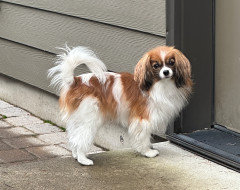
- last year
So glad the surgery went well and things are looking up. Hope the rest of the recovery process goes well. She is beautiful!
KW PNW Z8 thanked lucillle KW PNW Z8
Original Authorlast year@petalique I read the comments at those links - It was reassuring to me to know that I wasn’t the only one struggling with the decision on whether or not to subject my pup to what seems to be such an invasive surgery. I had asked why, if this surgery has such a high success rate, is it so hard to find others with experience with it. The answer to that lies in the cost for sure!
@Elmer J Fudd - Your caution about seeking qualified Veterinarians is warranted. I personally cannot imagine a veterinarian who deals with only routine surgery i.e. spay/neuter type things, would even want to attempt this kind of specialized care. But, I know there probably are unethical vets out there as in any other field. My dog’s ’PCP’ referred us immediately to a specialty hospital once the poor result of the bile acid test was in. He told us what the problem likely was but said the internist would want a CT scan with contrast to confirm & to determine treatment options.
@Ninapearl My understanding is that ALT #’s can be elevated for many reasons so it’s not surprising your pup had a temporary issue. I have also read that these congenital shunts are more likely in small dogs than large ones. But, large dogs are more likely to develop acquired liver shunts from some other underlying liver disease. These acquired shunts aren’t typically surgically correctable without addressing the underlying cause. I’ve picked up so much information from all my reading about liver shunts, Information nobody wants to need for sure!
@HU-279332973 Patriciae Thank you for your good wishes. As you’re reading here, I did get lots of information & education from qualified sources — the Veterinarians! I was hoping to hear from people here who might have the patient experience side of the picture. last year
She's adorable! Glad it went well...hopefully, things going well is her future. Pets steal our hearts....💕
KW PNW Z8 thanked nicole- KW PNW Z8 thanked Elmer J Fudd
KW PNW Z8
Original Author11 months agoUpdate finally! Whisper’s results from 9/15 bile acids test are in. Her numbers are 56.4 compared to pre-surgery number of 109. Normal is @ 20 range. The process used to close the shunt is a gradual one. The fact that her numbers have dropped over 50 points in a month indicate the shunt is closing. Yeah!! Next test in 2 months.
- KW PNW Z8 thanked Elmer J Fudd
KW PNW Z8
Original Author11 months agoElmer, here’s a bit copied from the written report - Whether results are what they expected, I don’t know but it seems clear they’re pleased with these results. I’m hoping for more improvement and clearance to change back to a ’normal’ diet from the liver support food she’s still on & that she doesn’t like.
“Whisper's bile acids are much improved post shunt-surgery. We are overall very happy with these values and may expect these numbers to be lower at her subsequent rechecks. Her liver enzymes are now normal.”KW PNW Z8
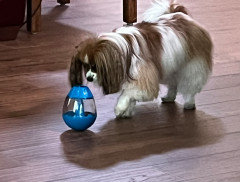
Original Author11 months agoWe do have to coax her to eat the liver diet food. One trick is putting her food into puzzles or toys. This is a weighted egg shape thing. She figured it out quickly so we now put all the layers inside of it & it keeps her busy and entertained while feeding her the dry kibble version of the food she can eat. Same trick as parents use with toddlers!
- 11 months ago
so happy to see this update! i hope things continue to improve for whisper and you will see more progress.
on another note, i've had to use Rx kidney support kibble on a couple of my past danes. neither was happy about it and it was a struggle some days. i found mixing in a tiny bit of canned green tripe helped.
somebody could become a bazzillionaire if they they could come up with a kibble that tastes like rabbit poop!!
KW PNW Z8 thanked Ninapearl KW PNW Z8
Original Author11 months ago@Ninapearl You are right about how to make a blah food appeal to our dogs! They really are so indiscriminate about the items they want to put to the taste test! 🤢
- 11 months agolast modified: 11 months ago
Wonderful news and what a beauty she is. Tell her to keep up the good work.
patriciaeKW PNW Z8 thanked HU-279332973 - 11 months ago
They really are so indiscriminate about the items they want to put to the taste test!
over my 19 years with danes, i've only had one poop eater. he ignored his own waste but made a beeline when my female would dump a pile. i tried my best to clean it all up but a few piles got by me. somebody suggested putting pineapple chunks in HER food. i was skeptical because i mean, he's eating POOP and doesn't that taste bad enough??? i tried it and it solved the problem! it's nice not to have to go out numerous times every day for poop patrol!
KW PNW Z8 thanked Ninapearl KW PNW Z8
Original Author11 months ago@Ninapearl We had 2 Yorkies with that issue. OMG! We tried everything & consulted with the best. We were advised it was a behavorial / competition issue with our doggies. Territorial. We learned to not let them see us pick it up for disposal, we put additives in their food etc etc. Challenge was that they had access to outside protected area for potty while we both were away at work all day. Hard to monitor when you’re not there. But, we sure could tell who had a snack when they greeted us at our coming home. 🤢
KW PNW Z8
Original Author11 months agoI have some more good news about Whisper’s blood work lab results in addition to her bile acids result. I’ve been poring over the Internal Medicine Vet’s written report and looked at the CBC results. My understanding is that the ALT & AST liver values are the best indicator of liver damage or disease. My Whisper’s numbers for those values pre & post surgery are:
ALT - pre 395 / post 28 Normal is 12-118. AST - pre 150 / post 30 Normal is 15 - 66.
I’d say that’s quite a phenomenal improvement!
 11 months ago
I never saw the original post, but im so happy tomhear her surgery appears to be a success.
I've been a big advocate of pet insurance because more and more of human surgical intervention is being made available to improve our pets' lives While pet insurance is not an insignificant expense, it might make a difference whether you can financially take advantage of these techniques.
KW PNW Z8 thanked blubirdKW PNW Z8
Original Author11 months ago@blubird - You raise a good point about pet insurance, The cost for this surgery was @ $7K which didn’t include the pre-surgery diagnostic tests - x-ray, CT scan with & w/o contrast, blood work, medicines & the post surgery tests of blood work. So roughly $10K total to date - haven’t tallied & don’t care to. So, I wondered about pet insurance covering this condition that is congenital but was discovered at 6 years of age due to blood work prior to ”routine” dental that is done prior to elective anesthesia. I did a ’shallow’ dive into pet insurance coverage. I say shallow dive bc I didn’t want to follow links for quotes & more info which required providing email etc. What I did read is a policy must specifically state coverage provided for ’pre-existing’ conditions which may be congenital. Best Money site lists 7 carriers & only one says it covers ”hereditary” conditions. Congenital liver shunts are genetic but not yet linked or proven to be hereditary. The condition is found mostly in smaller breeds rather than large breeds - which are more likely to develop acquired shunts due to an underlying liver issue. These congenital shunts do show up more in specific small breeds but my dog breed isn’t yet one of them. So, would this insurance cover the liver shunt surgery? The jury is out but my bet is no. I think pet insurance is meant for routine costs like spay / neuter, shots etc and maybe accidental injury treatment.
On the flip side, my thoughts about the expense of this surgery & some other medical treatments that can save or improve the quality of life for an animal are that I have become far less judgemental about people who in situations like mine, opt not to have the surgery based on cost & personal affordability. I understand completely that not all have the ability to pay for the surgery. It’s often a terrible & heartbreaking decision for a pet owner to make. The only other option for help besides possible pet insurance that I’ve heard about is Care Credit. I was reminded of that business when I saw their brochures in the lobby of the pet hospital & ER. I believe their credit approval standards are low so most applicants could be approved & their program I think is a 6 month interest free loan. Of course the only way that’s a bargain is if the cost is paid off before 6 months.- 11 months ago
I think pet insurance is meant for routine costs like spay / neuter, shots etc and maybe accidental injury treatment.
for me, it's just the opposite. i have insurance on both of my danes but it doesn't include routine exams, spay/neuter or vaccinations. it only covers injury or illness and that makes it more affordable. when renewal time came up a few months ago, i asked about the cost of adding "wellness" coverage for vaccinations or other routine things. it would have cost several hundred more on top of my already $1,200.00/each yearly premium so i decided to just keep doing what i've been doing, that being just tossing a few extra bucks each week into a drawer. by the time wellness exams roll around, i have them covered.
i hope whisper is doing well with her recovery and that you are finally able to breathe easier!
KW PNW Z8 thanked Ninapearl KW PNW Z8
Original Author11 months ago@Ninapearl Whisper is doing great, thanks. Before her surgery the Internal Med Vet kept reminding us that Whisper doesn’t know she’s sick. He said that because she was still asymptomatic when her condition was discovered because of the pre-dental blood work done.
Question for you about your Pet Insurance policy - would it have covered a situation like Whisper’s? A congenital condition that’s genetic but unproven (not tied to specific gene) to be ’hereditary’.
- 11 months ago
interesting question and i honestly do not know the answer. i would have to ask if such a condition would be covered. that being said, for bloat/torsion, i know for sure that surgery would be covered. much like what you describe with whisper's condition, bloat can certainly be a genetic issue yet remains unproven to be hereditary.
KW PNW Z8 thanked Ninapearl - 11 months agolast modified: 11 months ago
ninapearl, the risk of bloat/torsion is very much an inherited trait insofar as the risk is greatest for large, deep chested breeds.
There's a surgical procedure called gastropexy in which a section of the digestive system (maybe the stomach, I'm not sure) is attached to the abdominal wall. It's often done on young dogs when a spay or neuter procedure is performed. But it can be done any time in a dog's lifetime. It's especially recommended for breeds with greater risk to the condition, including Great Danes.
Before we had this done on our dog, the vet's recommendation was to feed frequent small meals during the day and restrict physical activity for an hour or more after each meal. That made the best time for vigorous exercise to be just before a meal time.
KW PNW Z8 thanked Elmer J Fudd - 11 months ago
elmer, the jury is still out on whether or not bloat is inherited. there is not a specific bloat gene, but rather a genetic predisposition. according to various studies, a dog with close relatives (i.e., parents, siblings) who have experienced bloat have a higher risk of suffering bloat.
i've had danes for 19 years, i'm well aware of the gastropexy procedure. ideally, it isn't done until a giant breed dog reaches 18-24 months of age when growth plates have closed. done on a young dog, there is the possibility that as the pup grows, the pexy site will be stretched and could cause problems that will necessitate a re-do of the procedure.
a gastropexy does not prevent bloat. done properly, it prevents torsion which is the killer. what a pexy does do is, if your dog is experiencing symptoms of bloat, it will give you extra time to get to the e.r. vet before torsion becomes an issue.
the old theory of 1 hour of rest before/after meals for giant breeds has, over the past couple of years, become outmoded. more preservation breeders as well as vets are advancing the idea that moderate exercise a few minutes before/after, if that's what your dog chooses, actually promotes digestion. obviously, that doesn't mean crazy zoomies for 20 minutes or wrestling with their companions or other strenuous things.
KW PNW Z8 thanked Ninapearl - 11 months ago
My information differs from your information. It's neither necessary nor possible to reconcile the differences.
KW PNW Z8 thanked Elmer J Fudd KW PNW Z8
Original Author11 months agolast modified: 11 months agoThis topic of genetic / heriditary/ predisposition of liver shunts in Papillons is a hot one amongst the preservation breeders. I imagine the topic of bloat /torsion for large breeds is the same. Risk factors aren’t same as inherited traits. The congenital liver shunts do show up much more in small breeds the same as bloat / torsion shows up more in large breeds. But, until the condition can be tied to a specific gene, an animal cannot be tested to determine if they will pass the trait. There are 2 conditions that Papillon breeders test for because they have been linked to a specific gene. One is connected to a retinal conditon, the other a bleeding disorder - Von Willebrand disease. I’ve been in contact with the Papillon Club of America genetic committee about this congenital liver shunt condition. They are working with Cornell to set up a study on the condition in Papillons. There are breeds - all small ones - that are seeing this condition showing up frequently & Papillons aren’t on that list - yet. The club wants to be able to test breeding dogs for the trait. Currently, all they can promote is for breeders to have their dogs bile acids tested since blood tests don’t always show elevated ALT & AST levels until there’s damage. The bile acids test is a good indicator but also not definitive. A CT scan should be because they can see the shunt but that’s a test that requires sedation so it’s not a good option.
KW PNW Z8
Original Author9 months agolast modified: 9 months agoHello fellow dog lovers! I have an update to tell you about from Whisper’s recent second post up follow up testing on her August 12th liver shunt correction surgery. Copied from the report:
“Whisper's disease associated with her shunt is improving. Though her bile acids are mildly improved, they are improved from previously. We discussed that these values may never fully resolve. Her ammonia levels are normal off lactulose. She continues to have normal liver enzymes without evidence of liver dysfunction.”
That is all very good news! Her liver enzyme numbers pre-surgery were ALT = 395. Current test result is 34. Normal range is 10 - 130. AST = 150. Current test result is 33. Normal is 10 - 34. These results mean Whisper’s liver is working well!
The current bile acids are ’mildly improved‘ from her 1st post op test result of 56.4 done 9/25. They are majorly improved from pre-surgery level of 109. This new bile acids result was 46.4. Normal is <25. This is a huge drop from pre-surgery & is why her liver enzymes are now in normal range. The current bile acids result is well outside of a danger range.
The shunt closure is a slow process & may never completely close off. Goal of the surgery is to at least limit the amount of blood flow being shunted off & not going through the portal vein to the liver to be cleaned. That result has been acheived. Another blood test is recommended at the six month post op point to check for full closure of shunt & / or rule out any liver function issues.
My last comment on this saga is that the doggie I have today is much more playful, active and busy than the dog I had pre-surgery. My pre-surgery dog was seemingly healthy and feeling well. In hindsight I can see that she might have been at the beginning of a steep decline in health which we were made aware of through a simple blood test prior to a dental cleaning. I must tell you that she hasn’t yet had that dental cleaning because of the major detour with the liver issue. Having this surgery for my dog was a scary decision. We worried about the quality of her life with and without the surgery. I’m happy to say we made the right decision. Though we have some dietary changes to make to get her off the prescription hepatic diet & over to a more palatable & more normal one, and still some future testing to complete, the major hurdles are done. We are looking forward to a very healthy life ahead for our Papillon who turned 7 September 12. Average life expectancy for this breed is @ 14-16 years and she now has a chance to enjoy those years!
 9 months ago
KW PNW Z8, what fantastic news!!! I am so happy for you and your girl! What a great outcome and so much improvement! I know you are thrilled beyond measure. Congratulations! Wishing you many, many more years of joy with your girl.
KW PNW Z8 thanked murraysmom Zone 6a OH- 9 months ago
this is the BEST NEWS!!! getting normal readings on blood work after such a stressful time is soooo gratifying! i couldn't be happier to see little whisper's improvement all around, especially knowing how much better she feels. your instincts served you well!
here's to many many many more happy years with your precious girl! 💖
KW PNW Z8 thanked Ninapearl  9 months ago
Having to make decisions like this is so difficult, but it's wonderful when you know you made the right one. Glad she is doing so well. I had to make a similar decision on a 10 year old cat...$$$$ and it went well for us. So I know the joy. May she have a long and healthy rest of her life!
KW PNW Z8 thanked OlychickKW PNW Z8
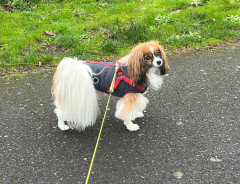
Original Author6 months agolast modified: 6 months agoI wanted to close my saga here with a final update. Whisper had her last post op tests done 2/10/26 and we received the good news results yesterday. To recap the issue - my dog was found to have a liver issue via bloodwork done before a scheduled dental cleaning. Her liver enzymes were extremely elevated & our Vet asked to do a bile acids test then since she was already fasted in prep for the dental work. Her bile acids came back at 109. Fast forward through referral to Specialty Vet & internist, more tests & scans, confirmation of a congenital liver shunt. Whisper was a good candidate for shunt attenuation surgery which was done 8/12/25. She’s had bile testing done 3 times post op with her results trending downward closer to normal each time. This was her 3rd post op testing & her results are NORMAL!!! Her fasting bile level was 1.7. Normal range is 0 - 15. Her post meal bile level was 28.8. Normal range is <30. Whisper seems happy & playful & is enjoying her life. What a hard decision this was to put her through the surgery but boy was it worth it!
- 6 months ago
Congratulations to you and Whisper! Great news! Wishing both of you many happy years together!
KW PNW Z8 thanked murraysmom Zone 6a OH - 6 months ago
i'm over the moon happy for this great news!! what a stressful time for you, i'm so so glad everything is back to normal. i'll echo murraysmom, and wish you and whisper a long, happy life together!
KW PNW Z8 thanked Ninapearl  6 months ago
Whisper looks so happy and healthy! Beautiful hair too - her tail is gorgeous! So glad to hear that you guys are doing well. Things have been pretty horrifying in Minneapolis, but it has been heartening to see so many caring people in our community stepping up for others. Libby is well, and the kids are heading to college in the fall! So much going on these days…
KW PNW Z8 thanked Little BirdKW PNW Z8
Original Author6 months agoHi Little Bird, I see from your post that my PM I sent to you was received. Good to hear you are surviving amid the chaos. Libby! I never get that right. College!! OMG! They’re still young girls! Music & arts will be their majors is my guess. 😉
Whisper’s tail - fantastic isn’t it? The Papillon tail allowed to grow long hair is their best feature next to the prick eared style Butterfly ears with their full fringe. Whisper is a Phalene Papillon - the original European style - so she has long drop ears. So many admirers have said she looks like Lady in the old Disney movie Lady & the Tramp!.
- 6 months ago
She does look like Lady from the movie! So sweet.
Strange - I got your PM as an email, but it wouldn’t let me reply, so I just came back here.
Not sure yet if the girls will be doing more academics or music - auditions coming up next month, so I’ll let you know when we find out! Their quartet was featured on NPR a couple weeks ago. I sure will miss the free music concerts in my house when they’re gone…
KW PNW Z8 thanked Little Bird - 6 months ago
A friend’s Yorkie had PSS surgery around age 4. Recovery was slow the first couple weeks but overall went really well. She said the hardest part was keeping him calm while the incision healed. After that, his energy and appetite actually improved.
KW PNW Z8 thanked Zande Willson KW PNW Z8
Original Author6 months ago@Zande Willson Yes, the post op no running, no walkies, no stairs etc were tough! But my Whisper recovered surprisingly fast too. They said they cut as little muscle as possible with that long belly incision. If your friend’s dog was experiencing symptoms from the shunt before surgery I imagine his energy & appetite would’ve improved. My dog was asymptomatic & her ammonia levels weren’t high. Some dogs have seizures from too high ammonia levels in blood. Yorkies are now one of the breeds that these congenital shunts are showing up in quite often. The challenge is that having a very young puppy bile acid tested won’t always reveal that the shunt exists. I learned that mammals have the shunts until they’re born when they’re supposed to close off naturally. The problem arises when they don’t close completely. While in utero the mother’s liver cleans their blood. At the very least all small dogs should be bile acid tested before they are bred. This would prevent a ”shunt’ dog from being bred. The non-closure issue of the shunt is a genetic defect but not known if it’s a heritable defect. No research has yet been able to identify a gene the defect is linked to so they aren’t able to test a dog for it as they’re able to do with other heritable defects.







Elmer J Fudd