Software
Houzz Logo Print
perennialfan275

How do you keep your beds separated from your lawn?

This is something we don't often think about, but over the years I've begun to realize how important this is. Maybe I'm wrong, but IMO you need to have some sort of physical barrier that separates your lawn from your garden beds. If you don't, your beds will be overrun by whatever is spreading in your lawn. Of course, many weeds also spread by seeding all over the place and this won't stop those. But if you have weeds in your lawn that like to creep all over the place this will certainly help to keep them in check. What do you use to edge out your garden beds?

Comments (25)

  • last year
    last modified: last year

    Personally, I keep my beds in the bedrooms... (ba-da-boom!)

    Sorry, I could NOT resist... Forgive me. =)

  • last year

    I am using metal barrier.


    .


  • last year

    Recycled brick.

  • last year

    Edging strips are challenging where you have tree roots. I have used them in places, but I’m not a fan. My preference us to cut a trench to edge. I like the flexibility of this too since I’ve been shrinking my lawn over time.

  • last year

    I have used pavers in many areas and round up the edges very carefully.


    Round up clean


    no round up


  • last year

    Brick, like mad. Though mostly not recycled.

    Bluegrass rhizomes, and some bed occupants, fight back, but that’s ok.


  • last year

    Same as garden gal. A simple sharp cut slit maintained with edging shears. No stones, bricks or edging.


    'round up the edges very carefully.' to my eye the picture without Roundup is more attractive. No bare patch between bed and grass.


  • last year

    The bare edge doesnt have to be as prominent as I do them, but my Bermuda grass was very aggressive at jumping in the beds so I did more than needed. Other well mannered grasses like zoysia wouldn't try to jump in so much.

    I am staying away from Bermuda around my future flower beds

  • last year
    last modified: last year

    In my opinion a physical barrier makes an edge where a lawn meets a bed, more difficult and more maintenance to maintain.

    Nothing is more classy to the eye and again, easier to maintain than @gardengal48 (PNW Z8/9)'s and @floral_uk z.8/9 SW UK's suggestion and illustration above on how to undertake the task. @gardengal48 (PNW Z8/9) calls the edge "British Edging," or "Victorian Trench," and I call it a 'CAMBRIDGE EDGE," (the same exact thing, but with different names). I have called such an edge 'Cambridge Edge,' for over 30 yrs. If my recollection is correct.

    The digging tool used is preferably a long straight wooden handled flat spade, but actually a regular straight wooden handled round garden shovel will work very well, perhaps even better for removing the soil as the trench of the Cambridge Edge is dug.

    @gardengal48 (PNW Z8/9)'s illustration says it all. You mentally outline the edge. With your shovel, you dig straight down through the grass to the depth of about 4". Lift the soil and grass attached to it out of the ground, placing it on a tarp, in a bucket or wheel barrow. Inch your way down to the adjacent spot and repeat. Repeat, repeat, repeat as you go along, checking your alignment frequently.

    When done trenching, remove all stray grass from the bed side and round the edge of the bed side, maintaining the 4" depth of the grass edge at all times. You can mulch with your choice of mulch to the soil side of the edge, but only lightly so as not to fill up the trench with mulch.

    A Cambridge Edge is so easy to periodically tidy up that you will be glad that you Cambridge Edged your rose bed.

    When mowing your lawn, mow with the rose bed to your left shoulder if your mower is a right side, cut grass discharge type. That way your mower's arbor can cut right up to your grass edge with the mower's left wheels still on the grass.

    Happy Edging! 😁

    Moses.

  • last year
    last modified: last year

    I'm happy to see folks recommendding trench edging, which is my preferred method for most beds. However, in my upper back beds I reinstalled the original sawtooth edging that was removed when we did some work back there. It was worth the effort to reinstall it as it ggives a finished lookk to this more formal section. Plus, it had been there 100 years prior!

    Please find the link with a picture as well as other great piccs and ideas from current and former members on this older thread.

    Vaporvac's Sawtooth Edging

  • last year


    Whenever I hear ”that’s class”, ” classy” or the like, I’m reminded of Basil Fawlty dismissing Sybil with ”you wouldn’t understand it, dear; it’s called style”.

  • last year

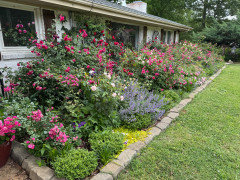
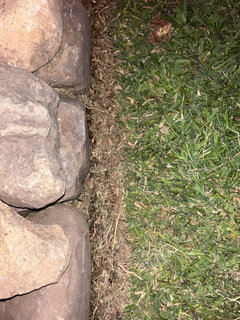
    I suppose my method isn’t classy at all, but “class” has never been my forte. I do love a British edge on a flower bed, but it wouldn’t work with my style of gardening because I am always adding more compost or horse manure or wood chips to my beds and I feel I need a “ lip” to hold all of the stuff back so it doesn’t spill out into the lawn. So I use a rock edging most places and then cut an edge with my string trimmer about two inches back from the rock. I have St, Augustine lawn which creeps a bit, but a weekly trim keeps my safe margin. Without that cut margin, the grass grows in among the stones. I hate Bermuda grass, Dianela… it’s almost a bad word to me. I fought that stuff out of my yard area for nearly 6 years before we put St Augustine sod down last summer. It’s one of the few grasses that eventually smother the Bermuda. I still have a few bits and pieces of the awful stuff, but I and the St Augustine are winning. I’m always on the alert for any stray seedling or bit of root coming back to life and out it comes!
    Here’s a picture of my edging. It’s dark outside, but I just stepped out and snapped a photo.

  • last year

    Photo didn’t post!
    I’ll try again.

  • last year
    last modified: last year

    A crecent moon shape edger and we do that once a year, sometimes once every two years. Then the bed gets mulched with bark mulch for the first 2ft of the bed and everything beyond that gets a good layer of chopped leaves. Sometimes I've used cardboard under the mulch and this arrangement usually keeps maintenance to a minimum.

    I do have a couple of beds with rock edges. These work when they are bordering walkways or mulched areas, but not lawn. Rock edges with grass on the other side, if you are a gardener that suddenly hasn't the time to fuss with the garden, the next thing you know, the grass has come up along the rock edge and it's SO much harder to get that grass out of there.

  • last year

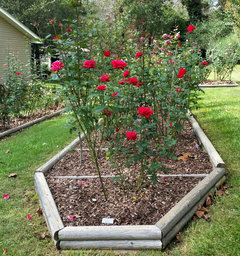
    I use treated 4"x4"with landscape timbers on top. Works great for me.

    As you can see, the 4x4's are dug into the ground to keep roots from sneaking into the rose beds. The landscape timbers are on top of the 4x4's. These beds are 17 years old.

  • last year

    Nice job, Ken!
    Yes, prairiemoon, you’re right about the grass getting in the rocks being a bad deal. Which is why I edge them back about two inches from the rocks every week. It doesn’t take long to run a string trimmer down the edge every week. Those who are doing a British edge and only needing to cut the edge twice a year are obviously growing a grass that doesn’t creep at all. If you have a creeping grass like I do, it needs to be done weekly. If you have Bermuda grass as Dianela does, then a two inch margin is hardly enough even if edged weekly. That stuff grows faster than fast during hot wet summers. I understand Dianela cutting hers back with a wider margin. It might not be the most attractive but it’s necessary to save your beds from invasion.

  • last year
    last modified: last year

    I love the French trench edging and tried it in the past, but could not maintain it. The way the grass grows here the edge needs to be retouched weekly which is more than I can manage on my own. If I had a small garden or a gardener I would definitely prefer the look of Victoria trenching in the flower beds.

    the wide edge shown in my image would be less than half that distance after a single week and need to be resprayed probably every month during the summer. Gardening is HARD WORK YOU ALL No matter which way we do it :). I am enjoying reading about all the different methods employed for flowed bed edging.

  • last year

    Most of my beds are raised to create a workable planting depth, because of shallow soil and sloping land. Mortared stone or concrete blocks with a proper foundation is the only lasting thing that stops couch and bermuda grass invading beds here. It’s an expensive solution though, plus the stone/concrete heats up and dries out the soil fast.


    My preferred method is to use railway sleepers or other chunky, treated timber but they need sinking into the ground to stop grass roots growing underneath. Even laid on gravel with weed matting their lifespan is considerably shortened.


    I tried using metal edging on one curvy bed where the planting depth was sufficient, but the invasive grass species just laughed at it. I have trenched between the grass and the bed but it’s still a constant chore to control it.

  • last year

    I have such rocky soil that I
    cannot drive
    down into it with a any type of spade for straight edging. Aside from raised vegetable beds with their ~ 12” walls, I make mostly “informally raised” beds, meaning I arduously pickaxe the rocks out of 4” or so ( with some deep pockets when encountering a rock the size of a football!) and layer just a few inches of soils , compost on top, doing a bit of spading/ forking to connect the layers a bit more so eventually plant roots & soil fora & fauna will further that.

    So I mostly edge with found rocks, having many that are the size of bricks, edger stone, soccer balls and do on. The edging is mostly to keep the slightly raised soil in, since many areas have a bit of slope also. Plus I also tend to expand areas a bit at a time so prefer impermanent edging. It’s not a perfect aesthetic since, while I try select specific rocks for their colors and shapes , it’s pretty random as to what turns up. So there can be a bit of the “ ring of rocks” look. But I find that natural edge- type plats like thymes or sedums or arching forms, help soften the look, plus thev rocks are, well, neutral earth/ toned rock colors.

  • last year

    I love a well trenched edge. however my crumbling lower back seriously protests lifting shovelfuls of soil. If i can get my ” garden guy” to do a half way good job i can tidy it up.

    Getting older is one long journey in compromise. ” Good enough” has ro do


    the woodland path is edged with the small hosta ”lemon lime” and its width varies. There more flexabity because theres no grass encroaching As long as i keep the chopped leaves deep on the path and pull the occasional weed it looks good enough.

  • last year

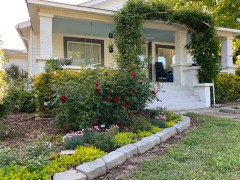
    I agree with Judijunebug that I need something to hold in the mulch etc. and hold back the plants. My husband also wants a definitive object designating the end of a given bed since he (justifiably) is concerned that my gardens would creep out into more space if allowed.

    For the visible edge, I use the pavers like dianala showed. They're relatively quick to install though I did dig them halfway into the soil, and they stay put pretty well. In most beds where the plants are likely to hang over into the lawn despite the pavers, I use a visible nice 12 inch high decorative fence for them to droop over, or a less obtrusive (and cheaper) 12 inch green wire fence to contain or allow the canes to be angled sideways for more bloom.

    I agree with the notions of aggressive grass growth where the trenching wouldn't work for me. Zoysia spreads by sneaky runners everywhere and I'd have to trench multiple times a year to make it effective. Too much like work - I find those kinds of chores among the least preferred of any garden chores.

    I'm gradually working my way around the paver edges adding those pound in 6 inch plastic barriers that mostly keeps out the Zoysia. Bermuda grass would probably require the extra big ones - sympathies to those of you dealing with that one. I need to do more of that now but it's so danged dry that the ground is rock hard and brutal to dig into in most parts. It would make more sense to do the edging in the spring, but that's busy rose planting and pruning time. Fall is bulb planting time so that leaves the dry part of summer to get it done - regardless of watering it's usually brutal work in the summer. I end up having to trench cut laboriously with a flat spade all along the stones. I can do about 3 feet per day between the digging and pulling grass and resetting the stones, and it's an exhausting 6 hours. I'm used to digging but this pushes my limits. Still, it's mostly one and done, since the places where I did the pound in edging last year are showing no encroachments from grass.

    BTW my preferred method is instead to leave a 2-3 inch barrier of leaf mulch beyond the pavers that also has the benefit of not requiring trimming. Lazy gardening at its best. However, my husband doesn't like that look and wants clean edging of grass up to the pavers. That means I do a fair bit of pulling shaggy grass growth when he doesn't get to the trimming. As was mentioned earlier, gardening is work, we just choose which aspects of gardening are acceptable or unacceptable work. I emphasize the fun so I want to minimize time spent yearly doing any edging chores.

    Cynthia

  • last year

    I have always cut in an edge to break the grass rhizomes from creeping in, but not really a trench, more of a crack or cranny. I used to just use a shovel and then treated myself to an upgrade of a straight edger ($35 was a lot of money for me for awhile there :))


    Fast forward, I have neglected it for 2 summers and lots of grass has moved in, dumb and lazy of me... even in chilly rainy summers I knew full well it needed doing! Anyway, kudos to my recently retired husband, he has caught us up with the edging using this tool that he really likes, it makes the job go so much faster - it does get through tree roots but he did hit a rock once, probably dinged the blade, so no good in the rocky soils some of you describe :


    https://www.worx.com/7-inch-electric-lawn-edger-trencher-wg896.html?gc_id=22661943516&g_special_campaign=true&gad_source=1&gad_campaignid=22661943516&gbraid=0AAAAAD2JO2_mjXWkJPHtQbL3rt8lgOCzL&gclid=CjwKCAjw1dLDBhBoEiwAQNRiQZQoBhZug3zVKxqVeVWH_Ub_Yfo9xhCoQID8RWsf6TvCCCtkthMH9xoCe5AQAvD_BwE


    Part of my ongoing work is to get after the grass that snuck in. Compared to some of your gardens, mine is more of a weed patch, but the edging helps my sought-after yet elusive tidy look tremendously! And I've felt a fresh spirit this year, and have a pickup truck full of compost to mulch, also for the first time in 3 years. So, on it goes !


    Maybe it's time for another lawn reduction, we aren't really playing croquet and badminton anymore :)

  • last year
    last modified: last year

    Out of curiosity, in England, is their lawn grass what we call Kentucky blue grass here in America? I know kbg is native to europe and eurasia

  • last year
    last modified: last year

    KBG is called Smooth Stalked Meadow Grass here. It is sometimes used in lawn grass mixtures here but isn't the most common. Commonest, I believe, are perennial rye grass, red fescue and creeping bent.

Sponsored
River Mill Construction
Average rating: 5 out of 5 stars2 Reviews
Delaware County's Customer Focused General Contractor