Software
Houzz Logo Print
party_music50

Poison Ivy, right?

last year
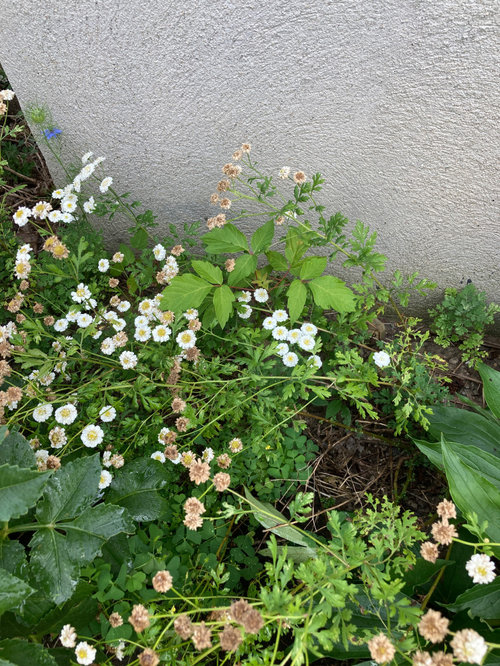
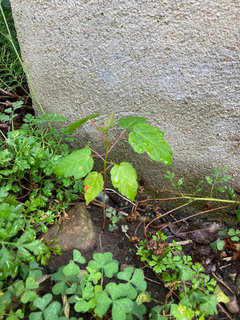
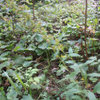
Ugh, my neighbor’s field has so much poison ivy that now it’s showing up in my and other neighbors’ yards. I recently noticed this plant growing near the back wall, so I treated it like it was PI and ripped it out. It was only a foot tall or less and had a woody stem… is that normal?! Another small plant just like it has popped up near this one, so I wanted confirmation that it is indeed poison ivy.


Comments (43)

  • PRO
    last year

    Looks a lot like poison ivy to me.

    party_music50 thanked beesneeds
  • last year

    Yep!

    party_music50 thanked Sherry8aNorthAL
  • last year

    ok, thank you both! Just what I needed. lol!

  • last year

    Yes.

    party_music50 thanked callirhoe123
  • last year
    last modified: last year

    If you just rip it out, it'll come back from the roots. In order to really destroy it, you need to use the Roundup that is specially formulated to kill poison ivy and poison oak. Regular Roundup won't do the job. Get a jug of concentrate, put it in a sprayer, and wail away at all the stuff that is approaching the house.

    party_music50 thanked daninthedirt (USDA 9a, HZ9, CentTX, Sunset z30, Cfa)
  • last year

    Or, if it's just a little bit of PI here and there, use gloves and a plastic bag and dig it up by the roots. It's not difficult.

  • last year

    I do not buy Roundup any more. It is not Roundup as we knew it. They changed to a different chemical in the US. I buy glyphosate from Ace Hardware.

  • last year
    last modified: last year

    Sheesh, just when you think the world can't become more like the Idiocracy! By the time I moved to my current garden 20 years ago, I'd realized the commercial products are a better value, and had started using them. So this was news to me, at least.

    https://gardeningsolutions.ifas.ufl.edu/care/weeds-and-invasive-plants/not-all-roundup-is-glyphosate


  • last year
    last modified: last year

    Roundup is now Triclopyr instead of Glyphosate. The very odd thing is that Roundup Weed & Grass Killer (regular Roundup) has EXACTLY the same active ingredients as Roundup Poison Ivy Killer. But in my experience, the latter works on poison ivy and the former does not. Maybe the latter has some "inactive" surfactant that more optimally coats poison ivy? I should note that around here, Rodeo is a lot more expensive than Roundup Poison Ivy Killer. BTW it's pretty well established that glyphosate isn't good for you, at least for extended exposure, which is why Bayer doesn't have it anymore in their Roundups. Bayer has LOADS of lawsuits against them for glyphosate induced lymphoma. It is banned in some cities. But you can choose your poison.

  • last year

    Amusing anecdote to start the day.

    One day, when I lived in Australia, I was having a discussion with a profesional gardener about something or other, when the subject of Roundup/glyphosate came up.

    I was very cautious about using it, as I was concerned about its potential toxicity and long term effects. He, however, had no qualms about using it and openly stated that if a customer was worried about it, he would show them how innocuous it was, by drinking a small amount of it.

    I often wondered how long he lived.


  • last year
    last modified: last year

    Pseudoscientific idiocy is engulfing society - from left to right, young to old. Theof, your anecdote reminds me of a joke I made years ago when the roundup hysteria started: "don't tell teens or they'll start a 'drink roundup' challenge." Which would be idiotic, because it's not meant to be drunken, OR bathed in...which I believe the very first roundup lawsuit plaintiff had actually done 10 years or whenever this insanity started. Didn't he say he literally bathed in pure roundup concentrate on a hot day, to cool down? Never mind the fact that the guy, as I recall, was seropositive for not one but *two* kinds of hepatitis, a risk factor way more linked to blood cancer. And G-d knows what other risk factors were present but not allowed to be entered into evidence: and yet a brain dead jury still awarded him and his vampire lawyers $1 billion or whatever it was.

    Unfortunately, the right to a jury trial was a nice ideal, but in cases involving science, the founding fathers just didn't realize that eventually, large swaths of the population would be dumb as a pile of bricks, but, hey, that's where we are. One of the reasons even *generic* medication has gotten so expensive is even generic makers have had to protect themselves from absolutely insane lawsuits and cover the cost of huge awards. Over a decade ago, Teva had to pay out over 500 million for the "crime" of packaging IV medications, intended for hospital use, in multiuse vials. As had been the trade standard for decades. Why? Because a fly by night clinic run by a corrupt doctor had re-used IV needles and given victims various blood born pathogens, and lawyers were able to convince a Nevada jury (surely a state with the nation's brain trust, right there!) that this was somehow linked to multiuse vials. Uh duh, it isn't? You could just as easily reuse a needle with single use vials!!!!!!!!!!!

    That correctly used and applied glyphosate *isn't* and *cannot* be strongly tied to cancer is actually very well established - that why good nanny states like Canada and Europe are still allowing THOUSANDS OF TONS PER YEAR of it to be applied by commercial farms in the first world. And yet people have become brainwashed into thinking it's like spraying a solution of radioactive iodine onto their vegetable gardens, therefore leading governments to helpfully ban it for home use. It's absolute insanity. I didn't take a course in medical statistics per se, but I was on a premed track in my undergrad career. (glad it didn't work out but I digress) I had a professor who was an expert in the topic point out how easy it is to manipulate studies to get the results you want. He was probably addressing more the topic of pharma trials, but it also applies to people the IARC 'concluding' glyphosate could 'probably' be causing cancer. So are scads of other things almost nobody is worried about like drinking milk or alcohol, or eating sugar and red or processed meat, and yet you don't see a hysteria to ban those things, do you? Any of those are way more tied to cancer than glyphosate, correctly handled.

    The final irony is, if you want to have a freak out about glyphosate, IT'S ALREADY IN YOUR FOOD YOU IDIOTS, UNLESS YOU EAT 100% ORGANIC. Many years ago I had a neighbor politely express his concern about me spraying it. I asked him if he ate only organic food. He said 'of course not, that's got nothing to do with this'. I said - it sure as heck does! It used both for roundup ready crops, *and* to desiccate grains before harvest. So again, the nanny states banned the use that leads to practically no exposure in diet - spraying in ornamental gardens on weeds - and continued to ALLOW the route of exposure that is actually putting it into people's food. I already preferred some organic foods years before finding this out myself, but I now avoid non-organic oats because it is supposedly one of the most contaminated crops. UPDATE - googling, I see that residues are falling even in non-organic grain crops, due to consumer pressure; good, BUT - are industrial farms just switching up to another desiccant? Are the crusaders like EWG even *thinking* to test for others like diquat dibromide? (actually a scarier molecule than glyphosate!) Not that I can see, so far!

  • last year
    last modified: last year

    One more twist - if there is something cancer causing in herbicides, the better research is showing it might actually be the weird surfactants that Monsanto originally added to almost all forms of their roundup products back in the day. I allude to that in my surfactants thread:

    https://www.gardenweb.com/discussions/6464124/gardening-concepts-explored-and-discussed-watering-and-wetting-agents

    dirt: no way in heck Rodeo is more expensive than any big box product ON A PER USE BASIS. Of course the 2.5 gallon jug is expensive - because it lasts me years! VS. the far less concentrated stuff branded 'RoundUp'. Strong enough triclopyr will 100% kill PI - been there, done that.


  • last year

    @UpperBayGardener (zone 7)

    Quote: "large swaths of the population would be dumb as a pile of bricks "

    Please, don't insult a pile of bricks. :-))))

  • last year

    Good grief. Just go to the hardware store and buy a small spray bottle of poison ivy killer (any brand). When you see a sprig, give it a spritz. Done.

  • last year
    last modified: last year

    Let's stop the ranting and just look at evidence. Yes, the toxicity of glyphosate is controversial. In many countries it is banned for household use. The EU has strong restrictions on it. There is ongoing debate about it.

    https://www.ewg.org/news-insights/news-release/2021/07/bayer-end-residential-sales-cancer-causing-weedkiller-glyphosate

    https://phys.org/news/2023-09-glyphosate-restricted.html

    https://www.epa.gov/ingredients-used-pesticide-products/glyphosate

    Of course, the EPA finally decided that glyphosate wasn't a cancer risk, but they admit at the end of this note that the decision is somewhat arguable.

    There are loads of bad things in the foods that we eat. But we eat them anyway. The amount of glyphosate in foods is miniscule compared to what lands on you and what you breathe in when you spray it.

  • PRO
    last year

    Goodness, we may be getting into the weeds from the OP. Pun intended.

  • last year
    last modified: last year

    "There are loads of bad things in the foods that we eat."

    Not to mention the food itself.

    I'm only ranting in response to the intellectual ranting about this topic for the past 20 years. EWG has a mixed record. They might have scrubbed it from their website, but they were once claiming palmitic acid was a toxin. A chemical that is literally IN EVERY CELL IN YOUR BODY, OR YOU'D BE DEAD. (in the form of palmitate chains of fatty acids) My point being there's some evidence to suggest the organization was not being run by persons actually versed in the science of toxicology, but rather by people who were more versed in stirring up pseudoscientific hysteria.

    I will say one thing pertinent to current events - I've said for years glyphosate was far more safety and toxicology tested than "additives in children's candy" and of course I was correct, which is why there's now a move to ban or more strictly regulate many of them. "GRAS" got taken too far. But, again, I digress. Gotta get back outside to the weeds!

  • last year

    David: Old toxicology quote -- "The dose makes the poison".

  • last year

    Yes, which is why, even if glyphosate did cause cancer, a man who literally bathed in it was not something that should have launched a legal movement. Yet, here we are.

  • last year
    last modified: last year

    I found this online:

    Roundup-Branded Herbicides: Active Ingredient Changes

    "For decades, herbicide products sold under the trade name Roundup contained the active ingredient glyphosate. Glyphosate-containing products are labeled for non-selective control of broadleaf and grassy weeds in landscape situations. Now, many Roundup- branded herbicides available to consumers no longer contain the active ingredient glyphosate (probably because of lawsuits!). Glyphosate has been replaced with active ingredients, such as diquat, fluazifop, imazapic and triclopyr. Trade names for these products include Roundup Extended Control, Roundup Weed and Grass Killer – Exclusive Formula, and Roundup Dual Action.

    These active ingredient changes have created confusion for consumers regarding where and when these products can be applied. Undesirable injury may occur if these active ingredients are inadvertently applied to landscape beds or vegetable gardens, as they cannot be used in the same manner as products containing glyphosate. It is important to note that these products control different weed species and have different application rates than previous products. This illustrates why reading and reviewing the label of any purchased herbicide is extremely important.

    Moving forward, consumers and applicators must be aware of the active ingredients in the Roundup products they purchase, as they may change. Be sure to carefully read and follow the labels. For more information about this topic, visit your local Extension Office today!"

  • last year

    No, boxelder.

  • last year

    Not poison ivy, boxelder

  • PRO
    last year

    Might be moot at this point, the OP has probably already gotten rid of it. But what makes you feel it is box elder rather than poison ivy?

  • last year

    It appears to have opposite foliage. Hence an Acer.

  • last year

    I’ve had a really busy week… there is a second one out there that I haven’t pulled yet. I’ll post with updates later, but Acer makes more sense. The woody stem didn’t seem right for such a small PI plant, which is why I asked about it. I should have taken more/better pics, but I didn’t. :p

  • last year

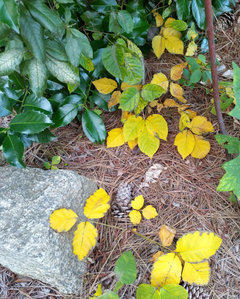
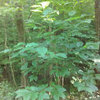
    I’m back to say that they were not poison ivy! In my original pic, you can see the second small seedling to the left of the suspected PI. I ripped out the first suspect before I even posted. That small seedling has continued to grow and looks like this now…. so obviously not poison ivy. Makes me feel better! Now I need to remember to check for alternate/opposite foluage. Thanks, all.


  • last year
    last modified: last year

    Couple funny things about this 'plot twist'. Looking closely now it is obviously a boxelder, but we on the east coast at least become I think, so attuned to worrying about contact with PI that it induces some kind of alarm response where if anything looks close enough to it, we want to get rid of it ASAP. Or at least I do. I haven't had PI now since I was a teen in the 1990s, and I intend to keep it that way. I barely washed it off in time a couple years ago - I had to wait at least 4 hours, and just got a bit of reddening, with slight itchiness. My first close call in a while. So, although it wasn't floral_uk who initially spotted this misidentification, I wouldn't have been surprised if they had...because they would be able to make a more clinical evaluation of it.

    Also funny though...I can't say I know of them in my current garden or neighborhood, but we had a box elder tree in my childhood garden. I played in the tree, it was the tree I learned to climb trees in. My memories are vague now 30 years later, but I don't remember these seeding nearly as aggressively as *any* other maple, either the native red or silver maple, or japanese maples. And in fact the wiki article has this quote:

    In 1928, Joseph Illick, chief forester for the state of Pennsylvania, wrote in Pennsylvania Trees[21] that box elder was "rare and localized" in the state.

    So, I wonder how often box elder seedlings actually crop up like this. Appearing in a flower bed like this is exactly how one normally encounters PI seedlings!

    At least around me, now, PI is being so out-competed by Celastrus orbiculatus, that I don't see nearly as many PI seedlings as I did 20 years ago. Mind you, that could also be because I killed a couple huge ones on the edges of my property.

    And since I'm doing the quarterly 'sorting of pics from my smartphone', here's a 'kill shot' (LOL) of a PI that was snaking its way through the place where an Azalea 'Daviesii' abuts a Koehne holly. This is the one I mention spraying with glyphosate upthread.


  • last year
    last modified: last year

    David, I've read that boxelder, because of land clearing, farming, etc, has rather aggressively expanded its numbers in areas like the mid-Atlantic states after European settlement. Floodplain and other similar sites can become pure stands of boxelder. They are usually short-lived, tho. Biggest one I ever saw was in south-central PA. I view them as the junk-yard tree of the maples.

  • last year

    While the second and third pictures are clearly not poison ivy, the first picture is. Touch art your own risk.

  • last year

    If the first pictured plant has opposite foliage it is not PI. Nor is the second. The third has alternate foliage and is PI.

  • last year

    All you can see of the foliage in the first picture is the "leaves three" which are always in that configuration.

  • last year

    As are the leaves of countless other plants, including Acer negundo. Note I said 'if' the leaves are opposite. On enlarging picture the terminal leaf pair appears opposite to me. A PI seedling has a single terminal leaf, not a pair.

  • last year

    I don't see a terminal pair. Oh, well. Not worth beating the topic to death:)

  • last year
    last modified: last year

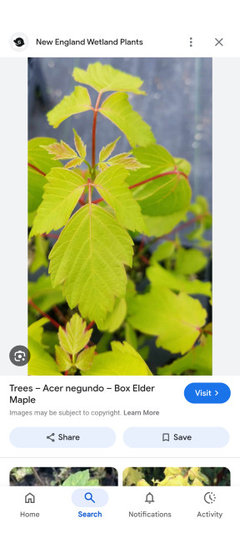
    This might be helpful.

    https://bplant.org/compare/90-1409

    Also the first picture (box elder) leaves are a little more deeply incised than is typical for a PI _seeding_. When they get bigger maybe they tend to produce some more incised leaves.

    Ben - agree that clearing may be a factor. But obviously it doesn't compete in forest succession with the larger, equally or more 'seedy' maples like red or silver. I just remember, from the very earliest time I had to learn to weed, hating the sight of red or silver maple seedlings, because there are so many of them! One of my European neighbors had large silver maple trees in her yard and I'd say 50% of the weeds I pulled from her beds were seedlings from that. Then, she wanted a European beech but got talked into planting a purple sycamore maple because it was faster growing = more weed seeds! Although by that point I had graduated from taking care of her yard.

  • last year

    Terminal pair


    party_music50 thanked floral_uk z.8/9 SW UK
  • last year

    Terminal leaf is the single one with the long stalk.

  • last year
    last modified: last year

    In opposite leaved plants, like Acers, there are two terminal seedling leaves, not one.

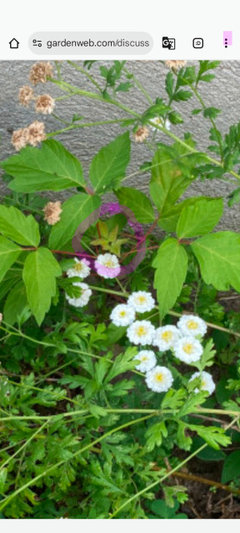
    The OP's photo shows a terminal pair. There are two leaves visible. The same arrangement is visible below.


  • last year

    I see odd, bipinnate compound leaves with 3 leaflets and 1 terminal leaflet that has a longer petiolule. The reference to 2 terminal leaflets was referring to the total of terminal leaves per node?

  • last year
    last modified: last year

    I see two exactly opposite compound leaflets, a feature of Acers, on the OP's photo and the example I posted last. I circled them in pink. OP also refers to a woody stem.


    Eta I am not referring to the structure of the compound leaf when I refer to terminal leaflets. I'm referring to the leaves being terminal to the whole plant. That is to say, the last two, newest leaves on the seedling. Maybe I shouldn't have said 'leaflets'. I just meant small, immature leaves.

  • last year
    last modified: last year

    Reddish leaf-stems on young boxelder leaves (fades w/age) are also a characteristic trait.

  • last year

    The Terminal leaf is at the end, hence "terminal" and it's a single.

  • last year

    As you wish. But it's not single. There are clearly two.

Sponsored
J.Holderby - Renovations
Average rating: 5 out of 5 stars4 Reviews
Franklin County's Leading General Contractors - 2X Best of Houzz!