Software
Houzz Logo Print
webuser_490324957

Gas Stovetop Exhaust Fan Dilemma & Hood Size

last year

We purchased a 36" gas stovetop and have to configure a hood and exhaust fan. For 41,700 Total BTU Load from stovetop, I understand that I need to purchase an exhaust fan = 417 CFM??? Is that correct??? What are the pros & cons if I go lower or higher? It's nearly impossible to find a unit that's precisely 417 CFM. (We cook steak, beef, chicken, and grease splatter is a problem for us. The cooking smells also waft to our upstairs and last until the next day.)


My research shows that, technically, I should have a 42" hood over my 36" range. My cabinet maker insists that the hood size should match the stovetop (36"). Since we are limited in space I am wondering, what are the pros & cons of same size hood 36" vs. larger hood 42". I understand the concept of pulling in more grease perhaps, but in real life, has anybody experienced any issues having the same size hood & stovetop?


Painted white cabinets will be alongside the hood (with distance between). Our backsplash will likely be marble tiles; countertop will be quartz.


I truly appreciate any practical input.


Comments (8)

  • PRO
    last year

    Are you thinking about how the cabinets and hood will look too?

  • last year
    last modified: last year

    Don't go with a lower cfm unit. They all have variable speeds so you can always slow the blower if the rated cfm is too high for what you're cooking. You'll never find an exhaust fan rated at exactly 417 cfm, besides the actual installed cfm varies depeneding on the actual duct size and length, number of elbows used, etc., etc. That all varies between installations; the factory cfm rating is based on a 'standard' installation that may or may not match your install. So you just buy a bigger rated cfm unit than you need to make sure your required cfm needs are covered.

  • PRO
    12 months ago
    last modified: 12 months ago

    You need CAPTURE of fumes/smoke/grease. A 36" range needs a 42" hood to properly vent and capture.

    You don't need exact CFM, and when you cook, sear, pan fry, that fan needs to be turned on, before you even set the pan on the burner!

    Your "cabinet Pro" is 100% wrong.

    I would not do a marble backsplash with your cooking habits. You will get spotting, it will absorb grease, and anyone who tells you differently is a liar.

    If space is tight? REDUCE the cooker size to 30" and get a 36 inch hood. You are 100% focused on the wrong thing. Failure to consider that, will coat your new cabinetry in grease residue.

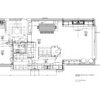
    In fact, post the very tight kitchen "plan"

    Let's see what else may be "tight" and not great. From the sound of it? Your "cabinet maker" should not be designing your kitchen layout.

    Change what are probably.........bad habits when you cook?

    Why prior start/running the fan is crucial for searing

    • Creates a powerful draft: Starting the fan early establishes a steady updraft that directs steam, smoke, and odors away from the coo ktop and into the ventilation system. Without this initial momentum, smoke and grease can escape the fan's capture area before it reaches full power.
    • Clears the air more effectively: Searing a steak requires a very hot pan, which quickly generates a significant amount of smoke, odor, and airborne grease droplets. Running the fan on a high setting from the beginning ensures maximum capture.
    • Improves overall air quality: Exhausting these pollutants immediately protects your indoor air quality and helps prevent the buildup of oily residue on kitchen surfaces.

    Best practices for using your vent hood when searing

    • Run it before and after: Turn the fan on about five minutes before you start cooking and leave it on for 5 to 10 minutes after you finish. This clears any lingering odors and smoke that remain in the air.
    • Use the highest setting: For intense cooking methods like searing, frying, or broiling, use the highest fan speed to handle the large amount of heat and fumes.
    • Minimize cross-drafts: If your kitchen has open windows or a powerful ceiling fan, it can disrupt the vent hood's airflow. Try to minimize these cross-drafts to maximize the fan's capture ability.
    • Use back burners: When possible, use the back burners for high-heat cooking. The vent fan is more effective at capturing fumes from the back of the cook top.
    • ( I will add that is the reason you should avoid the MARBLE backsplash, or live a life of poultice making)
  • 12 months ago
    last modified: 12 months ago

    The hood intake aperture size needs to be sufficient to capture the rising and expanding cooking plume. A 3-inch overlap all around is deemed a reasonable compromise, given typical plume velocity vs. angle profiles.

    The flow rate (CFM) needs to be sufficient to ensure no captured plume reflects out of the hood (loss of containment). In my view, 90 CFM/sq. ft. of aperture is appropriate for hot cooking tasks (searing, wok use). Modest cooking styles over induction may allow getting away with less.

    The blower rating has to account for various system pressure losses, mainly baffles, ducts, and make-up air (MUA). A factor of 1.5 over the flow rate requirement above may be sufficient to make up for this.

    Deliberate MUA is required by Code above 400 CFM blower rating. Even below that rating, insufficient MUA will degrade hood system flow rate and may pull external air through leaks in house walls.

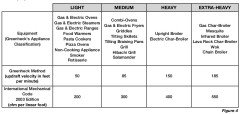
    For commentary related to the historical rules, such as 100 CFM per 10000 BTUh, versus the more fundamental rule of adequate air speed in the baffles to ensure containment, see: https://www.tagengineering.ca/wp-content/uploads/2015/02/KVSApplDesign_catalog.pdf up through its Figure 4 (below). Note that the 90 CFM/sq. ft. = 90 ft/min I recommend, which is higher than the first two columns of Figure 4, is due to residential hoods having low to no reservoir volume below the baffles. (Click to enlarge.)


  • 12 months ago
    last modified: 12 months ago

    In this instance the technical recommendation really does matter.


    The cons of a hood the same size as your range are already familiar to you: grease splatter and smells that last for days.

    If your kitchen is really small use a 36” hood over a 30” range.

    Smells and grease do not contain themselves to the footprint of your range. That is why you must go larger if you are a high grease high odor cooker.

    How much space are you currently planning between cabinets and hood? Why don’t you want them touching?

    Marble splash behind a greasy stove is not a good idea at all. They will stain easily.

    Quartz is a fine material on its own. But next to marble it can look very faux and cheap. Reconsider your materials.

  • 12 months ago

    Do NOT listen to you cabinet person! We had a huge issue when ours orderdd the wrong size hood cabinet and then tried to tell us she knew better than the appliance dealer. This was the same kitchen designer that required us to have the appliances purchased prior to laying out the kitchen.


    Her solution was to return the proper hood, buy a smaller hood to fit the wrong cabinet she ordered. Did not happen, a new enclosure was made and she ate the cost.


    I am an avid home cook, until our son went to college I did breakfast and dinner every day. high heat cooking, lots of sauting, etc etc. Do not skimp on the exhaust.


    however, i have marble countertops and backsplash (slab, not tile) and have zero issues with stains 8 years going.

  • 12 months ago
    last modified: 12 months ago

    Just to pile on - a 36" range needs a 42" hood.

    Good stuff from @kaseki.

    U.S. consumer hoods can be noisy and inefficient. I would strongly consider a hood with a remote blower and, given the over-estimation by U.S. consumer marketing, an 800 CFM which will deliver about 400 actual CFM. Accurex, Prestige, Wolf and Modernaire are options to consieer.

    More: https://bamasotan.us/range-exhaust-hood-faq/

Sponsored
AIS Renovations
Average rating: 4.5 out of 5 stars15 Reviews
Custom Craftsmanship & Construction Solutions in Franklin County, Ohio