Software
Houzz Logo Print
zuponcic

Dying beech tree, need a substitute...

last month
last modified: last month

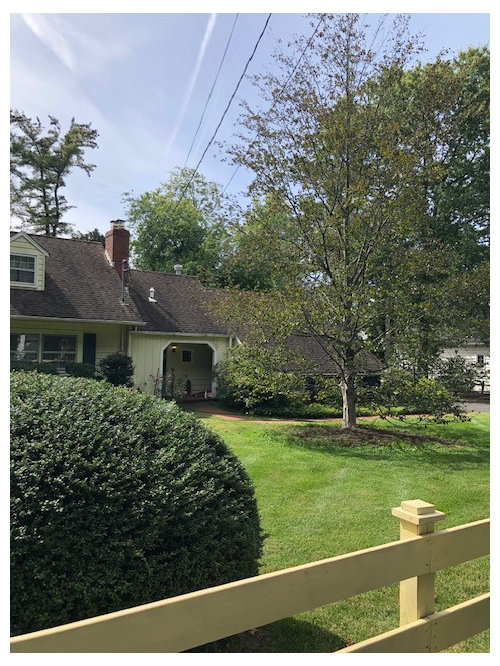
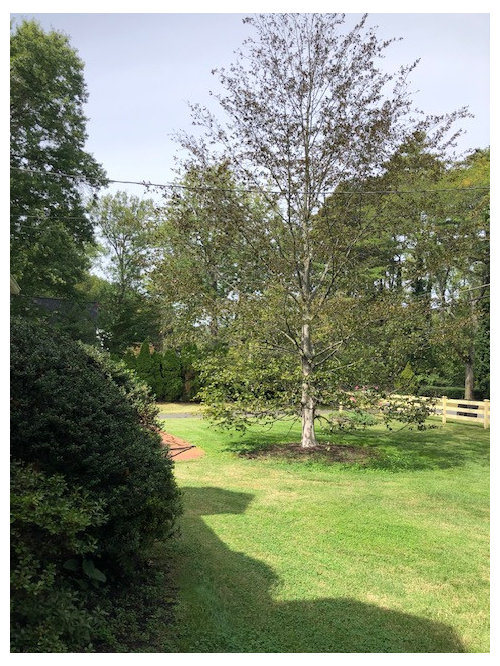
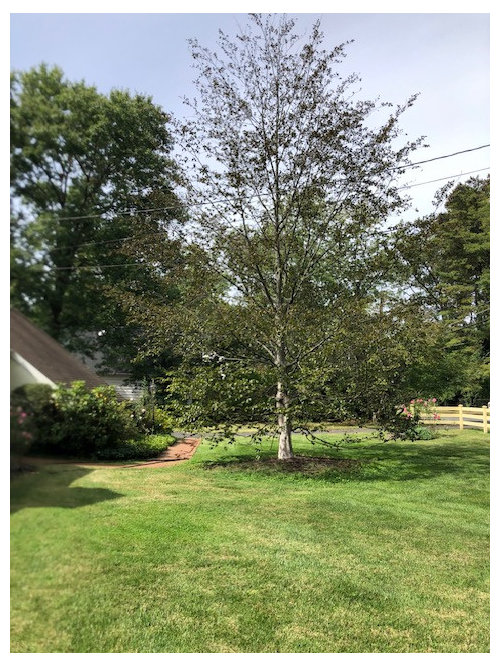
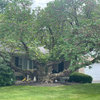
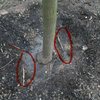
About 20 years ago, I planted a copper beech in my front yard where I have sufficient space for it. It is succumbing, sadly, to whatever ailments are afflicting beech trees these days, and I will soon have to have it removed. What are other "big skirted" trees that would be similar in height ultimately, and seem to be healthy in today's world? I've already got a big magnolia in the back yard, so I'm not interested in another one for the front. I live in New Jersey.. I added some photos...it is looking so thin. Because of that you can't see the dark color of the leaves. What do you think of a buttonwood tree? They're rather historic trees in NJ, and a little rough looking, but they have their own beauty. You can't see the whole house, but it is a long Cape Cod that has a modest feel about it. If I were to plant another big tree (and I will) I would move it more to the right and closer to the street....not a lot but enough to evade power lines for a few decades.


Comments (23)

  • last month

    Sadly beech leaf disease is also killing all the native beeches in my area.

    A mature copper beech is very tall and wide. Do you want a replacement tree that is that large for your front yard?

    Without knowing anything about your zone, sun/shade, soil, etc. … a coral bark Japanese maple will get fairly large (15-25’ tall x 15-20’ wide). Spectacular leaf color especially in fall and the bark color is beautiful.

    My coral bark maple tree is close to mature size and is a gorgeous specimen tree in sun with well drained soil.

    vedazu thanked Design Fan (NE z7a)
  • last month

    One of the copper maples?

    vedazu thanked floral_uk z.8/9 SW UK
  • last month

    Design Fan: Do you have a picture of your mature tree so I could see how it works in your yard? Thank you!

  • last month
    last modified: last month

    To clarify, the 'copper' maples I was think about we're not JMs but large trees like Acer platanoides 'Crimson King' or A. pseuodoplatanum 'purpureum'.

  • last month

    floral, my comment was directed to the suggestion of a coral bark Japanese maple as a possible substitute for a copper beech. It just doesn't compute :-) OTOH, Norway maple, Acer platanoides, makes a lot more sense wrt to mature size and potential leaf color but is also considered an invasive species along much of the east coast.

    vedazu thanked gardengal48 (PNW Z8/9)
  • last month

    Maybe a multi trunked specimen of a disease-resistant tree to give you that broad look. Multi-trunked birch of some kind

    vedazu thanked L Clark (zone 4 WY)
  • last month
    last modified: last month

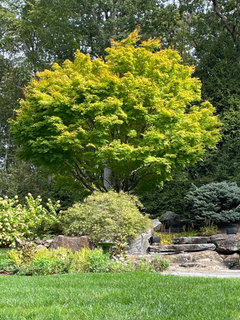
    Below is a photo of my coral bark Japanese maple. Fall leaf color is beautiful. The red bark stands out in winter against the backdrop of my Norway spruces. Especially when it snows.

    I do consider it fairly large at 15’ - 25’ for a front yard specimen tree. I suggested it as a replacement tree and not a substitution. A copper beech is very tall as I said but maybe a 80’ - 115’ mature tree suits the front of your property.

    If you have any questions about the scale of a replacement tree for your front yard, add a photo of the front of your house taken from the curb.

    Good luck with a replacement tree. It is so sad that beeches are being decimated. I was sorry to lose all of mine.


    vedazu thanked Design Fan (NE z7a)
  • last month
    last modified: last month

    Thanks for the photos. Beautiful spot for whatever replacement tree you choose. Are the supply wires from pole to house through/near the tree?

    Another specimen tree with beautiful foliage imo is a full moon maple. There are many cultivars with different leaf colors ranging in height with some maturing to 15’ - 30’. I planted one this year and love the leaf on it.

    Paperbark maples are also gorgeous especially during winter. The exfoliating bark is so interesting as it looks like cinnamon curls. I have one planted in front near my front steps. Mature height is 20’ - 30’

    You might want to take a stroll through a local nursery specializing in trees to see what catches your eye.

  • last month

    Thank you all for such thoughtful comments! Design Fan, yes the supply wires go near the tree now....which is why I think I should move the next tree closer to the street and over about 5 feet. We're on a lane--no sidewalks and my house is smaller than most...Some people have 9 acres in this area. So, globally, a big tree is not an anomaly. I'll investigate some of these suggested trees....but I value your suggestions. I strolled through the tree place years ago and got a copper beech. I don't want to make that kind of mistake again.

  • last month

    I’ve only just scanned through this posting,. But I would like to propose a male gingko tree. They get tall and have the most polite sensibility when leaves fall, all at once! Prehistoric and lovely when allowed to take in their natural form. They can handle some cold weather, too!

    vedazu thanked Jj J
  • last month
    last modified: last month

    An American sycamore would indeed look nice there, but there are other options, including less common trees.

    A Dawn redwood could be grown there. Or one of the deciduous magnolias.

    Perhaps one of the new disease resistant elm trees or chestnut.

    Maybe a flowering cherry tree? Or a fruit tree? If you planted a pear on standard rootstock, the tree could get to be fairly large. Or a plum tree (such as 'President' plum). (If you go with an apple, do your research and pick a good tasting heirloom variety that isn't too prone to disease. Being stupid would be picking a variety sold in supermarkets)

    Beech is a beautiful tree, but can be quite large, and probably not a tree you want to plant unless you want a large area with lots of cool shade and a trunk width that will eventually get huge.

    One of the hardier cultivars of Lebanon Cedar could also be an option. Those can also get to be big beautiful stately trees, if your front yard has the room for it. They're nice because they do not block too much sun.

    vedazu thanked socalnolympia
  • last month

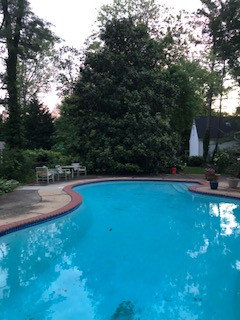
    Socalnolympia: Funny story. When we bought the house 45 years ago, there was a young magnolia in that spot. It grew to a wonderful size and was the envy of the neighborhood. I went to the USSR on a sabbatical and rented my house for the year. The tenants were much better landscapers than I, and were dedicated to making sure no magnolia leaves were hanging around under the tree. I had just left lots of them there as a sort of mulch. In any case, I came back, and saw that, apparently, during a winter freeze, that nice clean floor caused the tree to die. That's when I bought the beech. Later in the summer, in a little flower bed near the pool in the backyard

    , I happened to see a little sprout of something that looked like a rhododendron leaf. I just left it alone to see what it might turn into, and it turned into a mammoth magnolia, apparently which self seeded somehow from the front of the house to the back. It looks great, but it does have an effect on my roses...rose beds that were full sun are now part shade. I'm glad it is there because my white pines are almost gone...Anyway, that's why I don't want another magnolia in the front.

  • last month
    last modified: last month

    I like the look of that huge magnolia tree by your pool. It gives an almost tropical look.

    Is it a deciduous magnolia, or an evergreen Southern magnolia? If deciduous, what color are the flowers? are they the same as the original tree?

    Southern magnolia is likely not considered reliably hardy where you are (but probably is less likely to die near that pool). Deciduous magnolias can be much more cold tolerant (down to zone 6a).

  • last month

    It's an evergreen Souther magnolia. Big, white flowers. it really is too close to the house, but so far, we're coexisting!

  • last month
    last modified: last month

    I might be able to change your mind about deciduous magnolias.

    Here's magnolia Iolanthe

    [click image here]

    Here's magnolia 'Yellow Bird'

    [click image here]

    Unlike your Southern magnolia, they will lose their leaves in the winter. But their leaves will also look a little more lush green than the harder darker look on Southern magnolia.

    One other possibility, if you are sure you are in zone 7 is wintersweet. Kind of boring during most of the year, but during winter it can have nicely fragrant little flowers that can waft its scent some distance in the cold air. But if you think your Southern magnolia was killed by the cold, then wintersweet probably would not do well there. It's a very small tree.

  • last month

    Oh, I have, actually, a deciduous magnolia on the other side of the driveway. Pink one. Beautiful tree, but smaller than I'd like for the other space.

  • last month
    last modified: last month

    In fairness, different magnolia varieties tend to grow to different sizes, some much bigger than others (since they are bred from different original species).


    I wonder, could any of the following camellia relatives be possibilities? If you want a more subtropical exotic look.

    Gordonia lasianthus, Gordlinia grandiflora, Stewartia

    Probably would be slow growing in your climate, but could eventually reach a big size. Just some unusual plant suggestions.

  • last month

    vedazu - I’m very sorry to hear about your failing beech tree. I have at least a dozen failing native beech surrounding my house – the situation is dire. Regarding your replacement tree, I was once looking for trees that could coexist under utilities and found this pdf – good late night browsing.

    https://jfschmidt.com/wp-content/uploads/2022/11/JFS-utilitrees.pdf

    vedazu thanked raymondz7a
  • last month

    Raymondz: What a great resource! Thanks for posting it. I'll spend some time studying it!


  • last month

    If you're interested in helping the ecology, an oak is the most important tree you could plant. Doug Tallamy calls it a keystone species.

    vedazu thanked laceyvail 6A, WV
  • last month

    Hi, Laceyvail, Since it is of the same family as beech, and seems to also be susceptible to numerous diseases these days, I'd be reluctant to go down that road. Unless you are aware of some variety that is relatively immune to disease. .

  • last month
    last modified: last month

    The Japanese oak species tend to be much more disease resistant, though they are less common in the U.S.

Sponsored
We remodel Inc.
Average rating: 5 out of 5 stars3 Reviews
Industry Leading Kitchen & Bath Remodelers in Loudoun County, Virginia