Software
Houzz Logo Print
daniel_towner

Walnut 0.4m from house - should it go?

11 months ago
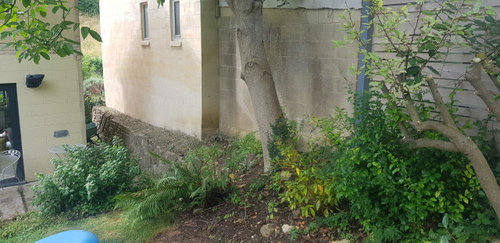
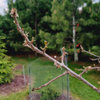
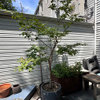
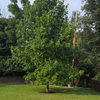
I have a 15-year old, self-seeded walnut tree which is 0.4m from my house (photo attached), and 5m from my neighbour. There are some really big surface roots around it, one of which is lifting a patio. I'm concerned that the tree has potential to cause damage to the buildings. Should the tree be removed? Could it be left a while longer, or is it better to remove it now? Thanks.


Comments (12)

  • 11 months ago
    last modified: 11 months ago

    Everything involves tradeoffs. If you're in a very hot climate and the tree provides shade to your house, you'd lose that benefit. If a house has a truly sound foundation and construction, a tree even that close will not affect it. I discovered a trunk remnant of a tree that big or bigger near my garage, and there's no sign it caused any problems. All the cinder blocks and concrete lentils are intact and there's no cracks in the foundation. But my house was made in a very old school way, and at least in the main part of the house, the concrete slabs are over 10" thick! (26 cm)

    Also we don't know if you're in a climate with intense storms. Around here, having lived through hurricane Irene that brought down a bunch of huge branches, I'd never let a tree stay that close to my house. But all the rafters in my house are original, so that large tree on the south side (probably for shade) never fell on it.

  • 11 months ago

    Yes, its English walnut - I'm in the UK.

  • 11 months ago

    Sadly, it has to go.

    tj

  • 11 months ago

    Do you live in or near Bath, Daniel? Looking at the masonry.


    Yes, sadly the tree is best removed.

  • 10 months ago

    My vote: Remove it.

  • 10 months ago
    last modified: 10 months ago

    Walnuts commonly self-seed all the time. You should have dug the seedling up when it was only 1 m high and replanted it a little further away from the wall.

    The tree looks very nice in its present location, but trees like this will just continue to grow, and eventually it will outgrow that location and be awkward. Walnut trees grow about 65% faster than oak.

    Walnut trees can also present problems because their roots will spread and the reats release a substance called juglone that can make it difficult for most other types of plants to grow in the soil near the tree. Although English Walnut (which it looks like that tree is) is not near as bad as Black Walnut, in this regard.

    Probably it is best to remove the tree. But not absolutely necessary, if money is not an issue and you are prepared to cut down the tree and go to the trouble and great expense of removing the stump 10 years down the line. (That tree will eventually grow into and up against the wall, and then it will not look right, in about 15 to 20 years) Walnuts are beautiful trees, though often not the best suited for small garden spaces.

    If you cut it down, you could always replant it, a little further away from the wall, with a dwarf Walnut variety. I'd give it at least 75 cm away from the wall. (also recommend installing a root barrier)

    Sadly, even though the tree looks very nice there, you probably do not really truly have space near that spot for a large tree.

    It is very possible (but not guaranteed) that tree could eventually cause foundation problems or cause water pipes (if there are any) in that area to fail. But I'd say those issues are probably at least 12 years down the line to worry about. As I said, if you really really like the tree, it's not a totally absolute requirement to remove it in this situation, if you're prepared to take the risk of future trouble and expense. But be aware that tree probably isn't going to be there 30 years from now, and someone (even if a future homeowner) will very likely be compelled to remove it.

  • 10 months ago

    Thanks for your comprehensive reply. I should have removed it when it was very young, but I didn't really think it would become a problem and just got used to it. I looked at it again recently and noticed the wall already has a crack which is suspiciously close to one of the roots, so definitely time to go I think.

  • 10 months ago
    last modified: 10 months ago

    If you don't mind sharing in the future, I'd be curious how much a tree removal like that costs on your 'side of the pond'. Around here, even in relatively cheaper part of the states, I think you'd be hard pressed to get it down and out for < $1500. That was my company's 'full crew, half day' rate - but a couple years ago. Maybe out in Appalachia someone unlicensed would do it for $500-$1000...if you dare. And near a big city? Fuggetaboutit. Could easily be $5000 or more.

    OTOH based on his prices at the time, the old-timer I used in the late 2000s would probably have done it for $800, $1000 tops. He retired in 2021. I thank my lucky stars I got most of my big, hideous [red or silver] maples taken care of by him. (The ones that nature didn't start the process on, by them losing huge branches, or splitting trunks, in storms!) Still, easily spent 25K or more with him, over the years. While with the "best landscaper in the county" (the one I humorously suspect, but cannot prove, of cutting down a monkey puzzle in an adjacent state/county for "not looking English enough")...that would easily have been 60K or more, based on his estimate differential for the first couple jobs. In addition to just being super difficult to work with - haughty and ignorant at the same time! For a large ash with a forked trunk, right at the ground, he told me he couldn't remove the half that overhung an area I wanted to plant with sun lovers because it would "unbalance the tree". (btw I believe he is/was "ISA certified".) So, I had the simple old country man tree removal guy (but state licensed and insured, of course) remove the half I wanted. Guess what, the damn ash tree was just fine being "unbalanced" for another 14 years, until EAB took it out!

  • 10 months ago

    I think it comes down to money. With every year that passes the tree will get bigger. The bigger the tree the more complicated it gets to cut it down. The more complicated, the equipment that will be needed to prevent the tree from damaging the buildings when it comes down. The more equipment needed to safely remove it the more it is going to cost. Factoring in inflation, it makes sense to take it down now while it would be relatively simple.

  • 10 months ago

    So ”unbalancing” of trees is a myth?

  • 10 months ago
    last modified: 10 months ago

    If the tree survived as V for years, what's going to happen to /

    It's going to fall over? It's going to get lonely and cry? Seemed like a myth to the tree I had!