Software
Houzz Logo Print
jan_allen40

Advice on poured concrete shower floor

24 days ago

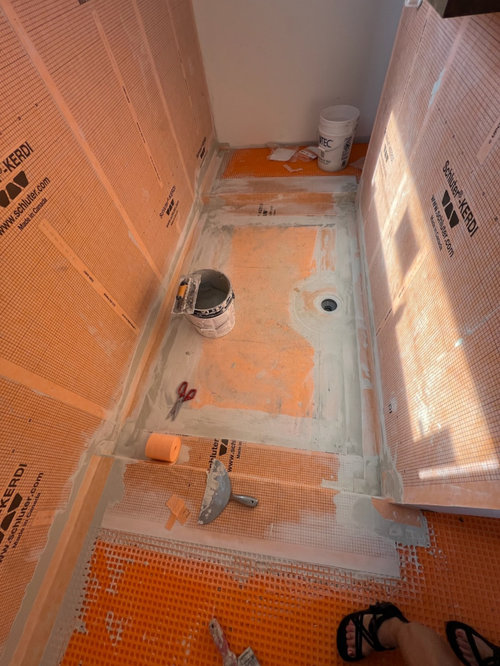
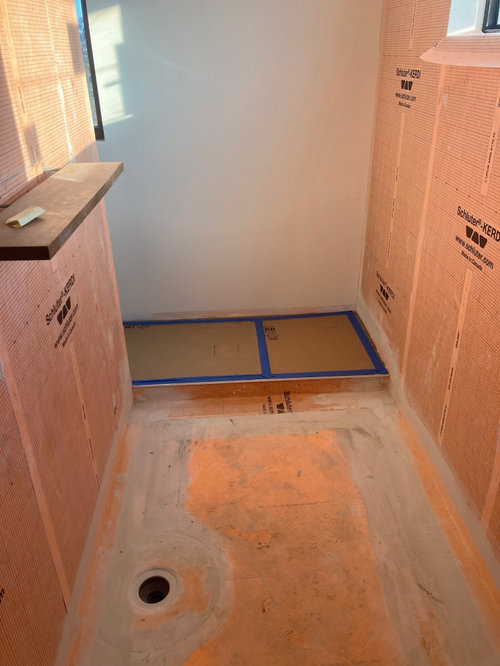
We are building a new build and have an elevated concrete slab for our master shower floor. Dimensions are 4’6” x 7’ with a 4” base. It has been prepped with kerdi board and membrane. We’ve done water test and it holds water with no leaks. There is a schluter strip installed on the edge where the concrete will meet the tile. We plan on using concrete that has an antishrink added.

Does anyone have any personal or professional experience with this type of project, if so what advice could you offer?

Concerns -
Waterproofing
Shrinking
Draining with proper slop
Sealing
Antislip

We are having a hard time finding a concrete contractor who has experience with this type of pour so we may ended up doing it ourselves so any advice or thoughts would be appreciated. We’re electrical contractors so concrete isn’t our area of expertise.

Comments (11)

  • PRO
    24 days ago

    Years ago I redid my shower and used some Schluter materials and put in a mortar bed under the shower floor (I think) on the Schluter material. Contact Schluter to see how they recommend it be done.

  • PRO
    24 days ago
    last modified: 24 days ago

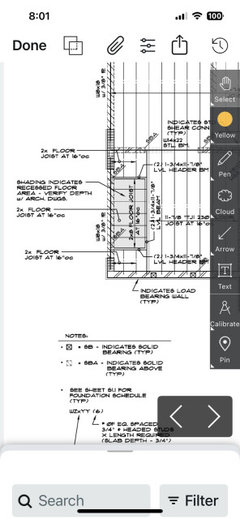
    How exactly was this built? You aren’t offering a section detail of the plan. How does it intersect with the other floor planes? Walls? Is a capillary break involved? Are the correct materials even being planned, with their physical properties incorporated into the plan? All materials have installation requirements that must be planned for, before anything is built. I think you’ve already gone too far, without knowing how the parts fit together. The end result is likely to be a water management issue, and lack of structural integrity of the finish materials.


    Start over with the end goal, and better explain your plan.

  • 24 days ago

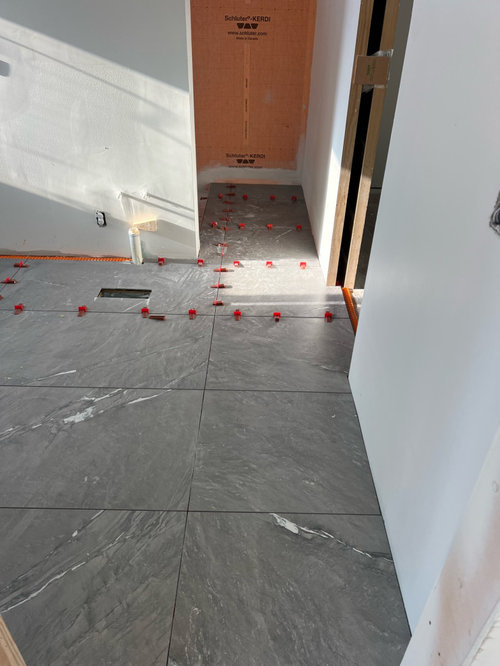
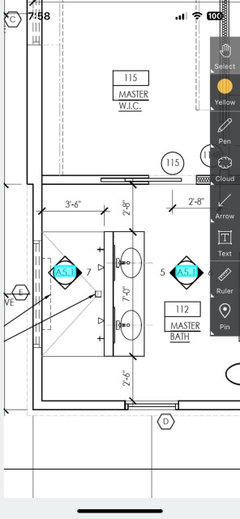
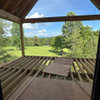
    Good point KT. Here are the drawings showing how it was built. They built the pan out of subfloor. The plan is to fill the whole space that had been prepped with concrete that is slopped toward the drain. The tile on the walls will be laid after the concrete is poured. I’m assuming they will add a schluter strip on both wall sections that meet the concrete but maybe just filling that in with grout is enough. We will definitely have it sealed. We have polished concrete in the living area that contractor said that he could seal it but we don’t want slick polished concrete in a shower. Hence the reason I came on here is to see if anyone had experience doing this particular type of shower. I do feel that our tile contractor prepped the bed right to receive the concrete. He used a schluter drain system and then prepped it like he did the walls. We did a 48+ hour water test and it held tight. Water level didn’t move.

  • PRO
    24 days ago
    last modified: 24 days ago

    What you appear to have done is to have placed the sloped foam pan too low relative to the room floor. The pan itself should only be the finish surface thickness below the finished thickness of the room floor. If the floor is continuous between room and shower floor, the sloped and waterproofed pan should be flush with the room subfloor, ready for the decorative veneer of tile or microcement, etc. .

    None of this is correct. When using concrete as the decorative finished surface, it's a thin decorative veneer of micro cement, separated from the adjacent rooms and walls via a capillary break. There's no "thick" concrete anything involved. Thick concrete would stay waterlogged, create a structural support issue, and be unsightly, as it will absorb any and everything. Concrete is basically man made marble in behavior. Microcement is more polymer and sand than it is "concrete", which is why some brands are acceptable as wet area finishes.

  • PRO
    24 days ago
    last modified: 24 days ago

    This is new construction, so WHY is the drain in the wrong location is the first of many questions about how you got to this point. Unless this isn't planned to be curbless? When doing curbless, with a linear drain, the shower plane is a single slope to a linear, which is best located directly across from the entrance, so that the break in the planes can occur at the shower entrance. Otherwise, a central point drain, in the center of the shower, is the better options, with multiple plane or envelope cuts to the center point, all breaking at the entrance. The intersection of the needed planes to make this work isn't going to work out at the entry point of the shower, with the drain at the current location.

  • 24 days ago

    WHO ”designed” that???? The issues all go back to that person not understanding the materials, or the needed end result. 𝐊𝐞𝐫𝐝𝐢 𝐠𝐨𝐞𝐬 𝐣𝐮𝐬𝐭 𝐛𝐞𝐧𝐞𝐚𝐭𝐡 𝐭𝐡𝐞 𝐟𝐢𝐧𝐢𝐬𝐡𝐞𝐝 𝐬𝐮𝐫𝐟𝐚𝐜𝐞. Not inches and layers beneath anything.

  • PRO
    24 days ago
    last modified: 24 days ago

    Start over at the beginning. Are you DIY? Or is there a GC involved with this? Who designed this? What exact materials are planned here? There seems to be a misunderstanding of the waterproofing system, the finished materials, and the structural needed for the situation. While it is important to find the source of the incorrect build, that does not fix what has been done, or the assumptions on board that created the issue. That is why you have to backtrack to the beginning of what you wanted, and then move forward again, with a redo.

  • PRO
    23 days ago
    last modified: 23 days ago

    This should be easy enough to fix. Pull all the foam pan and rest of the waterproofing off of that recess. Relocate the drain to the center of the shower area and extend the pipe. Paint the slab with a bonding agent and pour the recess so that it ends up flush with your subfloor, or with the finished micro cement thickness meeting the room floor. Laser level is your friend. Add the foam pan and band to the walls. Now, micro cement. Where the capillary break needs to be installed depends on if you are doing the walls and the room floors in the microcent too. But a bead of silicone caulk far enough out from the pan is a sufficient precaution to separate the wet area from the dry area and not allow the wet to wick through the dry.

  • PRO
    21 days ago

    ^Sound plan to fix the visible issues. The problem is the invisible issues, and what else in the home was designed as wrongly as that. The root of the whole issue is a bad initial design. What else was that victim? It won’t be the only oops.

  • PRO
    21 days ago

    Get the person that designed the house back involved with the detail of the shower. I think there is improper terminology used here that only confuses the situation. If you are using Schluter materials you should follow their installation directions.