Software
Houzz Logo Print
webuser_4803509

Help with range hood and outlet

8 months ago
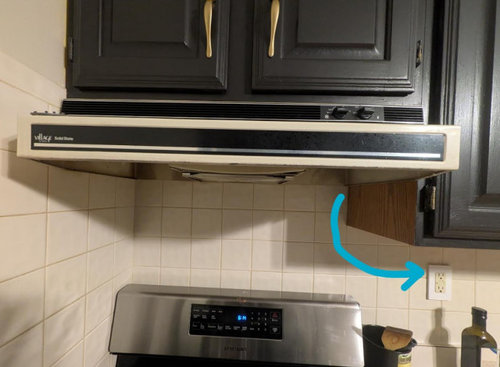
I am facing a challenge that I want to share with you to seek your suggestions.


I recently bought a house that has tile backsplash and also due to budget constraints I am not willing to install a new outlet for range hood in the cabinet above the range.


We cook 3x a day and with gas range, I am adamant at getting a range hood that is at least 600 CFM but also something that can be hard wired to home's electrical. The existing range hood is hard wired to electrical but then it is quite old and does not have enough suction.


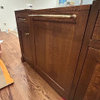
The closest outlet is near the second cabinet as shown in the picture that is an option if the range hood has a power cord that can be passed

from the side.


Does anyone know any range hoods that satisfy my needs? I tried searching on the internet but have not had any luck. Most of the ones that are over 600 CFM require outlet and ones that can be hard wired are less than 400 CFM.

Comments (39)

  • PRO
    8 months ago

    Keep looking and how is the one there wired ? Is it not hardwired

  • 8 months ago

    it is hardwired but has low cfm. any decent cfm hoods seem to have plugs.

  • PRO
    8 months ago

    it is hardwired but has low cfm. any decent cfm hoods seem to have plugs.

    So what's the problem? Install a receptacle (outlet, socket), and plug it in.

  • 8 months ago

    Hoods with controls that are wired to external (e.g. roof) blowers are hard wired as are the blowers to the hood (or some intermediate junction box). Further, a corded internal blower can be hard wired so long as one conforms to the requirements of the National Electrical Code (NFPA 70) in connecting the cord -- sans plug -- to a suitable box. Alternatively, one could mount a receptacle box within the hood and hard wire it.

  • 8 months ago

    Add the electrical box to the wall where the raw wire is coming out, install the oulet, and presto, buy whatever you want. Super simple. Just put the box in the right specified location. 10 minute job.

  • 8 months ago

    Thanks for your feedback. Perhaps I was not clear in my post.


    I am not willing to install an outlet in the cabinet above range due to the fact that it will require substantial tile work. Electrical panel is located in the basement right below the kitchen and the only way to install outlet/receptacle is to open the backsplash wall. I have already got an estimate from electrician.


    I have a newborn and cooking on a gas stove 3x a day (sometimes 4x) releases byproducts that the baby should not inhale. 300 cfm will not cut it. This is a high-performance Samsung gas range with a combined total of 56,000 BTU. The current hood is a recirculating hood that was installed in 2000.

  • 8 months ago

    While I appreciate your lack of time, given your message above, you really need to review the many hood threads here to understand what it is you really need, along with the make-up air requirement that goes with it. Unless you acquire a large recirculating hood like the VaH ARS, you will need an adequate duct to the outside, an overlapping hood entry aperture, and a means to bring in (perhaps heated depending on location) replacement air.

    With limited space an outdoor (roof of wall) blower is useful. We can go over all the requirements, but here is the basic hood summary. Note that this is not an inexpensive upgrade from the "nothing" that you presently have.

    A hood entry aperture of 3 ft x 2 ft (approximately) should adequately overlap your cooking zone (area of pan edge cooking plumes + gas combustion plumes). This nominal aperture is 6 sq. ft. An airflow of roughly 90 CFM/sq. ft. is desirable, which is 540 CFM. This is driven by plume velocity and only indirectly by range BTUh capability. Due to intrinsic fan blade characteristics, a rated flow rate of 1.5X this, or 800 CFM, is needed to overcome pressure loss in the baffles and imperfect make-up air supply, among other factors. Note that most locales, if actually doing proper code enforcement, will require MUA at 400 or more rated CFM.

    Also, as I noted earlier, if you have an internal hood blower circuit with cord, you can put a metal junction box inside the hood metal envelope to connect your power cable to your hood circuit.

  • 8 months ago

    I have this one 600CFM. https://www.ajmadison.com/cgi-bin/ajmadison/XOC30SC.html?utm_source=google&utm_medium=cse&utm_term=XOC30SC&gad_source=1&gad_campaignid=23350672559&gclid=Cj0KCQiA0p7KBhCkARIsAE6XlamzI30Se3rgyAIakHO0GUIlpyJVFjmytiZrtHzXNFq2RyBfemdA_LcaAp9rEALw_wcB

    Go to an appliance store, not a big box store and speak with them about your needs. They will also have installers who can correctly install without adding an outlet.

  • 8 months ago

    Please clarify: Is there an actual exhaust duct vented to the outside? Or are you planning to install one? It's hard to imagine someone installing the recirculating hood back in 2000 while ignoring an existing duct, but it is possible.

  • PRO
    8 months ago

    From what I understand a 600CFM range hood can be hardwired or plug-in depending on the model. Look for a model that can be hardwired.

    --------

    A 600 CFM range hood

    can be either hardwired or plug-in; it depends on the specific model's power cord, but many come with a standard 3-prong plug for easy outlet connection, while others might have a cut cord for direct hardwiring, though plugging it into a dedicated outlet is generally preferred for serviceability and code compliance, according to Proline Range Hoods, Hauslane, KitchenAid, and Futuro Futuro Range Hoods. Always check your hood's manual and local electrical codes, as a professional electrician is often recommended

    ----------

  • 8 months ago

    Provide a photo of how/where the current hood is hardwired.

  • PRO
    8 months ago

    Just replacing the hood will require replacing the old awful bathroom tile.

  • 8 months ago

    @Monique do I have to replace the tile to install hood? I thought there are hoods that mount to the top cabinet. Isn't that correct?

  • 8 months ago

    @dadoes will do once I disassemble it

  • 8 months ago

    @apple_pie_order I am positive that there is no exhaust duct vented to outside and I am planning to install one.

  • 8 months ago
    last modified: 8 months ago

    Thanks for clarifying the current situation and your plan for installing an exhaust duct.

    The tile looks like it could be one of Daltile/American Olean's classic colors that have been made for decades. If so, you may be able to patch it. A local tile dealer (not a big box store) is likely to have a full sample board of them. One advantage of that line of tile is that the company makes a wide selection of trim pieces in each color. There are several whites and several off whites available.

    https://www.daltile.com/products/wall/color-wheel-classic

    Some big box stores may also carry a few colors.

  • 8 months ago

    Thanks @apple_pie_order but I still don't get it why do I have to mess with tiles? I must be missing something.

  • 8 months ago

    Is this on an outside wall?

    Last summer we remodeled our kitchen, including the addition of an exhaust vent through the roof. It was done by an HVAC professional, and was not inexpensive.

    As for your electrical - if you have power in the cabinet now, you can either add an outlet (not at all difficult), or hardwire directly - also not at all difficult. If you are not comfortable with these options, hire yourself an electrician.

  • 8 months ago
    last modified: 8 months ago

    Hold on, are you saying this does not vent out through those cabinets above the hood? If so, the electrical is the least of your issues to address. You will likely be able to save the tile with a vent such as I posted above, but you do need to cut venting to the outside. What is in the cabinets above? The cabinets above mine are false fronts covering the venting to the outside.

  • 8 months ago

    The existing hood is a recirculating model if it's not vented to outdoors.

  • PRO
    8 months ago

    The existing cabinet is too short for a high BTU cooker and hood. It needs to be removed, because that's easier than altering or finding a replacement. Then you can use a chimney hood, add the ductwork, and take the tile up to the bottom of the hood. But, there's no point in actually keeping the existing tile with the amount of demo needed. Do something else.

  • 8 months ago
    last modified: 8 months ago

    The OP wrote "Thanks @apple_pie_order but I still don't get it why do I have to mess with tiles? I must be missing something."

    Here's what my post was meant to imply: If you do have to mess with the tiles, and they are one of the Daltile classic colors, it's possible that you will be able to patch new tiles in and not have to redo the whole backsplash. That will save money. Once the old recirculating fan is removed, you'll be able to see if the original tile is intact or missing a few pieces.

  • 8 months ago

    thanks all.


    -as I mentioned in my original post, the exhaust is not connected to outside vent. the current hood is a recirculating one.

    -i am not inclined to spending any resources on tilework. that is a hard no.

    -there is no electrical outlet inside the top cabinet.

    -i have a contractor who is ready to open the wall and connect a new hood to outside vent


    @Minardi could you please explain what do you mean by " The existing cabinet is too short for a high BTU cooker and hood."

  • PRO
    8 months ago

    This is not a 1:1 replacement. Just the ducting to make this work is probably more than a grand. Plus the hood. All for a range shoved against a corner with a 1984 kitchen around it. I wouldn't even consider spending the money that this would take for putting in the vent for a hood, with the range in that location. The whole thing needs to be gutted and redone.

  • 8 months ago

    @McDonald Enterprises thanks; how about if i replace the gas range with an induction one?

  • PRO
    8 months ago
    last modified: 8 months ago

    You need to go to anappliance store and talk to someone who understands what you are dealing with. I honestly do not understand the issue with the wiring the hood you have is hardwired so use that connection for the next hood . But you have bigger issues since the new hood needs venting how will that happen ? Where is this space in the house ? Is the range in an outside wall or do you need to go throught the roof?. You need someone to come and tell you what you need to do. BTW induction will require much more work for the elctrical usually so make sure before you go buy induction you get the electical in the home checked

  • PRO
    8 months ago

    I have an expensive recirculating exhaust hood and it's WORTHLESS. All the recirculating exhaust fans are worthless. They simply suck in smoke, grease, and smells passes it through a filter and sends them back into the room.


    You think you need high cfms but what you need is a vent to the outside and a reasonable cfm rating.

  • 8 months ago

    @Patricia Colwell Consulting the other side of this range is our yard and I am very confident of installing a vent on the exterior since contractor who was here confirmed that it was an easy job.


    @BeverlyFLADeziner I totally agree on recirculating exhaust. those do not work for households that cook 3x a day. I have already done my research.

  • 8 months ago

    Have you already talked to your contractor about make up air for fans over 600 cfm?

  • 8 months ago

    Do a pull out like the one I posted above but one that can vent horizontally. The one I posted can't but there are plenty out there that can.

    You can vent horizontally out the back of your house but you'll likely have take some of the above cabinet space to make the turn but it can be hidden behind the cabinet doors. That greatly reduces your cost to install and I doubt you'll touch the tile.

  • 8 months ago

    The existing hood has power from somewhere. Use that power for the new hood. Hardwire the new hood. Don’t get a blower that needs more amps than the existing circuit. Definitely vent to the outside. You may not absolutely need over 600 cfm depending on what you cook and how you cook it. I understand you don’t want to touch the tile and you shouldn’t have to, even if you have to add an outlet above the new hood.

  • PRO
    8 months ago

    Switching to induction doesn't eliminate grease from frying, aromas from food or the smoke if something burns. It still needs to be exhausted, though there's no denying gas is a dirty fuel that leaves a residue over everything in a kitchen.

  • PRO
    8 months ago

    Induction only deals with the bypass heat produced by gas burners. The heat that goes into the room, rather than heating the pan. The pan, the cooking, and the food cooked, stays the same. If you cook high heat spicy dishes, you absolutely need external ventilation, no matter the method of producing heat for that cooking. It's the cooking that needs to be vented.


    The issue is, what you need isn't just 1 "little" thing. You need all the everything here. And while I would ordinarily say, "don't let the perfect be the enemy of the good", the expenses required to be sunk into this as a place holder are very high, and will not translate over to the needed gut. It's throwaway money. No one would ever place a range against a wall in a new kitchen. It's not just the fire safety issue. It's the fact that there is no landing space on one side, and no way to even really use the left side well, with that wall there. Placing the vent ductwork with the range in that location, when it would obviously be changed and improved later, just wastes money. If you had the money to waste, you wouldn't be balking at doing the super simple things that have already been suggested as an easier DIY route, to hold you over.


    Your best bet is to probably change the way you cook, until you can change the cooking space.

  • 8 months ago

    Kiran, I'm not sure if this is a condo, I believe you've posted on a couple different houses. If it's a condo based on the range being pushed into the corner, be cognizant of allowing an external exhaust.

    It's a bit unclear on my part, or maybe a half-baked thought process on yours. If your concern is cooking 3x a day, having potential issues with a newborn, and the strength of the fan, then you will have to accept that there is some other work that will have to be done.

    • As stated by others, any hood over 400cfm requires a makeup air system. That is another outside access hole tied to the range hood which brings in outside air to balance the system when the range hood is on.
    • The recirculation function of any fan seems to go against your concerns with the baby. High cfm fans with recirculation (e.g. Tozmo's convertible spec) seems to be a bit self-defeating for the reasons you would want a high cfm fan to begin with.
    • A ducted fan will require modification or removal of the cabinet.
    • That duct will require an exterior exit, which is a lot of work or disallowed in many condos.
    • As far as any OTR products I've seen, a fan beyond the cheapest 80cfm recirculating hood will not have a cord that can be plugged in below the fan. The ones that have a cord will exit through the top of the unit, into a cabinet, which is where an outlet would be hidden. And, it would not make sense to jerry rig a hood to add an electrical box to the intake plenum of a hood, where the cord drapes down to the side in the way of cooking, and also as that is where the grease collects.
    • It also is not allowed to plug in your fan to that receptacle on the counter, as that is probably your SABC.
    • Most all non-corded fans allow the electrical to enter in the back of hood. Your existing hood has that same connection, via a whip, which is a cable which sticks out of the wall.
    • If you need to add an outlet to the inside of the cabinet, it looks fairly simple. Just remove (probably 2 screws to the wall and 2 to the adjacent cabinet) the upper cabinet. Move that whip up into the cabinet location, reinstall the cabinet, add a box in the cabinet. Worse case, there is a receptacle behind the range which can be fished from.
  • PRO
    8 months ago

    If this is a condo, none of what you want to do is likely to happen. They don't allow holes in their buildings by homeowners. There are certain sacrifices that need to be made when living in a condo, and others control over a large part of what you can do is one of them.


    I'd suggest opening the window while you cook as one of those compromises. You likely do not want to live in a condo long term, since you have a new baby. Moving to a single family home and putting your money into it, is a good goal. That's worth either modifying some of the dishes that you currently cook, or cooking with an open window for the short term for those dishes that you cannot modify or give up.

  • 8 months ago
    last modified: 8 months ago

    Thank you @3onthetree and @Rainbow Colors This is NOT a condo but a single family house. I will summarize all the points I gathered from this discussion in a few moments and thanks for your input! It is rather disappointing that my realtor did not catch it nor did the county building inspector catch it as it obviously seems to be against the code.

  • 8 months ago

    thank you all. looks like it makes sense to continue this discussion in my other thread which was originally about renovation ideas (kind of)


    key points that I am taking away:

    - continuing to have a gas range (or any range for that matter) in the corner is against the code

    - range hood that vents to exterior vent is a must

    - when connecting OTR hood to an outside vent, provisions should be made to replace the lost air


    Here is the other thread: https://www.houzz.com/discussions/6513669/ideas-on-remodeling-kitchen

  • PRO
    8 months ago

    You aren’t understanding things about building codes. They evolve over time in response to stupid things that people do. But no one makes people go back and bring existing buildings up to current code. Not until you start to change things. It can stay stupid and dangerous grandfathered in for 50 years, and not meet current code. But as soon as you want to add ventilation, or do new electrical, or deal with rotted out plumbing, you need to get rid of the stupid and dangerous.

    Kiran K thanked Monique