Software
Houzz Logo Print
bengz6westmd

Big Amer western larch Montana

8 months ago
last modified: 8 months ago
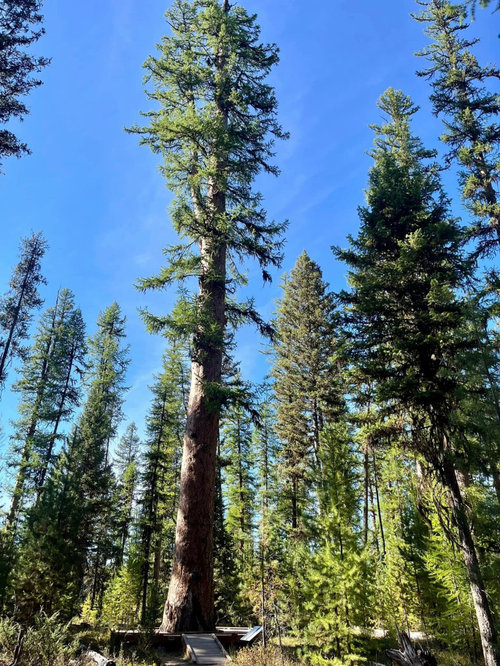
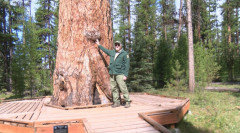
Larches have been in the discussions, so I post this giant American western larch in Montana. Really magnificent. Several surrounding trees look to be larches too.


Comments (20)

  • 8 months ago
    last modified: 8 months ago

    Wow! I've been reading about western larches even though I don't especially want to grow one. They seem like some of the biggest and toughest larches of all. If one looks at the picturesque Chinese and Himalayan larches, perhaps if there were ever ones this big, they were long ago cut down for timber. There's probably a combination of less logging pressure - since the western US has many other conifers to exploit - and maybe an innate tendency for other species to be more spindly. I should go scrounge up the pics I took of plantation larches outside Lock Haven, PA. They are probably at least on a similar order of magnitude height, but their trunks look like telephone poles! (they are presumably Dunkeld, or its parents: Japanese or European)

    It would be cool if someone came back and took that picture in fall.

    UPDATE: yeah I just asked New Google. L. o. definitely the biggest, baddest larch! GO AMERICA! lol Seriously though, it makes it kind of surprising to me that the UK adopted Japanese Larch as a plantation species, and not western Larch. I can only guess the Japanese ones grow faster? I'll have to research that one of these days, or ask pineresin!

    bengz6westmd thanked UpperBayGardener (zone 7)
  • 8 months ago

    UBG, I had a close friend who lived for a while in Lock Haven. Drove up there one time long ago during a Christmas holiday for a visit in a dang snowstorm. There ain't much flat areas around there other than the narrow valleys.

  • 8 months ago

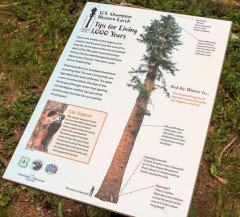
    It would be fun to read the plaque by the base of that tree, beng.

    The walkway around it presumably signals a remarkable specimen.

    bengz6westmd thanked BillMN-z4a
  • 8 months ago
    last modified: 8 months ago

    Bill you have a much better eye than me!

    bengz6westmd thanked UpperBayGardener (zone 7)
  • 8 months ago
    last modified: 8 months ago

    david, you were just mesmerized by the tree.

    Or maybe an eye checkup is called for idk. lol

    (I've spent most of my careers noticing details).

    Older pictures don't show the platform or the sign and some just the platform.

    'Gus is not only the tallest tree in the state of Montana, but he is also the tallest western larch tree in the world. Standing at 163 feet, two feet taller than the Statue of Liberty, Gus is a subtle local legend.'

    https://www.seeleylake.com/story/meet-gus-the-large-larch-tree/9470.html

    Not sure if this is readable.


    bengz6westmd thanked BillMN-z4a
  • 8 months ago
    last modified: 8 months ago

    Thanks Dave!

    They do continue to grow.

    I see on other pictures; there's not much clearance between the trunk and the platform.


    bengz6westmd thanked BillMN-z4a
  • 8 months ago

    My wife hates larches. she thinks they look like ”dead pine trees” in the winter

    bengz6westmd thanked L Clark (zone 4 WY)
  • 8 months ago

    'she thinks they look like ”dead pine trees” in the winter'


    They do. lol

    bengz6westmd thanked BillMN-z4a
  • 8 months ago
    last modified: 8 months ago

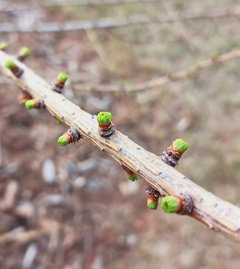
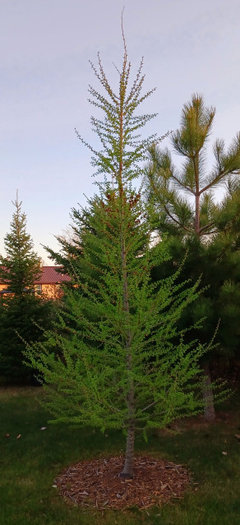
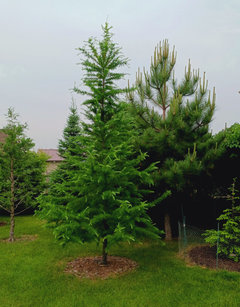
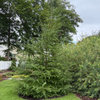
    I like the way my larix laricina, buds after looking like it's dead. My older (than me) neighbor thought one of my trees had died. But by mid-April, it sends out buds early and is the most frost-resistant tree I have ever had.

    4-20-2025:


    The buds are barely visible, just a green haze from a distance.

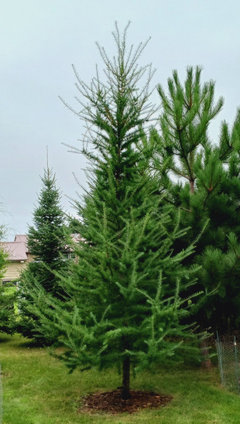
    But by first week in May, it really begins to show green when its tufts expand.

    5-4-2025:


    By middle of June, the branch tips elongate, giving the color of the tree a 'Fireworks' effect

    6-11-2025:


    And it grows like crazy.

    8-17-2025:


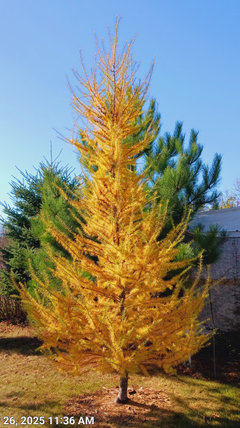
    Not to mention sometimes great Fall colors.

    10-26-25:


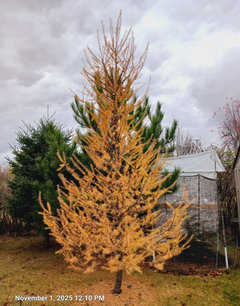
    It even mulches itself before winter!

    11-1-2025:


    I don't think you can find a tree with more desirable traits than a larch has.

    ;-)


    eta: I don't think I would plant one in my front yard, but you never know what I might do. 🤭

    bengz6westmd thanked BillMN-z4a
  • 8 months ago
    last modified: 8 months ago

    Larch wood is said to have the most combination of hardness and durability of temperate conifers, other than yew.

  • 8 months ago
    last modified: 8 months ago
    bengz6westmd thanked BillMN-z4a
  • 8 months ago

    FWIW, conifer expert Resin says L. occidentalis doesn't grow as fast as the European or Japanese larch...hence the reason it wasn't used it forestry there. Although growing on the eastern slopes of the Cascades, it's not really from a maritime climate. Still I wonder if hybridizing L. decidua w/L. occidentalis might not have produced a better hybrid for them. Oh well. The larch forests of the UK are mostly dead or dying now from SOD.

    bengz6westmd thanked UpperBayGardener (zone 7)
  • 8 months ago

    UBG, what's SOD? Sudden something Death?

  • 8 months ago

    Apparently, a typo.

    Should be SLD.

    bengz6westmd thanked BillMN-z4a
  • 8 months ago
    last modified: 8 months ago

    Sudden oak death is the accepted common name for the pathogen. The scientific name is P. ramorum. https://en.wikipedia.org/wiki/Phytophthora_ramorum

    In the UK, it affects larches.

    This is odd, obviously because conifers haven't been affected by it elsewhere, but even more so because that strain of Phytophthora is believed to be of Asian origins, but it's an Asian conifer (Japanese larch) that has been severely affected.

    bengz6westmd thanked UpperBayGardener (zone 7)
  • 8 months ago

    Thanks, for that info david.

    Just this morning I realized it was SLD only in the UK.

    bengz6westmd thanked BillMN-z4a
  • 8 months ago
    last modified: 8 months ago

    Well, crap, SOD is what killed a big white oak at my brother's house (where I'm at right now), and the big cemetery European larch I showed that died suddenly is a mere 200 yards from here, so it's possible it died from SOD! It took about the same amount of time for the deaths to occur, about 2 seasons.

  • 8 months ago

    Bill, I bet you already know this: Larix laricina was used to make mats to "float" heavy machinery working in bogs. Larch timbers were cabled together to make the mats. Typically an old style excavator called a drag-line would move the mats from behind, after walking over them, to the front of the machine.


    My dad was an excavator in Todd and surrounding counties, as was his dad, my grandpa. I wouldn't doubt it if you saw one of them plying their craft in a bog, or more likely near a rapidly developing lakeshore someplace in northern Minnesota over your many years there.

    bengz6westmd thanked artinnaturez8b
  • 8 months ago
    last modified: 8 months ago

    Quite possibly art!

    Even today, large, timbers, that look like railroad ties, only a lot longer, are still used for that purpose. You'll see them where highway work is being done along wet areas or ditching in the low ground when using excavators.

    Some of the old(er) timers have told me that larix L. was used for fence posts in swampy areas because even untreated, they wouldn't rot as long as they stayed wet.

    Some even said if a green larch post was set in the ground, it would sprout and begin to grow again but I doubt that would happen.


    Edit: There are back roads here, where Tamarack logs were once used to build corduroy roads, across the swampy areas. You can still see today, the ends of the logs sticking out at the roadsides or where the maintainers have dug too deep and exposed the still solid logs.

    bengz6westmd thanked BillMN-z4a