Software
Houzz Logo Print
mtnrdredux_gw

Microplastics in well water

last month

Has anyone had their well water tested for microplastics

Comments (36)

  • last month

    Hmm, had to test my parents’ well water twice, but I don’t recall testing for microplastics. Well sources can certainly vary.

    mtnrdredux_gw thanked bpath
  • last month

    We have not tested ours for microplastics, in fact we haven't tested it since we finished our build and moved in - 2017. Our well is deep - almost 800 ft. There are so many places we are picking up microplastics that any well water mitigation would be like slapping a band-aid on a bullet wound.

    mtnrdredux_gw thanked DLM2000-GW
  • last month

    Gee, I think of microplastics being in water that is easy to get too… river, streams, re-conditioned city drinking water, etc. I would never think to look for it in a well which taps into the aquifer. Is testing well water being promoted by the testers of well water?

    mtnrdredux_gw thanked bbstx
  • last month
    last modified: last month

    @bbstx not all wells are tapped into an aquifer, but there are reasons to test even deep wells - for contaminants, and water composition. Most microplastics that we are exposed to are in the air or our food. We can't get away from it.

    mtnrdredux_gw thanked DLM2000-GW
  • last month
    last modified: last month

    The impetus was a clip from some expert discussing 5 ways to reduce microplastics risk. Not a water testing co.

    They suggested a reverse osmosis system.

    Before I consider that, curious how significant this is in our own well water. There will be some, no question.

  • last month

    Mtn, you are a smart soul so you don't need me weighing in. However....my SO runs a large municipal water system, and I have heard enough about microplastics/PFAS to last me a lifetime. 🤣 My limited lay understanding mirrors DLM's comments. Certainly if your water tests through the roof, then maybe. But bandaid on a bullet wound is an apt description based on what little I know....


    This interests me, I will be curious what you find out. 😊

    mtnrdredux_gw thanked Ally De
  • last month

    Before we moved into this house (first house on well water) in 2025, we had our well water tested through Tap Score. (Local government testing was difficult to arrange and did not test as much.) The water tested against Health Guidance Levels, Maximum Federal Levels, and Maximum Federal Goals. I don't see anything specific that looks like micro plastics, and a quick google search indicates that EPA and WHO monitor microplastics, but that there are no federal Maximum Contaminant Levels, so that would probably explain why I don't see them on my test.


    It looks like Tap Score, the company I used, does offer a specialized microplastics test: https://mytapscore.com/products/microplastics-water-test.


    @Ally De does your SO's water system do any kind of filtration to try to eliminate microplastics? (Is that even possible?)

    mtnrdredux_gw thanked pricklypearcactus
  • last month

    A link to Reverse Osmosis and the resulting removal of good minerals as well as bad. Having an ” add back” system is generally the way to go .


    https://www.google.com/search?q=reverse+osmosis+filter+removes+beneficial.&rlz=1CDGOYI_enUS1149US1149&hl=en-US&sourceid=chrome-mobile&ie=UTF-8

    mtnrdredux_gw thanked HU-113737678
  • last month

    no, it would not be a part of standard testing

  • last month

    Not boring at all. I find it interesting. Thanks for the info!

  • last month
    last modified: last month

    For me, it started with this clip, 1 minute in : https://www.facebook.com/watch/?v=862567823413248.

    So then I looked up the 5 or 6 changes that can eliminate 80% of exposure.


    Based on information presented by Dr. Peter Attia in discussions on his podcast, The Drive, and related content, here are five things you can do to reduce exposure to microplastics and related chemicals like PFAS and phthalates:

    • Avoid heating food in plastic Heat increases the breakdown of plastics and the leaching of chemicals into your food and drink. Transfer food to glass or ceramic containers before microwaving or placing it in the dishwasher.
    • Opt for non-plastic water bottles Commercial bottled water can contain higher levels of microplastics than filtered tap water. Use reusable bottles made of stainless steel or glass instead.
    • Filter your tap water Using a filter, such as a reverse osmosis (RO) system, can help remove microplastics from your drinking water.
    • Use non-plastic food storage and cookware Store leftovers in glass, ceramic, or stainless steel containers. Avoid non-stick pots and pans, which often contain PFAS coatings, and choose alternatives like cast iron or stainless steel.
    • Choose natural fiber clothing Many clothes made from synthetic materials like polyester, nylon, and spandex shed microfibers, which are a major source of microplastic pollution. Opt for natural fibers such as cotton, wool, or linen when possible.
  • last month

    I would think deep wells - mine is 400' - would tend to have the water naturally filtered as water works down through the ground.

  • last month

    I got interested in this a while back, and eliminated all plastic storage containers (although the lids still all seem to have some plastic?), kitchen utensils, and water bottles. We don’t have well water. We do filter our tap water. Kinda feels like a drop in the bucket, esp give my 60 years of exposure, but I figured it couldn’t hurt.


    I tried to switch to all-cotton undies 🫣 but you know what, that’s not as easy as it should be.

    mtnrdredux_gw thanked Sueb20
  • last month

    Thank you @Ally De and @mtnrdredux_gw for the great information!

    mtnrdredux_gw thanked pricklypearcactus
  • last month

    @Sueb20, I’m with you. I’ve gotten rid of as much as reasonably possible. I kept my Tervis tumblers for water at night. With the lids, they don’t spill much or break when I knock them over…and I do that too often to count.


    I’ve come to the conclusion that it is impossible to go 100% no-plastic. All you can do is try your best.


    I’ve got several pair of 100% cotton drawers from Victoria’s Secret. They are probably as old as you are, but they are so comfy.

    mtnrdredux_gw thanked bbstx
  • last month

    The plastics that you get rid of continue to shed microplastic, don't they? Not all are recyclable, and I imagined even recycling processes shed microplastic.

    mtnrdredux_gw thanked bpath
  • last month

    “Drawers” LOL, bb!

  • last month

    I haven't and don't plan to.

  • last month

    I agree it would be impossible to eliminate microplastics, and I probably already have a few pounds in my system LOL. But the tagline "5 or 6 things to reduce exposure by 80%" got me thinking.

  • last month

    We do filter our tap water.

    do you have a reverse osmosis system, or do you mean something like a Brita?

  • last month

    I suspect that for anyone over the age of 40 or 50, the PFAS ship has sailed. I have nothing to back that up either. It is based solely on lifestyles and decades of exposure.


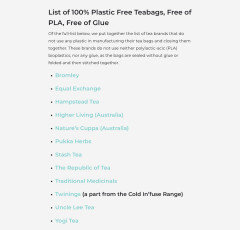
    From my plastic teething toys, to my cases of capri sun, sunny d, otter pops, and drinking hot water that had been in the garden hose, to growing up and eating all kinds of stuff in microwaved plastic, to drinking soda and bottled water that was shipped in hot tractor trailers, then switching to 3 cups of hot tea a day, only to find out that my tea bags are frigging LOADED with the stuff. Anyone ever make sun tea? It was about all I drank in the summer. That was pure PFAS. I have to have so much in me my joints are swimming in plastic.


    I honestly think my horse has left that barn. I no longer worry about it. Hopefully the science continues to evolve (yay science!!!!), and we can make a difference for future generations.

  • last month

    Ally De, thanks very much for your comprehensive informayion earlier and your reality check thoghts just now. Given the very small size of the microplastics I’m sure they are finding their way into aquafers every time we send anything down the drain or into the world.

    Fix the big ones as possible.

    I don’t expect to wear 100% cotton to yoga or the beach.


    Feeling dumb because I need to read how reverse osmosis really works. If it were economical, wouldn’t California & Israel be doing it more intensively?

  • last month

    Feeling dumb because I need to read how reverse osmosis really works. If it were economical, wouldn’t California & Israel be doing it more intensively?


    I live in an rea with exceptionally hard water as the aquifer is lined with limestone. Most people have water softeners for the whole house. I use potassium salt in my softener which does not improve the taste of the water so we purchase RO water for drinking. We do not do it because of microplastics, but because of the taste. Every so often people inquire why the water system does not do more to filter the water at the source, such as RO. Some of the answers are because of cost which comes down to many factors. One, it is not a strict 1:1 ratio of water produced. It takes several gallons of water to make one RO gallon which is wasteful in an arid climate. You do not RO water to flush the toilet or irrigate a garden. It would also increase expenses beyond what is necessary for everybody, as noted above.


    We considered an RO system to use at the kitchen sink. The plumbing for it is not complicated but the filters do have to be changed which is just one more maintenance issue. The filters are also not cheap. We did the math and we can grab water from the water dispenser for .35/gallon and I just add it to my errands. It is however, stored in a large plastic jug. Some people in our area have water delivered by Culligan and the like. RO water, like everything, has it's pros and cons, but on a large, water system scale, is not practical or even truly necessary.

  • last month

    Ally, care to share what you know about PFAS in tea bags these days? I had read about it a few years ago and saw some well-known tea bags contain PFAS. Do they still or have their manufacturers done something to eliminate it? What tea do you like that doesn't contain PFAS? Thanks!

  • last month

    I don't know what RO water is, but is it delivered in plastic jugs? What about people's water .pipes in their homes? Seems like most are plastic now. Seems like an uphill battle to worry about platics in drinking water when literally everything else is plastic.

  • last month

    Bluebell, I honestly don't know. :-) I recall reading the same information that I think you're remembering, and the list was full of common teas - including ones that I drink. I am down to one cup of hot tea in the winter evenings only and gave up worrying about any exposure from that.


    Oly - absolutely. Many homes (and even many municipalities!) have plastic water supply lines. However this comes up a fair bit in the water world. People mean well. But legislators and the general public come up with all kinds of ideas about ways to save the world, and eliminating PFAS from drinking water is a hot topic du jour. The people who run these systems tread carefully. They don't want to come off as not caring about public safety because that is their #1 concern. The cost to get it out of public water will be astronomical, and the world we live in right now is still pretty much encased in plastic. The general consensus among the water purveyors is that the cost/benefit isn't even close right now - but again, as both science and the world keeps evolving eventually it will make sense. Hopefully! Because that would be good!

  • last month

    Olychick, RO is reverse osmosis water. It is generally delivered in plastic jugs. One can get glass bottles for it,. I could maybe carry a 3 gallon glass bottle of water but I would not want to be swinging around a 5 gallon glass bottle. In my area, the RO water is not used for plastics but for the minerals in the water that affect the taste.

  • last month

    An article in The Guardian 1/13/26 doesn't deny that there can be microplastics in the body, but questions the quality of the studies that have been done so far.


    https://www.theguardian.com/environment/2026/jan/13/microplastics-human-body-doubt

  • last month

    I saw that article too. It is interesting, and aligns with my SOs stance that the science in this is still very new and evolving, and much more solid information is needed.


    The impacts of things like lead and arsenic (and so many other things they test/treat for!) in drinking water is understood, there is a general consensus what is safe, what levels are not, and the science is there to inform decisions. The microplastic/PFAS thing is a hot topic - but rigorous, useful information is apparently slim. 🤷‍♀️

  • last month

    My sister is an engineer and works in the water resources arena, and she has schooled me on what I can do to minimize exposure to microplastics. I do what I can do. I listened to a podcast about a year ago, and it was so overwhelming. My own take is reduction in consumer consumption, which I think would do a lot for this world.

  • last month

    As I said I agree that my body is probably 20% microplastics already, and eradication is impossible. Just curious about easy things to do that might help.


  • last month

    Mtn, the younger generation has definitely gotten the memo. They're all walking around with their Yeti and Stanley, and it's so nice not to see so many plastic water bottles as we did years ago. Beauty products have gotten cleaner, clothing is heading toward sustainability, cookware is safer... at least we're becoming more aware. That is hopeful.

  • last month

    Yes, and if I had a baby I would probably get pretty extreme about the subject.

  • last month

    Skipping down to comment - no well water here, but we've been using a countertop distiller for years now, and I'm feeling validated because we now know it removes microplastics.

    FWIW, and forgive me if this was mentioned already, but recently, I've seen some reporting that the studies finding so much micro- and nano- plastics in our bodies, etc. appear to have some flaws.