Software
Houzz Logo Print
neonzeus

Need suggestions for a possible accent wall to solve a drywall issue?

5 months ago
last modified: 5 months ago
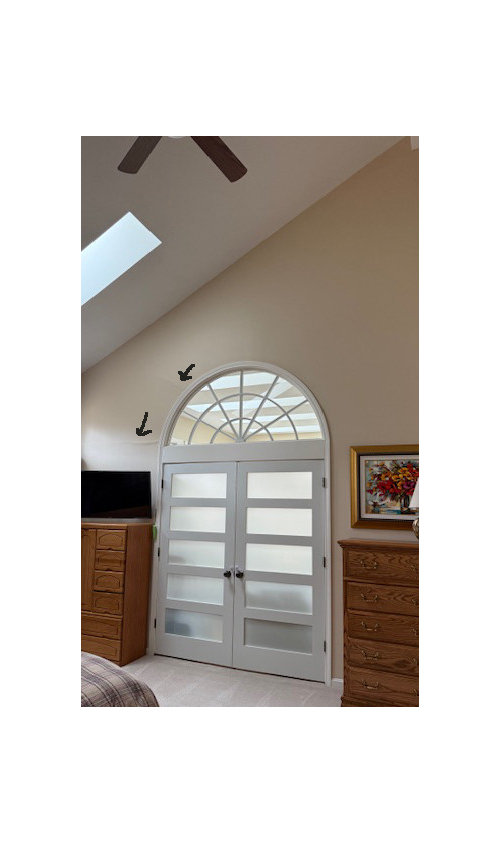
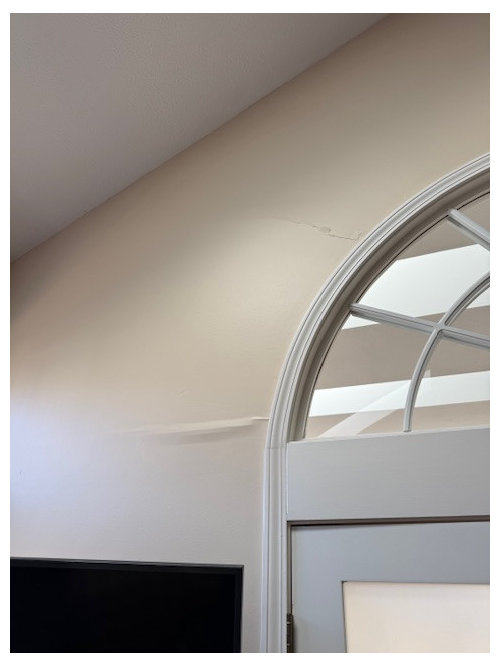
I'm struggling with a solution for the master bedroom in my 35-yr old house (I've lived here 7 years) and desperately need some ideas. The room is very large, with two skylights & a two-story cathedral ceiling. The wall facing the bed has french doors and a glass arched window above them, going out to a 4-season sunroom. About 6 mos. ago, I woke up to two large stress cracks by the arched window. A structural engineer inspected the walls and the basement. He concluded there was no structural problem and said these cracks are common from settling in older homes. I went ahead and got a reputable painting & drywall company to repair the wall. Well...within 3 months, the same cracks are back (there were no cracks in the drywall in the sunroom). I'm wondering what options I have. Do I have to just patch it each time? Is it practical to replace the drywall pieces with new drywall and tape instead of patching, so I might get at least a few years out of a repair? Or is it possible to cover the problem wall with an accent of some kind? A contractor has warned me that a heavy facing (like stone) wouldn't work on such a large wall. Would a wains-coating or wood accent wall be a possible solution, such as covering the drywall with oak (and would I need a carpenter to do that?). Is a wallpaper accent wall feasible for such a tall wall? Scaffolding would be necessary for the project. I expect to be in this house for another 7 years. Thank you for any construction or design tips!


Comments (19)

  • 5 months ago

    Have you called the head painter back to take a look? They may have alternative ideas based on their experience with other houses with similar settling.

  • 5 months ago
    last modified: 5 months ago
    I hate cracks. Truly.

    That said, though, my first thought is that attaching anything directly onto the wall would be a mistake. Your expert said it will keep happening, right? And then the repair would be more complicated.

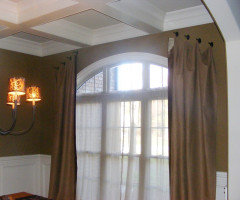
    Have you considered any kind of window treatment which would help conceal the problem area? Obviously the curtain rod would need to extend over the wall. Even semi-sheers would help.

  • 5 months ago
    last modified: 5 months ago

    As much as I liked the painting company (it was recommended by the realtor, painted my home after I bought it, and has lots of 5-star reviews), they're being a little evasive. They said they've never heard of this happening before and guess it's been caused by extreme weather this winter (NE Ohio). They suggest a wainscoating of some kind to cover persistent problems -- but they said they don't have a contractor to recommend. And the one contractor who has come to look at the wall told me to decide what product I'd want to use, and then he'll give me an estimate. The job didn't seem to be big enough to interest him.

  • 5 months ago

    Would an increased snow load this winter make a difference? If so, waiting until late spring to let things warm up and dry out may be a good idea.


    Has the drainage changed? Drainage and related settling near the house can also be affected dramatically by tree removal.


    You can take photos of the cracks every month to track changes so you can decide when changes have stopped and you can spackle and touch up the paint.

  • PRO
    5 months ago

    If you furniture were placed in a different layout you could use drapery panels to hide the issue.


    For a fairly modern home, that many drawers inside a bedroom are not typical. Clothes are usually confined to closets in upper scale homes.

  • 5 months ago

    Apple_pie: Good idea to take pictures, so a contractor will be able to see the whole picture - thanks for that tip.


    The two cracks have been in the same place both times. The structural engineer concluded it was just age-settling and seemed to think simple maintenance with flexible spackle was sufficient. I'm wondering whether I should just get a contractor to completely replace the drywall panel(s) that is settling/moving, or in the alternative - if there's some kind of architectural element like paneling, shiplap etc. that might work so I don't have to keep doing the repair? The first repair incl. the paint touchup was about $1,500.


    Thanks to Beverly & littlebug for their curtain suggestions: but the goal is to actually fix the drywall or use an architectural element on the wall instead of just hiding cracks from sight. I could be in this home for another 7 yrs or so. Pesky buyers have been known to eventually look behind curtains LOL.

  • 5 months ago
    last modified: 5 months ago

    1- Drywall repair in a midwestern climate is outside my area of expertise. But I can tell you that it takes me under an hour on successive days for me to spackle, sand and paint my house's recurring earthquake cracks over lathe-and-plaster to a good-enough level in one room. If I were going to sell, I'd have it done to a higher level. Perhaps you could decide if a "DIY good enough for now, do it professionally later" strategy would work for you, after you see what happens in the next few months.

    2- I suspect that putting in a patch of new drywall would shift the cracks to another location if the settling continues.

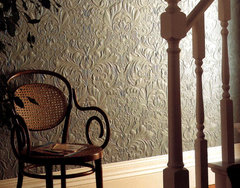
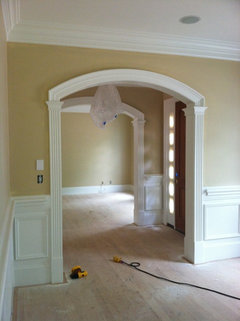
    3- You could consider adding a thin, wider trim to the door frame, wide enough to cover the cracks, all around the arch and down to the floor. Or use a paintable anaglypta-type embossed wallpaper with a thin finishing border to achieve the same effect.

    Anaglypta and Lincrusta Wallcoverings and Borders · More Info


    For more images of arched trim, do a google image search on "wood trim arch".


    Arch Doorways - wood arch trim from CurveMakers · More Info


    neonzeus thanked apple_pie_order
  • 5 months ago

    Wallpaper will not work over those cracks. It will crack right along with the drywall. New drywall would most likely crack in exactly the same places. I would have the cracks professionally filled, and then use the mesh self stick tape over them, and then drywall mud and sanded and primed and painted. Even then, it may still happen again, every time, your house moves a little.

    neonzeus thanked cat_ky
  • 5 months ago

    I think I would do Beverly’s curtain arrangement for now and ignore the issue until you get ready to sell. Then fix it. But be sure to list the issue on your disclosures sheet in your sales documents.

  • 5 months ago

    Information that I gleaned from looking online says that persistent cracks are better repaired with a setting compound or "hot mud" instead of joint compound. It dries much harder and is resistant to cracking.

    neonzeus thanked katinparadise
  • 5 months ago

    Did the engineer use a laser level in the basement? I have a house in western PA and had a problem with water seeping into the basement but upon inspection found that the front corner of the house had sunk over 2 inches. We had just a few hairline cracks in the plaster above.

    neonzeus thanked Karen
  • PRO
    5 months ago

    I would want to remove the drywall to see what is happening there . Then maybe a permanent solution could be found . Are you in earthquake zone somehow.Has this cracking always been an issue for the last 7 yrs or just started ?

    neonzeus thanked Patricia Colwell Consulting
  • 5 months ago
    last modified: 5 months ago

    Lorraine & Patricia: I think you're both right. The top crack is actually on a seam too. It makes sense to remove that piece of drywall to see what's going on behind it, since both of its seams keep failing. And it would obviously also be a lot cheaper to repair drywall than to cover up such a large wall (although a cover-up accent wall to never have to go through this again was my initial preference!!!). That portion of the bedroom is 15' wide X 20'+ high, so wainscoating etc. would probably end up being much more costly than just dealing with this issue as a drywall fix.


    Patricia: Not in an earthquake zone. I had no drywall cracks in that room for 7 yrs (there have been 2-3 small ones in other rooms of the house over the years, which were easily repaired with no problem). That's why I obtained a structural engineer's inspection when the large cracks on the seams of this piece of drywall showed up overnight. I didn't get them repaired until AFTER the structural engineer's report. I sure didn't expect the seams to fail again within 3 months. 3 years maybe ... but not 3 months.

  • PRO
    5 months ago

    Covering it will not address what the cause is , I always want to know why something starts happening all of a sudden. Could be moistureswelling th frame wood for instance . No matter what I would want to know what is behind that wall.. It sounds like the drywall repairwas just remudding which is a band aid at best


    neonzeus thanked Patricia Colwell Consulting
  • PRO
    5 months ago
    last modified: 5 months ago

    The frame of the door is the weakest point. Second, even gouging this out to the studs may not solve the issue, and you don't mention what "fix", or how deep they went with the fix.

    There's a stress crack at the entrance of my dining/kitchen, right at the corner, and I long ago gave up and it's just "there" .. It has been dug out, filled , patched, skimmed three times at least, and returns every single time. It's invisible in the kitchen, as that has a wallpaper......it's only seen on the dining side. and the kitchen paper has NOT budged- not even at the second opening to pantry closets which also had cracks.

    If you're staying seven years? I'd enjoy a great Phillip Jeffries vinyl grass cloth and paper the whole room. These are over fifty inches wide, are less expensive than their usual 36" wide .

    You can't really see a difference, there are amazing selections and incredible colors.

    You prep with "Stress Crack Tape, , a Vinyl designed to accommodate movement in the wall, unlike mesh drywall tape. Did they use this? Any of the painters?

    You might want to ask what they used, try one more time.

    Houses settle- beneath the drywall lie wood studs susceptible to movement with humidity change. You have a bedroom skylight, the door opens to a sun room and despite it is a 4 season space has no window covering? The door is closed most of the time?

    Call that issue one. : ) Different humidity levels. ........even different temperatures.

  • 5 months ago
    last modified: 5 months ago

    I just noticed you said the repair was done only 3 months ago? If yes then I am going to have to question the installer and a bad repair job because that is definitely paper tape lifting on the left horizontal straight line. I have to wonder if he just did a crappy job and if the job was done right you would not be questioning the wall at all. If you were to shine a strong light along the wall to the left past the lifting I wonder if you can see the tape lines? It almost looks like no feathering of mud was done at all ontop of the tape. If you were to take a knife and slice away the tape close to the frame of the door where it is starting to lift on the horizontal line and looked under the tape I bet you would not see much mud at all on the tape OR the wall so once it fully dried out it lifted. SO is it an installer issue or a wall issue? My feeling on the lower horizontal it is a installer issue but I can not say the same for the top one.

    neonzeus thanked Lorraine Leroux
  • 5 months ago

    Jan: Thanks for the suggestions & for sharing your experiences. I do expect to be here 7 more years. The bedroom's doors to the sunroom actually aren't used much. The "sunroom" has transoms & french doors that are always open to a living area. It has double patio doors with more glass transoms on two walls, 5 skylights, window treatments on the patio doors & heat vents.


    The master bedroom also has a wall with several windows & a direct-vent gas fireplace, a door to the hall, and multiple architectural details (the picture is only of the section of the wall with the problem). It has 20+ ft ceilings, with a few skylights. It's a really large room. After 7 yrs with no problem, both cracks appeared one morning. Unfortunately, I didn't pay enough attention to the painter/drywall contractor's repair after the Structural Engineer's report. I'll be asking a lot more questions this time!!!


    Right now, my plan is to have a general contractor open up the wall to see if the framing is secure and if any causation is evident -- and then replace the affected piece of drywall using stress crack tape! The cost of another drywall repair will still be less than wainscoting, shiplap etc. But if the new repair quickly fails again, I'll do something more permanent, such as trying the wallpaper tip or reviving that accent wall option ... perhaps even removing these french doors & the arched window completely.

  • 5 months ago

    Hi, I dont know if this is true, but in may be. I heard that trusses expand at a diffrent rate than a stud wall. That could be the cause of your problem. If so maybe put some nice moulding over the crack, secure it on one side and let the other side flote. Good Luck Woodbutcher

    neonzeus thanked woodbutcher_ca