Software
Houzz Logo Print
hkerrigan8374

Bannister Up to Code?

12 years ago
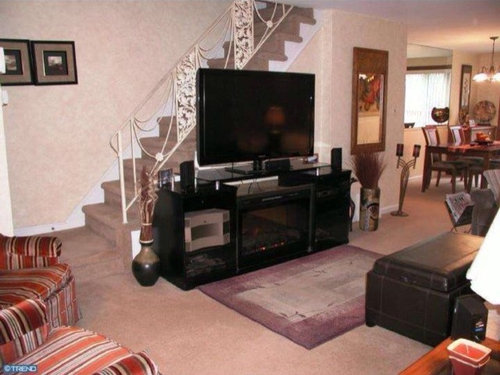
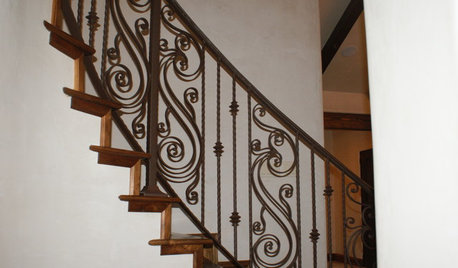
A friend said that this may not be up to code because of the large gaps, is this true? The home inspection is being done this weekend and would love to know if this is true or not before meeting the inspector. Thanks!

Comments (16)

  • 12 years ago
    I would google staircase to code to see if it gives a description.
  • 12 years ago
    I would think that they are correct. I don't know the code but I think it has to be small enough space where a baby/small child cannot get their head stuck through the gaps in the vertical post. It's kind of ugly too....I would consider replacing it.
  • 12 years ago
    last modified: 12 years ago
    International Residential Code

    R102.7 Existing structures.
    The legal occupancy of any structure existing on the date of adoption of this code shall be permitted to continue without change, except as is specifically covered in this code, the International Property Maintenance Code or the International Fire Code, or as is deemed necessary by the building official for the general safety and welfare of the occupants and the public.

    R102.7.1 Additions, alterations or repairs.
    Additions, alterations or repairs to any structure shall conform to the requirements for a new structure without requiring the existing structure to comply with all of the requirements of this code, unless otherwise stated. Additions, alterations or repairs shall not cause an existing structure to become unsafe or adversely affect the performance of the building.

    R312.1.2 Height.
    2. Where the top of the guard also serves as a handrail on the open sides of stairs, the top of the guard shall not be less than 34 inches (864 mm) and not more than 38 inches (965 mm) measured vertically from a line connecting the leading edges of the treads.

    R312.1.3 Opening limitations.
    Required guards shall not have openings from the walking surface to the required guard height which allow passage of a sphere 4 inches (102 mm) in diameter.

    Exceptions:
    1. The triangular openings at the open side of stair, formed by the riser, tread and bottom rail of a guard, shall not allow passage of a sphere 6 inches (153 mm) in diameter.
    2. Guards on the open side of stairs shall not have openings which allow passage of a sphere 43/8 inches (111 mm) in diameter.

    http://publicecodes.cyberregs.com/icod/irc/2012/icod_irc_2012_3_sec012.htm
  • 12 years ago
    We are aware that it is ugly lol we want to replace it, the reason I'm asking if it is up to code is because if it is not, the seller is responsible for fixing it
  • 12 years ago
    @ helping hands, your explaination seems to be misleading. Read R102.7.1 above. For example, if you add an air conditioner, and a deck to the back of the house (with a permit) you do NOT have to bring the stairs or any of the remainder of the house up to current code standards as long as it was legally put in and up to the standards at the time it was built.
  • 12 years ago
    I've purchased several older homes, and basically this is my experience in this situation with the railing. The inspector will come in and see the railing and tell you something to the effect that it's not really the current standard and for it to be safe you would want to fix it. After the inspection you get to go to the seller and tell them you want them to replace it in order for you to purchase the home. The seller can either fix it (or not) leaving you the option to accept it as is or walk away from the deal. It never hurts to ask the seller to fix things, but be prepared for things to go either way, there is really nothing that says a seller HAS to fix anything, or at least that's the way it worked in the 6 states I purchased a home in with conventional mortgages , my understanding is that some loans require different conditions for a property to qualify.
  • PRO
    12 years ago
    its likely grandfathered in....meaning they will not have to change it.
  • 12 years ago
    Aw man, I was hoping that if it wasn't up to code they would have to fix it. The seller has been in the home since a couple years after it was built and I'm going to assume it was up to code then.
  • PRO
    12 years ago
    its cool that the house has been maintained by one owner for so long. they probably loved their home. thus didnt even notice the railing.
  • PRO
    12 years ago
    wonder if the carpet is up to code hahaha
  • 12 years ago
    One thing to keep in mind too is that even if they do decide to change it out they don't necessarily have to do what you like. In theory they could just frame a 2x4 half wall and sheet rock it. I would look for a concession so that you could replace it with something you really like. check out agsstainless.com we make a pre-fabricated stainless cable rail system that you can install yourself after you own the home. you can get an estimate and then take it to the sellers to see if they'll cover it. Even if they aren't required to do it, if you ask nicely they might work with you.
  • 12 years ago
    The stair does not blend in with the room at all. Just keep it simple and replace it.
  • PRO
    12 years ago
    @ Fred S - I agree with your statement in part, but if you read R102.7 "...as is deemed necessary by the building official for the general safety and welfare of the occupants and the public." In my jurisdiction, our building inspectors would take one look at that railing, and if we had a permit pulled, they would ask us to correct it. As you know, they have the authority to compel us to correct issues that they deem a safety concern.
    I believe that Katie Gooding has the best approach. Just kindly ask the sellers to correct it after the home inspection and then suggest by picture or other method a preferred replacement if they are open to that.
  • 12 years ago
    last modified: 12 years ago
    Just a comment on buying a house that the sellers have lived in for many years. It is easier to agree to a credit in escrow to fix some things than to have them done during escrow. Disruptive replacements of railings and carpet can be done in the interval between close of escrow and move-in (I'm assuming the railing is grandfathered in). Other repairs such as adding GFCI outlets or replacing a leaking garbage disposal can be done while the original owners are still living there. Buying and selling do not have to be adversarial. Finding a way for both to be satisfied will make it a good deal for all concerned.
  • 12 years ago
    last modified: 12 years ago
    I always lobby for a credit or reduction in price and let the buyer fix everything. I've done this when on both sides of a transaction.

    Coming to an agreement on what it may cost to fix/replace something and crediting that money to the buyer lets the buyer choose the repair company, oversee the work, etc. It also eliminates the oft used buyer argument of "Gee, the seller chose a slip shod repair company and I'm not happy!!" and gets the seller out of the equation if the buyer chooses a "fly buy night" outfit.

    It also has the buyer at the forefront in the event of any follow up work is needed. They're the original customer.