Software
Houzz Logo Print
zlong13

Thinning St. Augustine Yard

10 years ago
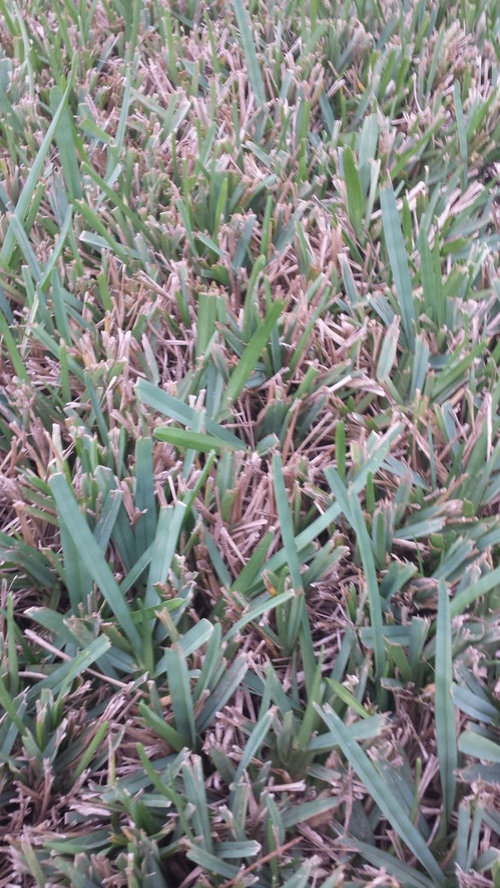
Hi all, long time lurker first time poster in Tampa, FL. I’m hoping you can help get my St. Augustine
Floratam yard back in shape and look like some of your yards. I’ve run into a “thinning” concern that I can’t
seem to figure out. It seems the
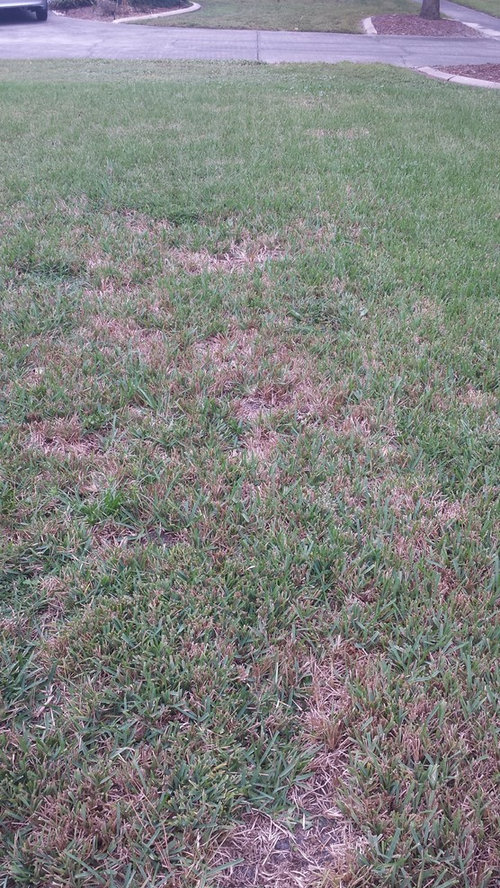
Floratam is slowly dying off within healthy areas (see pics below). Here are some details without going overkill. Thoughts on what it could be and
recommendations for repair are greatly appreciated!

-Sodded the yard in May 2014. It looked great until June of
this year.

-Record rainfall in Tampa from April through about July.

-The thinning started with a few isolated spots and then
slowly covered 50% of the yard

-Thought with all the rainfall it
was a fungus, sprayed Honor Guard per instructions in June. No noticeable impact.

-Performed the grub test and chinch
bug test and came back clean. Some
evidence of webworms, so sprayed Talstar just to be safe in early August.

-Fertilized with Milorganite in April and May. I ceased fertilizing when the thinning
occurred, since the yard appeared under stress.

Soil Test Results from UF

pH = 6.5 which is within spec for my area

P = 92 (High)

K = 44 (Medium)

Mg = 176 (High)

Ca > 1946

I know it is late in the season to do anything now, but
hoping to have a game plan in the Spring to get off to a running start. Thanks!


Comments (13)

  • 10 years ago

    The grass that is green looks great, but that is often the case with Floratam. That stuff grows so fast in full sun that it can outrun diseases. It still can look poorly, but it doesn't go directly to all-round dead like with the dwarf varieties.

    What is your normal watering schedule when it isn't raining? How often and for how long do you water? I ask because it looks like the entire lawn is water stressed.

    So you dug up a square foot in the bad area and did not find more than a dozen grubs? Is that correct?

    Would you characterize your soil as pure sand or is there anything else mixed in? Is it white or does it have lots of black (organic) particles mixed in?

    What is your normal fertilizer schedule? What do you normally use and when do you apply?

    You can fertilize with organics any time. If you can find corn meal (at a feed store) or corn flour (harina de maiz at a grocery store catering to the Hispanic community), those have a natural anti fungal quality that might help. Corn is an organic fertilizer, too, so it will always help one way or another.

  • 10 years ago

    Thanks Dchall, that is reassuring to hear about it not being fungus or bug related.

    I somewhat ruled out a lack of water/heat stress since we had so much rain, but it has definitely been a warmer than usual summer. During the summer, I usually water every 5-7 days, unless I see the leaves folding in half and getting that blue tint, which in the hottest weeks might be every 3 or 4 days. I water long enough to put down between 3/4 to an inch at a time. The winter sees the same amount of water, but might be every 2-3 weeks, depending on the temp. The top portion of the yard is relatively flat and then it slopes gently toward the street. Maybe its running off with too much water at once?

    I did dig up a square foot and looked in about the top 2-3 inches of the top soil for grubs. At the time, I only found 3 or 4 of them, so it passed the test as I read it.

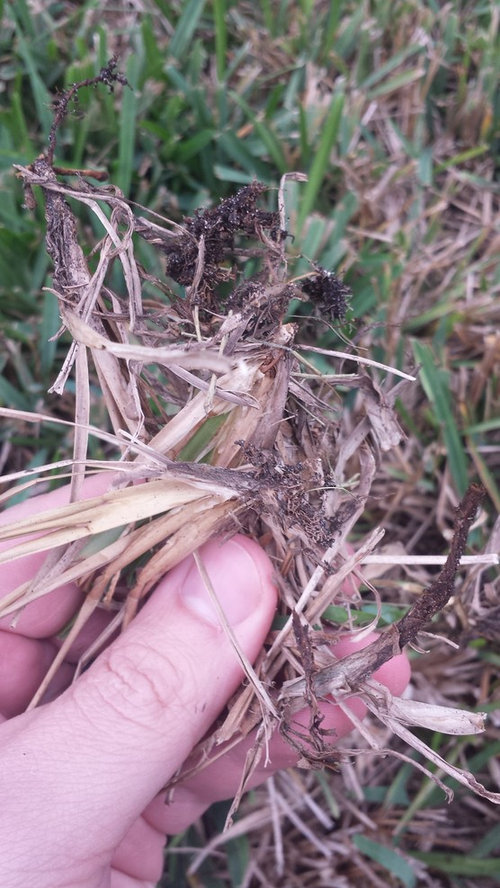
    The soil has a more organic look, more black with a hint of light sand (see pic). This seemed to be the case across the board. Before I sodded last year, I had a decent look at the entire yard, and didn't come across any anomalies for soil consistency.

    I appreciate the recommendation on the corn meal and flour, I will read into that more. For the first year after the sod was laid, I put down Lesco (24-0-8 I believe) fertilizer 3 or 4 times around the major holidays. After more reading, I started with Milorganite hoping I could lay it out more often and keep the Floratam fed.

    Should I just keep it watered and let it recover on its own? Dig out the dead stuff? Any other suggestions to get me prepared for the recovery phase?

  • 10 years ago

    The Floratam blades look amazing, I've never seen it up close. It looks like a sharp new blade should probably be on your shopping list from those frayed tips, but if it were my yard, I'd be soaking that with whole area with baby shampoo once a week & lightly raking out some of that dead stuff. How deep is that nice black dirt layer & what's below it? I had a big, dry compacted section in the center of my yard the first 2 years or so.

  • 10 years ago

    Thanks reeljake. I actually have a sharp blade in the garage ready to go on, just tried to get the last few cuts of the season with the old dull one.

    I test the moisture content of the soil every once in a while with a 6" screwdriver and never have any problems getting it all the way in. I like the idea of loosening up the soil, but mine is actually pretty good. Although, it might help get some of the old dead grass loosened up to make removal easier.

  • 10 years ago

    Thanks Dchall, that is reassuring to hear about it not being fungus or bug related.

    I did not mean to imply either of those things. I was asking for more information to help determine what it might be. With your watering it would not appear to be disease, but it sure looks like something is going after the base of the plant. Disease or insects are still on the list. How did you check for grubs and how did you check for chinch bugs?


  • 10 years ago

    For chinch bugs, used an old can and placed it in an area that was half dead half alive, filled it with water and soap and waited for any of them to float to the surface. I may have had one or two, but tough to be certain.

    For grubs, I chose a an area half dead half alive and just searched the soil diligently. Like I mentioned, I found a few, but definitely far from an infestation.

    I've read this is acceptable, but wondering if even seeing chinch bugs or grubs warrants action.

  • 10 years ago

    I live near your area too and am having what appears to be very similar issues. Check out my thread too
    https://www.houzz.com/discussions/st-augustine-grass-brown-straws-dsvw-vd~3546484

  • 10 years ago

    You'll want to check for chinch bugs right at the edge of the damage circle, where healthy grass meets unhealthy. I prefer to place an old white sheet over freshly watered lawn and check the underside of the sheet next morning. They are red but very small. I usually only see them when it's really hot (over 100 for an extended period) and dry.

  • 10 years ago
    last modified: 10 years ago

    I live in Central Florida and have Floratam in the front yard. My issues look very similar to yours, but the spots in my yard don't seem to be spreading anymore and it doesn't seem to be filling in. The roots look rotted out and decayed in the bare spots in my yard. Have yet to figure out what it is, but i'm going to try corn meal here soon. Just got the Floratam put in within the past year and haven't been a fan of it so far.

  • 10 years ago

    Any updates on your problems?

  • 10 years ago

    My thread is similar and I live in same state too. https://www.houzz.com/discussions/st-augustine-grass-brown-straws-dsvw-vd~3546484

    My pest control guy said it is gray leaf spot. But my yard is mostly under a large oak tree. So it does not get full day of sun. I keep it cut long to allow more of grass blades to get the most out of its sunlight. Mine is not getting thinner, but its not super thick either (not like how how "4 weeks" photo shows).

  • 4 years ago

    Were you ever able to figure this out? i live in Tampa and I’m having similar issues with my St. Augustine, and I’m at my wit’s end trying to figure out what it is. My problem areas look just like your pictures.

  • 4 years ago

    Dylon, just because your lawn looks the same does not mean your situation is the same. Please start a new topic with pictures of your lawn, your location, and anything you have done to try and treat the problem.