
Herringbone
The herringbone pattern is composed of alternating rectangles arranged in zigzags

Whether it's on cloth, brick or a parquet floor, the herringbone pattern gets its name from the crisscross shape of a herring's skeleton. Not to be mistaken for a chevron, a herringbone pattern is distinctly created from 90-degree angles only. The interlocking geometric shape of a herringbone arrangement creates intense strength. It spreads the load over twice as much area, absorbing high compression.
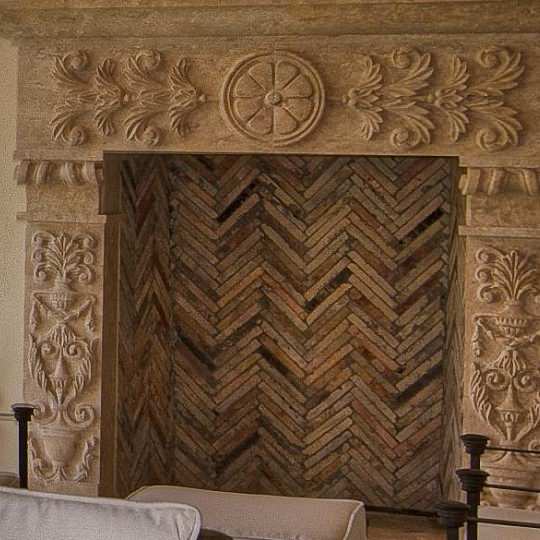
The interlocking bricks of this firebox are laid in a herringbone pattern, which was used as early as Roman times for strong paving units.
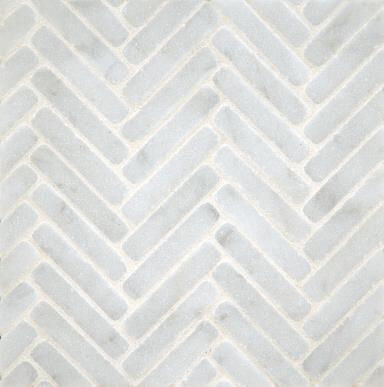
A true herringbone pattern is comosed of alternating rectangles woven together in a zigzag pattern.
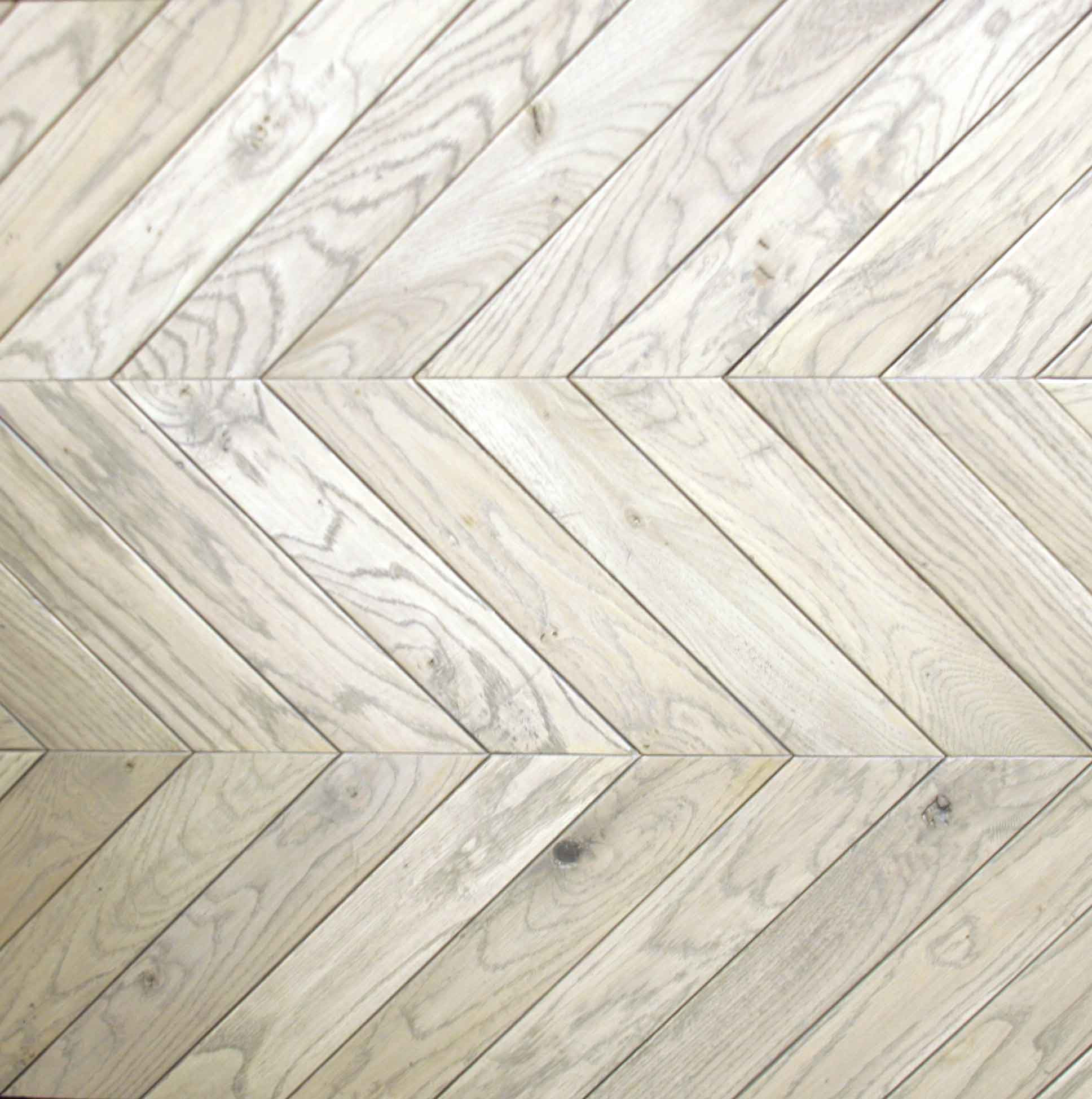
A chevron pattern (shown here) is also a zigzag, but the ends are cut at angles that result in long, straight lines where the planks meet.
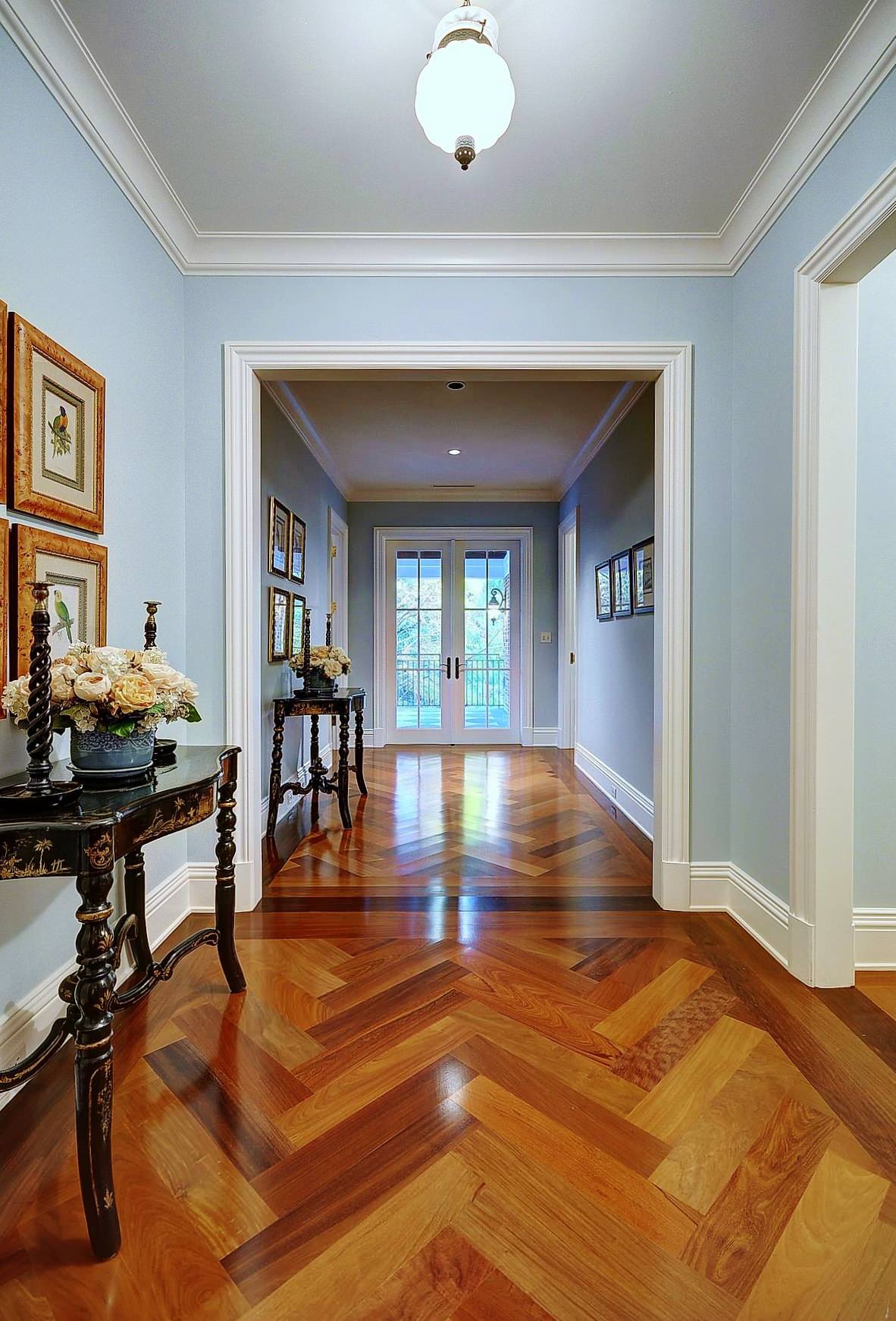
Wide wood planks with a high-gloss finish make this herringbone floor shine. Wood floors laid in geometric patterns are called parquet.

Originally herringbone was used to absorb compression in horizontal surfaces, but later it was laid vertically for the lovely decorative appeal. The beautiful detail of this backsplash distracts the eye from the hood.
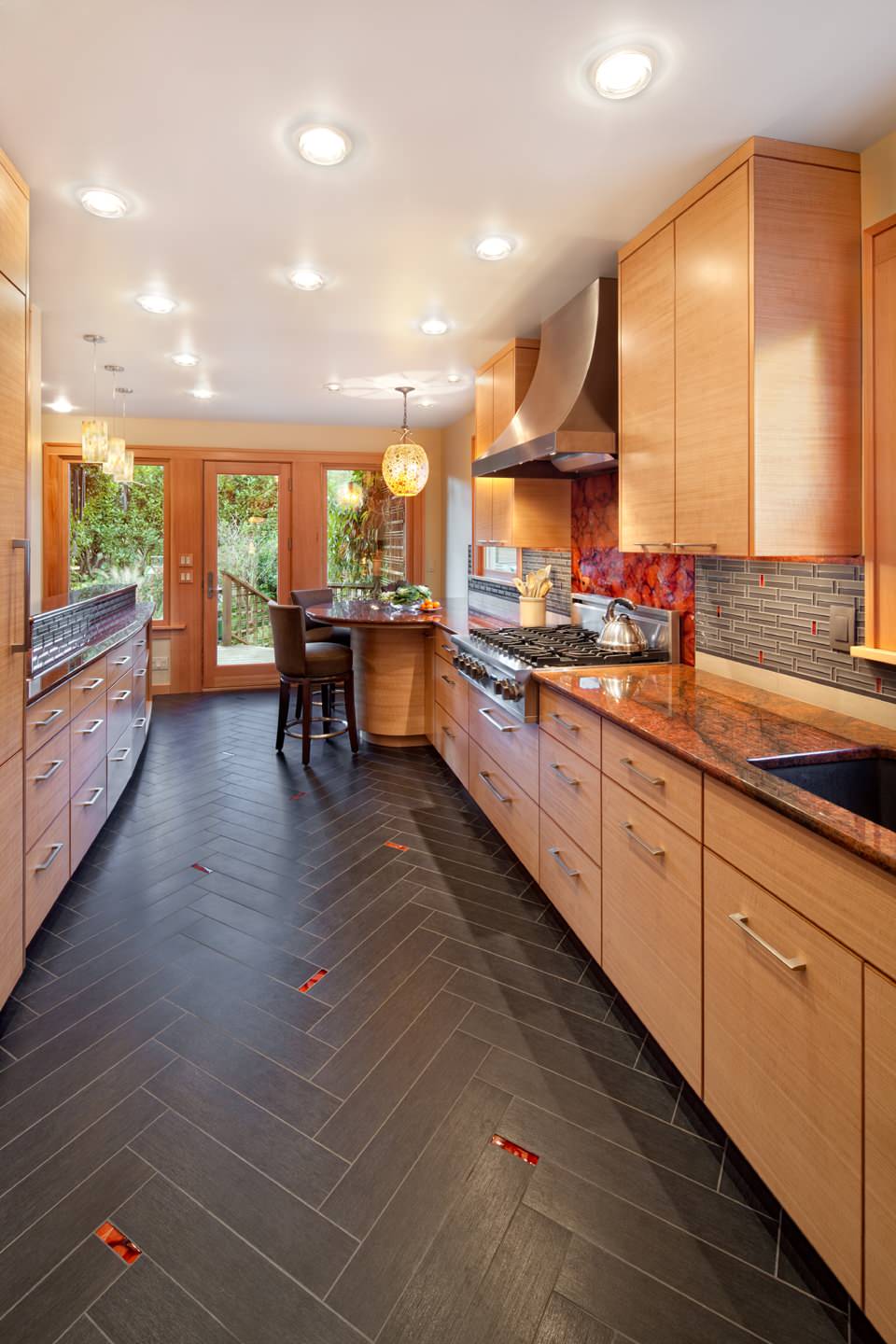
Flashes of red glass accent this herringbone tile floor.
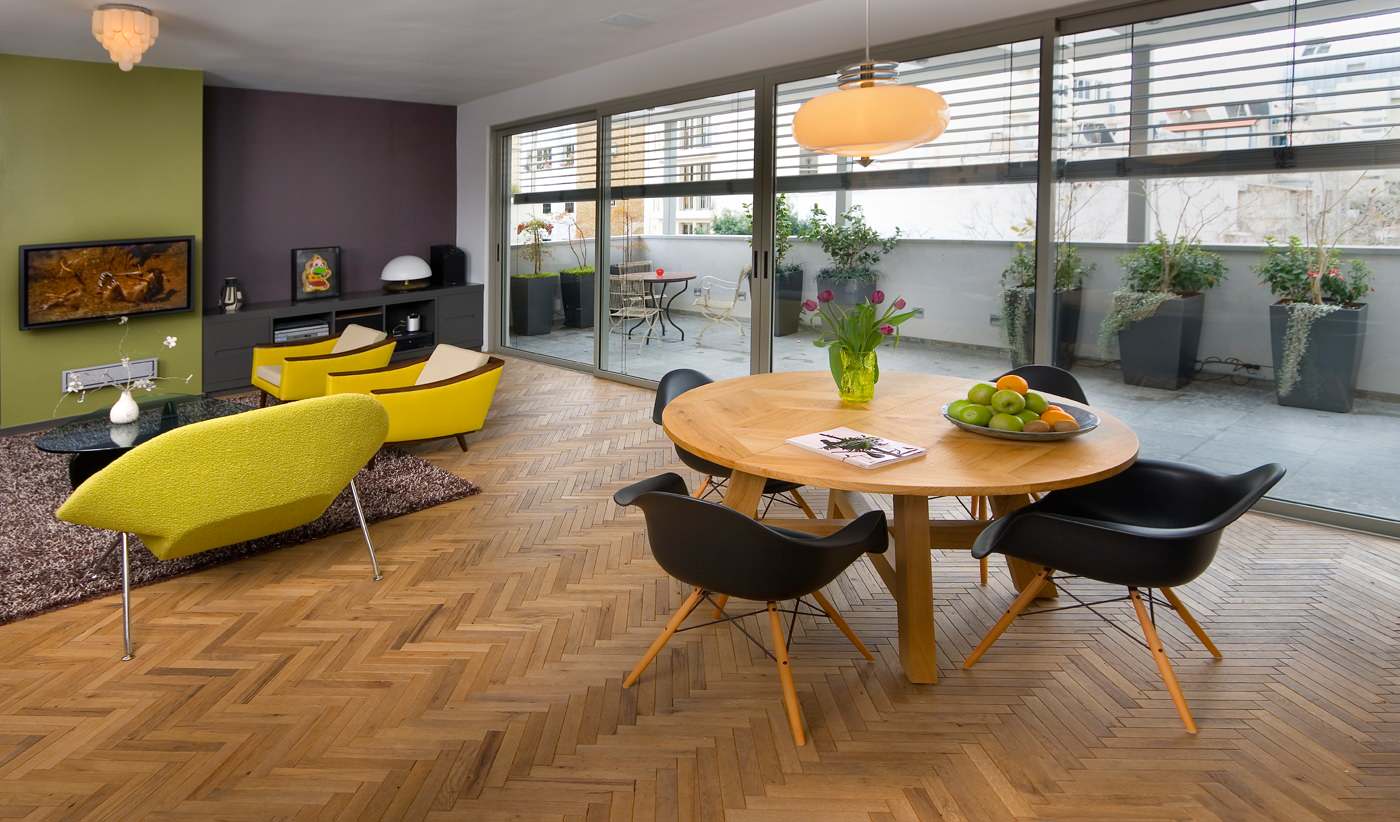
A matte finish lets the lovely herringbone pattern dominate this narrow-plank wood floor. Oils and waxes penetrate the wood deeply, whereas hard coatings laid on top provide a thin layer to protect from scatches and dents only.

