
Search results for "Alloyed" in Home Design Ideas

 Colorado Style Home Furnishings
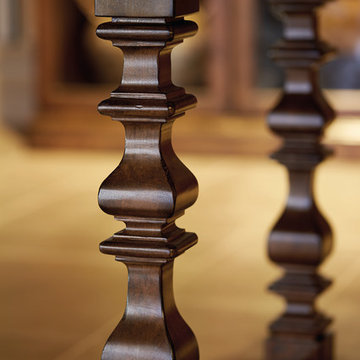
Console Table - Carved
Inspiration for a rustic home design remodel in Denver
Inspiration for a rustic home design remodel in Denver


Find the right local pro for your project


 Michelle Verrill / Kitchen & Bath Galleries
Medium tone wood floor kitchen photo in Raleigh with a farmhouse sink, flat-panel cabinets, turquoise cabinets, quartz countertops, white backsplash, marble backsplash, stainless steel appliances, an island and white countertops

 Trimcraft of Fort Myers, Inc.
Twisted Crown Heritage iron baskets with twisted wood newels. Double flared bottom
Red Oak treads, painted risers
Quail West community in Naples, FL
Example of a tuscan wooden mixed material railing staircase design with wooden risers
Example of a tuscan wooden mixed material railing staircase design with wooden risers


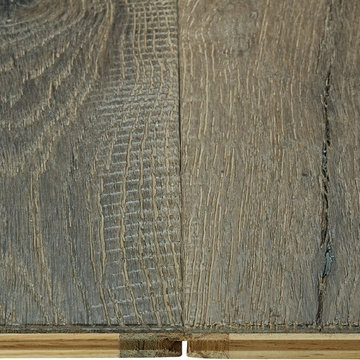


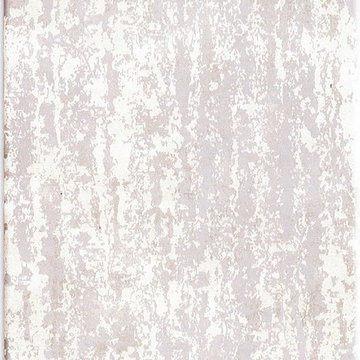
 Storm Inspired
Our wool and silk rugs can be custom made in any size and color with options for machine made, hand tufted or knotted, the possibilities are endless.
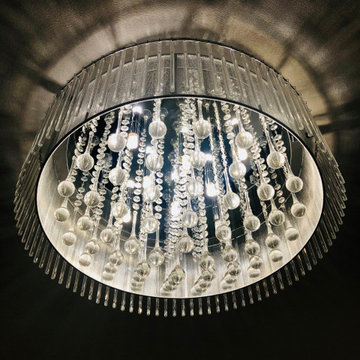
 By Two Studio
Designed around the needs of modern family life, this home by By Two Studio brings together contemporary interiors, practical space planning and a warm, welcoming aesthetic. The design balances everyday usability with carefully selected furniture, finishes and decorative details, creating spaces for family life, relaxing and entertaining. A strong example of modern family home interior design, the project showcases residential interior design, contemporary home renovation and family-friendly interiors.
 Mr Shishir
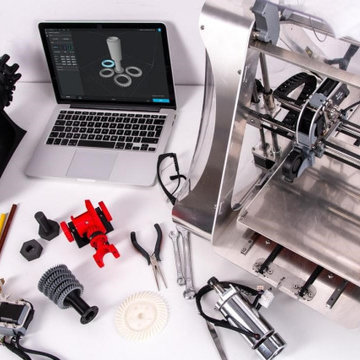
Computer numerical control or CNC machining is an automated manufacturing process used to make components of devices or appliances. It employs computer-aided software and codes to control complex machinery, including mills, grinders, lathes, and cutters. It is used to manufacture multiple parts from diverse raw materials such as aluminium, brass, acrylic, plastics, and wood.
It is a subtractive process in which a solid piece of material is carved into a 2D or 3D object of any shape or size. This enables the creation of prototypes for parts and finished products. It also enables automated mass production of parts such as fittings, housings, brackets, gears, fasteners, shafts, electrical contacts, and moulds using specific materials.
This process is a quick, safe, versatile, precise, and cost-effective production method. These advantages allow it to be used for various applications in industries ranging from healthcare and electronics to aerospace and the military. Moreover, it is used to create parts for several objects you use at home every day.
Here are 10 things in your house that you may not know are manufactured using CNC machining:
1. Kitchen Appliances
Several manufacturers employ CNC machines to create heavy-duty parts for durable kitchen appliances. Through pre-programmed software, the machine produces parts of different shapes, sizes, colours, and textures using a variety of materials like metals and plastic.
CNC-machined components of kitchen appliances include metal plates, covers, textured handles, pins, rings, and wires. These small but essential parts improve the utility of your everyday kitchen appliances such as the electric can opener, dishwasher, hand blender, grinder, and coffee brewing machine.
2. Electronic Devices
Components of electronic devices are usually small in size and have fine details and shapes that require precision machining. CNC machines offer the flexibility and efficiency to manufacture large and small parts of various shapes, sizes, and materials required to complete electronic appliances.
CNC machining enables accurate, computerized prototyping and the production of detailed, intricate, and sensitive parts from a wide range of metals. It can be used to produce parts such as connectors, housing, wires, heat sinks, semiconductors, and fixtures. It can also be used to create the chassis or the framework of various electronic appliances.
You can find CNC-machined parts in the following electronic home appliances:
- Laptops and Computers
- Mobile phones
- Cameras
- Television
- Speakers
- Keyboard
- Mouse
- Router
- Refrigerator
- Air conditioner
- Washing machine
- Fans, air purifiers, and humidifiers
- Robotic vacuum cleaners
- Remote control
 Windy City Painters
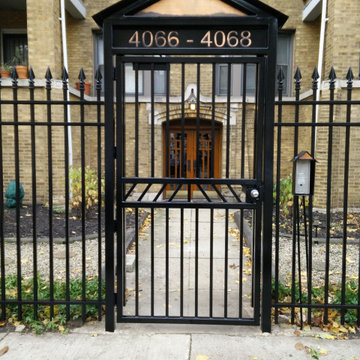
This West Town porch had suffered years of Chicago's harshest conditions. Road salt from winter streets, freeze-thaw cycles that crack metal bonds, and Lake Michigan humidity had transformed the iron railings into a rust catastrophe. The homeowner called Windy City Painters because they knew surface-level repainting wouldn't hold. We delivered a complete restoration using industrial-grade products and techniques that Chicago demands. The transformation took precision, the right chemistry, and an understanding of how brutal our climate actually is.
MATERIALS AND PRODUCTS
Windy City Painters selected RustDestroyer rust-converting primer as the foundation. This product chemically bonds to rust particles, converting them into a stable surface rather than simply covering them. The topcoat is Sherwin-Williams Corothane Aliphatic Urethane, specifically chosen because aliphatic urethanes resist yellowing, maintain flexibility in Chicago's temperature extremes, and provide superior weather resistance. We use 220-grit sandpaper between coats, stainless steel wire wheels for rust removal, and two full coats of finish. No shortcuts. No budget brands that fail in freeze-thaw cycles.
THE PROCESS
Step 1: Wire Wheel to Bare Metal (45 words)
We attached a stainless steel wire wheel to our equipment and removed every flake of loose rust and paint. This isn't cosmetic—it eliminates the corrosion source entirely. Rust spreads beneath paint. By going to bare metal, we stopped the problem at its root. Chicago's salt exposure demands this aggressive approach.
Step 2: Apply RustDestroyer Rust-Converting Primer (48 words)
After the surface was clean, we applied RustDestroyer according to spec. This primer chemically converts remaining rust particles into a protective layer, then bonds everything together. It's the critical bridge between corroded metal and lasting finish. One coat of RustDestroyer on bare metal creates the stable foundation that allows Corothane to perform properly throughout Chicago's cycles.
Step 3: Sand and Inspect Between Coats (42 words)
Once the primer cured, we lightly sanded with 220-grit paper. This step seems small but matters enormously—it removes dust, smooths any drips, and ensures perfect adhesion for the topcoat. We inspected every inch for missed spots. Chicago's humidity can trap moisture under topcoat if prep is rushed.
Step 4: Apply Two Coats of Corothane Topcoat (50 words)
We applied the first coat of Sherwin-Williams Corothane Aliphatic Urethane evenly, let it cure fully, then applied the second coat. Two coats guarantee coverage and durability. One coat thins under Chicago's sun and freeze-thaw stress. Corothane's flexibility is crucial—it moves with the metal as temperatures swing 50+ degrees in a single day.
CHICAGO-SPECIFIC CHALLENGES
West Town sits blocks from Lake Michigan. Humidity here is relentless. Winter brings road salt that penetrates every micro-gap in paint. Spring freeze-thaw cycles expand and contract iron, cracking weak coatings. Summer sun accelerates UV breakdown. Fall brings moisture creep before freezing begins again. Generic paints fail fast. Windy City Painters uses products engineered for this exact climate. RustDestroyer stops the chemical source of rust. Corothane's aliphatic formula resists yellowing under UV while maintaining the flexibility that stops cracking. The two-coat system ensures thickness that protects through all four seasons.
WHAT TO EXPECT LONG-TERM
With proper application and two coats of Corothane, this porch should remain rust-free and attractive for 7-10 years. This assumes normal Chicago weather exposure and no damage from impact or intentional scratching. Homeowners should rinse salt off railings after heavy winter storms and inspect annually for any paint cracks. Windy City Painters stands behind our work. If you see rust appearing in year 3 or 4, something failed—and we'll address it. This level of confidence comes from using the right products and proper technique.
PRO TIPS
1. Never paint over rust. If your railing shows orange or flaking, wire-wheel it first. Windy City Painters refuses shortcuts that fail.
2. Timing matters. Paint in spring or early fall when humidity is lower and temperatures are stable. Avoid summer heat and winter moisture.
3. Inspect annually. Catch paint cracks before rust starts underneath. A small touch-up now prevents a full restoration later.
Contact Windy City Painters at windypainters.com or 773-818-6331 for your free estimate.
FAQS
Q: Why is Corothane better than cheaper urethanes? A: Aliphatic urethanes resist UV yellowing and maintain flexibility in extreme temperature swings. Chicago needs flexible protection, not brittle coatings that crack.
Q: How do I know if my railing needs wire-wheeling? A: If you see rust flakes, discoloration, or pitting, wire-wheeling is essential. Windy City Painters inspects free and explains exactly what's needed.
Q: Can you paint over old paint if it's not rusted? A: Sometimes, but we always inspect. If the old paint is loose or the metal beneath shows any corrosion, we start over with wire-wheeling.
Q: What's the cost difference between one coat and two? A: Two coats cost more upfront but last 7-10 years versus 3-4 years with one coat. Windy City Painters recommends the investment.
Q: How do I protect my railing between professional paintings? A: Rinse salt off after winter storms, keep paint clean, and report any cracks immediately. Prevention beats restoration.
Q: Does RustDestroyer work on all metal? A: It works on iron, steel, and rust-prone alloys. Windy City Painters uses it exclusively for rust conversion because it's proven.
Q: Why do West Town homes rust faster than other neighborhoods? A: Proximity to Lake Michigan increases humidity. Combined with road salt, the freeze-thaw cycles hit West Town and River West harder than inland areas.
Q: Can I apply Corothane myself? A: Technically yes, but surface prep (wire-wheeling and RustDestroyer application) is where most DIYers fail. Windy City Painters handles this correctly.
Q: How often should I repaint my porch? A: Every 7-10 years with proper two-coat application. If you see rust sooner, the original prep was insufficient.
Q: What neighborhoods does Windy City Painters serve? A: We serve West Town, River West, and all of Chicago. Call 773-818-6331 for your area.
170