
Search results for "Causing" in Home Design Ideas
 Forward Design Build Remodel
Goals
While their home provided them with enough square footage, the original layout caused for many rooms to be underutilized. The closed off kitchen and dining room were disconnected from the other common spaces of the home causing problems with circulation and limited sight-lines. A tucked-away powder room was also inaccessible from the entryway and main living spaces in the house.
Our Design Solution
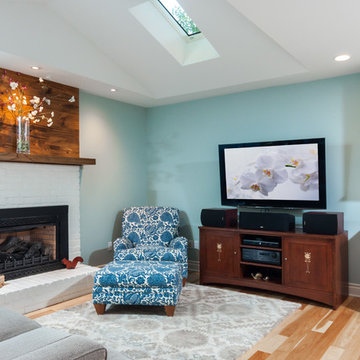
We sought out to improve the functionality of this home by opening up walls, relocating rooms, and connecting the entryway to the mudroom. By moving the kitchen into the formerly over-sized family room, it was able to really become the heart of the home with access from all of the other rooms in the house. Meanwhile, the adjacent family room was made into a cozy, comfortable space with updated fireplace and new cathedral style ceiling with skylights. The powder room was relocated to be off of the entry, making it more accessible for guests.
A transitional style with rustic accents was used throughout the remodel for a cohesive first floor design. White and black cabinets were complimented with brass hardware and custom wood features, including a hood top and accent wall over the fireplace. Between each room, walls were thickened and archway were put in place, providing the home with even more character.
 Paradise Found Construction
The homes in Heritage Hills in Chapel Hill, NC are representative of the popularity and explosive growth of American Home Ownership that occurred during the economic expansion that followed the end of WW II. They were designed and built to foster the benefits and sense of “community”, where families could come together and share theirs and their children’s lives. They are typically in very desirable locations within their larger communities, and remodeling them with modern amenities, increasing the performance and efficiency of them, and having them Green Certified (independent third-party verified) makes them extremely attractive to buyers, and helps to raise other property values within the neighborhood.
Green Certified Remodeled Homes offer significant value and advantage in the marketplace over similar homes in their area, which is especially important as a new, younger era of home buyers enter the market. Current trends suggest that younger (as well as many “seasoned”) homeowners are interested in smaller, more efficient (and thus affordable) homes situated closer to shopping, their work, entertainment opportunities, and access to the economic and environmental benefits of mass transit.
These older homes also offer an additional value that is continuing to gain visibility and appreciation in the market place. They were built from lumber from slower-growth trees (denser and harder wood), and as such offer superior structural support compared to the same home built using lumber from today’s faster-growing (softer and less-dense wood) trees.
Robin and Kent had lived in their 2-story Gambrel Roof home in Heritage Hills since 1994. The house was structurally sound, due in large part to the old-growth (and denser) yellow pine that was used in its framing. They loved the quiet neighborhood, its sense of community and amenities, and their home. It suited their life-style and needs; and they had decided that they would remain in the home. It was showing its age, and was in need of general repairs and maintenance, and its energy, water, and indoor air quality performance was continuing to increase their ongoing cost of ownership.
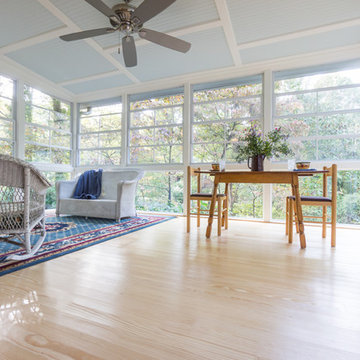
Robin loved the screen porch that looked out on their private and nicely landscaped back yard, but she wanted to be able to use it in the colder months of the year. She was unsatisfied with the kitchen and the mud room / laundry room, and the darkness of other living spaces. A previous water leak in the laundry room had resulted in a large patch of mold that had compromised flooring, wall board, and insulation and contributed to the homes reduced indoor air quality.
The home lacked insulation in the crawl, and inadequate insulation in the attic. The single HVAC unit had been replaced a few years earlier with a more efficient unit, but with a single programmable thermostat control on the first floor and aging and un-insulated ducting, the second floor was often over-heated in the summer months.
The original wood windows had begun to deteriorate and were drafty and inefficient, and the original wood-burning fireplace was an open conduit for escaping conditioned air as well as an inlet for wood-smoke smelling air being pulled into the home. The siding had been replaced a few years earlier with a cement-fiber product, but the exterior wood trim was compromised and beginning to look unsightly. Its original architecture had been altered over the years in ways that presented ongoing maintenance and durability issues, as well as disrupting the elegance of the original design.
Kent has worked for over 30 years in the Environmental Sciences field, and is considered to be a national expert in understanding the sources of, and human exposure to pollutants in indoor environments. He had always been very conscious and cautious about the effects on indoor air quality that the construction, furnishings, and products used in home had on him and his family.
Project Goals
Increase the performance of their home by improving energy efficiency by at least 40% and lowering their natural gas and electric utility costs.
Increase the performance of their home by reducing water usage by at least 40% and lowering the water utility costs.
Increase the comfort of their home that was being compromised by an inadequate HVAC design, inadequate insulation, inefficient and compromised wood windows, and copious air intrusions and drafts.
Improve the healthiness of the homes indoor air quality that was being compromised by an open wood-burning fireplace, and prior water intrusion that had allowed colonies of mold to thrive.
Create a new Kitchen, Family Room, Home Office, Mudroom, and Laundry Room that featured some of the latest designs and trends and harmonized with the rest of the homes charm.
Increase the usefulness and aesthetics of the screened porch by creating a warm and inviting semi-conditioned 3-Season Room that extended the times during the year that it was comfortable.
Introduce day-lighting into areas of the home that were dark and uninviting.
Brighten and harmonize all of the interior finishes.
Protect and restore the exterior of the home with superior-performing products and finishes.
Achieve Gold Level Green Home Certification in conformance with the ICC 700-2012 National Green Building Standards (NGBS).
 Pennsylvania Landscape & Nursery Association
Terren Landscapes http://www.terrenlandscapes.com
Project Entry: Pembrooke Estate Rain Garden
2014 PLNA Awards for Landscape Excellence Winner
Category: Sustainable Landscape &60,000-$120,000
Award Level: Silver
Project Description:
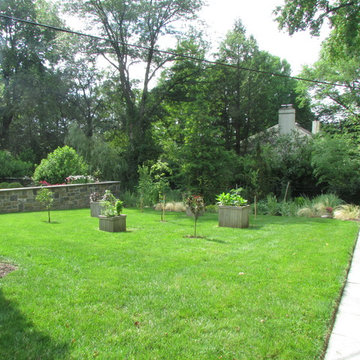
The client contracted our company to solve multiple existing drainage problems. In a heavy rain event the existing French drain system would overflow, causing water to pool in the driveway. After investigating the system we found that the capacity of the French drain was undersized for the amount of storm water from the large rain events received in recent years. As a result of our findings and at the request of the homeowner, we designed a storm water management system to capture all storm water from the structures on the property and regenerate the underground aquifers for the volume of a 5.8” rainstorm. In addition to the new drain system, the homeowners wanted a rain garden to provide a backdrop for an existing formal garden, provide a habitat for wildlife, and provide screening from an adjacent neighbor.
Throughout the design process many challenges were presented, including an existing gas line, which ran directly through the area that best suited the bioswale. The existence of the gas line caused us to alter the shape and depth of the bioswale in some areas. We also inspected the existing downspouts to make sure there were no obstructions that would impede the system’s efficiency, and then conducted a test pit dig to make sure we had sufficient percolation rates for disposal of storm water.
To effectively capture the storm water runoff, the existing downspouts were piped from the main house and the large detached garage to a large catch basin located at the low point in the driveway. The driveway catch basin contains two outlet pipes at different elevations within the basin allowing water from smaller rain events to enter the bioswale and rain garden area to percolate into the soil before excess water overflows into a sediment trap which filters out any debris and is then piped to an underground StormTech® pit to slowly percolate into the ground. The other outlet pipe in the driveway catch basin is used for larger storm water events, taking the water directly to the StormTech® pit.
Accepting and slowing the velocity of the storm water, mitigation of erosion, and filtering out pollutants contained in the “first flush” of rainfall are the primary functions of the bioswale and rain garden. Planting these areas with mostly native plant species helps carry out these functions while attracting and providing shelter for wildlife.
The ‘Niobe’ weeping willow is the centerpiece of the rain garden, connecting with the axis of the existing formal garden. To screen the neighboring property we chose Chamaecyparis nootkatensis ‘Pendula’ for its graceful evergreen habit and tolerance of wet sites. ‘Ivory Halo’ dogwood and Panicum ‘Cloud Nine’ were used for screening as well as winter interest. To provide deciduous structure to the garden Taxodium distichum and Magnolia virginiana were used in conjunction with witch hazel. Mostly native wetland perennials were used due to their tolerance of wet conditions and occasional drought.
The area above the StormTech® pit provides space for the client’s family to relax. The rain garden and bioswale provide screening, storm water management, a habitat for wildlife, and plants that enhance the adjacent formal garden.
Photo Credit: Terren Landscapes
Find the right local pro for your project

 All Surface Restoration
Surface Saver Sealer is a water-based Silane-Siloxane water repellent and impregnating sealer for porous concrete and masonry surfaces. Surface Saver penetrates up to 1/4 to form a chemical bond deep within the substrate to provide long lasting protection against deterioration or staining due to water absorption. Surface Saver will not impair the natural breathing characteristics of treated substrates, nor will it produce a film or coating. Surface Saver will help concrete and masonry surfaces to resist common issues such as cracking, efflorescence, spalling, staining, and other damages caused by intrusion of water. Surface Saver will also help to reduce the formation of efflorescence and the growth of mold and mildew.
Uses: Unsealed concrete, broom finished concrete, trowel finished concrete, stamped colored concrete, exposed aggregate concrete, concrete pavers, brick pavers, pavers, clay tile, unglazed tile, cement, brick, stone, and other masonry.
Common Applications: driveway sealer, walkway and sidewalk sealer, patio and pool deck sealer, brick house and chimney sealer, clay tile roof sealer, garage floor sealer, warehouse floor sealer, basement wall and floor sealer, and other concrete and masonry applications.
Surface Saver maintain the natural, unsealed look and feel of the substrate. Will never peel, flake or fade. UV resistant, non-yellowing. No surface film or coating to maintain.
Resistant to freeze-thaw cycles and de-icing salts.
Provides excellent resistance to mold, mildew, and fungus.
Can be applied to interior & exterior, vertical & horizontal, above & below grade surfaces.
Surface Saver Sealer will cause water and other liquids to bead off the surface.
Breathable, low VOC.
5 gallon covers up to 750-1000 Square Feet in one coat, or up to 500 Square feet in 2 coats.
Surface Saver Sealer can be purchased in 5 gallon pails shipped UPS Ground to all 48 U.S. States except Alaska & Hawaii at: www.surfacerestoration.com/shop
 Decra-Scape, Inc.
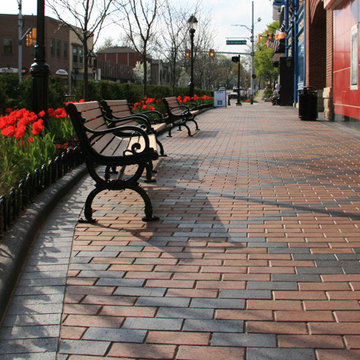
The City of Farmington is comprised of numerous historic structures that make up the Farmington Historic District. This Historic District surrounds the project site and played a huge role in the design and construction of the streetscape. While the plans look fascinating on paper, bringing the project to life became a challenge on its own – upon the initial layout of the site, we found that none of the existing buildings were square, so additional cutting would be required for the bricks abutting these structures and the curbs along the road.
Another challenge faced during this project was after the demolition and removal of the existing concrete sidewalk. The demolition had caused damage to the face of the historic buildings, and required careful repairs. These unexpected repairs consisted of turning brick on end to cover blemishes, mortaring bricks on the buildings back into position, and re-cutting concrete sills.
Throughout the project, the stacked diamond pattern involving two different color bricks proved to be a challenge as well. One brick laid out of position could alter the aesthetics of the project and would not be accepted. When working with clay bricks, the dimension tolerances are somewhat loose, which make it difficult to keep clean site-lines due to the carrying sized bricks. Furthermore, the different colored bricks used for this project were created by different manufactures, which amplified the dimension tolerance issue.
Coordination with the project took careful planning and communication. The bricks specified were coming from two different states, one being California. With materials being shipped from across the continent, and tight deadline, managing logistics was key to insuring the success of this project. Further, all of the storefronts remained open during the course of the project, as did the road. This created tight working quarters, and required coordination with shop owners, and careful attention to pedestrians as they walked through the worksite to shop in the stores. For each storefront, the team had to strike the leveling layer up to the entrance, lay the brick pavers, and get past the door in a timely manner as not to interrupt the normal business operations. The tight deadline and unfavorable weather conditions caused the team to work 21 consecutive days to finish on schedule.
Upon completion of the project, the new streetscape complimented the historic feel of the city and looked as if it was meant-to-be. The architect was happy with our workmanship, and pleased with the results.
 SERVPRO of Blackwood NJ and Gloucester Township NJ
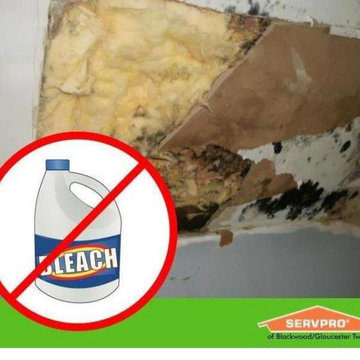
Cleaning Mold with Bleach is Hazardous, Don't use bleach, Mold,
Using chlorine bleach to kill mold is probably one of the worst things you can do.
As a matter of fact, the Occupational Safety and Health Administration (OSHA), stopped recommending the use of bleach for dealing with mold issues. And, the Environmental Protection Agency (EPA) updated their guide as well, removing the suggestion to use bleach to kill mold.
The problem is, it’s true that bleach can kill some mold in some places, some of the time. But, bleach only works to remove mold on hard, impermeable surfaces like bathtub and shower surrounds or tiles. However, on porous surfaces like drywall or hardwood floors, it won’t work to kill mold or keep it from coming back.
Mold spreads its roots deep into porous surfaces.
Simply spraying a bleach solution on the surface won’t kill mold spores at their roots.
Here are some reasons Why you should NOT to Use Bleach to Kill Mold:
1) Bleach is Caustic, with High VOC's and can cause Burns to your Eyes, Nose and Throat and Skin. Your Pets paws, can get burned, and Pets lick their paws.
2) Bleach encourages toxic mold growth on porous surfaces because it provides excess moisture.
3) Bleach is extremely corrosive, and corrodes Metal Fastners, such as Screws and Nails, Water Pipes, Waste and Drain Pipes.
4) Bleach only removes the color from mold.
5) Chlorine bleach is extremely harmful to surfaces.
SERVPRO of Blackwood NJ Gloucester Township NJ, is a Veteran Owned and Operated Small Business, or Veteran Owned Business, (V.O.S.B.), and understands that fires, Mold, floods, Covid 19, or other disasters can strike suddenly and they can cause disruption to your life and home or business.
SERVPRO of Blackwood NJ Gloucester Township NJ, is Completely registered with:
1) The System for Award Management (SAM) for the U.S. Government.
2) The Commercial and Government Entity (CAGE) Code, with the Federal Government.
***CAGE Code 8QK50 and DUNS 023257359
***Government Contractor
We look forward to partnering with Industrial Hygienists, Environmental Consultants, and other business opportunities, to bid on Federal, State, County, City, Industrial, Manufacturing, Commercial, and Residential Projects, throughout the entire United States of America.
YES WE ARE OPEN!!
Jon A. Barrett
Marketing Manager
SERVPRO of Blackwood/Gloucester Twp
Phone: (856) 227-7800
Email: sp.jonb@gmail.com
Website: https://www.SERVPROblackwoodgloucestertownship.com/company-profile
Emergency Services 24/7/365
Federal, State, Industrial, Commercial and Residential Restoration Services
CAGE Code: 8QK50 DUNS# 023257359
*****VETERAN OWNED AND OPERATED
Google MyBusiness:
https://goo.gl/maps/v5wzUXhQ3pDntdbTA
 Elite Construction and Remodel Corp
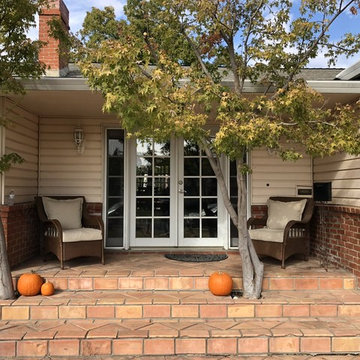
Damage noted to the exterior trim, is visible at the garage and pedestrian door jambs, and to the soffit caused by uncontrollable exterior moisture sources.
https://www.eliteconstructioncorp.com/projects/melrose-avenue
 Master Odor Removal - Albany
COOKING PAN SMOKE ODOR — 7500 Sq. Ft. Home
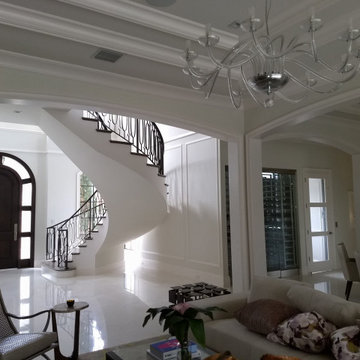
In July 2018, Master Odor Removal successfully completed an odor removal service in a luxury 7500 sq. ft. home in Boca Raton, FL. The odor issue was caused by smoldering cooking pan that had started to burn and was left for several hours. The 1700 sq. ft. area had 20 ft ceilings, three islands which led to the open adjacent dining and family room and large spiral stair case lead to the upstairs narrow hall and bedroom.
All areas had a Level 5 (1-5 scale) burnt or scorched smell which included the cabinets, furniture, drapes and custom carpeting and in closeted large food pantry. The home had four air conditioning units which were in the attic that would have to be treated separately.
The owner prior to our visit, had tried to just air it out and then used common cover-ups after cleaning the stove area – which only contributed to making the source odor smell pronounced throughout the homes other living areas. The owner was only interested in a rush and same day service!
The odor was caused by tiny microscopic burnt plastic particles that were clinging to ceiling walls, furniture, floors, clothing and other items now inside most of the home carried in part by the time of smoke exposure and air conditioning cycling on and off. Smoke particles get into the tiniest nooks and crannies and can be difficult to remove. The stove area / back splash had visible signs of carbon though the other areas had no blackness that could be seen or even evident in the microfiber white cloths that we used to test prior to molecular chemical application. All living areas of the home had been expertly cleaned prior to our inspection.
The scope of our work included odor source remediation, ceiling and wall treatments using a 20-foot ladder, and fogging treatments in the entire main home’s, kitchen, bedrooms, living areas and pantry. A/C electrochemical fogging in attic.
Carbon was remediated and air quality tested.
 Huggins Wood Floor Specialist
/Zero VOC means no Volatile Organic Compounds – those long-chain hydrocarbons that contribute to interior air pollution and can combine with nitrogen oxides to form ground-level ozone – are released as the finish cures.
A zero-VOC finish is hard to find in the floor coating industry and we had been searching for one for a while. It’s not exactly clear why the floor finishing business is so far behind the paint industry – VOC-free paints have been available in mainstream retail for at least two years.
Flooring finishes seem to rely heavily on those volatile petroleum-distillate-based solvents that keep the solids and resins in solution until applied but evaporate quickly to allow the finish to dry and cure in a reasonable time.
But mineral spirits and petroleum distillates release high levels of VOCs that can cause eye, skin, nose and throat irritation, and they are neurotoxins that may depress or damage the brain and nervous system. Short-term exposure to VOCs can cause dizziness, headache, drowsiness and nausea.
You could contact us at (908)232-6600 visit our showroom located at 406B West Broad St Westfield, NJ or visit our website https://newyorkcitywoodfloors.com
 All Surface Restoration
Surface Saver penetrates up to 1/4 to form a chemical bond deep within the substrate to provide long lasting protection against deterioration or staining due to water absorption. Surface Saver will not impair the natural breathing characteristics of treated substrates, nor will it produce a film or coating. Surface Saver will help concrete and masonry surfaces to resist common issues such as cracking, efflorescence, spalling, staining, and other damages caused by intrusion of water. Surface Saver will also help to reduce the formation of efflorescence and the growth of mold and mildew.
Uses: Unsealed concrete, broom finished concrete, trowel finished concrete, stamped colored concrete, exposed aggregate concrete, concrete pavers, brick pavers, pavers, clay tile, unglazed tile, cement, brick, stone, and other masonry.
Common Applications: driveway sealer, walkway and sidewalk sealer, patio and pool deck sealer, brick house and chimney sealer, clay tile roof sealer, garage floor sealer, warehouse floor sealer, basement wall and floor sealer, and other concrete and masonry applications.
Surface Saver maintain the natural, unsealed look and feel of the substrate. Will never peel, flake or fade. UV resistant, non-yellowing. No surface film or coating to maintain.
Resistant to freeze-thaw cycles and de-icing salts.
Provides excellent resistance to mold, mildew, and fungus.
Can be applied to interior & exterior, vertical & horizontal, above & below grade surfaces.
Surface Saver Sealer will cause water and other liquids to bead off the surface.
Breathable, low VOC.
5 gallon covers up to 750-1000 Square Feet in one coat, or up to 500 Square feet in 2 coats.
Surface Saver Sealer can be purchased in 5 gallon pails shipped UPS Ground to all 48 U.S. States except Alaska & Hawaii at: www.surfacerestoration.com/shop
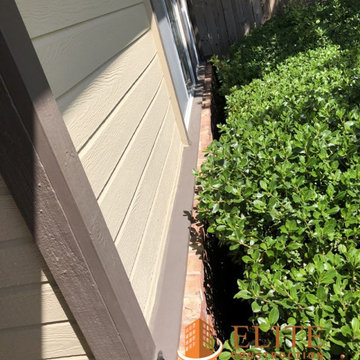 Elite Construction and Remodel Corp
Location: Roseville, CA
Project Type: Lap siding, belly band trim and deck dry rot repair
Description: There are wood damage at the lap siding and trim, to the belly band trim, to the deck caused by uncontrollable exterior moisture sources.
RECOMMENDATION:
Remove all damaged wood and replace with new material (to match as close as practical) where necessary and perform a local repair
where needed. Remove and dispose of the existing deck. In place construct a new like for like deck utilizing pressure treated material for the framing and redwood material for the planks.
PAINTING:
Prime paint on all exterior surfaces included in this estimate in the event that pre-primed wood is not used. Elite Construction and Remodel
to color match and paint the repaired areas only as discussed with the client. Elite Construction and Remodel is not responsible for color
match due to the age of the old painted surfaces compared to the new painted surfaces.
https://www.eliteconstructioncorp.com/projects/roseville-diamond-ca
 SUPERIOR CHIMNEY SERVICES CORPORATION
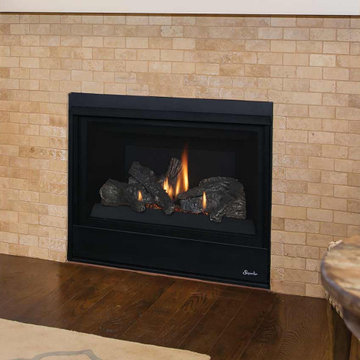
Is it necessary to clean gas fireplace? It’s intuitive that the dark black buildup of combustion needs to be cleaned from a typical wood burning fireplace, but is it needed to clean a gas fireplace? It’s gas…right? Gas fireplaces do not have a visible buildup of combustion, but should be cleaned at least once a year to prevent serious problems with the fireplace.
Gas vs. Wood Burning Fireplaces
When thinking of the inside of a family home, we think about the most comfortable room: the living room or family room. This is where the family meets, watches movies, and plays board games during rainy days, evenings and family time. It usually has a lofty, cozy couch and a wood burning fireplace. Nothing’s more comforting than falling asleep to the dim light of the fireplace and faint smell of burning wood. Nowadays, we have a close alternative to this old fashioned comfort: the gas fireplace. Gas fireplaces don’t leave much creosote behind, however gas fireplaces should be cleaned once a year, per the CSIA, due to dust, pet hair, insects, and other debris that can build up and cause performance problems. Chimney sweep are primarily for firewall worthiness assurance, cleaning and obstruction free assurance.
Gas fireplaces look similar to wood burning fireplaces, with a live flame. The logs inside the gas fireplace look real, but are not actually burning. Oftentimes, they are made of ceramic. A gas fireplace produces much less heat than a wood burning fireplace, but can retain more heat inside your home based on its type and configuration. Gas fireplaces can be low maintenance and energy friendly alternatives to a wood burning fireplace.
Some Signs to Clean Gas Fireplace
1. Buildup: Although gas fireplaces do not produce as much visible flammable and hazardous buildup, it does produce some corrosive substances and flue gasses that may settle inside your home without you knowing. Burning natural gas leaves a residue that must be cleaned annually. Failing to clean the residue may cause health risks if left untouched.
2. Technical Issues: There may be technical problems that are not visible, such as issues with the burner. Gas fireplaces are usually built to last long term but it’s imperative to check if there are any unnoticed technical issues at least once a year.
3. Gas Leaks: Over time, valves and pipes turn weaker and become corroded. It’s important to inspect these valves, as a gas leak is extremely hazardous. A certified chimney specialist must inspect and determine any damage or future damage to prevent this serious problem.
4. Condensation: Due to the high temperatures in the flue, there’s a buildup of condensation when the fireplace vapors are cooled. Natural gas exhaust also contains a high content of water vapor in emissions. The condensation reacts with byproducts and is acidic and corrosive, and must be cleaned at least once a year to not pose a potential health hazard.
It’s just as important to clean a gas fireplace at least once a year to prevent long term issues that could pose health risks if not cared for. A certified chimney professional from Superior Chimney will inspect and sweep the fireplace and ventilation system.
Contact us today to clean gas fireplace at 877-244-6349.
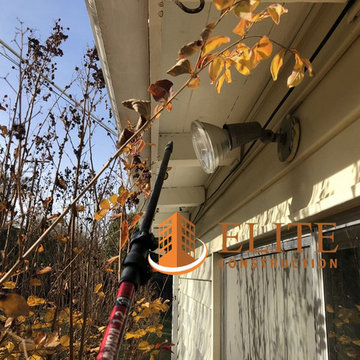 Elite Construction and Remodel Corp
Location: Fair Oaks, CA
Project Type: Fungus on Subfloor, Exterior Door Base and Rafter Tail dry rot repair
Description: Damage noted to the rafter tails, subfloor, exterior door base caused by uncontrollable exterior moisture sources.
RECOMMENDATION:
Cut out damaged sections and splice in with new material. Re-support rafter tails by attaching a sister wood member of a like size to the
repaired area.
PAINTING:
Prime paint on all exterior surfaces included in this estimate in the event that pre-primed wood is not used. Elite Construction and Remodel
to color match and paint the repaired areas only as discussed with the client. Elite Construction and Remodel is not responsible for color
match due to the age of the old painted surfaces compared to the new painted surface.
https://www.eliteconstructioncorp.com/projects/fair-oaks-manila-ca
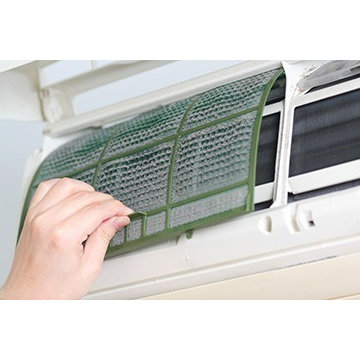
 G & G Heating
The indoor air quality of your home is important to us at G & G Heating.We at G&G Heating, offers a full range of professional indoor Air quality solutions. We understand the importance of maintaining air quality and are experts in helping you to keep your home’s air clean and comfortable.
 Elite Construction and Remodel Corp
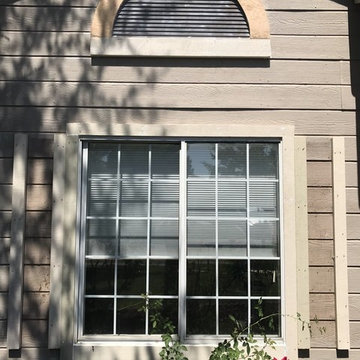
Damage noted at the lap siding and trim, at the roof sheathing, to the rafter tail caused by uncontrollable exterior moisture sources.
RECOMMENDATION:
Remove trim as necessary. Remove and replace the damaged portions of siding (to match as close as practical) and install new trim at repaired areas only. Remove the roof covering and gutters if necessary to expose damaged areas. Remove all structurally damaged wood members and replace with new material. If removed, reinstall gutters and roof covering to the exposed areas only. Cut out damaged sections and splice in with new material. Re-support rafter tails by attaching a sister wood member of a like size to the repaired area.
https://www.eliteconstructioncorp.com/projects/roseville-ca
 Forward Design Build Remodel
Goals
While their home provided them with enough square footage, the original layout caused for many rooms to be underutilized. The closed off kitchen and dining room were disconnected from the other common spaces of the home causing problems with circulation and limited sight-lines. A tucked-away powder room was also inaccessible from the entryway and main living spaces in the house.
Our Design Solution
We sought out to improve the functionality of this home by opening up walls, relocating rooms, and connecting the entryway to the mudroom. By moving the kitchen into the formerly over-sized family room, it was able to really become the heart of the home with access from all of the other rooms in the house. Meanwhile, the adjacent family room was made into a cozy, comfortable space with updated fireplace and new cathedral style ceiling with skylights. The powder room was relocated to be off of the entry, making it more accessible for guests.
A transitional style with rustic accents was used throughout the remodel for a cohesive first floor design. White and black cabinets were complimented with brass hardware and custom wood features, including a hood top and accent wall over the fireplace. Between each room, walls were thickened and archway were put in place, providing the home with even more character.
 the art of nesting
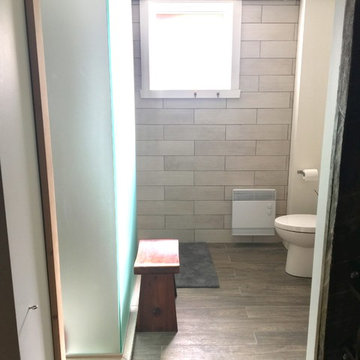
The basement was dark, damp & underused. There was flooding every spring which was causing significant water damage, which if left unaddressed would cause bigger headaches in the future.
With a growing family, the space needed to accommodate an extra bedroom, a large second family room, as well as a well-lit, modern bathroom with a sauna & shower.
 Five Star Tree Care
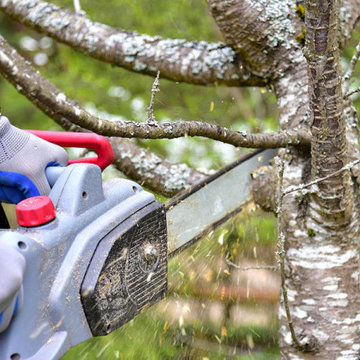
Using a chainsaw is a quick way to make work of fallen branches, damaged trees, and more. However, unless you have been plenty of experience, you may not be able to use this tool safely. For those who have never used a chainsaw before, it is a good idea to start with a lighter saw to prevent injury. It is also a good idea to enroll in a training course. If you plan to use a chainsaw in a professional company, it is even mandatory. Five Star Tree Services has created a quick guide that will help you decide if using a chainsaw is the best option for you.
Chainsaw Maintenance
Before you start using a chainsaw, you need to know if the blades are properly sharpened. Dull blades can cause jagged cuts or even cause injury. A sharp blade allows the saw to cut smoothly and produce straight cuts. The next step is to review is the cutting chain. It should be adjusted to the right tension, so the chain doesn’t move when the engine is idle. Make sure there are no loose screws and that the chain brake is in proper working order.
Operating a Chainsaw
Once you ensure that the chainsaw is safe to operate, it is time to get it started. Do you know the right amount of throttle and pressure to use? What about which cut would be best for your current project? Each type of cut will affect the wood differently, so it is important to keep these factors in mind when using a chainsaw. Situational awareness is also an important part of chainsaw use. No one should be within 10 feet while you are cutting. Also, avoid getting distracted by people seeking your attention since it only takes a second for a grave mistake to occur.
Protection During Chainsaw Operation
Proper protection is essential when operating machinery. When using a chainsaw, you should have on personal protection equipment such as; chainsaw pants, steel toe boots, gloves, ear protection, high visibility clothing, a helmet, and eye protection. All of these items should be in good working order and made from high-quality materials. Protecting your face, neck, chest, and abdomen is critical when working with any type of cutting tool.
The best way to keep yourself protected while wearing your personal protective equipment (PPE) is to maintain control over the chainsaw. Gloves may reduce control for many people, but a firm stance and proper balance can work wonders for maintaining control. PPE usage is very important, but it is equally important not to get lulled into a false sense of security by wearing it.
Practice Makes Perfect
It is best to practice using your chainsaw before taking on big projects. This will help you learn to move your body and your head in a safe way and a way that supports a clean cut. Most often, work with chainsaws is completed on ground that is uneven or covered in obstacles. Practicing will ensure that you can adapt to your environment without risking damage to your property or bodily harm.
How We Can Help
Working with chainsaws can make tree care simpler, but without the proper training and protection, it can be hazardous. Instead of taking the risk, hire the professionals here at Five Star Tree Services for all of your Richmond Hill tree removal and tree care needs. Give us a call at (416) 990-3355 to find out more about our rates and services.
 Tile Doctor Ltd
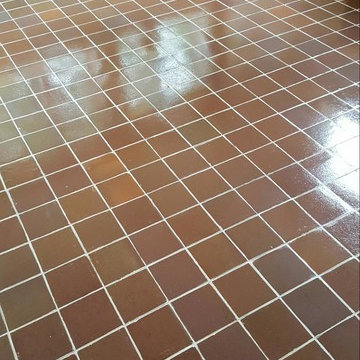
It’s always a good idea to double-check any tile cleaning advice you receive with a professional. Sometimes advice can be inaccurate and cause more problems than good. Such was the case with this customer, who lives in the small town of Appleton near Warrington. He had been advised by his builder to use brick acid to remove carpet glue from a newly discovered Quarry tiled floor. Taking the advice, he had washed the floor several times with a solution of brick acid diluted with water. But while this seemed to successfully remove the carpet glue, it also severely discoloured the grout lines, leaving the entire floor looking grubby and unappealing.
The customer was just about to go on holiday, and asked me to see what could be done to restore the floor’s appearance while he was gone. With the house to myself, I got to work.
My first job was to strip the floor property to remove old sealers present on the tile using a strong dilution of our high alkaline cleaner, Tile Doctor Pro Clean. We use this cleaner on all types of tile and natural stone due to its versatility and consistency.
I spread the solution onto the floor and left to dwell for twenty minutes before scrubbing with a black pad fitted to a floor rotary machine. This process also removed the years of dirt and dust that had penetrated through the recently removed carpet. I also paid attention to the grout lines giving them a good scrub with a stiff grout brush, but the acid staining proved to be impossible to remove completely.
While I’m not sure exactly how long the floor had been covered by carpet, it’s safe to say a deep clean had been long, long overdue. Once I had cleaned the floor to a high standard, I used a wet-vac to remove the now dirty cleaning solution from the floor, before leaving it to dry off completely overnight.
Upon my return to the property the next day, I tested to make sure the floor was dry enough to seal, which is important as excess moisture can cloud the sealer and damage its performance.
Once satisfied, I applied one coat of Tile Doctor Colour Grow, which is our impregnating sealer designed to really bring out the natural colours in the tile, followed by two coats of Tile Doctor Seal and Go to give the tiles a stain resistant, low-sheen finish.
After this was dry I coloured the grout lines with a matching Tile Doctor Grout Colourant to cover and hide the damage the acid had caused to the grout lines. Finally, I gave the floor three more coats of Seal and Go to add the finishing touches.
My customer returned from holiday to find a completely transformed floor. Looking at the before and after photos, it is easy to see why he was more than happy with the result! Another satisfied customer.
Alastair Robb
West Cheshire Tile Doctor
 Redecorating Vancouver
A modern home with an eclectic mix
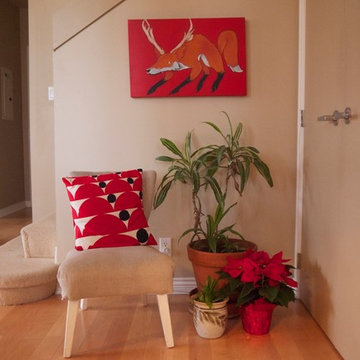
My clients in this space were divided. They were split by competing aesthetics. There were Vietnamese art pieces with modern motifs and bold colours mixed with hand-crafted rustic tables and antique Canadiana. I quickly identified a lack of cohesion and an uncomfortable conversation area as the primary issues that were causing my clients stress.
A change was in order. We partitioned their large connected dining room, living and entryway areas using the existing furniture and floor covering. We were able to create several distinct and cohesive areas that each brought out the best of their contents. Each grouping now seemed natural and harmonious. Smooth international contemporary style and rustic heritage pieces now coexisted in the same space without causing my clients decorating headaches. To organize future projects and to summarize personalized decorating tips, Redecorating Vancouver provided them with a written Design Plan at the conclusion of the consultation.
Family is important to me. I recognize that items in my clients' homes have unseen significance. In this instance, I was able to gather items to create a grand-parents nook to honour the couple's family. We took advantage of an heirloom antique radio that belonged to the client's grandfather and a meaningful handmade table. It is both pleasing to the eye and a daily reminder to the couple of who really matters in a home: the family that lives in it.
49