
Search results for "Curated" in Home Design Ideas


Find the right local pro for your project
 Curated Interior Renovations
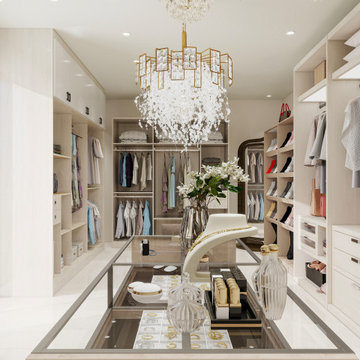
Luxury dressing suite design concept featuring integrated custom millwork, illuminated display cabinetry, and a central glass-topped jewelry island layered beneath sculptural statement lighting. Boutique-inspired detailing, soft neutral tones, and curated organization create a refined contemporary space designed for both function and everyday ritual.
 Curated Interior Renovations
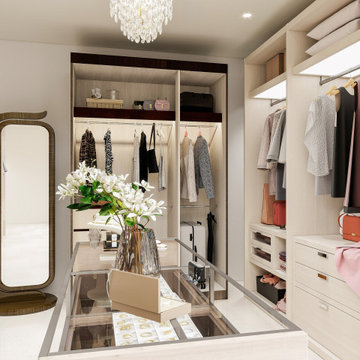
Refined contemporary dressing suite concept featuring illuminated custom millwork, integrated wardrobe storage, and a central glass-topped jewelry island layered with boutique-inspired detailing. Sculptural mirrors, soft neutral finishes, and curated display elements create a luxurious residential space designed for organization, dressing, and everyday elegance.
 Keene Interiors
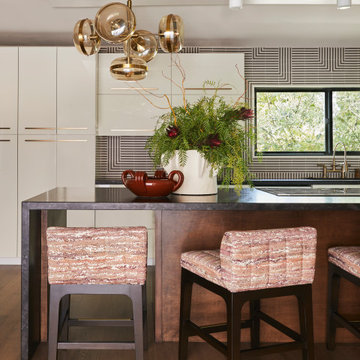
This kitchen blends tailored finishes with sculptural lighting to create a space that feels refined yet approachable. A clean-lined island anchors the room, featuring a dark, grounded base that contrasts beautifully with the light cabinetry beyond. Upholstered counter stools introduce warmth and texture, softening the architectural lines and adding comfort to the gathering space.
A geometric tile backsplash adds visual interest and rhythm, providing a modern backdrop without overpowering the design. Warm brass hardware and fixtures bring cohesion and subtle polish, echoed in the statement chandelier overhead. The layered globe fixture introduces movement and artistry, elevating the kitchen with a bold focal point.
Natural light from the window enhances the material palette, highlighting the balance between crisp surfaces and rich wood tones. The result is a thoughtfully layered kitchen that feels modern, elevated, and designed for both everyday living and entertaining.


 Chango
Interior Design, Custom Furniture Design, & Art Curation by Chango & Co.
Photography by Raquel Langworthy
Shop the East Hampton New Traditional accessories at the Chango Shop!
 Curated Nest
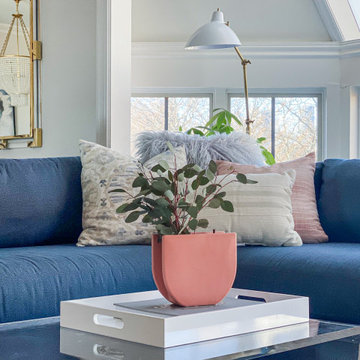
Light and airy family room, with grey and blush tones, and natural wood elements. Located in Brooklyn, New York.
Example of a transitional open concept family room design in New York
Example of a transitional open concept family room design in New York
 Curated Interior Renovations
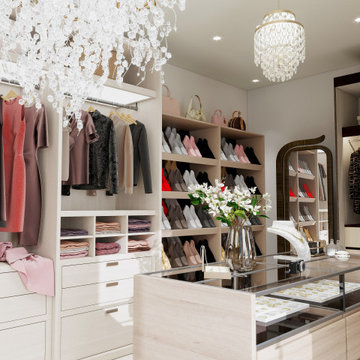
Luxury dressing suite design concept featuring a central glass-topped jewelry island, illuminated custom millwork, and curated handbag and shoe display storage layered beneath sculptural crystal lighting. Warm neutral finishes, refined contemporary detailing, and boutique-inspired organization create a sophisticated residential dressing experience.


 Keene Interiors
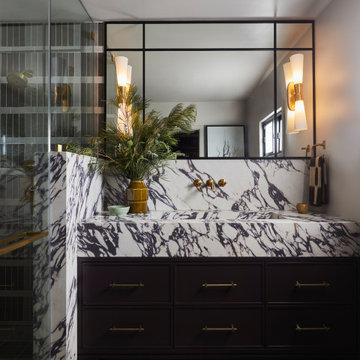
This bathroom pairs bold stonework with refined detailing to create a sophisticated, architectural statement. Dramatic marble wraps the vanity and backsplash, its expressive veining delivering movement and contrast against the clean-lined silhouette. The integrated stone sink reinforces a seamless, monolithic look while elevating the overall design.
Deep-toned cabinetry grounds the composition, accented with warm brass hardware that adds subtle polish and cohesion. A black-framed mirror introduces structure and symmetry, flanked by sculptural sconces that provide soft, flattering light. The layered materials continue into the adjacent shower, where glass and tile contribute depth and texture without overwhelming the space.
The result is a richly layered bath that feels modern, tailored, and timeless, balancing bold material choices with thoughtful refinement.

 Architect
One of the biggest shifts in home design over the past few years has been a move away from matchy-matchy, big-box decor toward spaces that feel personal, layered, and collected over time. If you've been searching for ways to add that "collected" quality to your own home, hand-carved wooden accent pieces are one of the most effective — and most overlooked — tools for achieving it.
Here's how to use them well, where they work best, and what to avoid.
Why Collected Spaces Read as More Designed
Design professionals often talk about the difference between a "decorated" room and a "collected" one. A decorated room looks like it was purchased all at once from a single catalog. A collected room looks like it evolved — pieces gathered over time, each with its own texture, material, and story.
Wooden objects, such as these hand-carved wooden ducks, contribute to that collected feeling almost instantly, for a simple reason: no two pieces are exactly alike. Unlike resin or plastic decor cast from a single mold, hand-carved pieces carry small variations — a slightly different grain pattern, a unique brushstroke, a subtle asymmetry — that read as authentic rather than mass-produced. That authenticity is what separates a space that feels curated from one that feels furnished.
Where Hand-Carved Wooden Accents Work Best
Entry tables and consoles. A single carved piece paired with a stack of books or a low bowl creates an intentional first impression without overwhelming a small surface.
Open shelving. Bookshelves benefit enormously from three-dimensional objects breaking up rows of spines. Tuck a carved piece between book stacks at varying heights to create visual rhythm.
Mantels. Grouping in odd numbers — three or five — with varied heights creates a naturally balanced display. Mix in a taper candle or two for additional height variation.
Kitchen windowsills. Smaller carved pieces catch natural light beautifully and add warmth to an otherwise utilitarian space.
Nightstands and dressers. A single small piece here adds personality without requiring extra surface space.
Styling Principles That Make the Difference
- Let one material contrast do the work.Wood against smooth ceramic, matte metal, or glass creates textural interest without needing additional colors or patterns. If your space already has a lot of wood tones (flooring, cabinetry, furniture), look for carved pieces in a slightly different wood finish to keep them from disappearing into the background.
- Odd numbers, varied heights.This is a foundational styling rule for a reason — it works. Groupings of three tend to feel more intentional than pairs, and varying the height of each object (using books or small risers if needed) prevents a flat, lined-up look.
- Give each piece breathing room.One of the most common styling mistakes is overcrowding a surface. A single well-chosen carved piece with negative space around it reads as more expensive and more intentional than five pieces crammed together.
- Rotate seasonally.Because hand-carved pieces are often designed as individual characters or figures, many collections include seasonal or themed variations. Swapping a neutral piece for a seasonal one is a low-effort way to refresh a space without a full redesign.
- Mix textures, not just objects.Pair a carved wooden piece with something soft (a linen table runner), something reflective (a brass tray), and something organic (fresh greenery or dried botanicals) to build a layered vignette rather than a single-note display.

 Champion Floor Company
The homeowners of this Mid Century Modern home in Creve Coeur are a young Architect and his wife and their two young sons. Being avid collectors of Mid Century Modern furniture and furnishings, they purchased their Atomic Ranch home, built in the 1970s, and saw in it a perfect future vessel for their lifestyle. Nothing had been done to the home in 40 years but they saw it as a fresh palette. The walls separating the kitchen from the dining, living, and entry areas were removed. Support beams and columns were created to hold the loads. The kitchen and laundry facilities were gutted and the living areas refurbished. They saw open space with great light, just waiting to be used. As they waited for the perfect time, they continued collecting. The Architect purchased their Claritone, of which less than 50 are in circulation: two are in the Playboy Mansion, and Frank Sinatra had four. They found their Bertoia wire chairs, and Eames and Baby Eames rockers. The chandelier over the dining room was found in a Los Angeles prop studio. The dining table and benches were made from the reclaimed wood of a beam that was removed, custom designed and made by Mwanzi and Co. The flooring is white oak with a white stain. Chairs are by Kartell. The lighting pendants over the island are by Tom Dixon and were found at Centro in St. Louis. Appliances were collected as they found them on sale and were stored in the garage along with the collections, until the time was right.. Even the dog was curated...from a South Central Los Angeles Animal Shelter!


136