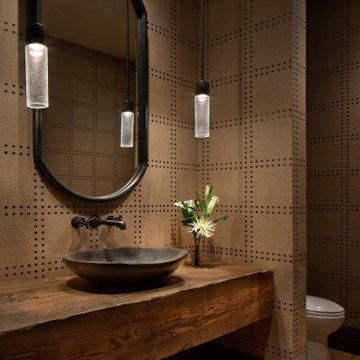
Search results for "Default" in Home Design Ideas

Natural
1x coat of ZINSSER®SealCoat™ Universal Sanding Sealer.
1x coat of Water-Based Oil-Modified polyurethane by default.
1x final coat of SamSeal or Masterline Oil-based polyurethane by default.
---} Finish: Semi-Gloss.
- To cover with plastic and use vacuum to do the job
- To remove current toilet from powder room and KEEP.
- Sand and refinish 2-1/4" red oak Prefinished Hardwood floors on First floor: front foyer, closet, dining room, kitchen, hallway & powder room (no family room, no living room) - 404.12 sqft
- To remove Bevels from floors on First floor: front foyer, closet, dining room, kitchen, hallway & powder room (no family room, no living room) - 404.12 sqft
- To Sand & Refinish T-moldings 3LFT + 3LFT + 3LFT between foyer to family room, dining room to living room
- To Install Unfinished Red Oak Shoe Molding to be polyurethaned on First floor: front foyer, closet, dining room, kitchen, hallway & powder room (no family room, no living room) + around powder room vanity
- To reinstall same toilet, including new ring after refinish.

Every year, the same thing happens. The first real snowfall arrives, demand for de-icing materials spikes overnight, and the businesses that waited too long find themselves scrambling for supply at the worst possible moment. Facility managers, property owners, contractors, and municipalities all depend on a steady supply of salt and ice melt to keep their properties safe and operational through winter. The ones who plan ahead sail through. The ones who don't pay more, wait longer, and take on real risk.
Sourcing de-icing materials well is not complicated, but it does require thinking ahead and understanding the options. The choices you make about what to buy, how to buy it, and who to buy it from have a direct effect on your costs, your reliability, and your ability to keep people safe when conditions turn dangerous. This article lays out what matters.
Why Your Choice of Supplier Matters More Than You Think
It is easy to treat de-icing material as a commodity, something you grab whenever you need it without much thought about where it comes from. That works fine until the moment it doesn't, usually in the middle of a storm when everyone needs supply at once and the casual sources have run dry. At that point, the relationships you built before the season become the difference between staying stocked and being stuck.
Reliable supply is the whole game in winter operations. A property that runs out of ice melt during a storm faces safety hazards, liability exposure, and disruption, none of which can wait for a back-ordered shipment. This is why establishing relationships with dependable rock salt suppliers before the season starts is one of the smartest moves a facility manager or contractor can make. It locks in supply, often locks in better pricing, and removes a major source of mid-winter stress.
The lesson here is to treat sourcing as a planning decision rather than a last-minute errand. The businesses that come through winter smoothly are almost always the ones that secured their supply chain early, chose suppliers who could actually deliver when it counted, and never had to gamble on finding material during a shortage. Reliability bought in advance is far cheaper than scarcity paid for in a crisis.
Bagged or Bulk: Matching the Material to the Job
One of the first practical decisions is whether to buy de-icing material in bags or in bulk, and the right answer depends entirely on the operation. Each format has clear advantages, and many operations end up using both for different purposes.
Bagged material offers convenience, control, and easy storage. It is simple to handle, easy to distribute to different locations or crews, straightforward to store without special equipment, and convenient for spot application by hand. It suits smaller properties, businesses without bulk storage, and situations where portion control and tidiness matter. Bulk material, on the other hand, tends to make sense for large operations that go through high volumes, where buying in quantity lowers the per-unit cost and the operation has the equipment and space to store and handle it. The tradeoff is between the convenience and flexibility of bags and the volume economics of bulk.
For many operations, the right approach is a mix: bulk for the high-volume core of the work and bags for flexibility, spot treatment, and locations where bulk handling is impractical. The key is to match the format to how the material will actually be stored, moved, and applied, rather than defaulting to one or the other out of habit. Thinking this through in advance avoids both the waste of over-buying bulk you can't handle and the expense of relying entirely on bags for a large operation.
Rock Salt Is Not Your Only Option
Rock salt, or sodium chloride, is the workhorse of winter de-icing for good reason. It is effective, widely available, and cost-efficient, which makes it the default choice for most operations most of the time. But it has limits, and understanding the alternatives helps you choose the right material for the conditions you actually face.
The most important limitation is temperature. Rock salt becomes less effective as temperatures drop, and in genuinely cold conditions it can struggle to do the job at all. This is where alternatives come in. Calcium chloride, for instance, works at much lower temperatures than rock salt and acts quickly, which makes it valuable when conditions are severe or when fast melting matters. Operations that face hard freezes or need dependable performance in extreme cold often keep calcium chloride for sale on hand for exactly those situations, using it alongside rock salt rather than instead of it.
The practical approach is to understand the conditions your property faces and stock accordingly. For many operations, rock salt handles the bulk of the work while a faster, colder-rated material like calcium chloride covers the extreme days when ordinary salt falls short. Matching the material to the temperature and the urgency of the situation is what separates an operation that stays ahead of winter from one that is constantly reacting to it.
Securing Your Supply Before the Season
Knowing what to buy is only half the equation. The other half is making sure you can actually get it when you need it, which means securing your supply before winter arrives rather than after it has already started. Timing is one of the most underrated factors in winter operations.
The logic is simple. Demand for de-icing materials is highly seasonal and spikes sharply during storms, when everyone needs supply simultaneously. Prices and availability both move against the buyer at exactly those moments. By contrast, planning ahead, estimating your needs and arranging supply before the season, puts you in a far stronger position. Working with established rock salt suppliers ahead of time means your material is accounted for before the rush, often at better pricing and with the confidence that it will be there when the first storm hits.
This kind of planning also lets you think clearly rather than react under pressure. You can estimate your seasonal needs based on your property and past winters, decide on the right mix of materials and formats, and arrange storage in advance. Operations that do this consistently spend less, worry less, and never find themselves making frantic calls during a storm. The effort of planning ahead is modest, and the payoff in reliability and cost savings is substantial.
Storing and Handling What You Buy
Securing supply is not much use if the material degrades before you can use it, which makes proper storage and handling an important and often overlooked part of the equation. De-icing materials are sensitive to moisture, and poor storage can turn a good supply into a clumped, hardened mess that is difficult to apply.
The fundamentals are straightforward. Keep material dry and protected from moisture, since salt and ice melt readily absorb water and can harden if exposed. Store it in a way that suits the format, whether that means a proper bulk storage area or a dry space for stacked bags. Keep it accessible, so crews can get to it quickly when a storm hits and time is short. And handle it with the right equipment for the format and volume, which protects both the material and the people working with it. None of this is complicated, but neglecting it can undermine even a well-planned supply.
Good storage practices protect the investment you made in securing supply early. There is little point in arranging your materials ahead of the season only to have them degrade before use. Treating storage and handling as part of the overall plan, rather than an afterthought, ensures that the material you secured is actually usable when the moment comes. It is the final link in a supply chain built to perform under winter conditions.
Estimating How Much You Actually Need
One question trips up operations of every size: how much de-icing material to buy. Order too little and you risk running short during a storm. Order too much and you tie up money and storage space in material you may not use. Getting the estimate reasonably right is a meaningful part of sourcing well.
Several factors shape the answer. The size and type of the areas you treat, sidewalks, lots, entrances, and drive lanes, set the baseline for how much material each application consumes. The local climate matters too, since colder regions and those with frequent snowfall go through far more material than milder ones. Application frequency depends on how often storms hit and how quickly surfaces need to be cleared, which varies with the kind of property and the expectations of the people who use it. And the type of material plays a role, since different products are applied at different rates.
Past experience is often the best guide. Operations that track what they used in previous winters, adjusted for the size of the property and the severity of the season, can estimate their needs with reasonable confidence. For newer operations without that history, it helps to plan conservatively and to work with a supplier who can replenish stock reliably, so that a low estimate does not turn into a mid-storm shortage.
The goal is not perfect precision but a sound, slightly cautious estimate paired with a dependable supply relationship. That combination lets an operation keep enough material on hand to handle the season without over-committing to volume it cannot store or use. Thinking this through before winter, rather than guessing during it, is one more way that planning ahead pays off when the snow starts to fall.
The Bottom Line
Sourcing de-icing materials well comes down to a few straightforward principles: plan ahead, choose reliable suppliers before the season, match your materials and formats to your actual needs and conditions, and store what you buy properly. The operations that follow these principles move through winter with confidence, while those that improvise pay more and take on needless risk.
Winter is predictable in one respect: it arrives every year, and demand for de-icing material spikes the moment it does. The businesses that prepare for that reality, rather than being surprised by it, are the ones that keep their properties safe, their costs controlled, and their operations running no matter what the season throws at them. A little foresight before the first snowfall pays off through every storm that follows.

Natural
1x coat of ZINSSER®SealCoat™ Universal Sanding Sealer.
1x coat of Water-Based Oil-Modified polyurethane by default.
1x final coat of SamSeal or Masterline Oil-based polyurethane by default.
---} Finish: Semi-Gloss.
- To cover with plastic and use vacuum to do the job
- To remove current toilet from powder room and KEEP.
- Sand and refinish 2-1/4" red oak Prefinished Hardwood floors on First floor: front foyer, closet, dining room, kitchen, hallway & powder room (no family room, no living room) - 404.12 sqft
- To remove Bevels from floors on First floor: front foyer, closet, dining room, kitchen, hallway & powder room (no family room, no living room) - 404.12 sqft
- To Sand & Refinish T-moldings 3LFT + 3LFT + 3LFT between foyer to family room, dining room to living room
- To Install Unfinished Red Oak Shoe Molding to be polyurethaned on First floor: front foyer, closet, dining room, kitchen, hallway & powder room (no family room, no living room) + around powder room vanity
- To reinstall same toilet, including new ring after refinish.
Find the right local pro for your project

When our clients came to us, their master bathroom was doing them no favors. An awkwardly oversized corner tub that hadn't seen a bubble bath in years, a shower barely large enough to turn around in, and a color palette best described as "contractor default." The bones were there — a generously sized footprint — but the space had zero personality and even less function.
Our first move was rethinking how the square footage was being used. Out went the hulking corner tub, and in its place: a spa-worthy walk-in shower that finally earns the space it occupies. Classic white subway tile with soft gray grout lines gives it a timeless foundation, while dual showerheads — a traditional wall-mount and a ceiling-mounted rain shower — turn every morning into something worth waking up for. Built-in niches keep everything organized without interrupting the clean aesthetic.
The commode room got a full character transplant. Wainscoting grounds the space with architectural detail, while a custom nautical map wallcovering wraps the room in something deeply personal — a curated cartographic love letter to the waterways and places that matter most to this family. The addition of a traditional pedestal bidet elevates both the function and the feeling of the space.
Back in the main bathroom, the clients' personality finally has a place to live. A bold, saturated blue on the custom double vanity cabinetry makes an unapologetic statement — the kind that makes you smile every time you walk in. Wall-mounted brushed nickel faucets and coordinating hardware keep the look polished and cohesive throughout. A heated towel rack and radiant heated floors are the quiet luxuries that tip this bathroom from "really nice" into "I never want to leave."
New windows flood the space with natural light, making the already generous footprint feel even more expansive and bringing out the best in every finish and material choice.
The result is a bathroom that works as hard as it looks good — and one that finally, unmistakably, feels like them.

When our clients came to us, their master bathroom was doing them no favors. An awkwardly oversized corner tub that hadn't seen a bubble bath in years, a shower barely large enough to turn around in, and a color palette best described as "contractor default." The bones were there — a generously sized footprint — but the space had zero personality and even less function.
Our first move was rethinking how the square footage was being used. Out went the hulking corner tub, and in its place: a spa-worthy walk-in shower that finally earns the space it occupies. Classic white subway tile with soft gray grout lines gives it a timeless foundation, while dual showerheads — a traditional wall-mount and a ceiling-mounted rain shower — turn every morning into something worth waking up for. Built-in niches keep everything organized without interrupting the clean aesthetic.
The commode room got a full character transplant. Wainscoting grounds the space with architectural detail, while a custom nautical map wallcovering wraps the room in something deeply personal — a curated cartographic love letter to the waterways and places that matter most to this family. The addition of a traditional pedestal bidet elevates both the function and the feeling of the space.
Back in the main bathroom, the clients' personality finally has a place to live. A bold, saturated blue on the custom double vanity cabinetry makes an unapologetic statement — the kind that makes you smile every time you walk in. Wall-mounted brushed nickel faucets and coordinating hardware keep the look polished and cohesive throughout. A heated towel rack and radiant heated floors are the quiet luxuries that tip this bathroom from "really nice" into "I never want to leave."
New windows flood the space with natural light, making the already generous footprint feel even more expansive and bringing out the best in every finish and material choice.
The result is a bathroom that works as hard as it looks good — and one that finally, unmistakably, feels like them.

CHR123 Fairweather High Quality Ivory S-Fold Curtain Tracks Ceiling/Wall Mount. The default roller distance is 60mm. The default S Fold tap distance is 145mm. If the track is 100cm, you need a 255cm curtain tap. S Fold curtain track and S Fold curtain tape can make the curtains more beautiful.

Natural
1x coat of ZINSSER®SealCoat™ Universal Sanding Sealer.
1x coat of Water-Based Oil-Modified polyurethane by default.
1x final coat of SamSeal or Masterline Oil-based polyurethane by default.
---} Finish: Semi-Gloss.
- To cover with plastic and use vacuum to do the job
- To remove current toilet from powder room and KEEP.
- Sand and refinish 2-1/4" red oak Prefinished Hardwood floors on First floor: front foyer, closet, dining room, kitchen, hallway & powder room (no family room, no living room) - 404.12 sqft
- To remove Bevels from floors on First floor: front foyer, closet, dining room, kitchen, hallway & powder room (no family room, no living room) - 404.12 sqft
- To Sand & Refinish T-moldings 3LFT + 3LFT + 3LFT between foyer to family room, dining room to living room
- To Install Unfinished Red Oak Shoe Molding to be polyurethaned on First floor: front foyer, closet, dining room, kitchen, hallway & powder room (no family room, no living room) + around powder room vanity
- To reinstall same toilet, including new ring after refinish.

We took helm of this project in Morton Grove, an area of Southside Chicago, when the property's contractor defaulted on the project midway. We provided full fixes and updates of all carpentry and electrical work, as well as a major rehab of the kitchen, bathrooms, and basement - addng new mechanical elements and completely reconfiguring the layout.

We took helm of this project in Morton Grove, an area of Southside Chicago, when the property's contractor defaulted on the project midway. We provided full fixes and updates of all carpentry and electrical work, as well as a major rehab of the kitchen, bathrooms, and basement - addng new mechanical elements and completely reconfiguring the layout.

Kitchen - contemporary dark wood floor kitchen idea in Calgary with an undermount sink, shaker cabinets, white cabinets, gray backsplash, colored appliances and an island

Great room - contemporary dark wood floor great room idea in Vancouver with white walls

When space becomes a limitation or hindrance at any residence, calling an expert like Sunshine Remodelers, works out perfectly well. Their experts in home remodeling in Inglewood help create a beautiful & functional living area that is amply spacious, and serves all your daily requirements in the most seamless and easy manner.
Home Remodeling Contractors in Inglewood, CA - https://www.sunshineremodelers.com/

When space becomes a limitation or hindrance at any residence, calling an expert like Sunshine Remodelers, works out perfectly well. Their experts in home remodeling in Inglewood help create a beautiful & functional living area that is amply spacious, and serves all your daily requirements in the most seamless and easy manner.
Home Remodeling Contractors in Inglewood, CA - https://www.sunshineremodelers.com/

Sliding glass barn doors for the wine room. Different roller styles available.
Ed Ellis Photography
Wine cellar - mid-sized modern wine cellar idea in Edmonton

Fredrik Karlsson
Large danish formal painted wood floor living room photo in Gothenburg with beige walls and a wood stove

Brandon Barre
Example of a transitional open concept dark wood floor living room design in Toronto with beige walls and a standard fireplace

Stephani Buchman Photography
Gender-neutral carpeted and beige floor nursery photo in Toronto with blue walls

Inspiration for a small contemporary living room remodel in Delhi with white walls

PhotoluxStudio.com/commercial - Christian Lalonde / Kariouk & Associates
Living room - scandinavian open concept light wood floor living room idea in Ottawa with a wood stove
9