
Search results for "Deterioration" in Home Design Ideas
 Chimneyz
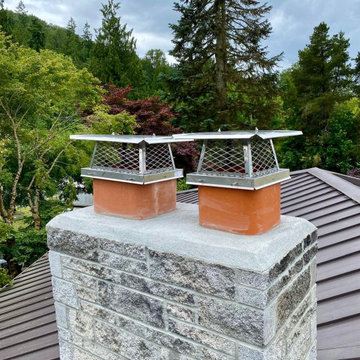
A complete chimney rebuild for a homeowner in Snoqualmie. The original brick chimney had reached the end of its lifespan — the crown was cracked, mortar joints were failing, and water damage was beginning to spread into the surrounding roofing. Rather than patch a failing structure, the homeowner chose to rebuild the chimney from the roofline up.
We tore down the deteriorated upper portion of the chimney and rebuilt it using natural stacked stone for a finished look that blends with the home's wooded surroundings. Two custom stainless steel multi-flue caps were installed to protect both flues from rain, debris, and animals while allowing safe ventilation. A new pre-cast concrete crown ties everything together and channels water away from the masonry below.
Scope of work:
- Demo of failing brick crown and upper chimney
- Structural assessment of remaining chimney base
- Custom stone veneer and mortar work for new chimney
- Pre-cast concrete crown installation with proper drip edge
- Custom-fit stainless steel multi-flue caps with spark arrestor screens
- Full waterproofing and weather protection
- Roof flashing inspection and minor repair as needed
The result: a chimney built to last another 50+ years — beautiful, functional, and perfectly matched to the home's natural surroundings. Family-owned. Licensed and bonded in Washington State.
 Bellus & Aisthesis (B&A)
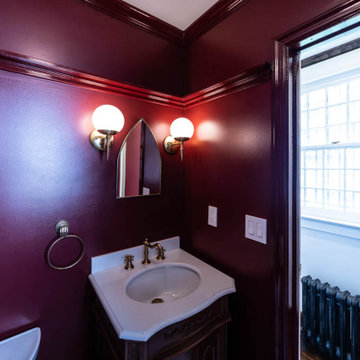
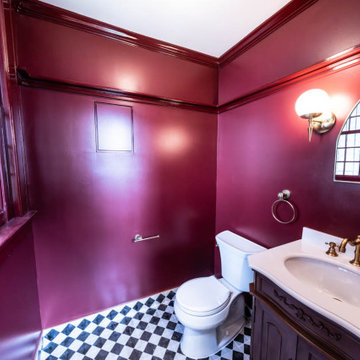
Vicarage renovation and restoration project for St. Andrew’s Church. The vicarage had a flood damaging the entire 1st floor. Over the years the space had deteriorated and various tenants had painted over and over and even put stables into 120 year old moldings and other wood detail. We wanted to bring the original integrity back to the space by matching the original hardwood flooring, refinishing and staining moldings where possible, building & extending moldings to match where they could not be salvaged, such as the plate rail that was missing parts, and removing old gunky paint. It was also important to make the space feel fresh and beautiful. The church has Gothic elements so we wanted to bring that feeling along with the beauty of the church into the vicarage space.
The bathroom echoed the kitchen cabinetry in classic burgundy but we painted the moldings, including the plate rail which we built, in high gloss for an elevated look. The flooring in black & white checker pattern is a nod to flooring common in churches around the world. The arched mirror and sconces are reminiscent of the gothic elements at St. Andrew’s. We also added the fun hand detailed towel ring and toilet paper holder.

 Three Tree Roofing
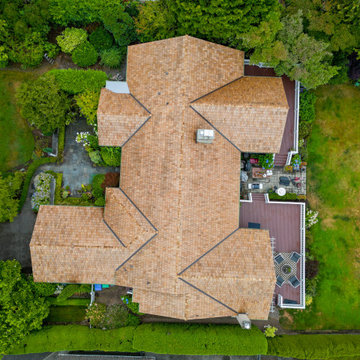
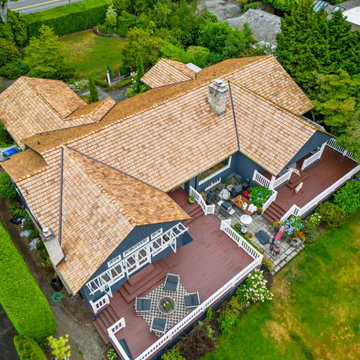
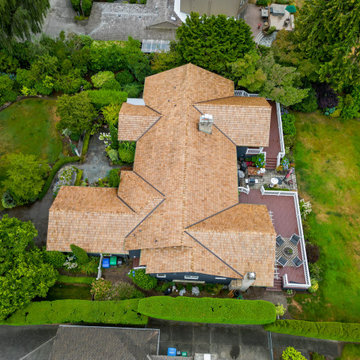
This impressive cedar shake shingle roof, prized for its beauty and sustainability, is located in Shoreline, Washington. Over time, the old cedar shake shingle roof had deteriorated, birds had begun to peck holes in it, and little critters had started to burrow and build nests in the wood. We removed the old cedar shake shingle roof, recycled it, and installed a premium three-quarter hand split cedar shake shingle roof. It’s a beautiful and environmentally friendly wood that comes with a 50-year CCA-treated warranty. The CCA treatment for longevity means the wood is injected with a treatment that prevents insects from growing into the wood which is a very important step. This treatment step is often omitted much of the time on lower quality wood leading to a very short life span of the cedar shake itself.
Three Tree Roofing uses quality wood that will last a very long time. When we install cedar shake shingles, it’s important to use stainless steel fasteners. The reason we use steel fasteners is that the CCA treatment will eat through all other metal fasteners. We use stainless steel so that doesn’t happen. We have an expert roofing crew that specializes in cedar shake shingle installs. It’s a skill that our highly dedicated crew uses every day. If you have any questions about residential or commercial roofing, feel free to contact us for your new roof or give us a call at 206-312-7663 (ROOF)!
Find the right local pro for your project
 Tile Doctor Ltd
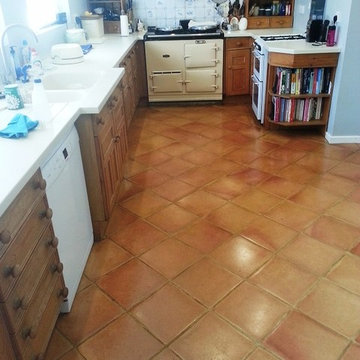
As part of our service we advise customers on best practice for maintaining the appearance of the floor and I’m happy to report this client in Ampthill who has a Terracotta tiled floor that we had fully restored a few years ago had followed to the letter.
Having two dogs and two children, the floor gets a lot of traffic and as expected over a period of time the sealer does wear thin in the busier areas. Should the sealer become too damaged dirt can get underneath and gradually the seal will deteriorate to the point where restoration will be needed again.
By keeping on top of the maintenance our client has kept a beautiful terracotta floor in great condition however as the sealer was wearing he called us back to do a maintenance clean and top up the sealer an activity which we are able to complete in one day rather than the several days needed to do a full restoration.
To maintain the floor, I applied a Tile Doctor fine diamond burnishing pad fitted to a rotary machine and with a little water sprayed onto the tiles to lubricate the process the top was burnished, this took the dirt off the top of the tiles and left a clean surface to top up the seal. The floor was then rinsed to remove the soil generated by the process.
Having removed any damaged sealer an industrial air mover was switched on to get the floor as dry as possible, we then tested the damp levels at various intervals until the floor was dry for re-sealing.
To re-seal two coats of Tile Doctor Seal and Go we applied to the floor allowing the first coat to dry before applying the second. Once the second coat had dried a white polishing pad was used to buff the tiles.
Andrew Evans
Bedfordshire Tile Doctor
 Colorworks Landscape Design
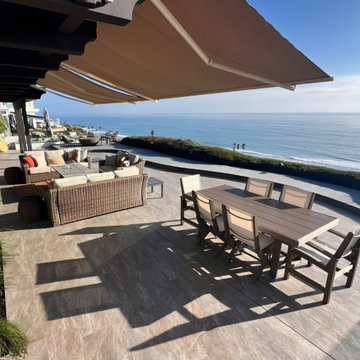
A full demo-to-finish backyard reinvention — replacing aging slate, deteriorating block walls, and an outdated fire feature with a refined, high-performance outdoor living space anchored by large-format porcelain tile, custom masonry planters, and integrated lighting.
Materials Used:
* 12" x 24" porcelain tile with colored grout
* CMU block planters with #3 rebar, concrete fill, smooth stucco finish & Valori-style pre-cast concrete caps
* TREX composite decking on pressure-treated frame with concrete footings
* C-joint membrane and Schluter-type anti-fracture membrane system
* Low-voltage LED landscape lighting (18 fixtures)
* Micro-channel and channel drain drainage system
* Drip irrigation throughout
Scope of Work: Full demolition of existing patio, BBQ area, block walls, and fire feature. Regrading to new levels. Drainage and irrigation installation. Large-format porcelain tile across the full patio field. Custom CMU raised planters with stucco finish — patio and side yard. TREX deck reconfiguration and walkway extension. Natural gas line trenched and permitted at four riser locations. Planting of 27 five-gallon shrubs with fresh soil mix. Full site protection throughout construction. 3-D renderings produced prior to build.
The Result: A backyard built to perform as well as it looks — designed for Southern California's climate, finished to a standard that lasts for decades.
 Three Tree Roofing
This impressive cedar shake shingle roof, prized for its beauty and sustainability, is located in Shoreline, Washington. Over time, the old cedar shake shingle roof had deteriorated, birds had begun to peck holes in it, and little critters had started to burrow and build nests in the wood. We removed the old cedar shake shingle roof, recycled it, and installed a premium three-quarter hand split cedar shake shingle roof. It’s a beautiful and environmentally friendly wood that comes with a 50-year CCA-treated warranty. The CCA treatment for longevity means the wood is injected with a treatment that prevents insects from growing into the wood which is a very important step. This treatment step is often omitted much of the time on lower quality wood leading to a very short life span of the cedar shake itself.
Three Tree Roofing uses quality wood that will last a very long time. When we install cedar shake shingles, it’s important to use stainless steel fasteners. The reason we use steel fasteners is that the CCA treatment will eat through all other metal fasteners. We use stainless steel so that doesn’t happen. We have an expert roofing crew that specializes in cedar shake shingle installs. It’s a skill that our highly dedicated crew uses every day. If you have any questions about residential or commercial roofing, feel free to contact us for your new roof or give us a call at 206-312-7663 (ROOF)!
 Three Tree Roofing
This impressive cedar shake shingle roof, prized for its beauty and sustainability, is located in Shoreline, Washington. Over time, the old cedar shake shingle roof had deteriorated, birds had begun to peck holes in it, and little critters had started to burrow and build nests in the wood. We removed the old cedar shake shingle roof, recycled it, and installed a premium three-quarter hand split cedar shake shingle roof. It’s a beautiful and environmentally friendly wood that comes with a 50-year CCA-treated warranty. The CCA treatment for longevity means the wood is injected with a treatment that prevents insects from growing into the wood which is a very important step. This treatment step is often omitted much of the time on lower quality wood leading to a very short life span of the cedar shake itself.
Three Tree Roofing uses quality wood that will last a very long time. When we install cedar shake shingles, it’s important to use stainless steel fasteners. The reason we use steel fasteners is that the CCA treatment will eat through all other metal fasteners. We use stainless steel so that doesn’t happen. We have an expert roofing crew that specializes in cedar shake shingle installs. It’s a skill that our highly dedicated crew uses every day. If you have any questions about residential or commercial roofing, feel free to contact us for your new roof or give us a call at 206-312-7663 (ROOF)!
 All Surface Restoration
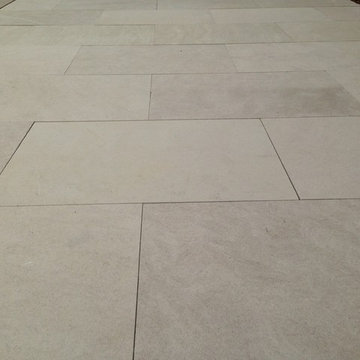
Surface Saver Sealer is a water-based Silane-Siloxane water repellent and impregnating sealer for porous concrete and masonry surfaces. Surface Saver penetrates up to 1/4 to form a chemical bond deep within the substrate to provide long lasting protection against deterioration or staining due to water absorption. Surface Saver will not impair the natural breathing characteristics of treated substrates, nor will it produce a film or coating. Surface Saver will help concrete and masonry surfaces to resist common issues such as cracking, efflorescence, spalling, staining, and other damages caused by intrusion of water. Surface Saver will also help to reduce the formation of efflorescence and the growth of mold and mildew.
Uses: Unsealed concrete, broom finished concrete, trowel finished concrete, stamped colored concrete, exposed aggregate concrete, concrete pavers, brick pavers, pavers, clay tile, unglazed tile, cement, brick, stone, and other masonry.
Common Applications: driveway sealer, walkway and sidewalk sealer, patio and pool deck sealer, brick house and chimney sealer, clay tile roof sealer, garage floor sealer, warehouse floor sealer, basement wall and floor sealer, and other concrete and masonry applications.
Surface Saver maintain the natural, unsealed look and feel of the substrate. Will never peel, flake or fade. UV resistant, non-yellowing. No surface film or coating to maintain.
Resistant to freeze-thaw cycles and de-icing salts.
Provides excellent resistance to mold, mildew, and fungus.
Can be applied to interior & exterior, vertical & horizontal, above & below grade surfaces.
Surface Saver Sealer will cause water and other liquids to bead off the surface.
Breathable, low VOC.
5 gallon covers up to 750-1000 Square Feet in one coat, or up to 500 Square feet in 2 coats.
Surface Saver Sealer can be purchased in 5 gallon pails shipped UPS Ground to all 48 U.S. States except Alaska & Hawaii at: www.surfacerestoration.com/shop
 Three Tree Roofing
This impressive cedar shake shingle roof, prized for its beauty and sustainability, is located in Shoreline, Washington. Over time, the old cedar shake shingle roof had deteriorated, birds had begun to peck holes in it, and little critters had started to burrow and build nests in the wood. We removed the old cedar shake shingle roof, recycled it, and installed a premium three-quarter hand split cedar shake shingle roof. It’s a beautiful and environmentally friendly wood that comes with a 50-year CCA-treated warranty. The CCA treatment for longevity means the wood is injected with a treatment that prevents insects from growing into the wood which is a very important step. This treatment step is often omitted much of the time on lower quality wood leading to a very short life span of the cedar shake itself.
Three Tree Roofing uses quality wood that will last a very long time. When we install cedar shake shingles, it’s important to use stainless steel fasteners. The reason we use steel fasteners is that the CCA treatment will eat through all other metal fasteners. We use stainless steel so that doesn’t happen. We have an expert roofing crew that specializes in cedar shake shingle installs. It’s a skill that our highly dedicated crew uses every day. If you have any questions about residential or commercial roofing, feel free to contact us for your new roof or give us a call at 206-312-7663 (ROOF)!
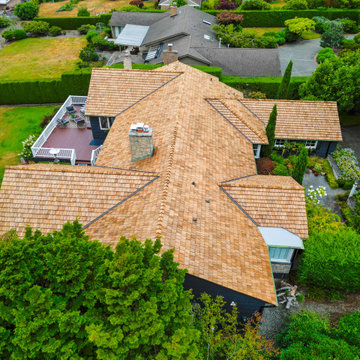 Three Tree Roofing
This impressive cedar shake shingle roof, prized for its beauty and sustainability, is located in Shoreline, Washington. Over time, the old cedar shake shingle roof had deteriorated, birds had begun to peck holes in it, and little critters had started to burrow and build nests in the wood. We removed the old cedar shake shingle roof, recycled it, and installed a premium three-quarter hand split cedar shake shingle roof. It’s a beautiful and environmentally friendly wood that comes with a 50-year CCA-treated warranty. The CCA treatment for longevity means the wood is injected with a treatment that prevents insects from growing into the wood which is a very important step. This treatment step is often omitted much of the time on lower quality wood leading to a very short life span of the cedar shake itself.
Three Tree Roofing uses quality wood that will last a very long time. When we install cedar shake shingles, it’s important to use stainless steel fasteners. The reason we use steel fasteners is that the CCA treatment will eat through all other metal fasteners. We use stainless steel so that doesn’t happen. We have an expert roofing crew that specializes in cedar shake shingle installs. It’s a skill that our highly dedicated crew uses every day. If you have any questions about residential or commercial roofing, feel free to contact us for your new roof or give us a call at 206-312-7663 (ROOF)!
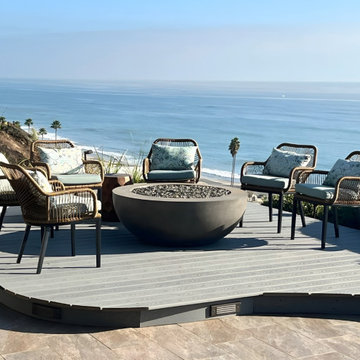 Colorworks Landscape Design
A full demo-to-finish backyard reinvention — replacing aging slate, deteriorating block walls, and an outdated fire feature with a refined, high-performance outdoor living space anchored by large-format porcelain tile, custom masonry planters, and integrated lighting.
Materials Used:
* 12" x 24" porcelain tile with colored grout
* CMU block planters with #3 rebar, concrete fill, smooth stucco finish & Valori-style pre-cast concrete caps
* TREX composite decking on pressure-treated frame with concrete footings
* C-joint membrane and Schluter-type anti-fracture membrane system
* Low-voltage LED landscape lighting (18 fixtures)
* Micro-channel and channel drain drainage system
* Drip irrigation throughout
Scope of Work: Full demolition of existing patio, BBQ area, block walls, and fire feature. Regrading to new levels. Drainage and irrigation installation. Large-format porcelain tile across the full patio field. Custom CMU raised planters with stucco finish — patio and side yard. TREX deck reconfiguration and walkway extension. Natural gas line trenched and permitted at four riser locations. Planting of 27 five-gallon shrubs with fresh soil mix. Full site protection throughout construction. 3-D renderings produced prior to build.
The Result: A backyard built to perform as well as it looks — designed for Southern California's climate, finished to a standard that lasts for decades.
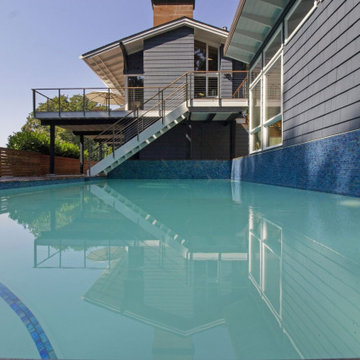
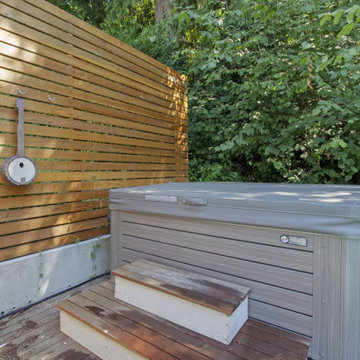
 Better Builders
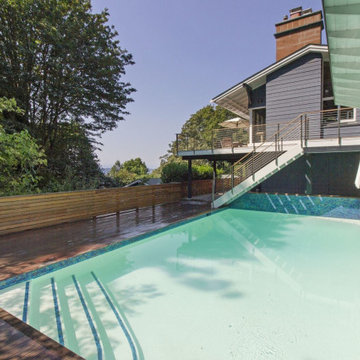
Nestled on a steep, hard-to-access lot, this home and pool presented unique challenges. The aging pool had tilted more than four inches downhill, and with limited backyard access and a tight budget, a full replacement wasn’t an option. Instead, a creative design solution—one of our specialties—allowed for a seamless repair, featuring a new concrete coping and a vibrant tile accent that revitalized the space.
The outdoor transformation didn’t stop there. The deteriorating decks required a complete rebuild, and the homeowners envisioned a detached art studio tucked into their nature-filled backyard. By embracing the site’s complexities, we crafted a design that connected the elevated outdoor living areas to the pool and studio, creating a cohesive, functional retreat.
Every detail was executed with precision. Linear decking and cable rail demanded meticulous planning, while IPE wood was chosen for its natural beauty and durability. Thoughtful design elements—like the IPE wood cap that unifies the pool’s edge and art studio wall and a horizontal privacy fence that visually expands the space—elevate the project beyond a renovation. This is a space built not just for beauty, but for lasting enjoyment.
 Better Builders
Nestled on a steep, hard-to-access lot, this home and pool presented unique challenges. The aging pool had tilted more than four inches downhill, and with limited backyard access and a tight budget, a full replacement wasn’t an option. Instead, a creative design solution—one of our specialties—allowed for a seamless repair, featuring a new concrete coping and a vibrant tile accent that revitalized the space.
The outdoor transformation didn’t stop there. The deteriorating decks required a complete rebuild, and the homeowners envisioned a detached art studio tucked into their nature-filled backyard. By embracing the site’s complexities, we crafted a design that connected the elevated outdoor living areas to the pool and studio, creating a cohesive, functional retreat.
Every detail was executed with precision. Linear decking and cable rail demanded meticulous planning, while IPE wood was chosen for its natural beauty and durability. Thoughtful design elements—like the IPE wood cap that unifies the pool’s edge and art studio wall and a horizontal privacy fence that visually expands the space—elevate the project beyond a renovation. This is a space built not just for beauty, but for lasting enjoyment.
 Bellus & Aisthesis (B&A)
Vicarage renovation and restoration project for St. Andrew’s Church. The vicarage had a flood damaging the entire 1st floor. Over the years the space had deteriorated and various tenants had painted over and over and even put stables into 120 year old moldings and other wood detail. We wanted to bring the original integrity back to the space by matching the original hardwood flooring, refinishing and staining moldings where possible, building & extending moldings to match where they could not be salvaged, such as the plate rail that was missing parts, and removing old gunky paint. It was also important to make the space feel fresh and beautiful. The church has Gothic elements so we wanted to bring that feeling along with the beauty of the church into the vicarage space.
The bathroom echoed the kitchen cabinetry in classic burgundy but we painted the moldings, including the plate rail which we built, in high gloss for an elevated look. The flooring in black & white checker pattern is a nod to flooring common in churches around the world. The arched mirror and sconces are reminiscent of the gothic elements at St. Andrew’s. We also added the fun hand detailed towel ring and toilet paper holder.
 Better Builders
Nestled on a steep, hard-to-access lot, this home and pool presented unique challenges. The aging pool had tilted more than four inches downhill, and with limited backyard access and a tight budget, a full replacement wasn’t an option. Instead, a creative design solution—one of our specialties—allowed for a seamless repair, featuring a new concrete coping and a vibrant tile accent that revitalized the space.
The outdoor transformation didn’t stop there. The deteriorating decks required a complete rebuild, and the homeowners envisioned a detached art studio tucked into their nature-filled backyard. By embracing the site’s complexities, we crafted a design that connected the elevated outdoor living areas to the pool and studio, creating a cohesive, functional retreat.
Every detail was executed with precision. Linear decking and cable rail demanded meticulous planning, while IPE wood was chosen for its natural beauty and durability. Thoughtful design elements—like the IPE wood cap that unifies the pool’s edge and art studio wall and a horizontal privacy fence that visually expands the space—elevate the project beyond a renovation. This is a space built not just for beauty, but for lasting enjoyment.

 All Surface Restoration
Surface Saver penetrates up to 1/4 to form a chemical bond deep within the substrate to provide long lasting protection against deterioration or staining due to water absorption. Surface Saver will not impair the natural breathing characteristics of treated substrates, nor will it produce a film or coating. Surface Saver will help concrete and masonry surfaces to resist common issues such as cracking, efflorescence, spalling, staining, and other damages caused by intrusion of water. Surface Saver will also help to reduce the formation of efflorescence and the growth of mold and mildew.
Uses: Unsealed concrete, broom finished concrete, trowel finished concrete, stamped colored concrete, exposed aggregate concrete, concrete pavers, brick pavers, pavers, clay tile, unglazed tile, cement, brick, stone, and other masonry.
Common Applications: driveway sealer, walkway and sidewalk sealer, patio and pool deck sealer, brick house and chimney sealer, clay tile roof sealer, garage floor sealer, warehouse floor sealer, basement wall and floor sealer, and other concrete and masonry applications.
Surface Saver maintain the natural, unsealed look and feel of the substrate. Will never peel, flake or fade. UV resistant, non-yellowing. No surface film or coating to maintain.
Resistant to freeze-thaw cycles and de-icing salts.
Provides excellent resistance to mold, mildew, and fungus.
Can be applied to interior & exterior, vertical & horizontal, above & below grade surfaces.
Surface Saver Sealer will cause water and other liquids to bead off the surface.
Breathable, low VOC.
5 gallon covers up to 750-1000 Square Feet in one coat, or up to 500 Square feet in 2 coats.
Surface Saver Sealer can be purchased in 5 gallon pails shipped UPS Ground to all 48 U.S. States except Alaska & Hawaii at: www.surfacerestoration.com/shop
 SUPERIOR CHIMNEY SERVICES CORPORATION
A friend noticed a damp, musty smell coming from her living room fireplace the week after a February thaw. When she called a masonry technician from Superior Chimney, to take a look, and found that water had been working its way behind the bricks for years. What started as a small crack now meant her chimney needed structural repairs before she could safely use it again.
Chimney repairs are any work done to restore the structural and weatherproof condition of a chimney. This can include mortar joint repair, brick replacement, crown repair, flue repair, and cap or flashing replacement. Most Chicagoland homeowners discover the need for chimney repairs often times after winter, when the freeze and thaw cycles have already done its damage. Uncovering the symptoms early is the best way to keep chimney repairs down. Let’s discuss how that can be done.
Why Chicagoland Weather Is Especially Hard on Chimneys
Chicagoland has some of the most polarized weather. One day it’s a blizzard and the next week hot, humid and 100 degrees. That swing in weather conditions and temperatures are the real reasons why chimney repairs are needed.
When moisture from humid and rainy days’ soak into brick and mortar and then freezes, it expands. As it begins to thaw, the materials contract. Repeat that cycle dozens of times in a single Illinois winter and even solid masonry in the chimney starts to crack, spall, and separate from the joints holding it together. This is called the freeze thaw cycle. We’ve talked about it many times over the years, and it continues to be the single biggest reason homes need chimney repairs more often than homes in milder climates.
The Chimney Safety Institute of America (CSIA), the leading nonprofit certifying body for chimney professionals in the United States, notes that water intrusion is one of the most damaging and most preventable problems. If the problem is left to mature, it affects more than the appearance. It compromises the structure itself.
What Do Chimney Repairs Involve?
Not every chimney problem requires the same fix. Chimney repairs generally fall into a few categories. Understanding the difference, helps homeowners have a more informed conversation with the expert technician.
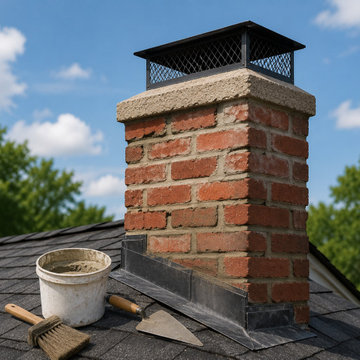
Mortar joint repair or tuckpointing. This involves removing deteriorated mortar between bricks and replacing it with fresh mortar, matched to the original color and texture as closely as possible.
Brick replacement. When individual bricks have spalled, meaning the face has cracked or popped off from trapped moisture, those bricks are removed and replaced.
Crown and cap repair. The crown is the concrete slab at the very top of the chimney. Cracks both big and small let water directly into the chimney flue. Chimney crown repair is often one of the most urgent forms of chimney repairs.
Flashing repair. Flashing is the barrier where the chimney meets the roofline. Loose, damaged or poorly installed flashing is a common source for water leaks. The roof gets the blame as it is the largest piece that covers the house. However, it certainly can be the overlooked chimney.
Flue and liner repair. Cracked flue tiles or damaged liners affect how safely a chimney vents smoke and combustion gases.
When to Know a Chimney Needs Repair
Most chimney damage shows up as small, easy to dismiss way. Let’s take a look at the following list. Be sure to print this out and keep it handy so if/when something happens, you know what to look for.
• Water stains near the fireplace or on the ceiling
• A brownish stain on the wall around your fireplace, or a stain on the ceiling near an exterior chimney. This means water is getting in somewhere it should not.
• Crumbling or missing mortar
• If you can see gaps between bricks, or mortar that flakes off when you touch it
• A leaning or visibly shifting chimney
• A chimney that appears to pull away from the house, even slightly, could indicate a structural issue
• White staining on the brick (efflorescence)
• Chalky white residue left behind as water evaporates out of the masonry. It is a visible sign that moisture is moving through brick
• Rusted damper or firebox components
• Metal parts inside a fireplace that are rusting are a strong indicator that moisture is present
• Debris in the fireplace
• Small chunks of brick, mortar, or tile landing in the firebox
What are the Various Types of Chimney Repair?
This is a compiled list of chimney repairs so you can be aware of what to look for. If you have any questions, contact us directly at 877-244-6349.
Homeowners who schedule chimney repairs at the first sign of trouble typically spend far less than those who wait until water damage reaches the interior of the home. This is a great reason to contact Superior Chimney at 877-244-6349.
Why an Annual Inspection Matters More Than People Think
The CSIA and the National Fire Protection Association both recommend that chimneys, fireplaces, and vents be inspected at least once a year, whether or not the fireplace gets used. This recommendation exists because damage does not take a break just because a chimney sits without any use.
According to data stated by the CSIA, chimney related fires still contribute to tens of thousands of residential fires across the United States each year, and a large share of those incidents can be traced back to deferred maintenance. An annual chimney inspection is what catches the small mortar crack or the hairline crown crack before it turns into a repair bill.
Hiring the Right Company for Chimney Repairs
Not every company who offers chimney repair work has the certified training to diagnose a problem correctly. CSIA certification is the most widely recognized credential in the industry, and it requires technicians to study chimney physics, venting systems, and fire codes. After the studies, the new technician needs to pass an exam and agree to a professional code of ethics.
When you call, be sure to ask:
Are your technicians CSIA certified, and can I verify that certification?
Will you show me photos or video of the damage before starting work?
Does the estimate distinguish between cosmetic repair and structural repair?
At Superior Chimney, we welcome these and other of your questions.
How Chimney Repairs Affect Insurance and Resale
A chimney in poor condition can complicate a home sale or an insurance claim. Home inspectors routinely report on visible mortar loss, leaning chimneys, or missing chimney caps. Some insurers will request proof of repair before renewing a policy on an older home. Addressing chimney repairs proactively protects more than curb appeal. It protects the sale timeline and the claims history associated to the property.
Frequently Asked Questions
How often should a Chicago area chimney be inspected? At least once a year, per CSIA and NFPA guidance, regardless of how often the fireplace is used.
Can chimney repairs be done in winter? Some interior repairs can happen in cold weather, but most masonry repair requires temperatures consistently above freezing. Spring and fall are the most common repair times in the Chicago area.
Is tuckpointing the same thing as chimney repair? Tuckpointing is one type of chimney repair, focused on replacing deteriorated mortar joints.
Does homeowners insurance cover chimney repairs? It depends. Sudden damage from a storm may be covered, while gradual deterioration from lack of maintenance typically is not.
So Finally…
Taking care of your home includes a chimney. Just because you don’t see it every day, doesn’t mean things aren’t happening. Be sure to get a chimney inspection done once per year by a certified and credible company such as Superior Chimney to take care of the issues. Contact us today by calling 877-244-6349.
 Ekena Millwork
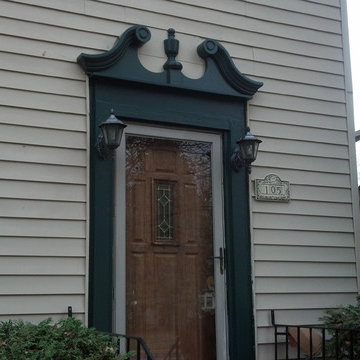
Pediments have been popular for thousands of years. Originally used in Greece, they are a commonly used type of Classical architecture. Today they are commonly placed above doors and windows to give a home exterior a classic and distinctive look.
Pediment basics
Pediments are the portion of the trim that is located above the pilasters, which are the column like frames on the sides of windows and doors. Directly below the pediments though, between the pediment and the pilasters, is a crosshead or breastboard. The crosshead is the flatter, protruding section directly above the door. Pediments can be purchased by themselves or can come with a crosshead already attached. These Pediments are manufactured out of a high density urethane, which is made to resemble wood but without the deterioration like wood has. Urethane architectural supplies are resistant to damage such as cracking or rotting. They are usually cheaper than wood alternatives.
Different styles for different homes
When choosing window trim or door trim either during initial door or window installation or for a home improvement project, you should consider the style of your home or the style that you want to create for your home. Do you want simple, unadorned distinction, or intricately molded elegance? Pediments combined with other millwork around window casings and doors can compliment any home. The main shapes of pediments are rounded, triangular, and scrolled. Rounded or semi-circle pediments can be plain but often have a sunburst pattern as well. Scrolling pediments are popular due to the elegance of this pediment shape. Triangular pediments come in Victorian styles, simple triangular shapes, and often in triangular shapes broken in the center or peak of the triangle by a more rounded shape such as an acorn. Triangular shapes are also commonly used on gable pediments, which are used in the upper triangular portions of home exteriors for decoration. Gable pediments are available in all of the same styles as door and window pediments

42