
Search results for "Experienced real" in Home Design Ideas



 Kitchen & Bath Design + Construction
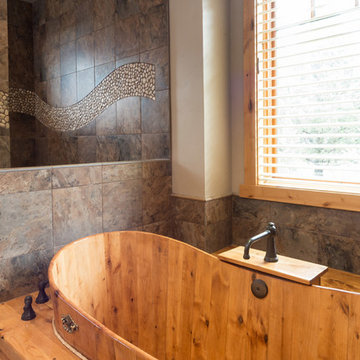
We installed a decidedly modern looking toilet from Kohler, the Persuade Circ, a skirted two-piece comfort height, elongated toilet with a top mount actuator. Heating was a problem in these cramped quarters with an existing radiator taking up valuable real estate next to the toilet. We replaced the bulky radiator with a sleek Runtal radiator which has a very slim profile, at a depth of only 2”, installing it along the window wall. Photography by Chrissy Racho.
Find the right local pro for your project

 Electronic Design & Consulting, Inc.
This article is posted here with the consent of the author. The views and opinions expressed in this article are those of the author and do not necessarily reflect the official policy, position, view, or opinion of Crestron Electronics, Inc., or of any of its employees. Crestron Electronics is not responsible for, and does not verify the accuracy of, any of the information contained in this article.
By Jeff Singer
The “smart” revolution began several years ago with smartphones (a.k.a phones) and has extended in recent years to thermostats, doorbells, alarm systems, and kitchen appliances. Smart devices are so ubiquitous that the term “smart” is overused to the point that it is almost meaningless. Companies are eager to jump on the bandwagon and claim their products are “smart,” and consumers proudly claim they have a smart home because they have lighting control. Misconceptions about smart homes are prevalent and create confusion in the marketplace. This can have deleterious effects on businesses and underserve consumers. Here are seven of the most popular misconceptions about smart homes:
1. Apps are smart
Apps are convenient and easy to use. Yes, it seems there’s an app for everything. People expect to be able to download an app and do just about anything. App developers and many companies do not disavow consumers of this myth. On the contrary, they promote this idea with carefully worded descriptions. The promise of having the world at your fingertips for $1.99 is very enticing. Although it sounds too good to be true, it is also too good to pass up for many people. This leads to undervaluing home control and disappointment when the apps don’t work, which undermines confidence in our industry. The fact is that apps are not smart. They do not control anything. They must connect to and communicate with a control system or cloud service that processes, prioritizes, and executes commands. That’s the real magic and what most people do not understand.
2. Smart devices work together
With so many smart appliances and devices on the market today, it’s understandable that the average consumer might think that they actually communicate and work together. This is simply not the case. Smart devices are not that smart. They are designed and manufactured by different, often competing, companies. There are no national or industry standards governing these products. Even if they all operate using Wi-Fi® communications, that doesn’t mean they work together. Some companies promote a home control platform, which unites different devices from different companies – in theory. The platform is yet another third-party software totally dependent on other companies developing APIs and writing control modules for their hardware to run on that piece of software. The devices are not independently compatible. Also, when updates are made to either the hardware or the software, functionality may be affected for some period. That’s a nice way of saying the device or system won’t work and there’s no way of knowing for how long.
3. It’s a DIY project
Which brings us to the next myth, which is that the average person can do it themselves. Unless you are a skilled professional, I would not advise taking on a smart home project. You want to make a light turn on and off with your Alexa® or Google Assistant™ virtual assistant software, go for it. A smart home takes much more planning and expertise. I have no problem changing a light bulb or hanging a light fixture in my dining room; however, I am not going to rewire my house. I may change the flush valve in my toilet, but I’m not going to replace the pipes in my house. You get it. Integrating devices and systems, establishing different zones, creating scenes, designing the UI with a balance between control, feedback, and simplicity – all takes experience and skill.
4. Need a programmer to make changes
Early adopters may have experienced the pain of trying to make a simple change or update to their home control system. Years ago, if the cable provider changed the channel line-up, the homeowner would have to call the dealer or programmer to make an appointment for them to come out to the house to reprogram the system. The system wouldn’t work as expected until it was updated, which often took several days and beaucoup bucks. Not anymore. Technology has evolved so now it’s easy for system owners to change favorite channels, create scenes, rename buttons, update images, and more. While a professional is needed for the initial installation and setup, the system is easy to manage once it’s up and running. This makes life so much easier for both dealer and customer.
5. Tech becomes obsolete quickly
Similar to updating the UI, updating firmware or hardware used to be a stressful process. A smart home should be intelligent enough to update itself. Apps don’t become obsolete. Updates are constantly pushed out from the cloud, making them better all the time. The same is true for a good smart home system. New features, functions, and device support gets added in the background consistently, so the system you installed (or purchased) yesterday gets better over time. Swapping out decorative elements, such as keypads, dimmers, and touch screens is also seamless. When a new device is added, all the settings are pulled down from the cloud and it just works. No system interruptions. No sunk costs. No imposing house calls. No surprise bills.
6. Lighting control saves energy and money
Lighting control is one of the most popular smart systems, but it takes more than just one system to make a home smart. On the surface, it makes sense that if you dim the lights ten percent, then you save ten percent of energy costs. If the shades are raised during the day to take advantage of sunlight so the lights don’t need to be on (or at least not 100%), but that causes the room temperature to rise a few degrees, which triggers the air conditioner to run longer and more often, was energy usage (or cost) reduced? A smart home integrates all the various systems and technology to optimize comfort, convenience, safety, and sometimes energy.
7. Home technology is easy to hack
Security is at the forefront of people’s minds these days. Personal identities are stolen; email accounts hacked; private photos publicized; and more. A smart home must outsmart those who don’t respect privacy. Crestron control systems adhere to the strictest security standards. The same Crestron control system that goes into a home is also installed in secure government and military facilities, global banking institutions, hospitals, and other mission critical applications. When installed correctly by a trained professional, a Crestron smart home is the gold standard for security, comfort, and convenience.
 Crogan Inlay Floors
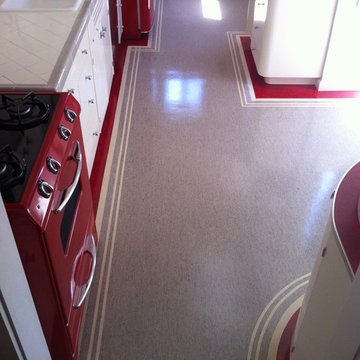
Border work of this style was widely used throughout the 40's and 50's. Clean and elegant. Laurie Crogan www.inlayfloors.com
Inspiration for an industrial kitchen remodel in Los Angeles
Inspiration for an industrial kitchen remodel in Los Angeles
 Infusion Home Design
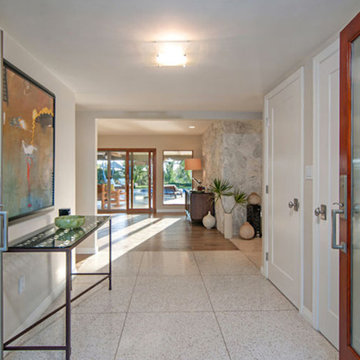
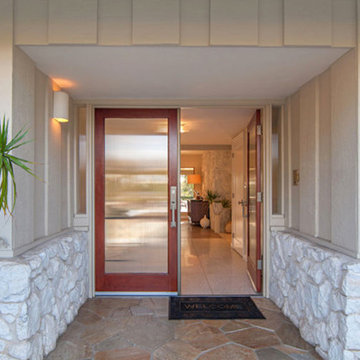
Mid-sized trendy ceramic tile entryway photo in San Diego with beige walls and a glass front door
 Infusion Home Design
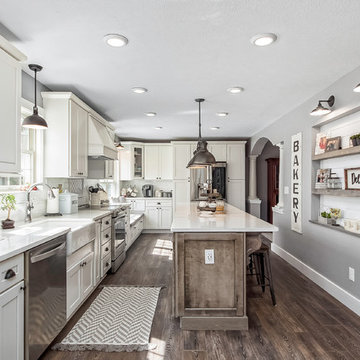
Mid-sized trendy ceramic tile entryway photo in San Diego with beige walls and a glass front door
Sponsored
Sunbury, OH

J.Holderby - Renovations
Franklin County's Leading General Contractors - 2X Best of Houzz!


 INSPIRED KITCHEN DESIGN
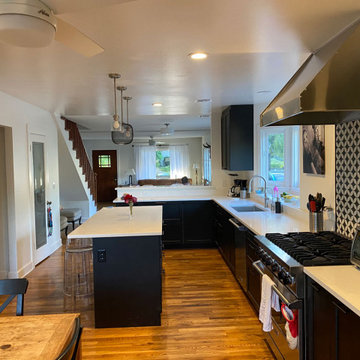
For Ann, working with IKEA cabinetry – and the right design professionals – made all the difference.
“My advice is don’t be afraid of IKEA! It’s an easy product and allows you to have a dream kitchen at a fraction of the price, in a fraction of the time of a normal kitchen,” she says.
“Another plus of IKEA cabinetry is that if you mess something up you can return parts you don’t need and just purchase panels or door parts that were somehow missed in the original design,” she notes.
“Lastly, I also highly recommend an experienced IKEA installer unless you have a small project or are a real DIYer. There was a real confidence knowing someone else had experience with the exact product I was using, so they could install efficiently and with everything aligned and level.”
She concludes: “Ultimately, I got exactly what I wanted. I have a brand new gorgeous IKEA kitchen and don’t have to live with painted cabinets and 40-year-old drawers!”


 Quarry Mill
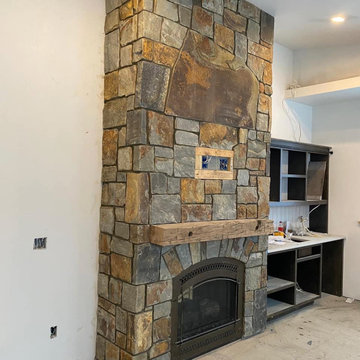
This stunning interior gas fireplace showcases the Quarry Mill's McGregor natural thin stone veneer. McGregor is a natural rocky mountain quartzite thin stone veneer. The stone consists of warm tans and earthy browns against cooler grey and gunmetal tones. McGregor natural stone comes as a loose mix of shapes in the fieldledge style. Our mockup attempts to show the stone exactly as it will come, however, the artistic talent of an experienced mason can be expressed beautifully with this product. The installation photos show how the stone can be installed more linearly in an ashlar style pattern. McGregor’s individual pieces have a deep depth of color with multiple colors showing in the same stone.

 James McNeal Architecture and Design
Guests are picked up at the driveway entrance then, just like a real African Safari, are driven to the home, experiencing the lay of the land along the way.

 Gustavson Dundes Architecture & Design, LLP
Gustavson/Dundes, a 30-year-old architectural and design firm, was featured in the September 2012 issue of Elle Decor magazine and the August 12, 2012 New York Times Real Estate section for its innovative design concepts. Focusing primarily on the New York metropolitan area, the firm is known for its highly trained and experienced architects who provide focused attention and innovative design to both large and small commercial and residential projects. The Principals have developed a reputation for trust and for their hands-on commitment to each project.
Sponsored
Sunbury, OH
J.Holderby - Renovations
Franklin County's Leading General Contractors - 2X Best of Houzz!
 James McNeal Architecture and Design
Guests are picked up at the driveway entrance then, just like a real African Safari, are driven to the home, experiencing the lay of the land along the way.
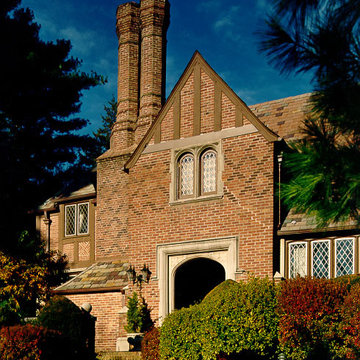 Gustavson Dundes Architecture & Design, LLP
Gustavson/Dundes, a 30-year-old architectural and design firm, was featured in the September 2012 issue of Elle Decor magazine and the August 12, 2012 New York Times Real Estate section for its innovative design concepts. Focusing primarily on the New York metropolitan area, the firm is known for its highly trained and experienced architects who provide focused attention and innovative design to both large and small commercial and residential projects. The Principals have developed a reputation for trust and for their hands-on commitment to each project.

 PropertyLark
The Pros and Cons of Fix and Flip Real Estate Investment
Last week, we covered The Pros and Cons of Buy and Hold Real Estate Investment for rental property investors. This week, we want to talk about the other most common type of real estate investment: “fix and flip.”
The Appeal of House Flipping
We all love the house flipping shows on HGTV and other reality channels. They’re great and they make the prospect of buying, renovating and flipping homes for big profits seem super sexy and fun. However, any experienced real estate investor will tell you it’s not quite as easy as they make it look. There’s a lot of work that goes into a successful fix and flip investment.
The basic premise of a fix and flip investment is pretty simple. You buy a property, usually one that needs some work and is available at a great price. You renovate the property, making the necessary repairs and upgrades to maximize its resale value. Then, you sell the property on the open market for the highest possible price. You get in and out as quickly as possible. Full-time flippers will move from property to property or will have multiple properties being worked on at the same time. Rather than the “buy and hold” strategy where you keep the house while earning rental income and equity over time, you are looking for the quick sale to earn your profits.
If you are going to explore house flipping—whether as a full-time career or just a side hustle—you will want to know exactly what you are getting into. That is why we are going to cover the pros and cons of fix and flip real estate investment in this article.
The Pros of Fix and Flip
Here are some of the pros of fix and flip investing:
Faster Return on Investment—The biggest appeal of fix and flip investing is that it gives you a quicker return on investment. Buy and hold will take you longer to see your ROI. House flipping allows you to see your full profit (hopefully) as soon as the house sells. The average house flip for an experienced investor is around six months. It may take longer for a first-timer who is just learning how to do certain things.
Fairly Safe Investment—As long as you do all your projections and calculations carefully and avoid any major problems along the way, house flipping is a relatively safe investment strategy compared to something as turbulent as the stock market. Real estate markets are generally predictable and the short time frame of a flip helps you avoid losses if the property happens to depreciate over a longer period of time.
Exciting—There is a reason why there are so many reality shows based around flipping and none based on buy and hold investing. It’s an exciting process to buy a home, gut it and completely renovate it. Then, you get the ultimate reward of selling it and collecting the profits—as long as you do things right.
The Cons of Fix and Flip
Here are some of the cons of fix and flip investing:
Upfront Expenses—A house flip will require a lot of upfront expenses. We’re not only talking about financing the house itself, but all the renovation costs and other expenses involved in the flip. You are laying out all that money at the beginning and only seeing your returns when the property sells. This can create cash flow issues and stress if you fall being schedule or go above your initial budget.
Taxes—House flips will usually create dramatic swings in income year over year, and that can increase your tax bill. You have to pace things correctly to take advantage of specific capital gains tax rules. Capital gains taxes are higher on any property owned less than a year, so you have to find that balance of how long you own any specific investment properties and how long it takes to complete the renovation and sale. Before you get too deep into fix and flip investing, you will want to talk with your tax advisor to make sure you have the right plan in place.
Surprises—All real estate investment is susceptible to surprises. You don’t always know what lies behind the walls until you start the renovation process. You cannot plan for everything as a real estate investor, but you have to be prepared for anything. It is a good idea to add some wiggle room in your budget and overestimate your renovation expenses/timeline to cover any surprises that may come up.
These are some of the biggest pros and cons of fix and flip real estate investment. Of course, there are other things you need to know as an investor, so be sure and do your homework in order to get the most out of your investment portfolio. Both fix and flip and buy and hold strategies can be highly lucrative if you do things right. There are no wrong answers, but there are wrong ways of doing things if you truly want to be successful in this field.
If you are looking for great investment properties to fix and flip, join the exclusive PropertyLark home buyers’ network. If you qualify, you’ll have access to our exclusive off-market deals and analytics tools that will help you identify the best investments and get the highest possible ROI. Fill out the contact form and questionnaire on the PropertyLark buyer’s site to apply!
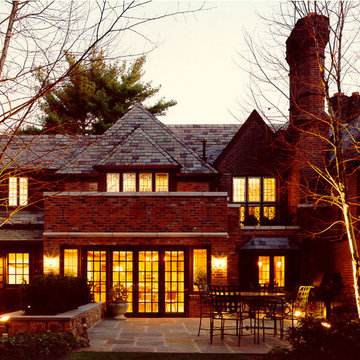 Gustavson Dundes Architecture & Design, LLP
Gustavson/Dundes, a 30-year-old architectural and design firm, was featured in the September 2012 issue of Elle Decor magazine and the August 12, 2012 New York Times Real Estate section for its innovative design concepts. Focusing primarily on the New York metropolitan area, the firm is known for its highly trained and experienced architects who provide focused attention and innovative design to both large and small commercial and residential projects. The Principals have developed a reputation for trust and for their hands-on commitment to each project.
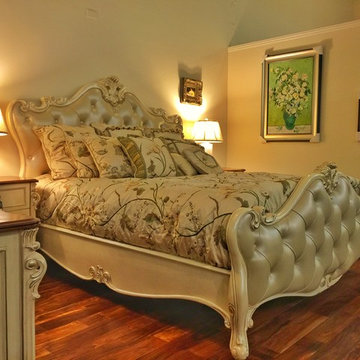
 Handmazing
As a professional artwork supplier, we work exclusively with oil paintings. We reproduce classic masterpieces from Van Gogh to Monet and beyond, and provide our customers with an opportunity to enjoy these incredible works of art without the cost of purchasing them outright. Unlike prints, however, our works of art are crafted by real artists who reproduce the work by way of their own natural talent.
Each of our oil paintings is just as colorful and unique as the original. Our talented and experienced artists give our paintings a distinct feel and look with each brushstroke. Additionally, no two paintings are alike, and each one will differ slightly from the others, giving all our paintings a distinctive charm. Our canvas paintings are extremely durable and are the ideal way to breathe life into your home.
In addition to purchasing our reproductions, you may also rent our artwork to brighten your home or business for a short period. This is a budget friendly alternative available to both individuals and businesses.
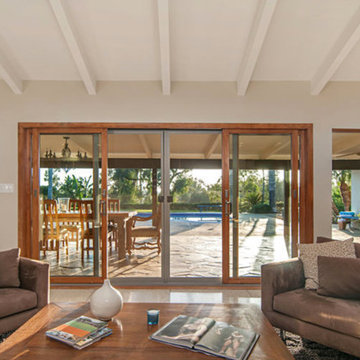 Infusion Home Design
Mid-sized trendy open concept ceramic tile family room photo in San Diego with beige walls, no fireplace and no tv
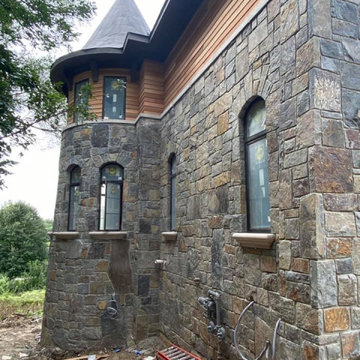 Quarry Mill
The Quarry Mill's McGregor real thin stone veneer custom cut in the castle rock style adds a luxurious and stately appearance to the exterior of this stunning home! McGregor is a natural rocky mountain quartzite thin stone veneer. The stone consists of warm tans and earthy browns against cooler grey and gunmetal tones. McGregor natural stone comes as a loose mix of shapes in the fieldledge style. Our mockup attempts to show the stone exactly as it will come, however, the artistic talent of an experienced mason can be expressed beautifully with this product. The installation photos show how the stone can be installed more linearly in an ashlar style pattern. McGregor’s individual pieces have a deep depth of color with multiple colors showing in the same stone.
3